Welcome back to Dry Powder, I’m Bill Cohan. In today’s issue, I’m happy to bring
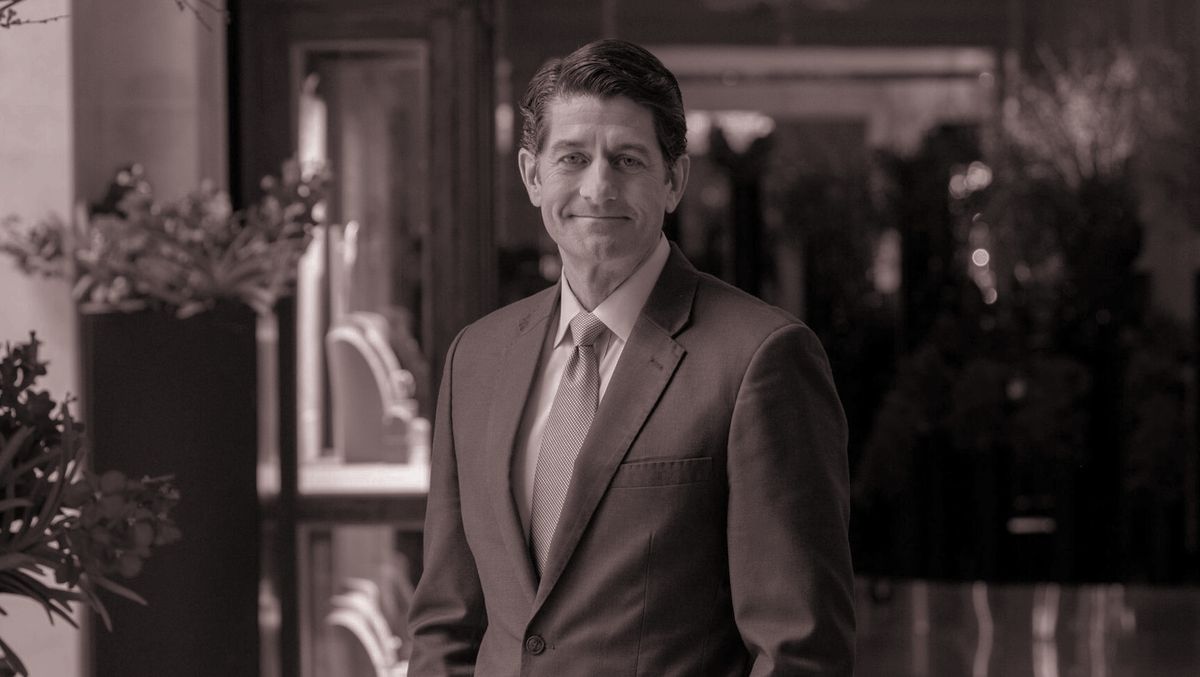
you my exclusive second dispatch from The Summit, the private gathering of business and political leaders at Brush Creek Ranch in Wyoming. This time, we’ll hear from former House speaker and current Fox Corp. board member Paul Ryan, who warned that the nation’s $37 trillion debt could trigger a bond-market crisis. Behind closed doors, Ryan proposed reviving a relic from a more congenial Washington—a bipartisan congressional commission tasked with tackling deficits. Despite some
muffled guffaws in the room, Ryan’s optimism was actually bracing and inspiring, if perhaps a little naive…
But first… |
- Elon’s
moonshot comp: What do you get the man who has everything— or at least $386 billion, according to Bloomberg? Why, you give him the chance to earn $1 trillion, of course. The much-ballyhooed proposed 10-year compensation package for Elon Musk, as outlined in Tesla’s proxy statement, would require the world’s richest man to achieve 12 goals—such as increasing Tesla’s market cap to $8.5 trillion, or more than eight times its current valuation—in order to unlock that
massive payout. If he can do that, you’ve got to figure he’s earned it.
The other 11 goals aren’t cakewalks, either. The Tesla board’s proposal, which still needs to be approved by shareholders, would also require him to remain C.E.O. for the next 10 years; formulate and implement a succession plan; deliver 20 million electric vehicles; obtain 10 million self-driving vehicle subscriptions; produce and deliver 1 million A.I. robots; deploy 1 million robotaxis; and generate $400 billion in
adjusted EBITDA.
This is a stunning repudiation of the Delaware judge who challenged Musk’s last pay package of $56 billion, after which the Tesla board moved the company to Texas, where they’ve now proposed compensation that could top out at nearly 20 times that amount. It’s hard to imagine shareholders will object to this plan at their annual meeting on November 6, but it’s equally hard to imagine them approving it. - Profiles in fiduciary
courage: It doesn’t get any easier watching guests of the White House—cabinet members, business leaders, European dignitaries, etcetera—forced to offer Pyongyang-style paeans to their host. Of course, everyone who needs something from Donald Trump knows what is expected of them if they hope to get it. Even so, there was something particularly jarring about the scene that unfolded in the White House dining room last Thursday, where a group of multibillionaire tech founders
and C.E.O.s—Mark Zuckerberg, Tim Cook, Safra Catz, Sam Altman, and Sundar Pichai among them—went around the room thanking the president for his leadership and pledging to invest incredible sums of money in the U.S. economy.
In Zuckerberg’s case, the pledge was, quite literally, unbelievable. “Thank you for being such a pro-business, pro-innovation president. It’s a very refreshing change,” he told Trump.
He followed that with a promise (or at least I think it was a promise) that Meta would spend $600 billion through 2028 to build A.I. data centers and infrastructure. Immediately afterward, he was caught on a hot mic saying to Trump, “Sorry, I wasn’t ready. … I wasn’t sure what number you wanted to go with.” Are we just making things up here, Mark? Or is Trump running Meta’s comms team now, too? At least Cook, who thanked Trump eight times in less than two minutes, didn’t bring any gold bars with
him this time.
|
|
|
In remarks at a private gathering in Wyoming, the former House speaker offered his most
unvarnished commentary yet on America’s looming fiscal crisis, his beef with Trump’s tariffs, and how to get the country back on track. By the end, the audience was even joking that he should take another run at the White House. |
|
|
Last week, I offered my
first dispatch from The Summit in beautiful Saratoga, Wyoming—an idyllic retreat for business leaders, former governors, senators, public intellectuals, and the like. The late Bruce White, founder of White Lodging, one of the country’s largest hotel management companies, had long desired to create something akin to Allen & Co.’s Sun Valley conference
at his Brush Creek Ranch—a vision that his widow, Beth, has now expertly fulfilled. It was a delight to hear from the likes of Jim Bullard, Joe Manchin, and Mitch Daniels, among many others, over the course of the inaugural three-day event.
Like many such forums, the conference operated under the
Chatham House Rule. But two
speakers at the conference offered to waive their anonymity for my reporting. The first was Niall Ferguson, a world-renowned expert in international affairs, who spoke at length about his view that President Trump’s shocks to the rules-based global order are not unprecedented, but rather follow historical patterns set by William McKinley, F.D.R., and especially Richard Nixon. (You can read more from Niall’s
remarks here.)
The second speaker who agreed to be quoted on the record was Paul Ryan, the 2012 vice presidential candidate, former speaker of the House, and now member of the board of directors of Fox Corp. Ryan, once hailed as a member of the G.O.P.’s so-called “Young Guns” in Congress, now represents a somewhat old-fashioned strain of
non-MAGA conservatism—a poignant reminder of how much the G.O.P. has drifted from the party of fiscal rectitude (at least in theory) to one that thinks nothing of adding trillions to the deficit. So my ears perked up when Ryan, one of The Summit’s featured panelists, was asked about whether our $37 trillion of national debt is “imperiling America’s future.”
It’s a good and important question. According to the Federal Reserve Bank of St. Louis, the national debt–to–G.D.P. ratio stood at
around 120 percent at the end of the second quarter, ranking the United States eighth among large industrialized countries. (Japan hovered around 235 percent, and Italy at about 137 percent.) Yields on 30-year U.S. Treasuries have spiked back to around 5 percent, the latest sign that investors are getting nervous about holding government debt (without getting properly compensated for doing so) amid persistent inflation, skyrocketing deficits, ineffectual politicians, and Trump’s attacks on the
independence of the Fed.
Ryan was clear-eyed about the failures of “his party” to budget and spend responsibly, and about the price America might pay if Washington can’t get its fiscal house in order. He wistfully recalled the budget that the House of Representatives passed in 2014, when he was chair of the House Budget Committee, which purported to balance the budget over 10 years and pay off the national debt in 30 years. Alas, Ryan continued, “We now have these populist parties who
believe that the end justifies the means. Both parties use moral relativism as the main tool. … The question is, when this crisis hits, what does it look like? And what can you do about it?” |
Ryan, not one to shy from prognostications of fiscal doom, offered one scenario for how such a crisis could
play out. “I assume it’s a bond market episode,” he said, “an auction failure, where basically the Treasury calls up the primary dealers and puts a gun to their head and says to Jamie Dimon, Buy the rest of these bonds. The market will know it, yields will spike, and we have a crisis.”
To circumvent congressional inaction, Ryan suggested, would require an Obama-era political construct: a bipartisan congressional commission empowered to reduce the
national debt. That may seem like a bureaucratic yawn of an idea, but like Ryan, I’m old enough to have lived through the 2010 National Commission on Fiscal Responsibility and Reform, a.k.a. Simpson–Bowles. As a member of the commission, Ryan witnessed its failure up close. “We had enough of a crisis to scare us into action,” Ryan recalled. “The last meeting of Bowles–Simpson, when we were all shaking hands, saying how nice it was to work with each other, the aides came in with the press release
from Obama and the press release from [Nancy] Pelosi, then speaker, saying, We’re not doing it. It was dead before we left the room in the last meeting.”
But he said he believes a consensus is growing in Washington that now is the time for a bipartisan commission to tackle the problem of the deficits and the debt—one with teeth this time. “That idea is starting to percolate back again,” he said. “Trump’s against anything that’s deemed
unpopular, but perhaps after the midterms, in 2027, if the last person talking to him in the room can convince him—legacy defining; preserving the dollar; stopping a debt crisis; helping the world—maybe a commission could happen. There are Democrats and Republicans in the House and the Senate who are getting serious about this idea.”
Before you dismiss Ryan and his bipartisan musings as pure delusion, hear him out: He insists a commission could work because both parties want to preserve
the so-called “social contract” with the American people. “We want health and retirement security for all Americans,” he said, sounding like a man who would consider a return to electoral politics. “We want to save the safety net for the poor. We just want it done in a way that doesn’t bankrupt us in the 21st century. And since we started these programs in 1935 and 1965, we’ve learned a lot about how to better run health retirement programs, a welfare system with digitization. So we now know
what to do to fix them. We just need the political wherewithal to do it.”
There was support for the commission idea in the room. Josh Bolten, a former chief of staff to President George W. Bush and now C.E.O. of the Business Roundtable, told the gathering, to some laughter, that he could envision a Manchin–Daniels Commission—both men were co-hosts of The Summit, and in the audience—“supported by President Paul Ryan.” |
Ryan, not surprisingly, declared himself no fan of Trump’s tariff policy. “We have uniquely badly timed
economic policies from Donald Trump, which is protectionism and profligacy of spending,” he said, on top of tariffs, which he declared a “big mistake.” Trump, for his part, alleged on Friday that the tariffs were generating so much “money” that “we’re thinking about a little rebate” for the American people, before adding that “the big thing we want to do is pay down debt.” (I’ll believe that when I see it.)
Ryan did offer some ideas for how to raise revenue and reduce the national debt,
akin to a value-added tax, although he refused to call it that. “I’m a recovering politician, but I’m still thinking like a politician,” he said. “Please stop calling these things V.A.T.s, because that is political death.” Instead, he proposed what he called “a border adjustment tax,” which would replace the corporate tax with a cashflow tax.
It’s a pretty wonky idea. “It’s a destination-based, border-adjustment, cashflow tax,” he said. “It just rolls right off the tongue. But
what that is, it’s basically a V.A.T. with wages being deductible to be pro-labor, and that border adjusts.” (A border adjustment tax is a tax on imports and excludes exports from tax. It is usually proposed as part of an overall corporate tax reform package.)
Ryan’s fluency with think tank–inflected policy jargon is impressive, even if it never got him to the White House. “It would be a far more superior tax on U.S. businesses than any other country has, because all the other first-world
countries have income taxes, and V.A.T.s on top of it,” he continued excitedly. “We could just have a consumption tax that’s border adjustable and get rid of these tariffs, and have a very clean and economically neutral tax, and get our revenue line up quite a bit, I would argue, probably two or three points of G.D.P. without doing damage to growth—actually improving growth. So there is a tax reform way to parlay this mess into something better.” Although he still likes the idea of a “flat tax,”
Ryan said he believes the ultimate tax reform will include a more graduated income tax on individual income “because that’s what society wants.”
Despite Trump’s boneheaded economic policies, Ryan concluded that he remains optimistic about America’s prospects. “We’re still the healthiest looking horse in the glue factory,” he said. A leading businessman in the audience had asked the members of the panel about their views on Bitcoin and Bitcoin treasuries, which Ryan dismissed as a “pipe
dream” because the U.S. has “the biggest economy and the biggest military” and “fiat currencies are going to be the currencies for the future.” But it did get him thinking about America’s superpower status, and what it would take to keep it.
The more important question, Ryan countered, was if and when we are going to reduce our national debt and get our fiscal house in order. “When we’re fighting China, literally, for liberty and freedom in the world, I think we’ve got a better brand,” he
said. “We’ve got freedom money that’s decentralized … and they’ve got tyranny money that’s going to surveil your money. So, I think we’ve got a good brand. If we just get our fiscal act together, we’re good to go.” |
|
|
Join Puck’s chief political columnist, John Heilemann, as he roams the corridors of power and influence in America on this
twice-weekly interview show, taking you beyond the headlines with the people who shape our culture: icons and up-and-comers, incumbents and insurgents, moguls and machers in the overlapping worlds of politics, entertainment, tech, business, sports, media, and beyond. The conversations are rich and revealing, unrehearsed and unexpected… and reliably impolitic. A Puck-Audacy joint, new episodes drop every Wednesday and Friday. |
|
|
Puck’s daily political newsletter from Washington on what’s really happening in this town, from the White House to the Pentagon
to Capitol Hill, K Street, and the campaign trail. |
|
|
Need help? Review our FAQ page or contact us for assistance. For brand partnerships, email ads@puck.news. You received this email because you signed up to receive emails from Puck, or as part of your Puck account associated with {{customer.email}}. To stop receiving this newsletter and/or manage all your email preferences, click here. |
Puck is published by Heat Media LLC. 107 Greenwich St, New York, NY 10006 |
|
|
|