|
Welcome back to Dry Powder. I’m Bill Cohan.
I’m surprised the Trump-Musk bromance lasted past Inauguration Day, given the profound narcissism and pathological attention-seeking of both POTUS and the world’s wealthiest man. It seemed to me like a clown show from the outset. Perhaps the most astonishing part, though, is that Musk is still the richest man in the world, worth $335 billion according to Bloomberg, despite Tesla losing around $150 billion in market value in the wake of the conscious uncoupling. My money is on Elon getting the last laugh here.
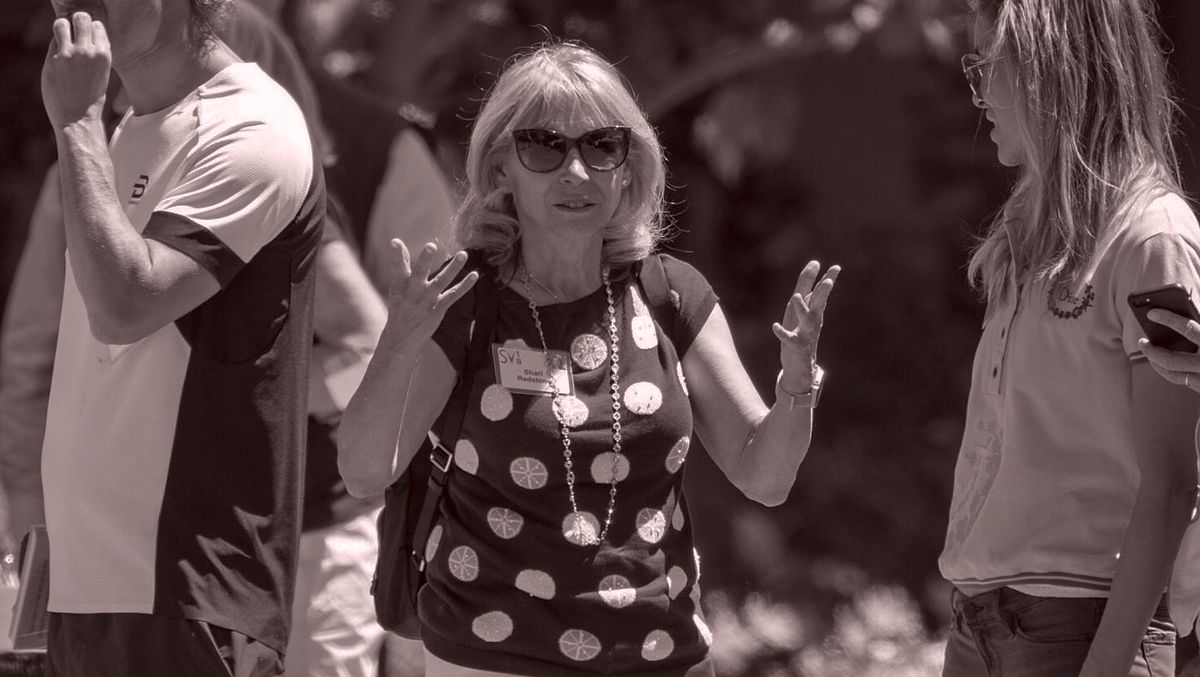
There will, inevitably, be more to say about this down the road. But today’s issue refines the focus on the mind-boggling financial consequences for Shari Redstone if the Paramount Global-Skydance deal falls apart.
But first…
|
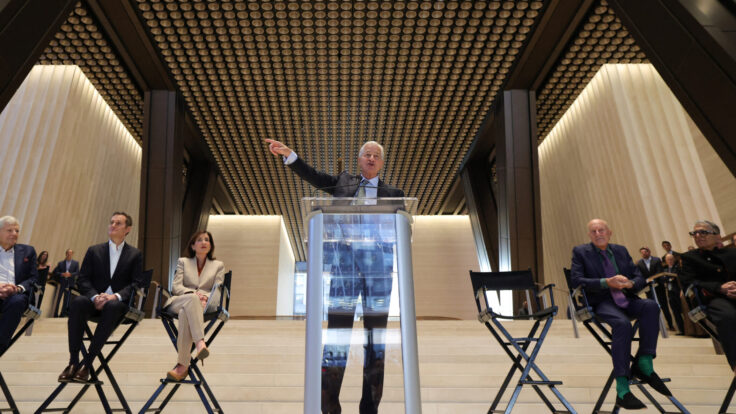
- Jamie’s loyalty oath: For years now, private equity firms, not investment banks, have been the place to be on Wall Street, and their recruitment tactics have become increasingly sophisticated and intense. These days, many P.E. firms begin their courtship of junior analysts within days of them starting their jobs at the banks, as I have been writing about for years. And since the private equity firms are clients of the investment banks—there’s really not much the banks can say. Anyway, this is why nearly every young employee of, say, Apollo, has JPMorgan Chase (or Morgan Stanley… or Goldman Sachs) on their résumé.But this past week, Jamie Dimon decided he’d had quite enough of this practice, thank you very much, and took a surprising stab at trying to end it. “Avoiding conflicts of interest is crucial to maintaining the trust and confidence our clients place in us so we have updated our policy regarding Investment Banking Analysts accepting future-dated job offers,” Filippo Gori and John Simmons, the co-heads of global banking, wrote in a note to the incoming class of analysts. “Therefore, if you accept a position with another company before joining us or within your first 18 months, you will be provided notice and your employment with the firm will end.” The duo also insisted that the new recruits would face dismissal if they failed to attend every training session and meeting, as asked.
The reaction to the new policy on the Wall Street chat boards was somewhat predictable. Writing on Wall Street Oasis, one second-year analyst in an investment bank’s M&A group conceded that the banks “invest a lot of money and pay” getting the annual crop of analysts “up to speed,” but “they don’t invest in making banking an attractive [environment] to work in. The current environment at banks isn’t even fucking safe, is potentially life threatening and kills juniors, has a toxic culture, and relies on constant overwork and abuse to the make the business model work. If you don’t want your talent leaving, be a better fucking place to work lol.” Well said.
|
|
|
|
A MESSAGE FROM OUR SPONSOR
|
Houndstooth House started as a shared vision between two friends – now it’s been named a Small Business of the Year. Over the past 20 years, founders Denise Cotter and Michelle Marino have grown their two-woman design firm into a thriving business with a 10,000-square-foot showroom and eight employees.
At U.S. Bank, we know that bold growth starts with meaningful support. That’s why we support over 1.1 million small businesses with personalized resources and expert guidance. For visionaries like Denise and Michelle, we’re more than a bank – we’re a partner in progress.
|
|
|
- A different kind of life after Drexel: Amid a bout of springtime nostalgia, I recently found myself wondering what became of Dennis Levine, the infamous former M&A banker at Drexel Burnham Lambert, the once-powerful firm that was dominated by Michael Milken and his junk-bond empire. Drexel, of course, blew up in 1990, and Levine was part of the reason. In 1986, after being investigated for insider trading, he pleaded guilty to securities fraud, tax evasion, and perjury, ultimately agreeing to disgorge $11.5 million in ill-gotten profits—at the time one of the largest individual fines in S.E.C. history—and accepting a lifetime ban from the securities industry. He was sentenced to two years in federal prison, and served a total of around 17 months in FCI Lewisburg.His sentence was considered lenient, partly because Levine cooperated with the government in its ongoing investigation of insider trading. Levine ended up implicating both his fellow Drexel M&A banker Marty Siegel and the arbitrageur Ivan Boesky—who later implicated Milken, who, like Levine, Siegel, and Boesky before him, pleaded guilty to various crimes and served some hard time. With Milken gone, it wasn’t long before the whole operation fell apart and the firm filed for bankruptcy.
Nowadays, at 72, Levine is doing something completely different, as a Drexel alum must do if he can’t work in the securities industry anymore. He is the founder and C.E.O. of Water Garden Farms, a pioneer of indoor, organic farming, with its principal offices at 230 Park Avenue and additional locations on Long Island. According to Levine’s LinkedIn profile, Water Garden “deploys a smart farm model integrating innovative AgTech processes, low energy usage, highly efficient logistics, and a dual retailer/customer centric sales model.” Levine, meanwhile, “blends his deep background as a global finance thought leader with a compelling formula to meet our world’s environmental, social and economic challenges, while generating long-term value for the planet and investors.”
I guess it’s no surprise that the Water Garden Farms website makes no mention of Levine’s criminal convictions and the actions that led to them. His LinkedIn profile claims “he was considered one of the industry’s leading dealmakers” and “worked closely with [Drexel’s] High Yield Bond Department, headed by Michael Milken, to design and integrate securities to meet client objectives.” Not sure how that’s a positive for hydroponic farming, but whatever. The profile also advertises Levine’s “unique combination of skills [that] has allowed him to be a trusted confidant to some of the world’s most prominent C-suite innovators,” and notes that he is “continuing his tradition of helping others by sharing his experiences with young professionals.”
On April 7, Levine spoke at the Opal Group’s Impact Investing Forum in West Palm Beach about Water Garden Farms. His talk, “Profits with Purpose: Driving Water and Food Security in the U.S.,” touched on “how securing America’s food and water systems offers one of the most powerful opportunities for purposeful profits in an uncertain world.” He was persuasive, according to at least one attendee. “He looks old,” this person wrote to me. “But made a great presentation about the viability of indoor farming. Convinced me.”
|
|
|
|
It’s not at all clear where Shari Redstone would come up with the $550 million she would owe her creditors if the Skydance-Paramount deal falls through—and the consequences are mind-boggling.
|
|
|
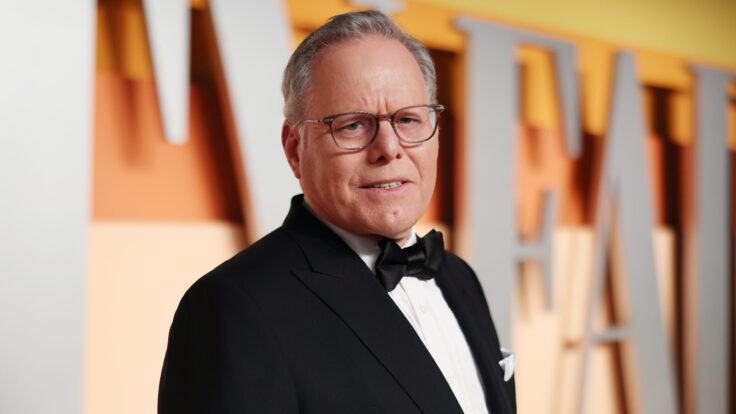
It’s been a bit of a rough patch, objectively speaking, for Shari Redstone, the principal owner of Paramount Global. She and her top executives have been trying to settle a ridiculous $20 billion lawsuit brought by Donald Trump against CBS News, a division of Paramount Global; at the same time, they’re waiting for the president’s F.C.C. to approve the sale of the whole company to Skydance’s David Ellison and RedBird Capital, which would net Shari and her family $2.4 billion upon closing. All other approvals but for the F.C.C.’s have been obtained.
Meanwhile, Shari has also been successfully battling thyroid cancer. According to a statement from her spokesperson, Molly Morse, a partner at Kekst CNC, Shari received her diagnosis earlier this spring. “While it has been a challenging period,” per the statement, “she is maintaining all professional and philanthropic activities throughout the treatment, which is ongoing. She and her family are grateful that her prognosis is excellent.”
While Shari focuses on returning to good health, her primary professional concern, as I reported on Wednesday, is F.C.C. approval. But I’m told that people connected to the deal expect that Trump won’t let the F.C.C. even consider the Skydance acquisition until the CBS News/ 60 Minutes lawsuit is resolved.
|
|
|
|
A MESSAGE FROM OUR SPONSOR
|
Behind every thriving local business is a story worth telling. For Houndstooth House, that story begins with Sioux Falls entrepreneurs Denise Cotter and Michelle Marino – and a partnership with U.S. Bank.
What started as a shared vision for a flexible, family-first design studio has grown into an award-winning business with a 10,000-square-foot retail space, an eight-person team. Now named a Small Business of the Year, their journey is proof that heart and hard work go hand in hand. U.S. Bank is proud to be a part of their story – and over 1.1 million others like it.
|
|
|
|
On the surface, the two sides of the lawsuit don’t seem that far apart. Trump is demanding $25 million for the settlement, plus $25 million of free airtime on CBS. Paramount Global has offered Trump $15 million. The matter is in the hands of a mediator. Of course, CBS News could let the judicial process play out, until the case inevitably gets tossed—but that would further delay the F.C.C.’s consideration of the Paramount recap, and the deal clock is ticking for Shari, with mind-boggling consequences if it does not close.
|
|
There are some critical deadlines on the near horizon. Already, the first “walk away” deadline for the deal, April 7, has been extended 90 days, to July 7, by the terms of the contract. The contract permits a second 90-day extension, until October 7. After that, the deal can be abandoned by either side without having to pay the $400 million breakup fee. But if Ellison/RedBird walks away from the deal after October 7, and the deal terminates, Shari and her family won’t receive the $2.4 billion in cash they were counting on. And without that money, Shari’s family holding company, National Amusements, faces some serious financial problems. Rich Greenfield, the LightShed Partners analyst, and I are both already on the record about our belief that this could potentially lead to a bankruptcy filing for National Amusements.
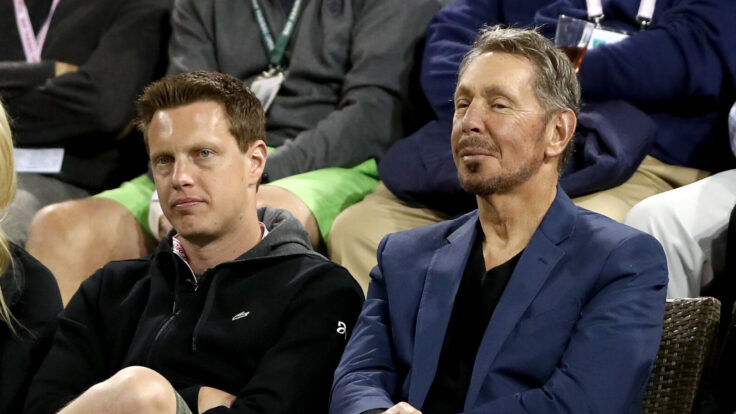
National Amusements owes Larry Ellison—the Oracle co-founder and David’s centibillionaire father—$300 million, which Shari borrowed from him last year to pay off her longtime bankers and other liabilities. If the deal
terminates in October, she will have six months to pay that $300 million back to Ellison. She also owes her M&A advisory firm, BDT & MSD Partners, $250 million, in the form of a PIK preferred stock investment that has been accreting at 7.75 percent per year.
Right now, it’s not the slightest bit obvious how Shari would come up with the $550 million she would need to pay off these two liabilities. I asked Morse if the Ellison debt was secured by National Amusements’ stock in Paramount Global, the only valuable asset at the holding company. She declined to share that information with me. (National Amusements’ 75 or so movie theaters are nice enough, but are not valuable security for a loan of $300 million. NAI’s F.C.C. application regarding the deal implies that the Ellison loan is secured by NAI’s stock in Paramount, but it’s not totally clear.)
If Shari fails to repay Ellison the $300 million within six months of October 2025, it would likely result in a default on the loan, unless Ellison renegotiates the terms. If Shari defaults, and her stock in Paramount is its security, then Ellison could foreclose on that security and get that stock in exchange for discharging the liability. How much Paramount Global stock would Ellison get to satisfy his debt at that point? Well, given that the value of National Amusements’ Class A and Class B stock in Paramount is now around $850 million (on a purely economic basis), it’s conceivable that Ellison’s $300 million of debt could be converted into something like a 30 percent voting stake in Paramount Global. (Here’s the simple math: 300/850*80 percent. This is just illustrative, of course. Who knows how it would all work out in the end.)
Then there’s the $250 million she owes to Byron Trott, her M&A advisor at BDT & MSD. It’s a preferred stock investment, which means National Amusements has more flexibility in paying that back—the warrants attached to the preferred stock are not exercisable until March 2028. But I suspect that any deal with Ellison on the $300 million debt would also end up including Trott et al. and their preferred stock. (Just because Trott’s $250 million is preferred equity doesn’t mean it will go up in smoke if Shari can’t repay it.) And in the event of a bankruptcy, BDT & MSD would likely get some recovery in the form of Shari’s Paramount Global stock. That means that any restructuring or bankruptcy of National Amusements could possibly result in a change of control of Paramount Global, and Ellison and Trott’s BDT & MSD Partners would become the new owners. They would likely not have to pay anywhere near the $2.4 billion Shari will get if the deal actually is allowed to close before October 7.
|
|
There is at least one other very messy consideration. If a credit downgrade accompanies a change of control at Paramount Global—which seems likely if the Ellison/RedBird deal falls apart—then the company could be required to purchase its ~$11 billion of net debt at 101 cents on the dollar, per the terms of the Paramount senior loan agreements and bond indentures. That would create yet another potential nightmare for Redstone.
Would Paramount be able to refinance that debt at 101 percent, which would likely be far above where the debt would trade after a credit downgrade? Would the big private-credit players—such as Apollo, KKR, or Blackstone— refinance that debt? Would a consortium of Wall Street banks want to step up and provide the loan? And if that debt cannot be refinanced at that level, does that entail a restructuring of Paramount that gives current creditors control of the company—or a share of the company—along with Ellison and Trott?
The mind reels just contemplating these potential outcomes. Speaking at a Gabelli conference on June 5, former F.C.C. Commissioner Rob McDowell said Paramount Global would be “a melting ice cube” if the Ellison/RedBird deal doesn’t happen. So, with a little extra thought, you can see why Shari may be quite desperate to settle this idiotic lawsuit with Trump.
|
|
|
|
A professional-grade rundown on the business of sports from John Ourand, the industry’s preeminent journalist, covering the leagues, players, agencies, media deals, and the egos fueling it all.
|
|
|
|
Finally, a media podcast about what’s actually happening in the media—not the oversanitized, legal-and-standards-approved version you read online. Join Dylan Byers, Puck’s veteran media reporter, as he sits down with TV personalities, moguls, pundits, and industry executives for raw, honest, sometimes salacious conversations about the business of media and its biggest egos. New episodes publish every Tuesday and Friday.
|
|
|
Need help? Review our FAQ page or contact us for assistance. For brand partnerships, email ads@puck.news.
You received this email because you signed up to receive emails from Puck, or as part of your Puck account associated with . To stop receiving this newsletter and/or manage all your email preferences, click here.
|
|
Puck is published by Heat Media LLC. 107 Greenwich St, New York, NY 10006
|
|
|
|