Welcome back to Wall Power’s Inner Circle. I’m Marion Maneker, back
after a day in Regent’s Park at the Frieze and Frieze Masters tents, where a sizable portion of the art world is trying to figure out where our global culture is going.
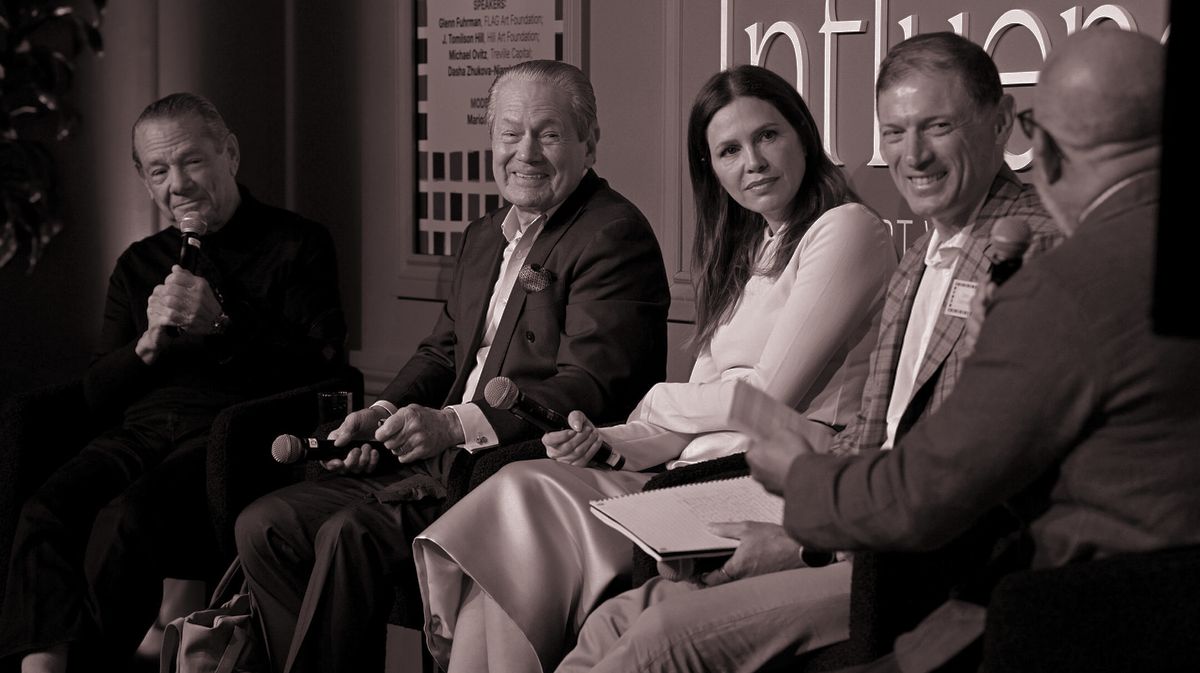
Tonight, we’re giving Inner Circle members access to The Art of Influence’s panel of heavyweight collectors. It was only a month ago that we collaborated with the FLAG Art Foundation to produce the event, and one of the high points of that day was the session that included Michael Ovitz, J.
Tomilson Hill, Dasha Zhukova, and Glenn Fuhrman. I think you’ll enjoy reading this collaborative reflection on the market’s direction.
But first… |
- About that Prince story…: Congratulations to Nate Freeman on his epic profile of Richard Prince in Vanity Fair. Everyone is passing around and talking about the story, which dives into everything from Prince’s
operatic seven-hour deposition video that’s emerging as one of his most important artworks, to the town in upstate New York that may become a monument to the artist after he’s gone. But perhaps most important, Freeman hints at an answer to a broader cultural question: A decade into America’s radical social and political turn, where is the great art reacting to our antidemocratic drift? Freeman makes a compelling case for Prince as a radical voice for our times. Read it and tell me what
you think.
|
|
|
A MESSAGE FROM OUR SPONSOR |
Bold, sculptural, and fluid.
Pomellato’s Iconica collection honors Milanese goldsmithing with handcrafted pieces that are more than just jewelry; they are a symbol of empowerment, authenticity, and timeless beauty. From statement necklaces to stackable rings, each piece reflects expert craftsmanship and modern expression. |
|
|
- A little Drahi-adjacent news: Thanks to my partner William Cohan for sending me this Financial Times story
about the potential sale of the consumer business of SFR, the massive French telecom provider owned by Patrick Drahi’s Altice. Drahi rejected the initial €17 billion offer, but an eventual sale would be a lifeline to Altice, and Drahi, presuming it wins government approval.
- Frieze frame: I’m just back from Frieze, where the mood was surprisingly upbeat. I assumed there would be a lot of interest in the historical works at Frieze
Masters, and that was indeed the case—Ben Brown told me he’d already sold five pieces on the day Mrs. Wallpower and I visited, and that was our first stop. “I don’t think I’ve ever sold five things…” he mused, but he was interrupted by potential clients. So it went. En route to the main fair, I ran into an advisor from Los Angeles who said the Frieze tent was packed and that lots of sales were happening. I noticed a lot of younger, well-dressed visitors there; if I had to guess,
I’d say there is a new crop of art-curious folks thinking about entering the market. I hope they do dive in—it’s a good time to do it. I’ll have more from the fair on Friday.
|
Now, let’s get to the main event… |
|
|
A freewheeling, on-the-record roundtable with some of the world’s most
prominent art collectors—Glenn Fuhrman, Michael Ovitz, J. Tomilson Hill, and Dasha Zhukova—discussing their formative experiences with art, what drives serious collecting today, and how to get the next generation of potential collectors to look at art somewhere other than their phones. |
|
|
For all of the attention the art world gets, it can be easy to lose sight of just how
small the community is that actually drives it. There are relatively few active collectors at any given time—and, for many reasons, they usually seek anonymity. So it’s rare to hear directly from them about their goals, preoccupations, or even why they started collecting in the first place (you’d be surprised what one art history class can do).
But we had exactly that rare opportunity last month at The Art of Influence, where we gathered a group of extraordinary collectors for an
exclusive discussion about the role that collecting plays in their lives, their concerns as museum trustees and board members, and how they see their art collections continuing—or not—after they pass from the scene. The panel included our co-host, Glenn Fuhrman, who co-founded MSD Capital and now runs Tru Arrow Partners; Michael Ovitz, who co-founded Creative Artists Agency; J. Tomilson Hill, who ran Blackstone’s hedge fund business for two
decades before taking a role at Two Sigma; and Dasha Zhukova, whose art-centered real estate venture, Ray, is opening projects in Philadelphia, Harlem, Phoenix, and Nashville. This conversation has been edited and condensed for clarity. |
Marion Maneker: Michael, how did you start
collecting?
Michael Ovitz: I took one elective art class in college, and it was the only class I ever attended. It was just so fascinating to listen to someone who had a deep knowledge of multiple periods of art not just describe the pictures themselves, but describe the context politically, socially, and artistically. I never went to a museum until I was 18. I lived in the San Fernando Valley in Los Angeles, and art was not part of our daily life. I went to the Museum
of Modern Art when I was 18, and it’s hard to articulate the impact it had on me. I stayed there for six hours, and went back three days in a row. When I became an agent when I was 21, I started collecting prints, and I remember the first thing I bought—my hand shaking as I wrote a check for $600 for a Jasper Johns print called Periscope, which I still have. |
|
|
A MESSAGE FROM OUR SPONSOR |
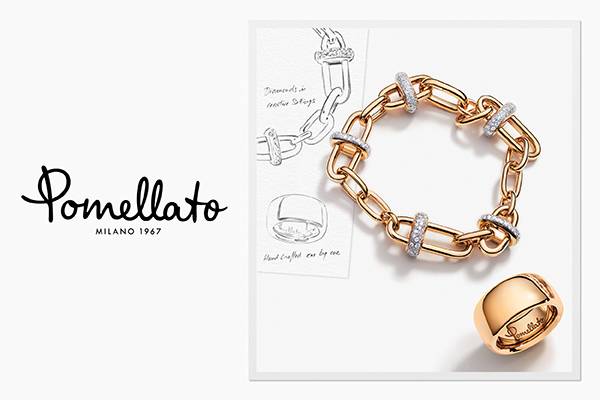
Handcrafted in Milan. Inspired by Pomellato's rich heritage, the Iconica Collection is a masterclass in quiet precision. The Iconica Bracelet features alternating gold and diamond links sculpted to a seamless silhouette. The matching ring shares the same commitment to fluidity and comfort. The result is timeless Milanese elegance with a contemporary edge. |
|
|
How about you, Tom?
Tom Hill:
Unlike Michael, I grew up in New York City, and from my parents’ apartment, I saw the Guggenheim Museum being built in the ’50s. I went to school and saw the Breuer being built on Madison Avenue. And my mother was an artist, so from an early age, she would take me to museums.
I had an opportunity to see what was predominantly the Western tradition of art. And I said, This is extraordinary. My father wasn’t a collector, but he was very involved. He was a partner at William A.M.
Burden—Bill Burden was the president, and when you walked in his apartment, you saw a Francis Bacon pope picture juxtaposed with a Brâncuși bird in space. It took me about 30 years to get to a point where I felt I could start thinking about those artists that we’re going to collect in depth. We collect in four areas: Old Masters paintings, Renaissance and Baroque bronzes, and Modern Masters. All artists that are dead, and living artists we think
are the next game-changers.
And you, Dasha?
Dasha Zhukova: I grew up in Los Angeles, and to my mother’s dismay, I wasn’t interested in anything art-related. But when I graduated college, I moved to London, and somehow I fell in with a group of friends that were artists and creatives, and I found myself going to galleries and museums very often—and I fell in love with art, and I really felt the transformative nature that art can have. I was also spending a
lot of time in Moscow, and I met so many young, smart Russian people that were aware of everything happening in the world, every exhibition in Hong Kong and London. But there wasn’t an outlet or platform for the types of ideas and type of world that they belonged in. So that led me to create the Garage Museum.
That experience informed what I was doing, which is at the intersection of art and real estate. I live with art; I love supporting artists of my generation. Every once in a while,
my curiosity is sparked by some historical period, so right now I’m currently on a deep dive into Oceanic art. But it all manifests itself in my life in many different ways.
And Glenn?
Glenn Fuhrman: I went to Wharton undergrad to study finance, and ended up stumbling into an art history class my first semester, and that really just transformed my life. So I ended up graduating with a master’s in finance and a joint degree in
art history. I went to work at Goldman Sachs and was surrounded by great collectors and great art. I just fell into going to galleries. The idea of being able to meet the artists, go to the studios, and see the work fresh on the wall after it’s been painted was really enticing to me, and that became the passion for me in my life—collecting the art of my lifetime and getting to spend time with [the artists]. |
For each of you, collecting is more than just a private passion. It’s become
part of your broader persona, and you’re building businesses that connect with it. Are people coming to you these days from the industries you’re from, and looking for guidance, or just interested in hearing about your experience?
Ovitz: Today, a ton of executives—men, women, agents, studio executives—are all collecting art. It’s a very healthy scene in Los Angeles, but it didn’t start that way for the first 20 years that I was collecting. In the technology world, I
cannot express how many major tech executives have been to our home in Beverly Hills for dinner, how many thousands of dollars of art books I have FedExed up to them in Palo Alto—and crickets after that. They just don’t seem particularly interested. I’ve got two young investors who, out of the blue, just came to the house and decided to do it, and they’ve done a phenomenal job of building a collection in the last 36 months. They’re the first two. The others who were exposed never followed
up.
Hill: I have a slightly different perspective. For the last seven years, I’ve worked for a data science firm. We’ve got over 2,000 employees—1,000 of them are data scientists, 250 Ph.D.s. The median age is 32, and I would say a reasonably high number of them are somewhere on the spectrum. They process information in a different way, and they tend to actually use data and algorithms to pose questions they think they have an answer to. In art, that requires looking, reading,
and talking to people. I don’t think a lot of these extremely successful technology people have quite gotten the data they need to process. All of these people are looking for perfection, and they’ll get there. It’s going to take a while for this process to find its way into the vocabulary and into the algorithms of these tech people. But it’s coming.
Zhukova: I’m involved with Artsy, and what the data will tell you is that there are a lot of young people interested in art. The
art market obviously contracted in the last year, but we’re seeing a rise in the number of transactions. There are very, very young, successful entrepreneurs. I’m assuming these people have the means to buy art. I would disagree that they’re not interested, but I do think galleries are kind of designed to intimidate people. So the fact you can now go online to other platforms is inviting. There’s not enough transparency in the art world for a lot of these young people, and that’s a theme that’s
being discussed all the time. I would say people are interested; I’m more optimistic.
We haven’t really found a good way, Artsy being an exception, to bring learning about art onto phones.
Fuhrman: One thing that the young people are increasingly focused on is I.R.L.—in real life. We all want to have more experiences really engaging with art and artists. For artists making actual works, that’s going to be more and more important going forward, because
everything in our world is becoming A.I.
Ovitz: You’ve got young people trying to learn about art through their computer, which, frankly, is one of the problems we’ve had in the entertainment business, [where] writers had practical, real-life experience. Writers today don’t go anywhere except their computer. I didn’t have a computer when I started. I have 3,000 monographs in my library, which until the computer came, was my lifeline if I got a call from a dealer about a piece of
art. |
|
|
Hill: I’d like to go back to a point Dasha made about the lack of
transparency. The whole structure of the art market is geared, by and large, starting with the dealer networks, to not share information, and to keep information to themselves, because they benefit from it being an inside market. What a lot of leading technologists want is data and access—and they also want to know whether an artist is going to be a game-changer. A lot of these data-driven, systematic people are saying, Well, how do I know that [a piece] is really great, or that an artist
has staying power?
Everyone talks about the art market being in a slump, but that doesn’t reflect those serious buyers. A lot of the major wealth in the world now is in places where, 30-40 years ago, they weren’t buying art. Look at the Middle East; the Guggenheim is about to open next year in the Emirates, and it’s going to be a massive, massive structure that’s going to have 3 million people come. We’ve been buying art for the last 15 years, basically, to put in that wonderful
space. So there are buyers out there at different price points. |
Dasha, what’s your feel for what people want to see, or what you think they
need to see?
Zhukova: In all the buildings that I build—which are all multifamily rental buildings—I want to create a shared experience, because that’s how you build community. We all know the world is becoming more lonely, and the technology is really not helping. Having a shared experience of art could be anything. Everyone has their own taste, but the ability to bring people together to see something new, and see what people
are making anywhere, is incredibly powerful.
The ultimate luxury of being an art collector is being able to experience the art you own in your day-to-day life. But each of you participate with museums and make loans. How do you approach that as a collector?
Ovitz: As far as loans, I have a standing policy to loan anything to a legitimate venue that asks for it. We’ll loan to European museums, American museums. One of the problems we’re having at MoMA,
where I’ve been on the board for 35 years, is the cost of doing a show, and protecting the people who loan the work has gotten to a point of insanity.
Fuhrman: Insurance is the biggest issue. And a lot of governmental insurance support is being taken away, or is not going to be available, even to public institutions, which is going to be a very big problem. In Europe, all these shows have this government indemnity, which allows for a Caravaggio show to happen in
Rome. We’re not going to be able to have something like that, and it’s going to affect these big monster shows that everyone loves to see.
As we’re increasingly seeing museums becoming part of the political conversation in a negative way, are there other ways for you to support the institutions you participate in?
Fuhrman: It’s fair to say for all of us that having a strong museum culture is critical, absolutely critical. We all have to do everything we
can to keep our museums strong and thriving, in big cities and in the smaller cities as well. I’m very passionate about the power of museums and how important they are. And it’s very difficult in a political environment where a lot of funds are being taken away from museums.
There are obviously dictatorial effects of what can be shown in museums, which is very off-putting. So we have to figure out a way to make sure that our museums survive. We probably have too many museums in the world;
there’s been a little bit of a rush to start new museums. But for the traditional strong museums, they’ve never played a more important role. |
That’s it for today. I’ll be back with more from London on Friday.
’Til
then,
M |
|
|
The ultimate fashion industry bible, offering incisive reportage on all aspects of the business and its biggest
players. Anchored by preeminent fashion journalist Lauren Sherman, Line Sheet also features veteran reporter Rachel Strugatz, who delivers unparalleled intel on what’s happening in the beauty industry, and Sarah Shapiro, a longtime retail strategist who writes about e-commerce, brick-and-mortar, D.T.C., and more. |
|
|
Finally, a media podcast about what’s actually happening in the media—not the oversanitized,
legal-and-standards-approved version you read online. Join Dylan Byers, Puck’s veteran media reporter, as he sits down with TV personalities, moguls, pundits, and industry executives for raw, honest, sometimes salacious conversations about the business of media and its biggest egos. New episodes publish every Tuesday and Friday. |
|
|
Need help? Review our FAQ page or contact us for assistance. For brand partnerships, email ads@puck.news. You received this email because you signed up to receive emails from Puck, or as part of your Puck account associated with {{customer.email}}. To stop receiving this newsletter and/or manage all your email preferences, click here. |
Puck is published by Heat Media LLC. 107 Greenwich St, New York, NY 10006
|
|
|
|