• Washington
  • Wall Street
  • A.I.
  • Hollywood
  • Media
  • Fashion
  • Sports
  • Art
  • Join Puck Newsletters What is puck? Authors Podcasts Gift Puck Careers Events
  • Join Puck

    Directly Supporting Authors

    A new economic model in which writers are also partners in the business.

    Personalized Subscriptions

    Customize your settings to receive the newsletters you want from the authors you follow.

    Stay in the Know

    Connect directly with Puck talent through email and exclusive events.

  • What is puck? Newsletters Authors Podcasts Events Gift Puck Careers
Happy Wednesday, welcome back to Dry Powder. For weeks, I hoped Lazard’s 8K filing would illuminate its conspicuously low-key transfer of power from C.E.O. Ken Jacobs to Peter Orszag. Having now reviewed the document, and after chatting with Orszag himself, I understand why the bank proceeded in the way that it did—but I still don’t envy Orszag’s position.
 ‌ ‌ ‌ ‌ ‌ ‌ ‌ ‌ ‌ ‌ ‌ ‌ ‌ ‌ ‌ ‌ ‌ ‌ ‌  ‌ ‌ ‌ ‌ ‌ ‌ ‌ ‌ ‌ ‌ ‌ ‌ ‌ ‌ ‌ ‌ ‌ ‌ ‌  ‌ ‌ ‌ ‌ ‌ ‌ ‌ ‌ ‌ ‌ ‌ ‌ ‌ ‌ ‌ ‌ ‌ ‌ ‌  ‌ ‌ ‌ ‌ ‌ ‌ ‌ ‌ ‌ ‌ ‌ ‌ ‌ ‌ ‌ ‌ ‌ ‌ ‌  ‌ ‌ ‌ ‌ ‌ ‌ ‌ ‌ ‌ ‌ ‌ ‌ ‌ ‌ ‌ ‌ ‌ ‌ ‌  ‌ ‌ ‌ ‌ ‌ ‌ ‌ ‌ ‌ ‌ ‌ ‌ ‌ ‌ ‌ ‌ ‌ ‌ ‌  ‌ ‌ ‌ ‌ ‌ ‌ ‌ ‌ ‌ ‌ ‌ ‌ ‌ ‌ ‌ ‌ ‌ ‌ ‌  ‌ ‌ ‌ ‌ ‌ ‌ ‌ ‌ ‌ ‌ ‌ ‌ ‌ ‌ ‌ ‌ ‌ ‌ ‌  ‌ ‌ ‌ ‌ ‌ ‌ ‌ ‌ ‌ ‌ ‌ ‌ ‌ ‌ ‌ ‌ ‌ ‌ ‌  ‌ ‌ ‌ ‌ ‌ ‌ ‌ ‌ ‌ ‌ ‌ ‌ ‌ ‌ ‌ ‌ ‌ ‌ ‌ 
Dry Powder

Happy Wednesday, welcome back to Dry Powder.

For weeks, I hoped Lazard’s 8K filing would illuminate its conspicuously low-key transfer of power from C.E.O. Ken Jacobs to Peter Orszag. Having now reviewed the document, and after chatting with Orszag himself, I understand why the bank proceeded in the way that it did—but I still don’t envy Orszag’s position.

Orszag in the Water
Orszag in the Water
Is the new C.E.O. of Lazard actually in charge? Adventures in creative 8-K writing and organizational management at my favorite Wall Street bank.
WILLIAM D. COHAN WILLIAM D. COHAN
Ever since the Lazard board of directors announced some two weeks ago that, after 14 years, Peter Orszag, the well-liked, Obama-era budget chief, would succeed Ken Jacobs as C.E.O. I’ve been waiting to read the bank’s 8K, as one does. After all, this disclosure of a material, unscheduled switcheroo to the S.E.C. is often the best lens through which to gauge the board-level machinations at a public company, offering far more meaningful revelations than the pablum that its phalanx of “comms people” release or leak to the Journal or to the FT. And, in that regard, the new Lazard filing doesn’t disappoint. In fact, it contained a series of surprises about Orszag’s ascension, including a more complex organizational structure, and an apparent series of compromises and half-moves.

Surprise one: The leadership change is not happening until October 1. And surprise two: Jacobs isn’t going anywhere. Not only will he become the executive chairman of the Lazard board of directors, he will also be sticking around Lazard and returning to the role of M&A dealmaker, with “a primary focus on clients and business development,” according to the 8K. Previously, Jacobs was the chairman of the Lazard board; now he becomes “executive chairman” of the board, a distinction, perhaps, but unlikely one of much significance.

Surprise number three: Jacobs will not be reporting to Orszag. Instead, he will continue to report to the Lazard board, just as he did when he was C.E.O. But he will also be chairman of the same board to which he reports. And Orszag will also report to the board of directors and not to Jacobs, despite the fact that Jacobs is the executive chairman of that board. So now Jacobs is in quite an unusual position: He’ll be akin to a newly hired star banker, focusing entirely on clients, while also being the executive chairman of the board, to which the new C.E.O. also reports while not reporting to the new C.E.O. His compensation, I gather, will be set by the board in consultation with Orszag. A real head-scratcher and governance conundrum. And so very Lazard.

So, has anything really changed at the top of Lazard? “When you see this happen,” explained Charles Elson, the founding director of the Weinberg Center for Corporate Governance at the University of Delaware, “there’s sort of two questions you have: Number one, is this really just a title swap? Or is it a real swap in power? Because an executive chair is just that, an executive chair. The chief executive reports to you effectively. You chair the board, but you’re in an executive position. The first question is, did Jacobs really leave the top job? Or number two: Was he reluctant to give up his power and responsibilities? In fact, you create a sort of a dual chief-executive-ship in that regard. And neither really works. You either run the company or you don’t. And when it’s time to go, it’s time to go.”

Frankly, I am pretty shocked that the Lazard board allowed this to happen or that it ratified it. This is the kind of cruel and unusual punishment that not even the Roys would conceive of, let alone the board of one of the leading investment banks on Wall Street. It’s just extremely unfair to Orszag. However, after a conversation with Orszag on Tuesday, he seems to be confident that the unusual arrangement with Jacobs will work out just fine. He told me, in fact, that Jacobs has been saying both publicly and privately how much he was looking forward to returning to spending 100 percent of his time doing deals for Lazard clients. “That’s the point,” Orszag said.

Is Past Prologue?
There is precedent, of course, for a delayed transition to a new C.E.O. When Jack Welch announced around Thanksgiving 2000 that Jeff Immelt would succeed him as GE’s chairman and C.E.O., the original idea was that Welch would step down in the spring of 2001 and be gone from the company. But at around the same time that GE announced that Immelt would succeed Welch, GE and Welch decided to make an unsolicited, but ultimately successful, $45 billion bid for rival Honeywell and that Jack would stay on as C.E.O. for another year to see the Honeywell deal through to completion. (That request/demand was made by the Honeywell board of directors since Honeywell was taking GE stock as compensation and Jack was a proven C.E.O. legend and the Honeywell board wanted to preserve the value of its GE stock for Honeywell shareholders.)

In the end, of course, Welch walked from the Honeywell deal after the E.U. demanded that GE sell more Honeywell businesses than Welch thought reasonable in order for the regulators to approve the deal. He also believed he had found problems at Honeywell, as GE dug deeper into the company, which scared him off. Still, many think blowing up the Honeywell deal was one of Jack’s biggest mistakes as C.E.O. He left GE on Friday, September 7, 2001. Immelt’s first day as GE’s chairman and C.E.O. was September 10, 2001. The rest is history.

But Jack was so focused on making sure that Jeff had no interference from himself or anyone else (besides his board) that he insisted that the other two contenders for the job—Robert Nardelli, who was head of GE’s power division, and Jim McNerney, who was head of GE’s jet-engine business—leave the company. Jack didn’t want the losers, sore or otherwise, hanging around and impeding Immelt’s freedom or his decision-making. Yes, GE lost the skills and talents of both Nardelli and McNerney, who were quickly scooped up by Home Depot and 3M, respectively. But for Jack, the principle of being able to act as C.E.O., free of encumbrances and second-guessing, was more important than the risk of losing the collective wisdom of the other two contestants.

When Lloyd Blankfein announced his departure from Goldman Sachs in July 2018, he said he would remain as chairman of the board until the end of December. Chairman of the board, not executive chairman—meaning that Blankfein would attend a board meeting or two before getting out of David Solomon’s hair. Even Bill Harrison, Jamie Dimon’s predecessor as the C.E.O. of JPMorgan Chase, realized that his best move was to get out of Dimon’s way as quickly as possible. After JPMorgan Chase completed the purchase of Bank One, where Dimon was C.E.O., in 2005, Jamie was named president and chief operating officer of the combined bank. In October 2005, the bank announced that Dimon would succeed Harrison on January 1, 2006, six months earlier than originally planned. A year later, he took over from Harrison as chairman of the JPMorgan Chase board. Importantly, Harrison was not still an executive at JPMorgan Chase once he relinquished the C.E.O. role at the start of 2006.

James Gorman, the chairman and C.E.O. of Morgan Stanley, recently said he would give up the top job at the firm within a year and would then, like Jacobs, become “executive chairman” of the Morgan Stanley board. But he won’t be doing deals, like Jacobs. Jacobs will still be lurking around the hallways of 30 Rockefeller Plaza for what will likely be a long while. I don’t envy Orszag that situation.

Number 1,027
Jacobs appears, at least superficially, to have made some concessions with his new role. He has agreed to take a 17 percent cut in base salary (not that that is a particularly relevant part of his total compensation) from $900,000 to $750,000. Orszag will get a corresponding increase in his salary to $900,000, from $750,000 (again, on Wall Street, executive and banker compensation comes largely from stock awards, bonuses and other incentive rewards). As best as can be figured out from Lazard’s opaque proxy statement, in 2022, in addition to his salary, Jacobs received a stock award of $8.35 million—although there were also other awards that vested, in the millions of dollars—and Orszag, received both a “special cash award” of $1.25 million and a stock award of another $7.75 million.

But, as I reported on April 30, if you read the footnotes in the Lazard proxy carefully, you can eventually discern that Jacobs also received $23.4 million in the value of what Lazard calls “performance-based restricted participation units,” or PRPUs. As best as I could figure, Jacobs potential payout on the deferred award, which won’t happen until February 2025, depends on the firm’s performance during 2022, 2023 and 2024 in aggregate, based on a number of tough to discern factors, plus some multiplier. As I said, opaque. But if Jacobs gets the maximum share grant of 660,338 shares, that would be worth $23.4 million to him, based on today’s stock price, putting him, compensation-wise anyway, in a similar league to the Wall Street big boys, like Dimon, Gorman and Solomon.

That windfall horizon also means that Jacobs will be sticking around for the foreseeable future, which may be just how he and the Lazard board want it. Jacobs was once upon a time a pretty decent M&A banker, especially when he was executing deals for Felix Rohatyn, Lazard’s premier rainmaker back in the day. But Felix is no longer around and Wall Street deal dynamics have changed considerably from the time when Lazard was a preeminent M&A advisor. And Elson, for one anyway, said he worries that Jacobs will still be running Lazard. “Executive Chair, I’ve always thought is really a phony title,” he said. “Because if you are Executive Chair, you are still effectively running the company. And whether you call yourself C.E.O. or Executive Chair, you’re still running things.”

But Orszag told me he isn’t worried, although he appreciated my concern for him. He said he had no worries about his ability to do his new job, come October 1, at least any posed to him by Jacobs. “There’s a lot to do, as you know,” Orszag said. “And so I have humility about what needs to happen. But whether it works or not, it’s going to depend on the decisions we make, not Ken. On my list of worries, Ken interference is number 1,027.”

But Elson recalled for me how, in 2004, the billionaire entrepreneur Michael Dell gave up his title as C.E.O. of Dell Computer but remained chairman of the board of directors. It was really just a change in title, Elson said. “He’s still in charge,” he said. “And I think that’s what you have to think about.” Dell, of course, returned as C.E.O. of the company in 2007, took it private in 2013 in a $25 billion buyout along with Silver Lake partners, bought EMC for some $67 billion in 2016, and went public again, as Dell Technologies, that same year.

Dell is now both C.E.O. and chairman of the Dell Technologies board. According to the 2023 Dell proxy statement, Dell and his wife and various related trusts appear to own nearly 53 percent of Dell, while Silver Lake Partners, and its affiliates, own 13 percent of the company. Dell’s market value is now around $35 billion. According to Bloomberg, Michael Dell is worth around $55 billion, making him one of the richest people in the world. So, ya know, as Bob Chapek and others might say, beware of former C.E.O.s who hang around the hoop.

FOUR STORIES WE’RE TALKING ABOUT
Yalta 2023
Yalta 2023
Imagining the post-invasion contours of Russia and Ukraine.
JULIA IOFFE
Netflix’s Platform Quest
A conversation examining the streamers’ hunger for international hits.
JULIA ALEXANDER
Fashion’s Sordid Economics
A candid conversation with the designer of A.O.C.’s “Eat The Rich” dress.
LAUREN SHERMAN
A Yellowstone Mystery
Notes on an $80M lawsuit surrounding TV’s No.1 series.
MATTHEW BELLONI & ERIQ GARDNER
Puck
Facebook Twitter Instagram LinkedIn

Need help? Review our FAQs
page
or contact
us
for assistance. For brand partnerships, email ads@puck.news.

Puck is published by Heat Media LLC. 227 W 17th St New York, NY 10011.

SEE THE ARCHIVES

SHARE
Try Puck for free

Sign up today to join the inside conversation at the nexus of Wall Street, Washington, A.I., Hollywood, and more.

Already a member? Log In


  • Daily articles and breaking news
  • Personal emails directly from our authors
  • Gift subscriber-only stories to friends & family
  • Unlimited access to archives

  • Exclusive bonus days of select newsletters
  • Exclusive access to Puck merch
  • Early bird access to new editorial and product features
  • Invitations to private conference calls with Puck authors

Exclusive to Inner Circle only


Latest Articles from Wall Street

Geoffroy van Raemdonck
William D. Cohan • May 31, 2023
The Saks Financial Colonoscopy
Amid a torrent of bankruptcy filings, a blunt declaration by Saks Global’s newly appointed chief restructuring officer lays out precisely what went wrong and when, and who got screwed hardest—plus which risk-hungry investors are likely to call the shots moving forward. As it turns out, the company’s capital structure became “unsustainable” almost immediately after its $2.7 billion acquisition of Neiman Marcus Group in December 2024.
David Ellison
William D. Cohan • May 31, 2023
The Ellison Way of Parenting
David Ellison’s latest schemes to wrest Warner Bros. from Netflix have proved insufficient after his previous negotiating tactics ran up the price. Meanwhile, he’s losing the respect of the WBD guys across the table. But will his dad come to the rescue with another, say, $10 billion to bail him out?
Patrick Drahi
William D. Cohan • May 31, 2023
A History of Creditor-on-Creditor Violence
Wall Street invented the coercive liability management exercise, which allows companies to play their creditors against one another as they extract beneficial terms for themselves—a now-routinized tradition referred to as “creditor-on-creditor violence.” But now Apollo, Oaktree, BlackRock, and JPMorgan Chase are teaming up to put an end to this mess.


Larry Ellison, David Ellison
William D. Cohan • May 31, 2023
The Zaz–Ellison Dagger Contest
Warner Bros. Discovery’s most recent S.E.C. filing reveals the latest battle lines between the company and its hostile suitor. In particular, the document evinces a deep distrust of Paramount Skydance’s proposed deal financing, recasting the $108 billion all-cash offer as an $87 billion L.B.O. that could fall apart before closing.
David Zaslav
William D. Cohan • May 31, 2023
What Is Zaz TV Really Worth?
The battle for Warner Bros. Discovery is increasingly coming down to how Netflix and Paramount Skydance value the declining TV assets (and CNN) that David Zaslav is determined to separate from the Warners mothership. Versant, which just started trading on Nasdaq this week, may provide the answer.
greg abel
William D. Cohan • May 31, 2023
Make Berkshire Hathaway Great Again?
Greg Abel, the handpicked successor to Warren Buffett, faces one of the most exalted and daunting jobs in finance: determining what to do with the staggering $358 billion bequeathed to him by the most legendary investor of his generation. Herewith, three proposals for what Abel should buy with all that cash.


David Ellison, Larry Ellison
William D. Cohan • May 31, 2023
Zaz Is From Mars, the Ellisons Are From Venus
Murmurs from sources close to the Warner Bros. Discovery deal illuminate the latest machinations surrounding the Paramount-Netflix showdown—and where this thing is headed.


Get access to this story

Enter your email for a free preview of Puck’s full offering, including exclusive articles, private emails from authors, and more.

Verify your email and sign in by clicking the link we just sent.

Already a member? Log In


Start 14 Day Free Trial for Unlimited Access Instead →


Latest Articles from Wall Street

Larry Ellison
William D. Cohan • May 31, 2023
“Larry Didn’t Show Up, and David Got Ahead of His Skis”
Everything you wanted to know about the Warner Bros. Discovery board’s doubts with the Ellisons’ bid (but were afraid to ask) is revealed in its 14D-9 filing—a mother lode of alleged Paramount missteps, from squabbles over consent provisions and breakup fee reimbursements to junior lien debt and the financial capacity of the world’s fifth-richest man.
larry ellison david ellison
William D. Cohan • May 31, 2023
Ellison Irrevocable Trust Issues
Despite their numerous bids for all of WBD, a rift has opened between the principals at Paramount Skydance and the board and advisors of their target company—at least for now. Can money heal all wounds?
larry ellison david ellison
William D. Cohan • May 31, 2023
The Ellisons at the Gates
Paramount has raised the stakes in its hostile bid for Warner Bros. Discovery, and may yet go higher. Now Netflix must decide how much it wants to venture into junk credit-rating territory, or play games with its stock, to secure the prize.


Larry Ellison, David Ellison
William D. Cohan • May 31, 2023
Netflix’s $83B Math & The Ellison Hostile Meter
A talmudic reading of the mishegas following the $83 billion Netflix-WBD deal: Zaz’s personal economics; the likelihood that this turns hostile; the unusual consortium of banks underwriting the deal; the value of the Gunnar stub; regulatory open questions; the $5.8 billion breakup fee; and more.
Leon Black
William D. Cohan • May 31, 2023
The Epstein Monologues
The recently released, one-sided correspondence between Jeffrey Epstein and Leon Black illustrates a discourse between a hustler and a billionaire with too much money and too little time on his hands. So why couldn’t Black get rid of him sooner?
Mike Mayo
William D. Cohan • May 31, 2023
Wall Street Enters the “Cockroach” Wars
The multitrillion-dollar growth of private credit is fueling an acrimonious debate on Wall Street over whether this surging shadow market is the future of finance or the seed corn of the next crisis. Is Rowan right? Or Dimon? Or Gundlach? As Mike Mayo put it, someone is wrong.


david zaslav
William D. Cohan • May 31, 2023
Zaz the World Turns
News, notes, and palace intrigues from all sides of what might become the largest M&A deal of the year: the three-way tussle for David Zaslav’s Warner Bros. Discovery.
Get access to this story

Enter your email to get access to one article and free previews of our private emails from Puck authors and editors.

OR

Already a Member? Sign in


Latest Articles from Wall Street

wall street 1929
William D. Cohan • May 31, 2023
The Spirit of ’29
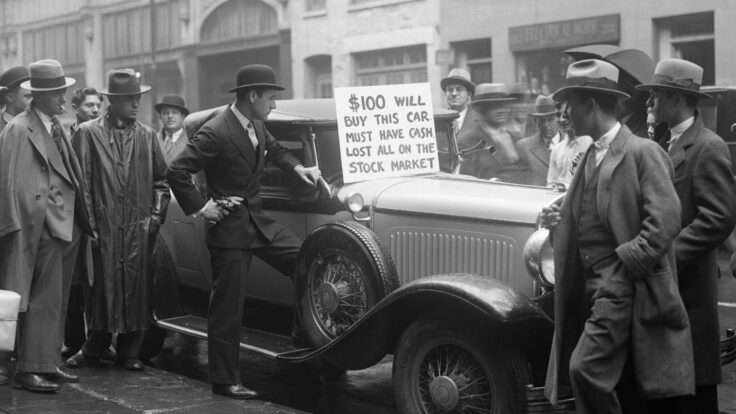
Financial history doesn’t repeat itself, but it does often rhyme. Amid a speculative frenzy, deregulation, trade wars, and a handful of megacaps propping up the markets, some of Wall Street’s brightest minds wonder whether 2026 might resemble 1929.
Marc Rowan
William D. Cohan • May 31, 2023
Street Credit
A recent string of bankruptcies and defaults suggests some challenges in the seemingly indomitable private credit market. And yet, according to some O.G.s, things have never been better. Apollo’s Marc Rowan lays bare the risks and rewards.
David Ellison
William D. Cohan • May 31, 2023
Ellisonology 101
In his first earnings call as C.E.O. of Paramount Skydance, David Ellison offered a masterclass in corporate optimism, promising “synergies” and artfully dodging questions about a possible Warner Bros. Discovery takeover. Alas, the time to act is here.


Michael Bloomberg
William D. Cohan • May 31, 2023
What Does Bloomberg Want for Bloomberg L.P.?
A modest proposal for how New York’s $100 billion man could bequeath his namesake, and its monumental profits in perpetuity.
Jim Chanos
William D. Cohan • May 31, 2023
The Mag Seven Itch
The market is notching record highs for the so-called Magnificent Seven—or should that be Mag 10?—but a subterranean counternarrative is forming as once-secure food and consumer staples crater, and cracks emerge in the $3 trillion private-credit boom.
Brian Roberts
William D. Cohan • May 31, 2023
The Brian Roberts–WBD Bull Case
A new analyst note highlights a heightened sense around Wall Street that Comcast co-C.E.O. Brian Roberts doesn’t merely want WBD, but also truly needs the company—and has a real shot at the asset.


Jamie Dimon
William D. Cohan • May 31, 2023
Jamie’s Castle in the Sky
Dimon’s $3 billion (or maybe as much as $5 billion, really) new headquarters is the physical embodiment of his fortress balance sheet and a metaphor for our fractional banking system. But the seeming permanence of its bronze facade shouldn’t fool old Wall Street hands, who know nothing is forever.


  • Terms
  • Privacy
  • Contact
  • FAQ
  • Careers
© 2026 Heat Media All rights reserved.
Create an account

Already a member? Log In

CREATE AN ACCOUNT with Google
OR YOUR EMAIL

OR

Use Email & Password Instead

USE EMAIL & PASSWORD
Password strength:

OR

Use Another Sign-Up Method

Become a member

All of the insider knowledge from our top tier authors, in your inbox.

Create an account

Already a member? Log In

Verify your email!

You should receive a link to log in at .

I DID NOT RECEIVE A LINK

Didn't get an email? Check your spam folder and confirm the spelling of your email, and try again. If you continue to have trouble, reach out to fritz@puck.news.

CREATE AN ACCOUNT with Google
CREATE AN ACCOUNT with Apple
OR USE EMAIL & PASSWORD
Password strength:

OR
Log In

Not a member yet? Sign up today

Log in with Google
Log in with Google
Log in with Apple
Log in with Apple
OR USE EMAIL & PASSWORD
Don't have a password or need to reset it?

OR
Verify Account

Verify your email!

You should receive a link to log in at .

I DID NOT RECEIVE A LINK

Didn't get an email? Check your spam folder and confirm the spelling of your email, and try again. If you continue to have trouble, reach out to fritz@puck.news.

YOUR EMAIL

Use a different sign in option instead

Member Exclusive

Get access to this story

Create a free account to preview Puck’s full offering, including exclusive articles, private emails from authors, and more.

Already a member? Sign in

Free article unlocked!

You are logged into a free account as unknown@example.com

ENJOY 1 FREE ARTICLE EACH MONTH

Subscribe today to join the inside conversation at the nexus of Wall Street, Washington, A.I., Hollywood, and more.

START 14-DAY FREE TRIAL

  • Daily articles and breaking news
  • Personal emails directly from our authors
  • Gift subscriber-only stories to friends & family
  • Unlimited access to archives
  • Bookmark articles to create a Reading List
  • Quarterly calls with industry experts from the power corners we cover