{{ 'now' | timezone: 'America/New_York' | date: '%b %d, %Y' }} |
|
|
Welcome to The Hidden Layer. I’m Ian Krietzberg.
In today’s issue, my deep
dive into what’s really going on with all those subpoenas OpenAI has been firing at smaller companies—described by some as an intimidation tactic—as the Altman–Musk legal battle continues. Plus, news and notes on Gavin’s new tech legislation and OpenAI’s latest hallucinatory megadeal. Yes, there’s another one, this time with Broadcom. No, it’s still not clear where all the money is going to come from.
Discussed in this issue:
OpenAI, Broadcom, Sam Altman, Charlie Kawwas, Greg Brockman, Gil Luria, Gavin Newsom, Jim Lee, Jason Kwon, Encode, The Midas Project, Elon Musk, Sneha Revanur, and many more…
Let’s get into it… |
- OpenAI’s
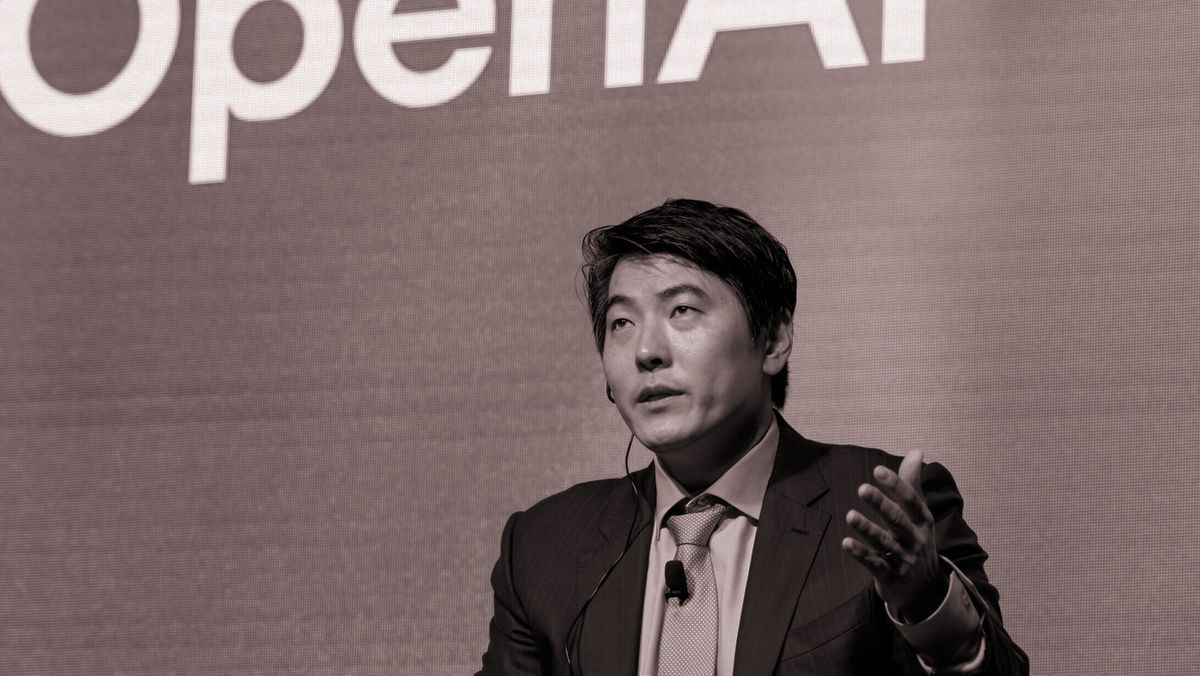
big new deal: After a quiet, months-long partnership, OpenAI and the semiconductor manufacturer Broadcom went public yesterday with plans to deploy 10 gigawatts of custom-built, OpenAI-designed A.I. chips. In a statement, OpenAI said the deal would help them meet “surging” demand, and in a joint
podcast published alongside the announcement, Sam Altman called the current A.I. infrastructure buildout the “biggest joint industrial project in human history.” The companies didn’t share the financial terms of the partnership.
After the announcement, Broadcom shares surged around 10 percent, which marks the second time in recent weeks that OpenAI has boosted
the company’s stock. Last month, it spiked around 10 percent post-earnings when analysts suggested that a mystery Broadcom customer that had made a $10 billion commitment was probably OpenAI. Charlie Kawwas, president of Broadcom’s semiconductor solutions group, poured cold water on that theory yesterday: “I would love to take a $10 billion
[purchase order] from my good friend Greg [Brockman, OpenAI’s president]. He has not given me that P.O. yet.”
Of course, this is merely the latest in a series of blockbuster deals between OpenAI and various publicly traded members of the cloud and semiconductor industries, including Oracle, AMD, and Nvidia. All told, OpenAI’s recent deals constitute more than 30 gigawatts of compute commitments over a number of years, although the company currently
operates with a total capacity of just 2 gigawatts. It’s unclear where the money to support this infrastructure buildout will come from, but Oracle is apparently convinced that OpenAI will meet its $60 billion annual commitments.
I asked Gil Luria, D.A. Davidson’s head of
technology research, about the flurry of deals. He offered a blunt assessment: “OpenAI has made commitments well beyond its means and will unlikely be able to live up to all those obligations, even if it is wildly successful.” - Newsom’s new laws: On Monday, California Gov. Gavin Newsom signed a
slew of bills into law—all aimed at protecting kids online—which included new safeguards for A.I. chatbots. Going forward, chatbot operators in the state will be required to share their protocols for identifying and addressing expressions of self-harm and suicidal ideation; provide minors with
break reminders; offer clear disclosures that minors are interacting with artificial bots; and will be prohibited from representing their chatbots as healthcare professionals. (Therapist chatbots are popular on apps like Character.AI.)
Other legislation is designed to prevent operators from “escaping liability by asserting that the
technology acted autonomously.” A spokesperson for Character.AI told me that the company “welcomes working with regulators and lawmakers as they develop regulations and legislation for this emerging space, and will comply with laws, including SB 243.” As I’ve reported, Character remains embroiled in multiple lawsuits connected to tragic cases of self-harm and
suicide among minors who interacted with their chatbots.
|
“A.I. doesn’t dream. It doesn’t feel. It doesn’t make art. It aggregates it. Our job as creators, as
storytellers, and as publishers is to make people feel something real. That’s why we create, and that’s why we’re still here.”
—Jim Lee, the legendary artist and DC Comics co-publisher, explaining why his company won’t support A.I.-generated storytelling or artwork.
And now for the main event… |
|
|
In the wake of OpenAI’s countersuit against Elon Musk, Sam Altman’s company has sent a
flurry of subpoenas to nonprofits asking for information about their funding sources, among other things. Is this a pro forma byproduct of their legal battle with Musk—or an intimidation tactic? |
|
|
Over the weekend, Nathan Calvin, the general counsel for A.I. safety nonprofit Encode,
accused OpenAI of engaging in legal intimidation tactics in a viral post on X. He detailed a nerve-racking experience, in early August, during which OpenAI served him two subpoenas: the first addressed to Encode, and the second addressed to him directly.
Jason Kwon, OpenAI’s chief strategy officer,
downplayed the subpoenas as a routine fact-finding exercise amid the company’s ongoing battle with Elon Musk. After all, more than a year ago, Musk embarked on a legal campaign to prove that OpenAI had betrayed its founding mission by attempting to convert into a for-profit organization. (Musk was a founding member of OpenAI.) The subpoena, Kwon noted, merely sought
to ascertain whether there was a financial connection between Musk and Encode, given that the nonprofit group had filed an amicus brief supporting some of Musk’s arguments. “For a safety policy organization to side with Elon (?), that raises legitimate questions about what is going on,” Kwon
wrote on X.
The legal notice to Encode was just the latest in a flurry of subpoenas that OpenAI has issued to a series of nonprofits in recent months, after the company countersued Musk in April alleging corporate harassment. The subpoenaed entities include The Midas Project, Legal Advocates for Safe Science and Technology (LASST), and the Coalition for AI Nonprofit Integrity (CANI). In some ways, this activity is hardly a surprise: OpenAI’s last two funding rounds are at least partially contingent on the company successfully completing its restructuring into a public benefit corporation. Hundreds of billions of dollars are at stake—literally.
Calvin viewed the situation much differently, accusing OpenAI of having “used
the pretext of their lawsuit against Elon Musk to intimidate their critics and imply that Elon is behind all of them.” Whatever Altman’s intentions, there’s no question that the subpoenas have been far-reaching. The legal documents that were serviced to Encode requested information that went far beyond the organization’s dealings with Musk. It asked for “all documents and communications concerning the governance or organizational structure of OpenAI,” and all documents “concerning SB 53 or its
potential impact on OpenAI.” (SB 53, California’s recently enacted A.I.-focused legislation, was co-sponsored by Encode.)
On Sunday, I connected with Calvin, who told me that Encode submitted objections and responses to the subpoena, contending that the information OpenAI requested was either irrelevant to its case or didn’t exist. He said he never
heard back. OpenAI “could file a motion to compel, but they never did that, and they never responded at all,” he said. On Monday, Encode’s founder and president, Sneha Revanur, said that “for us, this was taxing.” She added that “the legal fees could’ve been crushing.” Encode’s team consists of just three people.
Meanwhile, Calvin’s thread prompted a
surprising response from Joshua Achiam, OpenAI’s head of mission alignment, pushing back against the subpoenas—a move that, he said, is “possibly a risk to my whole career.” “We can’t be doing things that make us into a frightening power instead of a virtuous one,” he wrote on X. “The dangerously incorrect use of power is the result of many small choices that
are all borderline but get no pushback; without someone speaking up once in a while it can get worse. So, this is my pushback.” When I asked for comment, an OpenAI spokesperson directed me to Kwon’s original thread. |
Given their engagement with Musk’s lawsuit, Revanur acknowledged that some scrutiny of Encode was
“reasonable.” However, it’s also true that OpenAI sent subpoenas to several organizations nowhere near the lawsuit, or with any obvious public connection with Musk. In May, LASST, a two-person organization founded last year by attorney Tyler Whitmer, was hit with a subpoena. Whitmer told me he viewed the measure as a good-faith misunderstanding. He said that his company had never taken money from Musk, doesn’t plan to, and that LASST is even working on public advocacy efforts
against xAI.
The subpoena, he said, seemed to be a response to an open letter LASST published in partnership with Encode opposing OpenAI’s restructuring plans. It asked for documents and communications concerning California’s infamous SB 1047, the state’s failed precursor to SB 53. “They just discount the idea that a lot of us might genuinely believe that OpenAI continuing to be a nonprofit and
continuing to control the commercial enterprise is very, very important for the future of humanity,” said Whitmer, adding that LASST had nothing to do with the bill.
Meanwhile, around the time Calvin was served, Tyler Johnston, the founder of nonprofit A.I. watchdog The Midas Project, received a double subpoena. He described a similarly broad document, seeking detailed information about his organization’s funding sources beyond Musk, including anyone associated
with him, as well as with Mark Zuckerberg, or anyone related to Meta. It also sought all documents and communications concerning OpenAI’s governance structure and planned changes to that governance structure.
At the time of the subpoena, The Midas Project had become well known for two things: an open letter, with around 10,000 signatures, calling for transparency around
several points regarding OpenAI’s proposed restructuring; and The OpenAI Files, a 14,000-word research document detailing The Midas Project’s concerns with the proposed restructuring. Both were referenced in the subpoena, which Johnston said encompassed “every conversation I had with a journalist; every congressional office that we talked to; every former employee we talked to.” After responding to the subpoena,
Johnston told me, he never heard back from OpenAI.
For his part, Kwon defended the broad requests as being “standard language,” and said that The Midas Project’s focus on OpenAI’s restructuring raised “transparency questions about who was funding them and whether there was any coordination.” Johnston said he would have happily revealed that his company was not funded by Musk, either in court or over the phone. The breadth of the request, he said, seemed to suggest an attempt at
intimidation. “Maybe they were trying to slow us down by burying us in paperwork in these critical months before this restructuring is finalized,” Johnston told me. He added that The Midas Project has been unable to obtain media liability insurance, and that the denials cited OpenAI’s subpoena as evidence of too much risk.
I reached out to a number of other safety-related organizations, including the AI Governance and Safety Institute, the AI and Democracy Foundation, PauseAI, the Center
for Existential Safety, and Brown University’s AI Safety Team, among others, to check whether any of them had received subpoenas as well. None had been served, although some entities, like the Center for Existential Safety, have been expecting to receive one for years. However, I’ve learned that Eko.org, a nonprofit that published a petition seeking to block OpenAI’s proposed transition, was served with a similar subpoena—despite the fact that the group had already told OpenAI it was not funded by Musk. |
That’s all for today. I’ll see you Thursday.
Ian |
|
|
Join Emmy Award-winning journalist Peter Hamby, along with the team of expert journalists at Puck, as they let you in on the
conversations insiders are having across the four corners of power in America: Wall Street, Washington, Silicon Valley, and Hollywood. Presented in partnership with Audacy, new episodes publish daily, Monday through Friday. |
|
|
A professional-grade rundown on the business of sports from John Ourand, the industry’s preeminent journalist, covering the
leagues, players, agencies, media deals, and the egos fueling it all. |
|
|
Need help? Review our FAQ page or contact us for assistance. For brand partnerships, email ads@puck.news. You received this email because you signed up to receive emails from Puck, or as part of your Puck account associated with {{customer.email}}. To stop receiving this newsletter and/or manage all your email preferences, click here. |
Puck is published by Heat Media LLC. 107 Greenwich St, New York, NY 10006 |
|
|
|