{{ 'now' | timezone: 'America/New_York' | date: '%b %d, %Y' }} |
|
|
Welcome to The Hidden Layer. I’m Ian Krietzberg.
Today, an
exclusive look at Dysolve, an A.I.-based platform that aims to solve dyslexia. I got my hands on the results of a randomized controlled trial examining its efficacy, and will share them below. Plus, a close look at a bipartisan A.I. bill that was recently introduced to Congress, and Sam Altman’s new openness to A.I. erotica.
Also discussed today: Dr. Coral Hoh, CRESP, Dr. Henry May, OpenAI, Josh
Hawley, Richard Blumenthal, Charlie Bullock, Major General William Taylor, and many more…
Let’s get into it… |
-
The Senate’s “extreme” new A.I. bill: On the precipice of the government shutdown, Senators Josh Hawley and Richard Blumenthal introduced a bipartisan A.I. bill intended, as Hawley put it, “to ensure A.I. works for Americans, not the other way around.” The legislation would require the developers of “advanced” A.I. systems to submit information about their systems to the federal government and be assessed for the myriad risks those systems might pose to the public.
Specifically, the bill would establish an evaluation program within the Department of Energy, focused on scrutinizing a litany of risk factors: advanced systems for potential threats
to critical infrastructure, risks to civil liberties and the labor market, potential weaponization by a foreign power or terrorist organization, and a potential “loss of control” scenario—which some industry leaders maintain is a real possibility. The bill defines an advanced system as one trained with a minimum of 1026 FLOPs of compute, a threshold that seems to
take its cue from earlier, unsuccessful regulatory efforts. (The industry generally balks at this baseline, considering it too broad and potentially surpassable by smaller developers in the near future.)
Anyway, developers that exceed that compute level would be required to provide information to the D.O.E., including source code, model weights, training data, training and post-training techniques, etcetera. The enforcement mechanism would have real teeth: Noncompliance would result in a
minimum fine of $1 million per day. The bill also calls for third-party model evaluations, which the A.I. safety community has been clamoring for since the dawn of ChatGPT.
Of course, given the deluge of Silicon Valley lobbying dollars in D.C., the bill has a steep uphill climb to actually become law. But for the safety community, it’s a step in the right direction. Charlie Bullock, a senior research fellow at the Institute for Law and A.I., said the bill “would lay a
solid foundation for future regulatory efforts,” and told me it’s probably “the best federal A.I. governance bill I’ve ever read in terms of the overall expected impact it would have if enacted.”
Still, Bullock said that some elements of the bill are either not great (like the compute threshold) or simply go too far, like the requirement to turn over model weights and data—which, he said, encompasses “highly sensitive business information.” The current risks from A.I., he added, aren’t
“extreme enough to justify that kind of super-broad, information-gathering authority.” - ChatGPT after dark: In the wake of a wrongful death lawsuit filed against OpenAI in August following the suicide of 16-year-old Adam Raine, the company was quick to announce new guardrails
and parental controls to keep kids safe on the platform. But on Tuesday, Sam Altman said that the company essentially overcorrected while addressing the needs of users with mental health problems, which made the platform “less useful/enjoyable to many users who had no mental health problems.” He said that OpenAI is going to “safely relax the restrictions in most cases,”
since “we have been able to mitigate the serious mental health issues and have new tools.” How so? OpenAI didn’t respond to a request for clarification.
In the post, Altman also said that when OpenAI rolls out age-gating—wherein the chatbot essentially predicts a user’s age, and then applies the relevant restrictions—by the end of the year, they will “allow even more, like erotica for verified adults.” (This came one day after Gavin Newsom
vetoed a bill that would have placed mandatory restrictions on how chatbots can interact with minors.) Just a few months ago, Altman said that he was proud of OpenAI for staying true to its mission rather than focusing on juicing profits. As evidence, he said,
“We haven’t put a sexbot avatar in ChatGPT yet.” I guess the market waits for no one. - BlackRock’s $40B deal: Finally, a quick note that the BlackRock data center deal I wrote about the other week has been
finalized. BlackRock’s Global Infrastructure Partners, along with Emirati state-owned investment firm MGX and the Artificial Intelligence Infrastructure Partnership, whose members include Nvidia, Microsoft, and xAI, are acquiring Aligned Data
Centers for around $40 billion. They expect the deal to close sometime next year.
|
Hallucination
of the Week
|
In a recent LinkedIn post, a tech lead at the Canadian music education platform Musora Media
said that the company had “fired” its “A.I. agent,” a coding tool called CodeRabbit. He claimed the system’s recommendations were somewhere between trivial and insignificant. He’s apparently not the first to ditch an underperforming A.I. tool, either. As one commenter wrote: “We’ve ‘fired’ three A.I. tools this year—$15K saved. The real secret: Most A.I. tools
solve problems you don’t have.”
And now for the main event… |
|
|
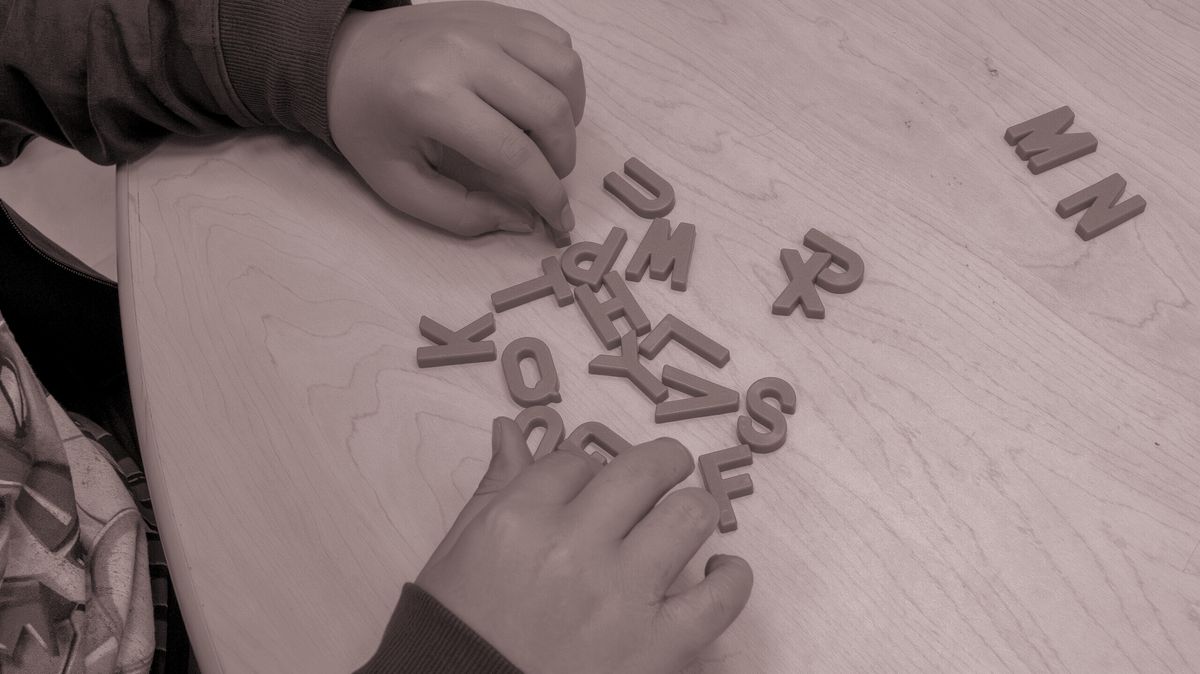
Dr. Coral Hoh has spent nearly a decade trying to prove that Dysolve, an A.I.
platform designed to treat dyslexia, actually works. A randomized controlled trial just validated her approach. |
|
|
For all the talk about how computers are frying our brains, they might have a role to
play in fixing them, too. In 2017, Dr. Coral Hoh launched Dysolve, an A.I. platform designed to diagnose and treat dyslexia, a reading comprehension disability, by generating mini video games in real time. As a user interacts with the platform, the system tries to identify the root of their neurological challenges, and generates new games to exercise those specific shortcomings. The idea is to eventually treat millions of people—dyslexia
affects around 20 percent of the population—at a speed and scale far beyond what human specialists can achieve. At least, that’s the pitch.
Of course, it’s one thing to design a treatment system, and another to prove it actually works. Over the past eight years, Dr. Hoh, a clinical linguist, had published a stream of case studies that seemed to demonstrate Dysolve’s ability to
help kids overcome their dyslexia. (The case studies mostly focused on children given that Dysolve’s current priority is deploying the product in schools, though the platform is also designed for adults.) And yet, case studies don’t really count as scientific evidence—for that, you need a clinical trial.
So Hoh decided to submit Dysolve to the ultimate test. In 2022, the Center for Research in Education and Social Policy (CRESP) at the University of Delaware began conducting an
independent, randomized, controlled trial—and I got an exclusive first look at the results. As Dr. Henry May, one of the authors of the study, told me: “If I were the parent of a dyslexic child and could afford the subscription to it, I would totally buy it.” |
Indeed, the results are impressive. The trial evaluated a group of 848 students—what May called a
“respectable sample size”—between third and eighth grade, spread across 32 schools in nine different states. Each of the students, all of whom started around the 10th percentile in reading scores, were assigned at random to either the treatment or control group, with students in the latter camp receiving access to the normal support they receive in school, and students in the treatment group supplementing that support with Dysolve. The recommended minimum “dosage” was 15 minutes on the Dysolve
platform, four days a week, for nine weeks.
Because this was a field trial rather than a lab-controlled trial, most students wound up logging only about a third of the total recommended time with Dysolve. Nevertheless, students with access to the treatment outscored those in the control group on reading tests conducted at the end of the trial. Moreover, seven students moved from the 10th percentile to the 50th after roughly 10 hours of using Dysolve. “I’m really hopeful, because even
though this R.C.T. achieved only a low dose, it still produced positive impacts,” May told me. “So I’m really interested to see what kind of impacts Dysolve would produce at a full dose.” (CRESP plans to conduct additional studies in the future to answer this very question.)
In the end, the study found “rigorous evidence” that the Dysolve program can, in fact, improve reading outcomes—which means Dysolve now belongs to a small, exclusive group of educational interventions whose efficacy
has been independently, clinically verified. May added that, even though the study was funded by Hoh’s company, EduNational, the contract stated that the company had no ability to prevent the publication of the trial results, regardless of the outcome. “I think this is one of the reasons why many interventions don’t have such evidence of impacts,” he told me. “They don’t want to put themselves to the test.” |
Perhaps one of the most surprising elements of the Dysolve approach is that it doesn’t actually
offer users any direct reading instruction. “When the kids are playing the Dysolve game, they’re not actually reading text passages,” May said. “They’re reading individual words, but what they’re trying to do is decipher and then identify the sounds within the words [to essentially] reprogram the way their brain processes language.” In short, while standard reading instruction involves focusing on literacy and reading comprehension, Dysolve seeks to rewire the underlying neural pathways. The
positive results would seem to validate Dysolve’s core hypothesis, which is that treating those processing issues translates to better reading outcomes for those with dyslexia.
For Hoh, it’s proof that not all A.I. is created equal. “I think it’s important to point out some of the amazing things that A.I. can do,” she said, especially considering “all the recent threats that there are for certain forms of A.I., but not necessarily for all.” Moreover, she told me, Dysolve is intended to
supplement, not disrupt, the work that teachers are already doing in school. (While a subscription to Dysolve isn’t cheap—it ranges from $100 to $350 per month, depending on the tier—it’s substantially less expensive than human specialists, who can charge hundreds of dollars per hour.)
For now, most schools piloting Dysolve use it as a last resort, when
everything else in their toolbox has stopped working. “Teachers deal with skills and content learning, but not with brain processing,” she said. “The changes first are behavioral. They find that with Dysolve, when the brain can process that kind of input, there’s less resistance. The whole person changes because of Dysolve. Rather than teach skills, you have to get to the foundation. The processing has to be efficient first before teachers can teach skills.”
Next up, Hoh hopes to use the
technology to tackle other neurological disorders. Her company is already starting to explore ways to significantly scale its operations, first by expanding its offering into other languages, communities, and countries. For the profitable, 12-person team behind Dysolve, that means it’s almost time to raise outside capital. Hoh said they’ve had some inquiries, but more importantly, she says, “we want to find a good partner.” |
My partner Eriq Gardner has an excellent breakdown of Hollywood’s biggest legal
beefs with Sora 2. [After Sora 2]
Somewhat relatedly, the Japanese government has officially requested that OpenAI refrain from violating the copyrights of Japanese I.P., specifically manga and anime.
[IGN]
Major General William Taylor, a top U.S. military official, recently told reporters that he’s been using generative A.I. chatbots to make military and personnel decisions. “As a commander, I
want to make better decisions,” he said. Wonderful. [Business Insider]
As we’ve discussed several times, OpenAI plans to spend a minimum of $1 trillion on infrastructure buildouts despite losing billions of dollars every year. The company also has a five-year plan that involves securing even more government contracts,
building out ChatGPT’s instant shopping partnerships, selling consumer hardware, selling compute through its data centers—and, of course, exploring “creative” plans to raise new debt. Altman will need it all, and then some, and then some more, to actually cash the checks that OpenAI keeps writing. [Financial Times] |
That’s all for today. I’ll see you next week.
Ian |
|
|
Join Emmy Award-winning journalist Peter Hamby, along with the team of expert journalists at Puck, as they let you in
on the conversations insiders are having across the four corners of power in America: Wall Street, Washington, Silicon Valley, and Hollywood. Presented in partnership with Audacy, new episodes publish daily, Monday through Friday. |
|
|
A professional-grade rundown on the business of sports from John Ourand, the industry’s preeminent journalist,
covering the leagues, players, agencies, media deals, and the egos fueling it all. |
|
|
Need help? Review our FAQ page or contact us for assistance. For brand partnerships, email ads@puck.news. You received this email because you signed up to receive emails from Puck, or as part of your Puck account associated with {{customer.email}}. To stop receiving this newsletter and/or manage all your email preferences, click here. |
Puck is published by Heat Media LLC. 107 Greenwich St, New York, NY 10006 |
|
|
|