 |
|
|
|
Forward this email to a friend!
|
|
For our second anniversary, subscribers can share the benefit of Puck with an exclusive code (INSIDEACCESS) that gets your network 30% off.
|
|
|
|
|
|
Hi you,
My relatively geo-stable summer is over. I’m sending this newsletter from Minneapolis-St. Paul, where I’m visiting family and attending my first State Fair in decades. Then I’m back on the road for a few weeks, largely to promote Season 2 of my PBS series, America Outdoors with Baratunde Thurston, including a few weeks in my beloved former home of New York City. We’ve got some exciting events planned for the show, including a screening and Q&A at the Patagonia flagship store in Williamsburg on September 8. The following week, on September 14, we’re going all-out and hosting a massive outdoor screening in Fort Greene Park, just a half block from where I used to live!
The series launches this Wednesday, September 6, at 8 p.m. ET, and you can catch it in the PBS app (I call it “The People’s Streamer”), or on Amazon Prime, or if you’re still one of those people, on actual television in Classic Mode via your local PBS station. The most accessible way to watch the first episode will be on YouTube Live at 8 p.m. ET on Wednesday. I’ll be answering questions and sharing commentary in a live chat, and afterwards I’ll do an Instagram Live.
I recognize my good fortune in being able to promote a television series during a record-setting double strike of the WGA and SAG-AFTRA. My series is covered by the latter, but public television’s agreement with the union is in good standing. Meanwhile, I recognize that most people in positions like mine aren’t so fortunate. I encourage you to listen to this recent episode of KCRW’s Press Play with Madeleine Brand, which features the firsthand experience of workers in the entertainment industry who aren’t on strike but who can’t work because of it. The discussion really humanizes the impact of the work stoppage. If you’re in a position to donate to a strike fund, or if you need the help of one, check out Entertainment Community Fund.
Other items grabbing my attention include:
- Anthony Conwright’s piece in Mother Jones makes the case that the conservative anti-“wokeness” movement is merely the latest version of efforts to shame white Americans who ally themselves with Black people. In previous generations, the pejoratives included “negrophiles” and “negro lovers” (or the uglier version of that phrase).
- Adam Grant argues in The New York Times that elections are bad for democracy. On the surface, it’s a radical position, but it’s one I’ve come around to in my work on the How To Citizen podcast. My interview with Astra Taylor on how the Greeks practiced democracy reveals part of the story. My interview with Claudia Chwalisz, on other ways we can include the people’s voices in their own self-governance (through randomly selected citizen assemblies), completes it.
- Meanwhile, Beyoncé put on an epic show Saturday night at Los Angeles’s SoFi Stadium, and I was there! The last time I was in a stadium was the summer of 2008 when Barack Obama accepted the Democratic presidential nomination. I’m not comparing a Beyoncé concert to that historic moment but I’m not not comparing it. She slayed. She’s in insane shape. The show was a masterclass in dance, vocal agility, technology and old school diva vibes.
|
| Also, in celebration of Puck’s second anniversary, subscribers can now offer their network a 30% discount on an annual subscription by using the code INSIDEACCESS at checkout. (If someone forwarded you this newsletter, you can also subscribe right here to access the discount). And don’t forget to check out Puck’s suite of other fantastic private emails here.
Now for this week’s main event: how we pay for climate change. As I’ve witnessed and experienced the impact of increasingly damaging weather, it’s become even more clear to me that climate action isn’t “too expensive”—on the contrary, we’re vastly undercounting the cost of doing nothing. |
|
|
| It’s time for a climate change reality check. For decades, we’ve been warned about the consequences of filling the skies with carbon: biblical flooding, uncontrollable fires, unbearable heat, refugee camps overflowing with the displaced. Now that future—Al Gore’s apocalyptic vision—has come to life. Even those of us who have been paying close attention, who have always taken climate change seriously, are experiencing genuine shock over the pace of recent events. Yesterday’s climate predictions are today’s weather.
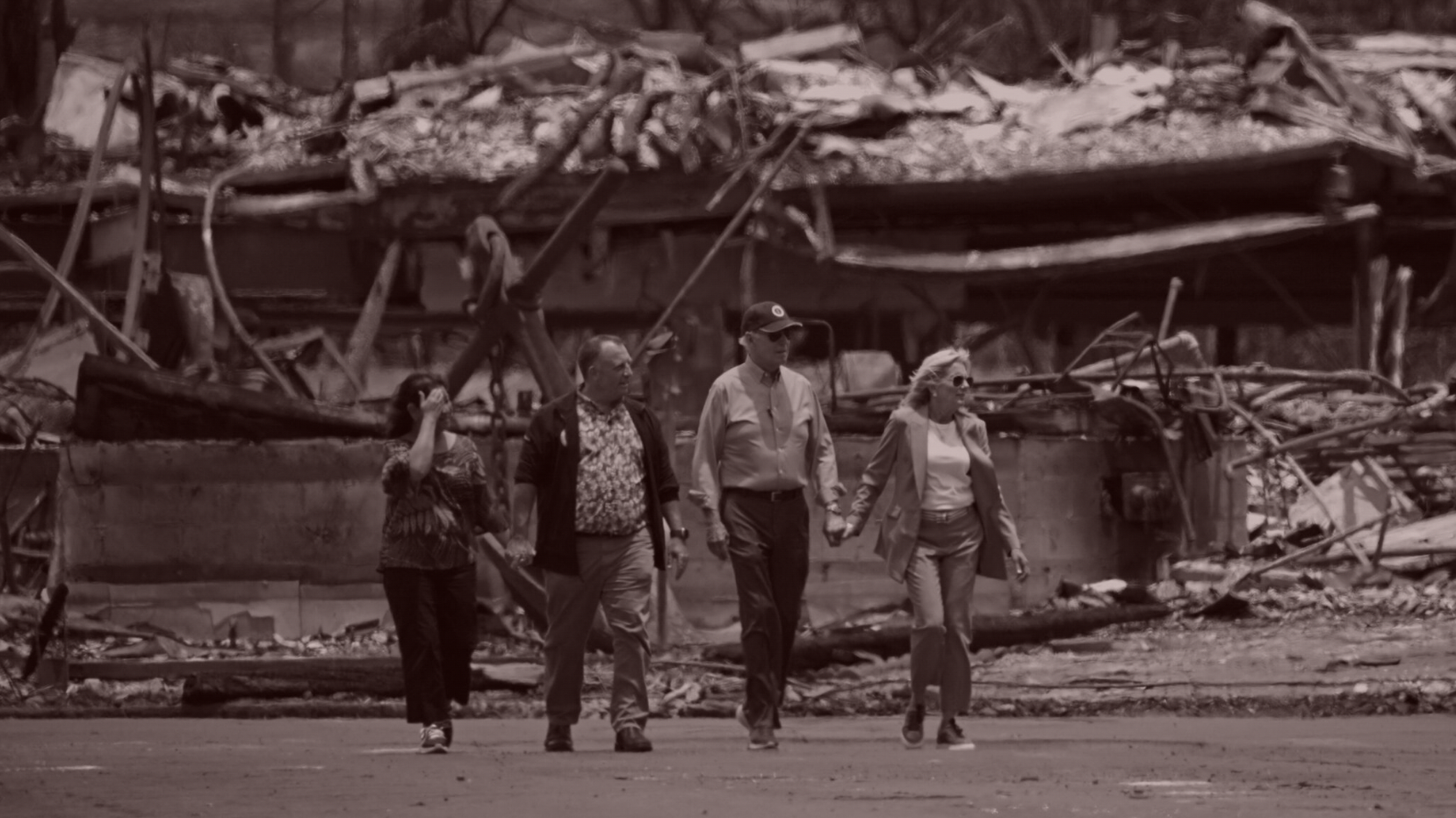
It seems that every week, new “natural” disasters are unfolding whose impact is amplified by human-caused climate change. The devastating fires that tore through the Hawaiian city of Lahaina, on Maui, may have receded from the headlines, but they left at least 115 people dead, the highest U.S wildfire death toll in over 100 years. In Southern California, where I live, we just experienced our first tropical storm in 84 years, flooding deserts, spoiling crops, and destroying homes. Just last week, a Category 3 hurricane, supercharged by 100-degree ocean waters in the Gulf, whipped through Florida, inundating the coast and leaving behind some $9 billion in damage. Heat records continue to be broken across Europe and Asia.
Fires and floods offer powerful visual representations of the climate crisis, but the consequences are everywhere, and sometimes out of sight. A months-long New York Times investigation, published last week, found that America’s groundwater—our great natural inheritance—is also running out, as we drain aquifers that can take thousands or millions of years to replenish. The result is roads that buckle, crops that don’t grow, and people and cities that don’t have enough water to sustain recognizable patterns of life.
I experienced this myself, firsthand, while filming my PBS series, America Outdoors, in Utah. There, I connected with climate ecologist Ben Abbott to bike across what was, according to Google Maps, the Great Salt Lake. Abbot is part of a group of scientists who have been warning that the lake could completely disappear in five years if severe and dramatic measures aren’t taken. But you don’t need to be a scientist to understand what’s happening in Salt Lake City and so many other communities around the world. Simply walk out to where the lake used to be, where islands are now peninsulas, and the air is choked with dust.
Climate change is costing us dearly, and it’s only getting worse. I feel so intensely frustrated, largely because the preventative actions we could have taken were not mysterious to us: invest in renewables, transition from greenhouse gas-emitting energy generation, and put a price on carbon. We’re finally making some progress on green energy, thanks to advances in wind and solar and battery technology. But for decades, the fossil fuel industry and our captive politicians cynically and speciously argued that the economy should come first. News flash: We’re going to pay more for the cleanup than it would have cost to prevent these disasters in the first place. |
|
|
|
|
| The market is now saying clearly what many politicians will not. In Hawaii, where insured property losses exceed $3 billion dollars, homeowners face rising insurance premiums as a result of climate disasters. Californians are familiar with this pain: State Farm and Allstate have already stopped offering homeowner policies in the state due to a combination of government-imposed rate caps, expensive reinsurance, and the growing risk of wildfires and floods. In disaster-prone states like Florida, insurers are either significantly raising rates or pulling out altogether, having found many coastal areas to be essentially uninsurable. There is also the rising cost of food, supply chain disruptions, disaster cleanup, migrant aid, and health care associated with new pathogens and stifling heat. (For a literal catalog of climate disaster costs in the U.S., check out the Atlas of Disaster and find out how susceptible your region is and ways to improve resilience; it’s not as doom-laden as the title makes it sound.)
Aging and obstinate politicians, who won’t live to experience the worst impacts of the climate crisis, have argued that we would slow the economy by investing in clean energy and other emissions-reducing measures. But some recent lawsuits offer a glimmer of hope. Last month, the first children’s climate trial took place in the U.S. when a group of 16 young people sued Montana for violating their constitutional rights, including rights to equal protection, dignity, liberty, health and safety, and public trust, all predicated on their right to “a clean and healthful environment” as enshrined in the state constitution. They won! Yes, Held v. State of Montana was a minor victory in the sense that most state constitutions don’t make the same guarantees that Montana’s does, but several do, and many others are considering so-called “green amendments.” As a result of the victory, state agencies will no longer be prevented from considering the climate effects of fossil fuel projects. It’s an important signal that at least some people are putting their foot down and being proactive about change.
Thankfully, these kids also have some international supporters. Last week, the U.N.’s Committee on the Rights of the Child (CRC) issued a 20-page document stating that children have the right to sue nations over climate change. The opinion is based on the U.N. Convention on the Rights of the Child, a widely ratified human rights treaty. I’m hopeful that this latest tool in the climate action kit leads to more lawsuits and more policy change, but I wanted to ask someone who’s far more in the fight than me for her perspective, so I reached out to Jamie Sarai Margolin, a filmmaker, organizer, artist and founder of the Gen Z climate action group This Is Zero Hour.
When she was 16 years old, Margolin was a plaintiff in a similar youth climate lawsuit filed against Washington State. That suit never made it to trial, and I wondered if she thought more of these lawsuits were coming and would help spur more climate policy change. Margolin texted, “I do think there will be more climate lawsuits but I can’t confidently say whether that will spur policy change. The whole reason we are in this climate crisis is due to corporate greed and politicians and corporations working together to actively prevent progress.” She added: “We could have transitioned to renewable energy and had a much more sustainable and just world a long time ago. People have known about the climate crisis and its impacts for decades, but progress has been purposefully prevented.”
For Margolin, it’s a frustrating and simple reality. “I have reached a point of exhaustion and cynicism where it’s hard to get my hopes up that politicians will actually do the right thing,” she told me. “We are seeing the world burn before our very eyes, and we understand it will only get worse. We’re being asked to plan a future, plan our lives, and go on with business as usual in a mass extinction event.”
Meanwhile, the economic incentives for clean energy included in the 2022 Inflation Reduction Act are starting to kick in, making it cheaper to prevent climate catastrophe. The IRA includes the largest investment in climate change we’ve ever made, roughly $370 billion. Its numerous provisions cover things like expansion of green energy production tax credits, expanded rebates for home electrification and electric vehicles, and new spending to make communities more resilient to the impacts of climate change.
Of course, that bill is not enough. The White House and others estimate the IRA will help us reduce our greenhouse gas emissions 41 percent by 2030 compared to 2005 levels. That’s still 10 percent short of our pledges. To activists like Margolin, the White House is also working at cross-purposes with a stable climate future, making historic investments in renewable incentives while also greenlighting more fossil fuel projects. On September 17, several groups are planning a so-called March to End Fossil Fuels, demanding even bolder action from President Biden and other world leaders so we can meet our commitments.
One thing that could help us close that remaining gap is a carbon tax—something universal, fair, and relatively simple. Paired with positive incentives for renewables, a price on carbon creates a negative incentive to generate emissions. I recently tuned in to a training session from Citizens’ Climate Lobby, which made a strong case not just for imposing a fee on carbon but for distributing the proceeds in a way that gets people excited: rebates. That’s right. We impose the tax on everyone emitting carbon, but the vast majority who pony up would receive more in rebates than in taxes paid. According to a study commissioned by CCL, only the top 20 percent of households—those of us with the biggest carbon footprints—will have net carbon payments due. |
| The Climate Identity Crisis |
|
| I’ve had a front-row seat to the many flavors of climate impacts around the U.S. as I’ve filmed America Outdoors. From Portland, Maine to Portland, Oregon, from North Florida to Southern California, the consequences manifest differently. Sometimes it’s fire. Sometimes it’s rising water. Sometimes it’s a migrating food source. But in every case, the end result is destabilization: of cultures and folkways, our sense of place and sense of self.
In Maine, for example, I recently spent time with an oyster farmer. It’s not the typical maritime avocation most associated with the state, but the oyster industry has been growing as Maine’s lobsters gradually migrate north, to Canada. The lobsters aren’t going there for the free healthcare—they’re on the move because the Atlantic is getting too warm. What does it mean when a profession (and food source) that is central to a region’s sense of self vanishes altogether?
A similar transformation is underway in Idaho, where the Shoshone-Bannock people shared their own experience of loss. The tribe is one of several indigenous groups who consider themselves to be salmon people. For them, the salmon are family. For another episode of America Outdoors, I was going to join them on a traditional salmon hunt in the spring of 2021 on the South Fork of the Salmon River in Idaho, but at the last moment, they called it off. The salmon were being cooked in their own river, and the salmon people decided to let the few remaining salmon swim on.
On Tangier Island in the Chesapeake Bay, a very conservative mayor got teary-eyed telling me about having to exhume his ancestors from their resting place to bury them in his own backyard. Rising sea levels were drowning the town cemetery, which now rests on the beach. In New Mexico, it was fire that destroyed the woods that generations had depended on for recreation and for employment. There are many more stories like these, but they share a common theme: the climate doesn’t care about our history or our politics.
We hear a lot about the American identity crisis in the context of demographic change, racial resentments, immigration, and globalization. So often these flashpoints and culture wars are actually manifestations of a deeper malaise wrought by technological change. It’s hard to maintain a sense of intergenerational continuity when the way we work, worship, communicate and cohabitate is undergoing constant tectonic shifts that have fueled epidemics of loneliness, teen suicide, political polarization and predatory business.
At the end of the day, I think people simply want to belong, to feel part of something, and to feel secure about their sense of selves. While there’s been plenty of public handwringing about how Americans’ identities are threatened by economic, technological, and cultural shifts, we’ve managed to overlook the threat to our identities posed by climate change. When we can no longer eat and grow the foods we’re used to because plants and animals migrate, or when the work we do changes because of rising temperatures, or when the homes we’ve built can’t survive the onslaught of floods, mudslides, and fires, we lose some essential part of our identities. Too often, we calculate the costs of climate merely in dollar terms, but this central challenge of our time is so much more than an identity crisis. It’s an existential crisis. If we don’t prepare now—changing our patterns of consumption and of energy generation, our habits and habitats—we will lose something much more valuable than money. We’ll lose ourselves. |
|
|
|
| FOUR STORIES WE’RE TALKING ABOUT |
|
|
|
|
|
|
|
|
|
 |
|
|
|
Need help? Review our FAQs
page or contact
us for assistance. For brand partnerships, email ads@puck.news.
|
|
You received this email because you signed up to receive emails from Puck, or as part of your Puck account associated with . To stop receiving this newsletter and/or manage all your email preferences, click here.
|
|
Puck is published by Heat Media LLC. 227 W 17th St New York, NY 10011.
|
|
|
|