 |
|
Hey all.
|
|
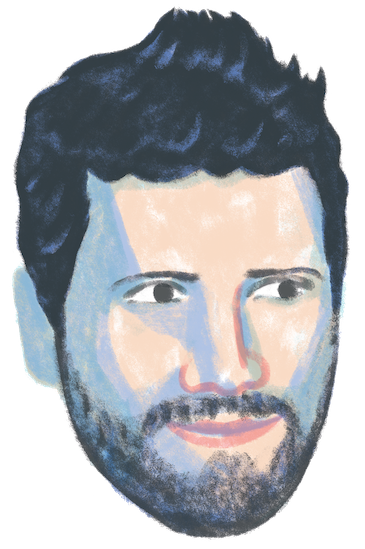
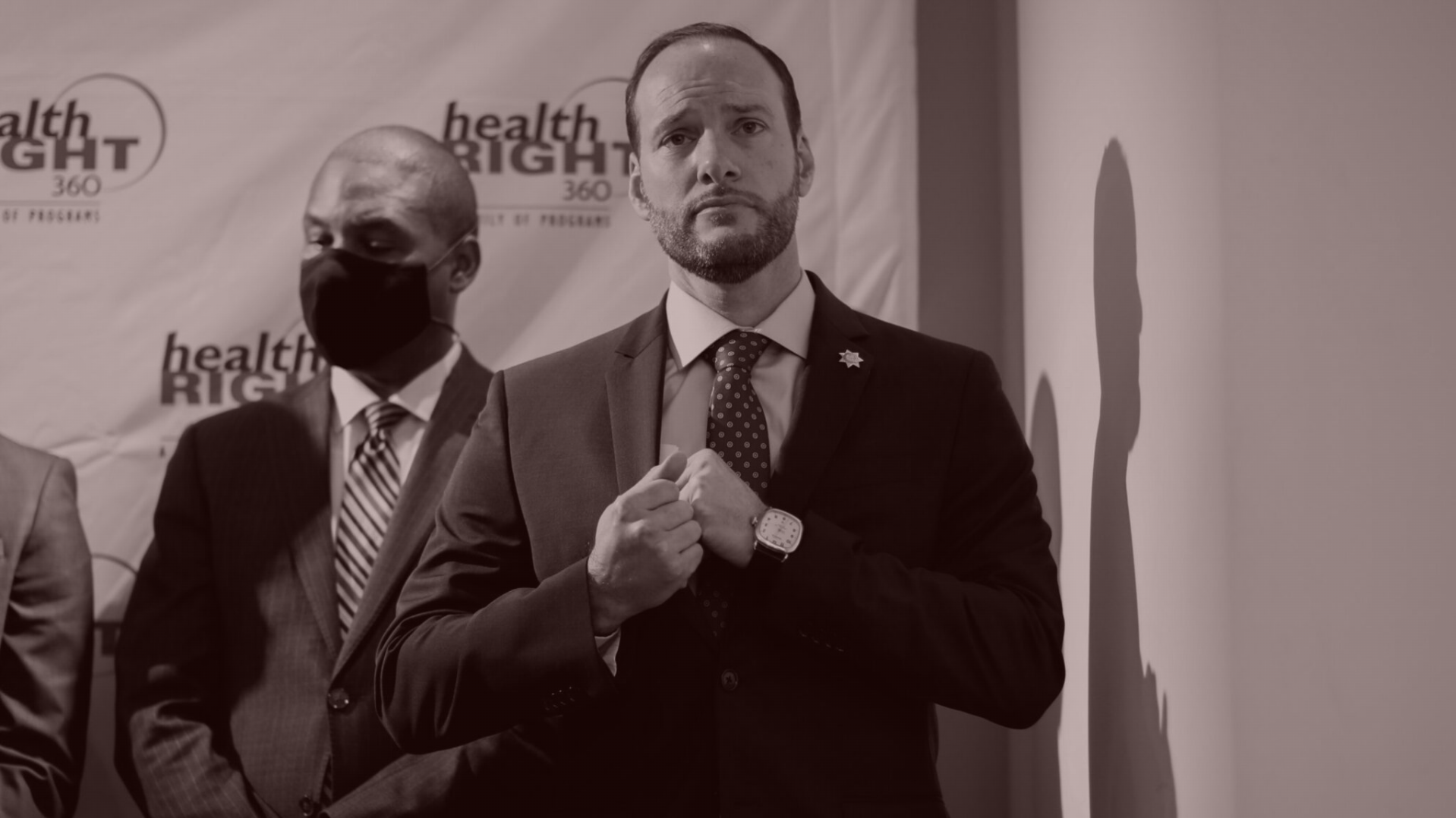
Today, I’m writing to share an interview with one of Silicon Valley’s most divisive characters: Chesa Boudin, who called me yesterday to gamely take on his critics across the industry.
By the way, if you’re enjoying this email, you may enjoy the writing of some of my other Puck colleagues. If you’re in politics, sign up for Julia Ioffe’s private email here. If you’re in tech, you’ll enjoy the work of Dylan Byers or Baratunde Thurston. If you’re in finance, you’ve got to read Bill Cohan. You can sign up for all of these lists for free. And, of course, Puck subscribers can soak in as much of our writing as they’d like.
|
 |
| One-on-One with Silicon Valley’s Enemy No. 1 |
| An interview with San Francisco’s embattled, ambitious, tech-squabbling prosecutor on the media, billionaires, and the recall. Is he the victim of an organized smear campaign—or is he just bad at his job? |
|
|
|
Last Thursday evening, I hopped out of an Uber in San Francisco’s Mission District to kibitz among the tech-political menagerie at the launch party for The San Francisco Standard, a new, promising and buzzy publication that is particularly popular with the city’s civic-minded tech crowd and is chaired by the Sequoia venture capitalist and former journalist Mike Moritz, who is funding the outlet with $10 million. As I approached the door, about an hour after the event’s start time, I did a double-take as a tall, suit-clad man—a rare sight in these parts—and his entourage disembarked from their car at the exact same moment: Was that Chesa?
In some ways, I was surprised to see Chesa Boudin, San Francisco’s embattled District Attorney, at a party where he was likely to see not just fans but some of the business leaders who would like to toss him from office this June. (At one point later in the evening, I saw Chesa literally standing back-to-back, in separate conversation circles, with the political operative who is leading the largest outside group behind his recall.) But in other ways, I was not. Chesa is daring, irrepressible, and unafraid of the people lobbing tomatoes his way. Many tech elites have cast Chesa as an avatar of out-of-control progressivism, a hapless oaf who presides over San Francisco’s deterioration into a woke, crime-infested Hobbesian hellhole, in part because he has generally sought more lenient sentences and declined to prosecute some juveniles as adults. But the son of imprisoned 1970s radicals was precociously interested in reimagining the criminal justice system, even radically, well before he went to Yale Law or became a Rhodes Scholar. He is no slouch.
And yet Chesa is, without a doubt, in serious trouble. The well-funded recall goes before an angry electorate this summer that just voted to toss three liberal members of its school board by a three-to-one margin, in a state that flirted with dethroning its Democratic governor, and appears fed up with the surge of crimes like burglaries and car thefts. The public data is cloudier than Chesa’s tech critics like to admit, but people perceive themselves to be more at risk of crime. I’ve had my own recent brushes with San Francisco crime —like many residents, my car was broken into about a year ago; unlike many residents, this year I served on a weeks-long violent criminal trial prosecuted by Chesa’s office, a fascinating experience. (The two sides eventually cut a deal.)
There’s a bigger story here, though: As the school board race previewed, San Francisco’s recall election will, without a doubt, be closely scrutinized by both the Democratic Party’s bed-wetting class and its technorati in the Bay as a flashpoint in the debate over whether the party has moved too far left. Behind the scenes, I have been hearing that Chesa has been rolling calls to donors and leaders in tech in recent weeks, seeking not to mend fences, per se, but to see if there is a way to at least meet them where they are. And so I suppose it shouldn’t have been a surprise that when I reached out to Chesa’s team to see if he might like to address his critics, and maybe shake loose a few dollars along the way, they happily obliged.
A few days after the Standard event—“a good party” in the words of the D.A.—I was on the phone with Chesa. Here’s our conversation, edited for length and clarity.
|
|
|
Teddy Schleifer: There are a lot of people in the business community who don't like you—maybe even hate your guts—some of whom were at that event. What's it like to be Chesa right now?
Chesa Boudin: As someone in elected office, it is totally normal to be on stage with or at events with people who not only disagree with you, but who are actively competing against you. Think about every time Mitch McConnell walks onto the Senate floor. There's a lot of people who hate his guts. Nancy Pelosi, same experience, right? There's a lot of Republicans that see her every time she walks into a public event in Washington. So it's more a reflection of the polarization of politics, and of the fact that we're doing business with people, and competing against people, with different ideas. That’s OK. It’s not personal.
I was on the famous Clubhouse call last year when you battled ferociously, live, with some of those tech critics. But now I hear that you’ve been trying in recent weeks and months to find more allies in that world. So tell me about the evolution of your relationship with tech elites and tech leaders.
I think the misconception is that we've just started looking to tech to build alliances, or frankly that tech is a monolithic group. Tech, like any other kind of constituency, is a diverse group. And I've had key allies in the tech community since well before I decided to run for District Attorney—people who care about criminal justice reform, people who care about equity and accountability and safety. And many of those allies are folks who might have been supportive financially or with whom we've built alliances around substantive issues.
To some extent, you wear the hate you get from these people as a badge of honor now, right?
If you're being attacked by folks like Bill Oberndorf and David Sacks, sure. The thing to remember is that the loudest voices are not the only voices, not even the majority. They are outliers. And that's one of the things that Twitter and the social media-ization of news has really made clear, not just in San Francisco—the loudest voices tend to be, by definition, the outliers. And that's what we're seeing here. We've got a couple of very wealthy, very loud Republican billionaires who are spending heavily. Let's be clear, whatever else you want to say—I mean, David Sacks wrote a book defending date rape. [Sacks in 2016 apologized for the book he co-wrote with Peter Thiel, while in college, that called date rape potentially “belated regret.”] Bill Oberndorf gave over a million dollars to Mitch McConnell to help impact the Supreme Court to eradicate voting rights, to undermine gun control, to take away women's right to control their own bodies. These are not San Francisco values. Am I surprised that really conservative people like Oberndorf or Sacks are against me? Absolutely not. But they don’t speak for tech.
So you and your campaign really want to position this as a politically manufactured recall. That this is being driven by elites who are effectively creating public opinion. But there are 80,000 people that signed this petition; I know that you're going to say that's a pretty low bar for triggering a recall. And there's some polling that says two-thirds of people support your recall; I know you're gonna say you have other polling that shows that's not the case.
Every public policy campaign has some elites behind it, no? How can you make the case that this movement is contrived or manufactured? Real people are upset, enough so that this recall is happening.
Look at what's happening in Sacramento, for example, or in any number of Republican or conservative-led cities where crime rates are out of control. In Oakland, crime rates are skyrocketing, both on a relative basis—during the time I've been in office, crimes have gone up far more in those places than in San Francisco—and on a per capita basis, they are far less safe. But you don't see the national media or the local media targeting those District Attorneys.
There was a whole story on how homicide rates were skyrocketing in Alameda County and Oakland in particular. And the article didn't mention Nancy O'Malley, the D.A., by name anywhere. In fact, even though the article was all about Alameda County, it did mention me by name.
To give another example, there was a video of a brazen burglary from a Walgreens that got something like 7 million views on social media. The journalist who posted it tagged me in the tweet. Why? I don't make arrests. The D.A.’s office doesn't make arrests. That man had never been presented to us for possible prosecution.
So of course in a universe where people get their news, usually from clicks and headlines and soundbites and Instagram videos, if there's an intense focus on me—and not just me, but other progressive prosecutors in Los Angeles, in Chicago—in a way that is divorced from empirical evidence and data, then of course there are going to be people who not only support a change, but are living in fear that is based not in data or empirical reality, but based on what they see on TV or in headlines.
Just to put the question simply: Do you think that the recall has a legitimate base of support?
I acknowledge that some people in San Francisco are living in fear, and there's nothing more important to me and to my office than public safety, and finding ways to both reduce crime as an empirical matter, but also to ensure that people feel safer in their communities. There's obviously a connection between those. And there's no question that there are people in San Francisco that don't feel safe. And some of that has to do with the way crime is being reported on. Some of that has to do with lived experience. And some of that has to do with changes that are the result of the pandemic, that the recall is trying desperately to pin that on me and my office without any empirical evidence.
Obviously you’re correct that Oberndorf is the biggest donor by far to this recall. But can't two things be true at once: people could legitimately feel unsafe, and elites are behind it?
Those things aren’t in tension. If elites spend millions of dollars, as they've done here, to promote fear, to exploit the kinds of tragedies that occur in every jurisdiction, to undermine reforms, or to suggest to people that an individual is responsible for the kind of things that happen in every major city in America, then of course the perception is going to be influenced by that.
Speaking of polls, you’re going to need some of the people who voted ‘yes’ for the school board recall to vote ‘no’ here. But there’s a fuck-the-system, middle-finger-up sort of vibe at play in both races.
There's a few things that are really different. Different candidates, different electoral map, and totally different issues. That was a special election with very, very low turnout. So we're gonna have a lot more votes. We're gonna see a wider array of San Franciscans vote. They were three different candidates who were being recalled. They each had their own track record. I have my own track record. And I'm really proud of the work that I've done. And the things that I've done actually poll between 60 percent to 80 percent with San Francisco voters.
But the other thing you can look at is the differences in endorsements. And that's just the grasstops, but there are a tremendous array of individuals, elected and formerly elected officials, labor organizations that have gone through the formal process of opposing my recall that didn’t for the school board.
I know for certain, as a matter of fact, that there are many people who supported the school board recall who will oppose mine.
Do you feel like the California recall rules in general are in need of reform? I understand this is a very self-serving question to ask someone currently being recalled. But in some of your messaging you seem to be running against the mere notion of recalls. You write on your campaign website that “recalls shouldn't be abused as tools for political parties that lose elections.” Aren’t recallers just following the political system as it's constructed?
It’s a system that goes back a very long time. And the world has changed since the recall provisions were created in California. And what we see not just in my race, but across the state, is that special interests have captured the process.
When you have the kind of accumulation of wealth that we've seen over the last 50 years, together with the ability to fly in paid signature-gathers, as happened in my race, you can put something on the ballot—as happened in Sonoma, as happened in San Francisco—without any grassroots volunteer base mobilizing. That is a real problem for democracy.
Putting aside me and my race, elections in the United States are increasingly close. They are often decided by small margins of victory. And the challenge for anyone who is elected is to find ways to fulfill your promises to those who elected you while also remembering that you govern for everybody, even those that voted against you and are perhaps determined to do it again in the next election. The problem with recalls—and this is what Republicans have been doing very effectively, and they've done it in other ways at the federal level without recalls—is to ensure that those who are fairly elected don't have a chance to govern. And it's also a strategy to ensure an outcome that they could never achieve in a head-to-head election.
Do you think the recall is an attempt to “overturn” an election? That’s pretty strong, but it is how Real Justice PAC, which supports you, is framing this.
Absolutely.
It's expensive, it's destructive. It allows a very, very small group of loud, wealthy elites who are not actually connected to the day-to-day political reality in San Francisco to have a massively outsized influence.
Let’s zoom way out. For the last five or so years, there was this policy consensus in corporate America on the issue of criminal justice reform. Mark Zuckerberg was parading about his unlikely alliances with the likes of Charles Koch. At least among the donor class and the philanthropist class, everyone could agree that it was a nonpartisan concern. Now, after George Floyd and the summer of 2020, when you might expect that consensus to deepen, we're instead seeing a backlash, and your recall is a flashpoint in that.
Addressing incarceration is something that is very easy for business leaders to agree on in theory, but in practice they’re complaining about their car getting broken into.
Every movement ebbs and flows. It's not unusual to see folks—whether it be in the media, or in public discourse, or in corporate America—focus on a particular issue and then move onto other issues and sometimes come back.
What we saw over the last several years since Trayvon Martin was killed, and the founding of the Black Lives Matter movement, was a confluence of factors: criminal justice reform, police accountability, Black Lives Matter. And after the killing of George Floyd, those related movements exploded onto the national consciousness in a way that was perhaps the biggest social reckoning this country has ever had. And the pendulum has begun to shift in many ways.
Last thing: What's your message to folks in the tech community who are hearing a lot of chatter about you from their friends—“misinformation” as you describe it—or seeing viral videos, or who are skeptical of you, or hear the word ‘Chesa’ as an epithet?
Nothing is more important to me than public safety. And I believe in reform because it is right, it expands justice and makes our communities safer. I am implementing policies that are grounded in data and that are supported in their outcomes by empirical evidence. Look at the numbers, not at the viral videos. And work with me to make San Francisco as safe as it possibly can be, for me, for my wife, for my son, for your families. For everyone who comes to live or work in the state or visit the city as a tourist or a commuter. San Francisco has the potential to be the safest city in the country, and we are making progress. Don’t be conned. Don't let the Republican fearmongers con you.
|
|
|
|
| FOUR STORIES WE'RE TALKING ABOUT |
 |
| The Will Smith Legal Fallout |
| ABC, the F.C.C., the L.A.P.D.—making sense of slapgate and its various legal ramifications one day later. |
| ERIQ GARDNER |
|
 |
| DeSantis vs. Hawley |
| The governor’s relative silence on Russia and Ukraine may appeal in Florida, but it could also be the first folly of his ’24 candidacy. |
| TINA NGUYEN |
|
 |
| The Panic in Zazworld |
| With the Warner-Discovery merger closing on April 11, the executive ranks are rife with speculation over Zaslav's rumored org chart. |
| DYLAN BYERS |
|
 |
| The Buffett Mystery |
| A bizarre and unexpected proxy statement leaves Wall Street to speculate: Do Warren Buffett and Goldman Sachs have beef? |
| WILLIAM D. COHAN |
|
|
|

|
|
|
You received this message because you signed up to receive emails from Puck.
Was this email forwarded to you?
Sign up for Puck here
Sent to
{{customer.email}}
Unsubscribe
Interested in exploring our newsletter offerings?
Manage your preferences
.
Puck is published by Heat Media LLC.
64 Bank Street
New York, NY 10014
For support, just reply to this e-mail.
For brand partnerships, email ads@puck.news |
|
|