 |
|
Welcome back to Dry Powder.
|
|
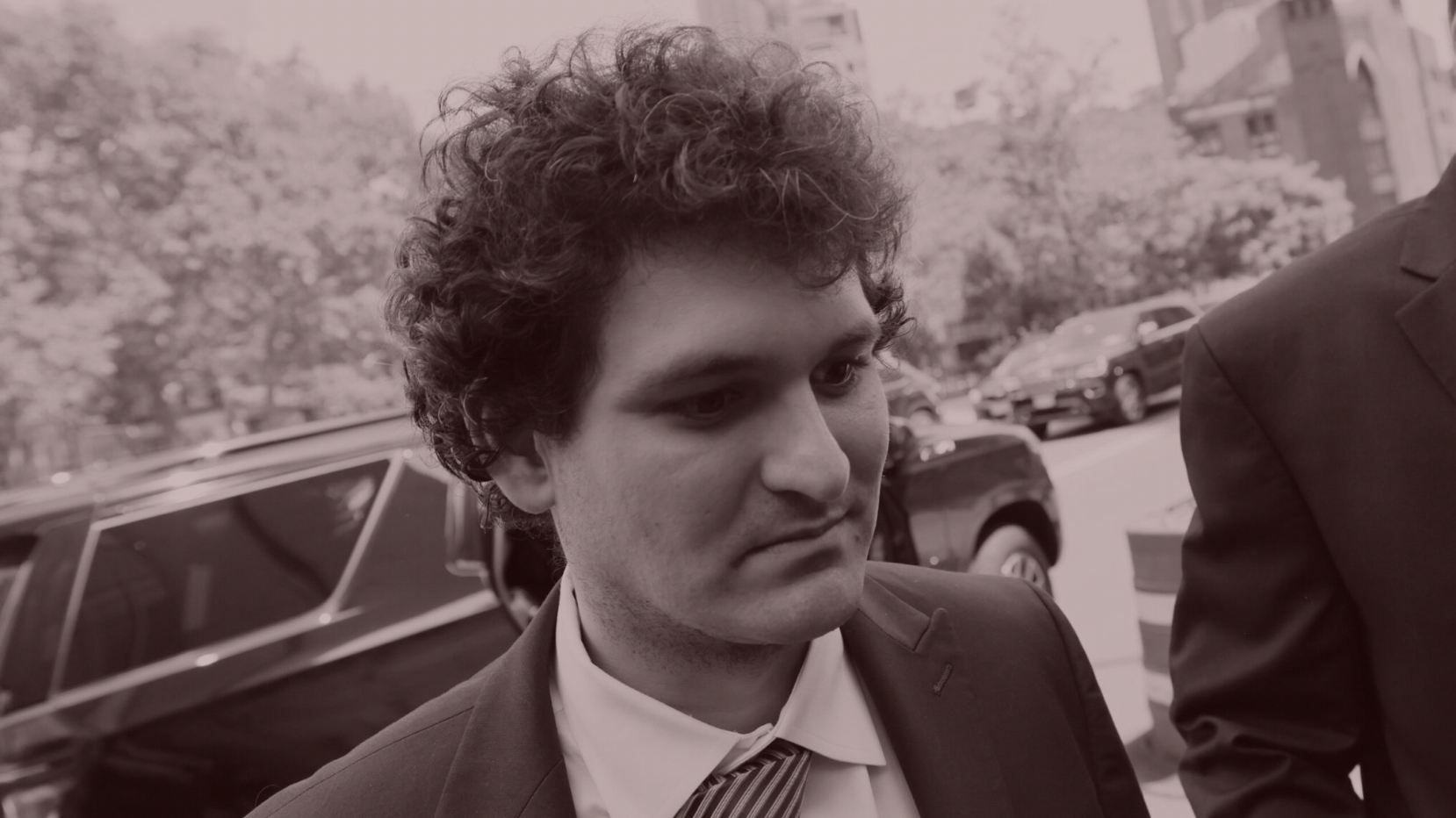
In today’s issue, my thoughts on the much-opined about Michael Lewis book, Going Infinite, his character study of fallen crypto billionaire Sam Bankman-Fried.
|
|
|
| Michael Lewis is a friend—we were colleagues at the old Vanity Fair for many years, shared some acquaintances, and I even interviewed him on stage at one of The Mooch’s SALT conferences in Las Vegas a few years back. It was wildly entertaining, thanks to Michael. But what I remember most from that event was how Michael was more than happy just to wing it and encouraged me to ask him whatever I wanted to ask, without hesitation or preparation. We last spoke in March 2022 for a piece I wrote in Puck about him and his views on the state of play on Wall Street.
We also discussed his next book project, which seemed destined to be about Sam Bankman-Fried. Michael was off to one of Mooch’s SALT conferences in the Bahamas to interview S.B.F. on the stage, in April, as part of what turned out to be Michael’s months-long embedding for his new book, Going Infinite: The Rise and Fall of a New Tycoon. That was the same event where Zeke Faux, the Bloomberg reporter and author of Number Go Up, described Michael as “fawning” over S.B.F. during the interview. Back then, there was only the rise of S.B.F.; the fall would take another six months, in November 2022, when the whole FTX/Alameda charade exploded. It is now being litigated in a federal courthouse in downtown Manhattan, with expert reporting and brilliant analysis by my partners, Teddy Schleifer and Eriq Gardner.
Michael’s plan, as he told me in March 2022, was to celebrate S.B.F. as the new, new thing—as he once famously dubbed Internet entrepreneur Jim Clark in one of his lesser canonical works. S.B.F., after all, seemed to be a classic Michael Lewis character in the same way that Michael Burry was because he could see the carnage of the financial system despite his prosthetic eye, or Billy Beane was after he evolved from five-tool prospect to the one general manager able to decipher the scrappy talents of underloved and underappreciated players, like Kevin Youkilis (i.e., “The Greek God of Walks”) and a late stage David Justice.
For his part, S.B.F. was a crypto entrepreneur with a M.I.T. pedigree who seemed to have crawled out of a spider hole and was also the richest person under 30 years old. Two months earlier, S.B.F. had seemingly perfected his status as a multi-billionaire by raising new equity capital for FTX at a $30 billion valuation from some of what most people assumed were among the smartest investors on the planet. Michael was going to the Bahamas and embedding with S.B.F. to do what he does best: write about misunderstood heroes and what makes them so special.
I greatly admire Michael for his ability to write short, highly entertaining narrative non-fiction books, but also for his knack for finding the most interesting protagonists and chronicling important events from a different perspective. As best I could tell from my March 2022 conversation with Michael, Going Infinite, was going to be about a new hero, S.B.F., and how he and his ilk were reshaping the worlds of finance, philanthropy, and political influence. I was particularly interested in the topic, in part, because I had spent 90 minutes interviewing S.B.F., in December 2021—just as bitcoin and other digital tokens were peaking—for my upcoming documentary film, Finding Satoshi.
During our interview, S.B.F. kept to the well-prescribed script, arriving late for the interview (around 9 o’clock at night) and wearing a black t-shirt and cargo pants even though it was a cold December night. He told me about how at M.I.T. he’d become a “utilitarian,” by which he meant that what he cared most about in the world was “maximizing the total happiness, minus suffering, and total well-being of everyone who is or will ever live.” Heavy cake.
He also told me about “effective altruism” and how when he left M.I.T., he had applied for jobs at non-profits but was rejected by them and then was told that if he really wanted to make the world a better place he should go out and make a fortune and then turn around and give his money to them. I’d never heard anyone profess this sort of financial-philanthropic psychobabble before. I was left scratching my head. On the other hand, he was the richest person under 30, so the world had obviously beaten a path to his door. Anyway, you can see why I was really looking forward to reading Michael’s take on this guy. |
| The Real Michael Lewis Characters |
|
| And then last November, the fiction of S.B.F. was revealed. The veil of gullibility was dropped from our eyes. He was too good to be true! He had out-Madoffed Madoff. At least Bernie Madoff had one legitimate business that was separated from his Ponzi scheme. S.B.F. used his legitimate business, FTX, (or what appeared to be a legitimate business) as collateral for unhedged bets and to funnel customer cash into his own private piggy-bank, and hoped he could keep the scheme going long enough so that it would all work out. He was basically a con-artist who had ripped off $8 billion from his credulous customers and used it to enrich himself, enhance his brand, and make a bunch of stupid venture-capital investments through his hedge fund, Alameda Research, ostensibly overseen by his mid-twentysomething girlfriend, Caroline Ellison. (S.B.F. has maintained his innocence and declared that his businesses suffered from executive inexperience and not fraud.) Of course, now I was even more curious about what Michael would do.
Leave it to Michael to have unfettered access to one of the best financial stories to come around in years. It’s not that I wanted to write a book about S.B.F., per se, but I had to admit to a bit of professional envy that Michael had found himself at the center, once again, of an incredible story. I was happy for him, to be honest, not only because a fabulous story deserves a great writer to chronicle it but also because he deserved some good fortune. In 2021, his nineteen year-old-daughter, Dixie, had passed away in a tragic car accident—a truly unimaginable horror that broke the hearts of everyone in and around his life.
While I awaited the publication of Going Infinite, I decided to take a page from Michael’s hymnal. As Michael had done in The Big Short, I wanted to see if I could find people who had somehow intuited that S.B.F. was sketchy and tried to bring that fact to peoples’ attention, using whatever crude methods they had at hand. And lo and behold, there had been such people. There was my friend Marc Cohodes, a short-seller, who figured out S.B.F. was up to no good and was an avid tweeter of his findings. There was Laura Goldman, a former Wall Street broker, who confronted S.B.F. on the sidelines of a Mooch SALT conference at the Javits Center, in September 2021 about what he was doing, if anything, to protect FTX customers from fraud. (He lied to her, natch.) Laura shared with me her recorded interview with S.B.F.
There was James Block, a young doctor in Michigan and amateur financial sleuth, who saw trouble brewing with S.B.F. and blogged about it. And of course I had several conversations about S.B.F. with Anthony Scaramucci, who had a front-row seat to his rise and fall; S.B.F. had invested in the Mooch’s hedge fund and the Mooch was the one who took S.B.F. to the Middle East during the summer and fall of last year in search of new equity. The Mooch introduced S.B.F. to M.B.S., the crown prince of Saudi Arabia, and to M.B.Z., the president of the United Arab Emirates.
It was on that trip that S.B.F. was heard bad-mouthing Changpeng Zhao, the C.E.O. of Binance, which then got back to CZ, who then set in motion a series of events that led to the bankruptcy of FTX and Alameda and the arrest of S.B.F. Needless to say, the Mooch is plenty contrite about his involvement in the saga, although he remains a believer in crypto and Bitcoin. Maybe, I thought, Michael would incorporate some of these perspectives—the real Michael Lewis characters of the drama, the ones who clearly saw what everyone had missed—into Going Infinite. Either way, I looked forward to reading the book and interviewing Michael about it when it came out.
We agreed that we would speak tomorrow, the date having been cleared through Norton, his publisher. I was looking forward to the conversation. I had a bunch of questions for him, including how he was feeling about the roll-out, from the two segments on 60 Minutes, to the large feature in the New York Times that contained more than a few zingers, to the various reviews and commentaries that pretty much lambasted him for being too sympathetic to S.B.F. in both his interviews and his narrative. All of which, and more, was enough to make Going Infinite the No. 1 bestselling non-fiction book in America last week, at least according to the Times, which remains the bible of such things. Alas, last week, his publicist at Norton postponed our conversation, even though Michael had emailed me that he was looking forward to it. No explanation was given other than something about the shifting of Michael’s “previously available window in Miami,” whatever that means. Anyway, I hope to have that conversation one of these days. In the meantime, I wanted to share some of my thoughts on Going Infinite. |
| Heroes, Anti-Heroes, and S.B.F. |
|
| Unlike so many others, I liked the book. It was a well-written and enjoyable read. There are, of course, the priceless anecdotes from the book that have been much cited, including S.B.F.’s inane conversation with Anna Wintour about whether he would attend and potentially sponsor the annual Met Gala—“Yup!”—and the revelations about his relationship with Ellison, the consequences of which are now playing out in court, as Teddy has so brilliantly chronicled. Michael also revealed the pains to which S.B.F. had to go to force smiles when talking to people so that they wouldn’t dismiss him as some sort of bizarre curmudgeon.
The book is also filled with insights about S.B.F. that I had not previously known, especially the sections about how and why he was able to get a seemingly coveted job at Jane Street Capital, the hedge fund, and what made him a success there. I was flabbergasted to learn how much his Jane Street colleagues did not like him, and were not hesitant about sharing that fact with Michael. There was also an uprising among the troops, against S.B.F., at the first iteration of Alameda. The two incidents raised serious questions about S.B.F.’s character that, if known before Michael reported on them, potentially would have raised big red flags for investors, future employees, customers, and regulators. Good for Michael for revealing these facts.
In short, Going Infinite is a delightful read, highly entertaining, often insightful and amusing. It’s a character study of one of the most notorious financial figures of our time. What it is not, as reviewers have noted, much to their dismay, is an indictment of S.B.F. It is not a work of investigative journalism about S.B.F. It is not a forensic accounting of FTX, Almeda et al. Indeed, Michael does not attempt in any way to try to figure out how S.B.F. pulled off what he is accused of doing, other than by revealing that he is one strange dude, lacking empathy, and capable, apparently, of fleecing billions from his customers. “Largely sympathetic,” wrote the Wall Street Journal about the book “Strange” opined the New York Times, adding that Michael seemed “unusually flummoxed by his material.”
In fairness, Michael did make a few attempts, seemingly a bit half-hearted, to get S.B.F. to explain himself and how he ended up on trial for his life, literally, but S.B.F. never really coughed up a good answer and Michael let what he did say hang in the air, without too much explication. He also made the argument that much of the reputed $8 billion in swiped money is slowly but surely being recovered. Hmmm… I was cruising along happily until page 174 when Michael wrote that S.B.F. was so casual about the billions he invested into a variety of doomed venture capital deals, using customer deposits, because “if Sam spent only twenty minutes or so deciding whether to sink a billion dollars into Twitter, it was because twenty minutes was all he could spare.” That seemed a little flip to me.
But guess what? That’s OK. As one writer friend of mine reminded me, once upon a time, when people criticized his books, “This is my book. If you don’t like it, write your own book.” I agree with that sentiment wholeheartedly. I’m not sure why Michael decided to write a character study of S.B.F. rather than a forensic accounting of his crimes. And I’m not sure how much the rushed timetable of S.B.F.’s trial inadvertently impacted the book’s final contents and what Michael could do. In many ways, S.B.F. was the first true Michael Lewis anti-hero—an obvious fraud in plain daylight (in retrospect) that, for one reason or another, many were unable to see. And perhaps Michael, always on the hunt for the next Michael Lewis character, was blinded by the journalistic goldmine in which he found himself.
I will ask him when our conversation is rescheduled. But he is certainly entitled to write the book he wanted to write, not the book some people hoped he would write. He is also free to talk about S.B.F. and his alleged crimes the way he wants to speak about him and them. And maybe we should listen more closely to him: He certainly knows S.B.F. far, far better than anyone else out there, besides his parents or his brother. (S.B.F. doesn’t seem to have many friends anymore, if he ever did.) Michael interviewed him on the way up and he interviewed him on the way down and he interviewed him when disaster struck. Maybe Michael Lewis has more insight into S.B.F. than the rest of us combined. (No wonder Eriq and Teddy have posited that he should be testifying in the trial.)
As someone who has spoken with people who saw the trouble with S.B.F. coming or who experienced that trouble firsthand, and as someone who has read John J. Ray’s two reports to the bankruptcy court and as a close follower of the trial reporting and testimony thus far, it seems blazingly obvious to me that S.B.F. will be convicted of his crimes. He will then be sentenced to the rest of his life in prison, as sad as that may sound. But if Madoff received a sentence of 150 years in prison and Ross Ulbricht—still just 39 years old—continues to serve a life sentence (quite unfairly I might add) as the founder of Silk Road, then S.B.F. is heading to Butner, or some place similar, for a very, very long time. It’s clear that his crimes were intentional and premeditated. There was mens rea, as the lawyers like to say. As S.B.F. himself has admitted the whole “effective altruism” and “utilitarian” shtick was just a bunch of bullshit.
The good news for all you non-fiction writers out there is that there is still a book to be written, that I would devour, about why S.B.F. did what he did and how he did it and why. That’s not the book Michael Lewis wrote in Going Infinite, and it’s obviously not the book he wanted to write. Good for him. He wrote what he wanted and left that other book for someone else, if they have the discipline, courage and the chops to write it. (Writing a book is not for the faint of heart.) Michael’s late daughter, Dixie Lee Lewis, to whom Going Infinite is dedicated, would have been very proud of her father. |
|
|
|
| FOUR STORIES WE’RE TALKING ABOUT |
|
|
|
|
|
 |
|
|
|
Need help? Review our FAQs
page or contact
us for assistance. For brand partnerships, email ads@puck.news.
|
|
You received this email because you signed up to receive emails from Puck, or as part of your Puck account associated with . To stop receiving this newsletter and/or manage all your email preferences, click here.
|
|
Puck is published by Heat Media LLC. 227 W 17th St New York, NY 10011.
|
|
|
|