 |
|
Happy Sunday, and welcome back to Dry Powder.
|
|
In today’s column, some notes on ValueAct Capital, the activist investor who recently acquired a 6.7 percent stake in The New York Times Company. Plus, a look at E.V. manufacturer Rivian’s growing pains, and the real reason, in my estimation, why Elon Musk has hastily liquified $7B worth of Tesla stock in advance of his date in Chancery.
|
 |
| Barbarians at the Times |
| More notes on ValueAct’s Sulzberger love tap, plus Rivian’s latest correction, and Elon’s Twitter liquidity headfake. |
|
|
|
| It’s a bit curious to see the activist investor ValueAct Capital targeting The New York Times Company, after building a sizable 6.7 percent stake in America’s most venerable media company. The goal of any activist, after all, is to amass a meaningful stake in a public company in order to leverage that ownership into getting management and the board of directors to do the things you want them to do. Once caricatured as corporate raiders (and not always inaccurately), these shareholders often provide a necessary cleansing of the toxins that often build up in a corporate ecosystem.
But the Times has proved famously immune to outside influence. The Ochs-Sulzberger family, which has owned the paper for more than a century, created the template for ironclad control. The family owns only 1.3 percent of the company’s Class A shares, but nearly 95 percent of its Class B shares, allowing them to appoint 70 percent of the New York Times Company board of directors. (The largest Class A shareholders are Vanguard, with 9.5 percent, and BlackRock, with 8.3 percent.) It’s the same sort of stock structure that allows Shari Redstone to control Paramount Global or Mark Zuckerberg to control Meta. I’m not a huge fan of dual class stock structure for this very reason; it’s not good governance and fails to align economics and control. But it has proliferated in recent years and, to a large degree, we have the Sulzbergers to thank for that.
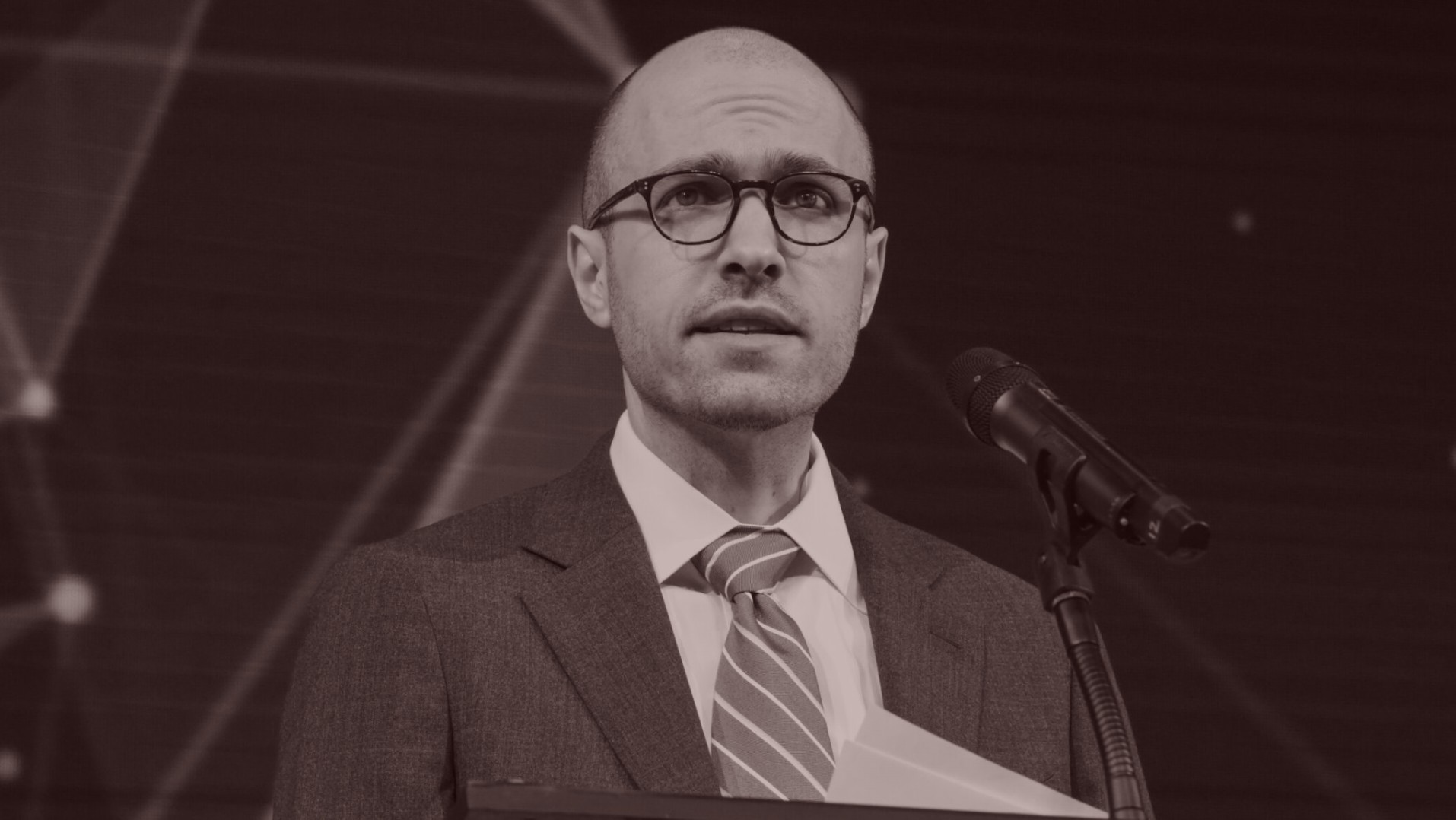
ValueAct, of course, is fully aware that the $350 million it spent to acquire its stake won’t necessarily buy the ability to boss around A.G. Sulzberger, the contemplative publisher now in his early 40s, or the Times Company board. It’s not going to get its way easily, that’s for sure. But, at the very least, it’s enough money to buy the hedge fund some access to the company’s C.E.O., Meredith Kopit Levien, and to the ears of the Sulzberger family. In its filing, ValueAct said it also intends to have “discussions” with company’s officers and directors about financing, dividends and M&A. ValueAct has also said it wants to aggressively expand the Times strategy of bundling its many subscription products—the core news product, sure, but also Cooking, Games, and The Athletic, among others—to demonstrate more value to consumers and grow the company’s global subscriptions. The market seems to agree that ValueAct may be on to something: Its 11 million shares in the company have increased in value by about 6 percent, to some $370 million, since it disclosed its stake last week.
NYTCo, for its part, appears to be on the same wavelength in terms of its growth strategy. But even if ValueAct’s suggestions are smart, as I’m sure they will be, the Sulzbergers are going to do what they want to do. Or, as the Times spokesperson Danielle Rhoades-Ha said in a statement earlier this week, “The board and management team will continue to make decisions that we believe are in the best interest of the company and all company shareholders.”
To get a sense of what the folks at ValueAct are up against by buying into a dual-class stock structure, I turned to our friend Scott Galloway. In 2008, he and a partner bought 20 percent of the New York Times Company stock and obtained two seats on the board of directors. But his calls to action fell on mostly deaf ears and Galloway left the Times board two years later. His investment fund lost about half its investment in the company, although his advice to the Sulzbergers—about diversifying, selling assets and investing more heavily in the Internet proved prescient. Galloway’s advice to Mason Morfit, the C.E.O. of ValueAct: “Start day drinking.” |
|
|
| Rivian, one of the many Tesla competitors in the electric vehicles market, recently announced a $1.7 billion loss in the second quarter, amid supply chain chokepoints and an increasingly challenging landscape. As a small investor in the company and a customer still awaiting delivery of my Rivian SUV, I’ve been eagerly watching its performance. (This is not investment advice.) I’ve also covered its progress, fits, and starts with journalistic fervor.
First, having visited the manufacturing plant in Normal, Illinois and having spent time with R.J. Scaringe, Rivian’s founder and C.E.O., I know that this is a serious company, doing serious manufacturing and producing three serious products—innovative and groundbreaking pickup trucks and SUVs, and, for Amazon, a very efficient delivery vehicle. Yes, it is having growing pains. Yes, it is having supply chain issues and can’t get enough of the parts it needs—especially computer chips—to keep up with customer demand. Yes, Wall Street overhyped its stock and retail investors, especially, have paid the price for that. Yes, it stepped on a rake, in the Netflix fashion, after it unilaterally announced it was dramatically raising prices on its vehicles even for customers, like me, who had put down a $1,000 deposit and are just waiting around for the vehicles to be manufactured. But the company quickly reversed course after the expected uproar, and grandfathered in the original pricing sheet for customers who put down deposits and implemented the price increases only on the new orders.
That won’t quell all its woes. My SUV is about a year overdue for delivery; a customer service rep told me this week that Rivian is getting ready to get ready to put a delivery timeline on its customers’ portals that will, supposedly, allow customers to anticipate when their vehicle will be delivered. That sounds like a 2023 delivery to me. The company has said it will be able to make 25,000 vehicles at its Normal facility in 2022, half of what it had originally hoped. The company’s backlog of unfilled orders, a combination of pickups and SUVs, is roughly 71,000. But Tesla endured similar vicissitudes half a decade ago, back when attention-hungry Elon Musk supposedly slept in the company’s manufacturing plant. And so we wait to do our part for the E.V. revolution.
On the bright side, Scaringe, a smart and ambitious fellow, is also the anti-Elon. He’s a family man. And he’s very unlikely to make a fool of himself on social media or smoke a joint with Joe Rogan or to offer to take Rivian private with a “funding secured” tweet. Rivian also has some runway, not infinite, but what seems at the moment like enough to get it to an expected production of 125,000 vehicles a year in Normal. (It is also slated to build a new manufacturing facility in Georgia.) Its 2021 I.P.O. was the largest of the year (as well as the most overhyped) and raised some $12 billion. At the end of the second quarter, the company had nearly $15.5 billion in cash on hand, about $1.5 billion less than it had at the start of the quarter. The company said its loss for the year would increase to around $5.5 billion, from its original estimate of $4.75 billion.
Rivian’s stock has certainly fallen victim to the uncertainties of the meme-friendly Covid-era equities market. Rivian went public last November at a price of $78 per share and, thanks to the Tesla-like hype, quickly traded up to nearly $180 a share, with a market value of around $140 billion. That very quickly proved unsustainable, and the retail investors who bought into the hype got singed. Since then, Rivian’s stock has fallen 61 percent and its market value is a more reasonable $35 billion. Things might be looking up.
The market has had a good month, after a rough 2022 so far. Rivian’s stock has had a good month, too, up 26.5 percent. I’m not sure, of course, how this story ends, but it remains a riveting one. The product is impressive and R.J. is learning some hard lessons in real time. He has to find a way to get customers into their vehicles, especially since at some point they will pull the plug on their deposit, get that money back, and move on. It’s still a bit worrisome, at least to me, about how one makes sure there’s a way to charge the vehicles between point A and point B. With an internal combustion engine, we know what to do. Just head to the gas station at the corner. It’s not nearly so simple with an E.V., at least not yet.
It’s worth recalling that E.V.s were first introduced a century or so ago, with Henry Ford and Thomas Edison working together on electric cars, which sold poorly, in part because they offered only a short distance of travel on a single charge and in part because Ford also was working on an internal combustion engine, fueled by cheap gasoline that could keep the car moving far longer than a bunch of batteries. It got to the point where even Edison, Mr. Electricity himself, encouraged Ford to produce gasoline cars instead of electric cars.
Now we’ve come full circle, and the E.V. revolution is finally here. I’m on board for it but obvious impediments remain. If anyone can figure it out, I’m thinking it’ll be Scaringe, who has a PhD from M.I.T. and wrote his thesis on creating a better internal combustion engine, of all things. |
|
|
| Speaking of Musk… He recently sold off $7 billion in Tesla shares, allegedly to preempt an emergency sale down the road should he be forced into buying Twitter, or in case “some equity partners don’t come through…” What’s Elon’s game here, one wonders. (Of course, it’s impossible to fully know what he’s thinking, or if he’s thinking.)
Pardon my French, but I think Elon is full of shit. He seems to be using any excuse these days to sell Tesla shares, especially since they are up 27 percent in the last month, roughly equivalent to the timing of his decision to back out of his deal to buy Twitter. He really wants us to believe that he sold $7 billion of Tesla shares because all of sudden he’s afraid he’s going to lose in Chancery Court? That might come as news to his attorneys at Skadden Arps, who have been arguing precisely the opposite.
Musk also wants us to believe that he raised this money in case “some equity partners don’t come through…” I’ve got news for you, Elon, these guys are long gone, or should be if they have a shred of sense left. Larry Ellison is a lot of things but an idiot is not one of them. The 18 or so equity partners he found were at his side to do the deal, not to futz around with him in a Delaware courtroom. I’d be surprised if most of them haven’t already bailed. They certainly did not sign up for the penalty phase of this charade, especially since I suspect the equity commitments from them were non-binding and, duh, wholly dependent on Elon completing the deal along the lines that he agreed to on April 25.
Regardless, he probably will need to get his hands on something like $5 billion in cash to settle with the Twitter board after he loses the court judgment in October, which is when the serious settlement negotiations will begin in earnest. So it was not unwise to sell Tesla stock at $900 a share rather than $700 a share, or when the market knows that he has to sell. As is his tell, he said it would be the last time he would sell Tesla stock, which is pretty much the same thing he said in April, when he sold $8.5 billion of Tesla stock and pretty much the same thing he tweeted in 2013 when he wrote, “Forgot to say one thing at Tesla annual shareholders meeting: just as my money was the first in, it will be the last out.”
None of that statement was true, of course. His money was not the first in at Tesla—he did not start the company—and it certainly hasn’t been the last out, even though he still owns around 155 million Tesla shares. I don’t begrudge the guy wanting to sell Tesla shares now and then. He’s rich and he’s entitled to diversify his holdings, just like anyone else. But as for trusting a word that comes out of his mouth? I might have given him the benefit of the doubt after “funding secured” since maybe he was just being flip and kind of goofing around. But after the Twitter debacle, which remains one of the most embarrassing corporate episodes in Wall Street history, fuhgeddaboudit. |
|
|
|
| FOUR STORIES WE'RE TALKING ABOUT |
 |
|
 |
| The “DeSantasy” Is Over |
| The F.B.I.’s Mar-a-Lago raid may have an unexpected casualty: Governor Ron DeSantis. |
| TINA NGUYEN |
|
 |
| Greenblatt Tells All |
| The legendary TV executive has a new memoir. Is it a prelude to his next moves? |
| MATTHEW BELLONI |
|
 |
| NFL's Secret Court |
| Eriq and Peter discuss how Goodell controls the league’s Vatican-like legal system. |
| PETER HAMBY |
|
|
|

|
|
|
| You received this message because you signed up to receive emails from Puck
Was this email forwarded to you?
Sign up for Puck here
Sent to
Unsubscribe
Interested in exploring our newsletter offerings?
Manage your preferences
Puck is published by Heat Media LLC
227 W 17th St
New York, NY 10011
For support, just reply to this e-mail
For brand partnerships, email ads@puck.news |
|
|