|
Welcome back to Dry Powder. I’m William D. Cohan.
Last week, as your retirement portfolio is aware, a Chinese company called DeepSeek revealed that it had created a free, open-source alternative to ChatGPT for a fraction of the cost. In response, the Nasdaq sank on Monday, and every A.I.-adjacent tech stock from Meta to Microsoft was dumped by nervous investors. Some V.C.s are likening this to a “Sputnik moment” for the U.S. tech sector, but as the dust settles after Monday’s selloff, I’ve noticed some cooler, perhaps wiser, heads prevailing. In today’s issue, a close look at the latest market frenzy.
But first…
|
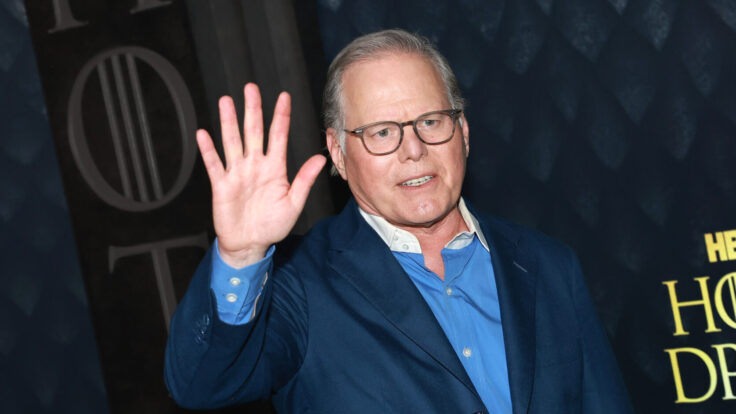
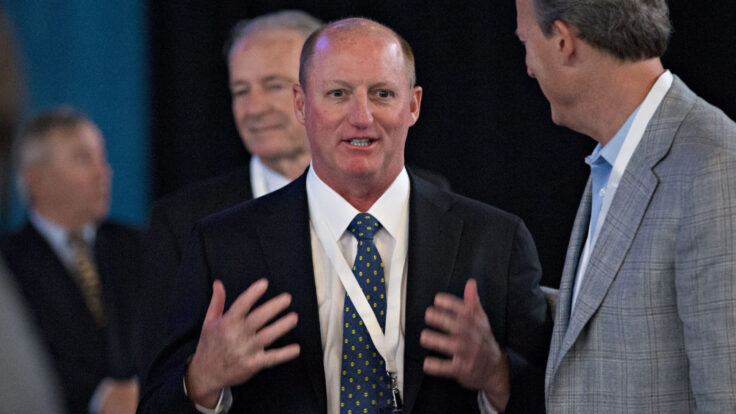
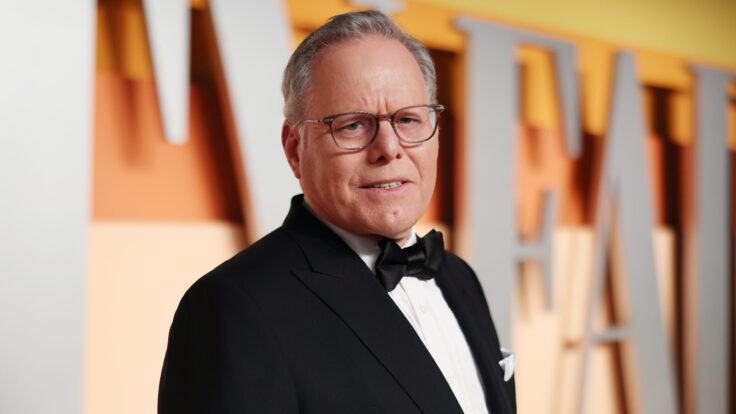
- Wall Street bonus envy: The griping about bonuses among the rank and file has begun in earnest, reports the New York Post, especially at JPMorgan Chase, where Jamie Dimon is slated to receive a $50 million picker-upper if he stays at the bank until 2026; and at Goldman Sachs, where David Solomon just received an $80 million stock grant that vests in 2030. (That’s on top of the $39 million in total compensation each C.E.O. received in 2024.)An equities trader at Goldman told the Post, “When news of Solomon’s bonus was released, a lot of folks here just rolled their eyes. Of course, that is where our money went.” The trader also complained that Goldman was like a “cult” that keeps employees around by “promising us promotions or money.” On bonus day, the paper reports, some Goldman employees “clocked out early” as a form of protest. “There’s a lot of frustration, anger, and disappointment,” said one banker. “It feels demotivating when leadership seems more focused on external perceptions than internal morale.”
Over on Wall Street Oasis, the industry message board, a first-year associate whined about getting a $135,000 bonus on top of his $200,000 base salary, posting that he or she (but probably he) was “not happy with the number,” and that he’d been “expecting more given the strong earnings.” Another banker “seethed” according to the Post, saying, “The bottom line for 2024 comp is this: the firm crushed it and a lot of people who made it happen were given cheap seats at the celebration.”The crocodile tears are killing me. First of all, as everyone surely knows by now, Wall Street bankers and traders get paid plenty, and have for decades, especially given that most of these firms are no longer private partnerships and none of these people have their own capital on the line. Where else can you get paid millions in annual compensation and not take any risk with your own money? The answer, of course, is nowhere. But there is always complaining, largely because Wall Street is the ultimate zero-sum environment, where everyone measures themselves on a relative basis, trying desperately to figure out how they stack up to their floor-mates, never giving a thought to how their pay compares to that of people in the real world. And since the yearly bonus pool is always a fixed amount, if someone else gets more, you get less.
During my years at Lazard, when it was still a private partnership, the expression was, “It’s not enough for you to succeed; others have to fail.” To drive that point home, every year Michel David-Weill, whose family had owned the firm through four generations, published the percentage of the pretax profits that the Lazard partners got paid each year. If you don’t think that list made grown men (and a very few women) go nuts, I’ve got news for you. Still, they were all getting paid more than they could ever dream of making by doing something else.
So I say: Chill out, friends. Revel in your bank accounts, and hunker down for the year ahead. We all know you ain’t going anywhere.
|
|
|
|
Yes, yes, DeepSeek’s low-cost alternative to ChatGPT might represent a sea change in how Wall Street models the financial impact of artificial intelligence. Markets like moats, after all. But investors racing for the exits ought to take the long view of history and stop losing their heads.
|
|
|
|
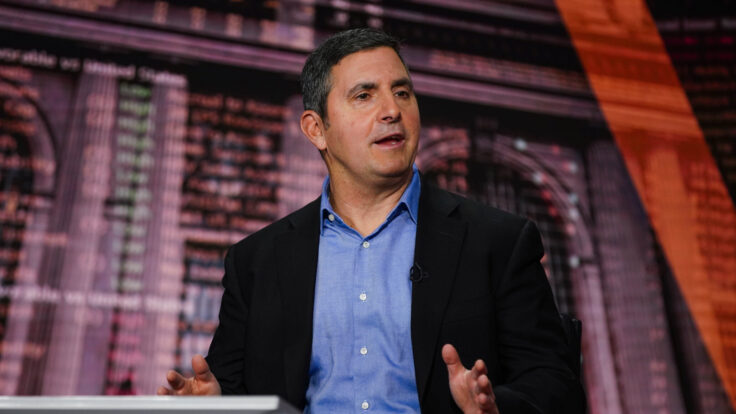
As the Nasdaq sank on Monday over fears that DeepSeek, a Chinese company, might undercut the entire American A.I. industry with its free, open-source alternative to ChatGPT, my old J.P. Morgan partner Tom Lee, now the head of research at Fundstrat Global Advisors, went on CNBC to offer some words of advice. Yes, he acknowledged, Nvidia had lost some $600 billion of market value—the largest single-day drop for any company ever—and every A.I.-adjacent tech stock from Meta to Microsoft was being dumped by investors. “Markets don’t like uncertainty,” Tom observed, calmly. “They like moats.” Nevertheless, “it’s an overreaction,” he argued. “I’d be looking at this as an opportunity.”
Of course, Tom was right. Yesterday the markets recovered some of what was lost on Monday, as people started returning to their senses. Personally, I love a market overreaction, especially when it comes after a prolonged, and largely inexplicable, period of irrational exuberance, in the argot of former Fed chairman Alan Greenspan. And that’s certainly what we’ve experienced for the past five years in the equities market—an extraordinary 86 percent run topped off by bona fide investor euphoria over the prospect that artificial intelligence will supercharge U.S. productivity and usher in some techno-utopia. The Nasdaq is up more than 136 percent in that time.
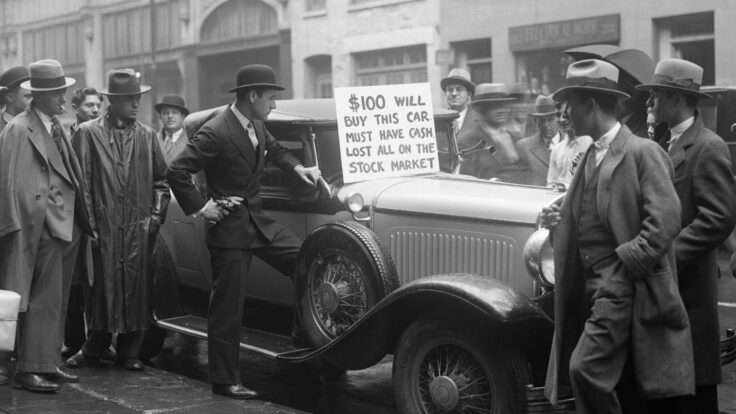
This isn’t investment advice, but it’s worth taking the long view of history. In my own career, I’ve lived through the 1987 crash; the 1989-93 credit crunch; the freak-out of 1998; the implosion of Long-Term Capital Management; the dot com bubble; September 11; the 2008 financial crisis; and most recently, the Covid pandemic, when stocks crashed and interest rates spiked before the Federal Reserve took control yet again, flooding the zone with liquidity and cheap money.
Every time, the correct move (market-wise, anyway) was not to panic, but to keep calm and carry on. I often return to Warren Buffett’s sage advice, “to be fearful when others are greedy and to be greedy only when others are fearful.” I think that’s the correct disposition in this moment, too.
|
|
That’s not to say that Silicon Valley has nothing to fear from competition in China, or that Wall Street shouldn’t be reassessing its models for how much value will accrue from A.I. to the Magnificent Seven: Apple, Microsoft, Alphabet, Amazon, Meta, Nvidia, and Tesla, which collectively shed about $1 trillion of equity value on Monday. For the past year, investors have rapidly bid up the market capitalization of companies with a stake in the A.I. gold rush, presuming that the massive capex required to build data centers and train new L.L.M.s would benefit the incumbent oligopoly. Indeed, the $500 billion “Stargate” joint venture that Donald Trump announced last week with OpenAI, Oracle, and SoftBank—to build data centers and expand electricity generation capacity—is premised on the notion that winning the A.I. war will require investment on par with the Manhattan Project.
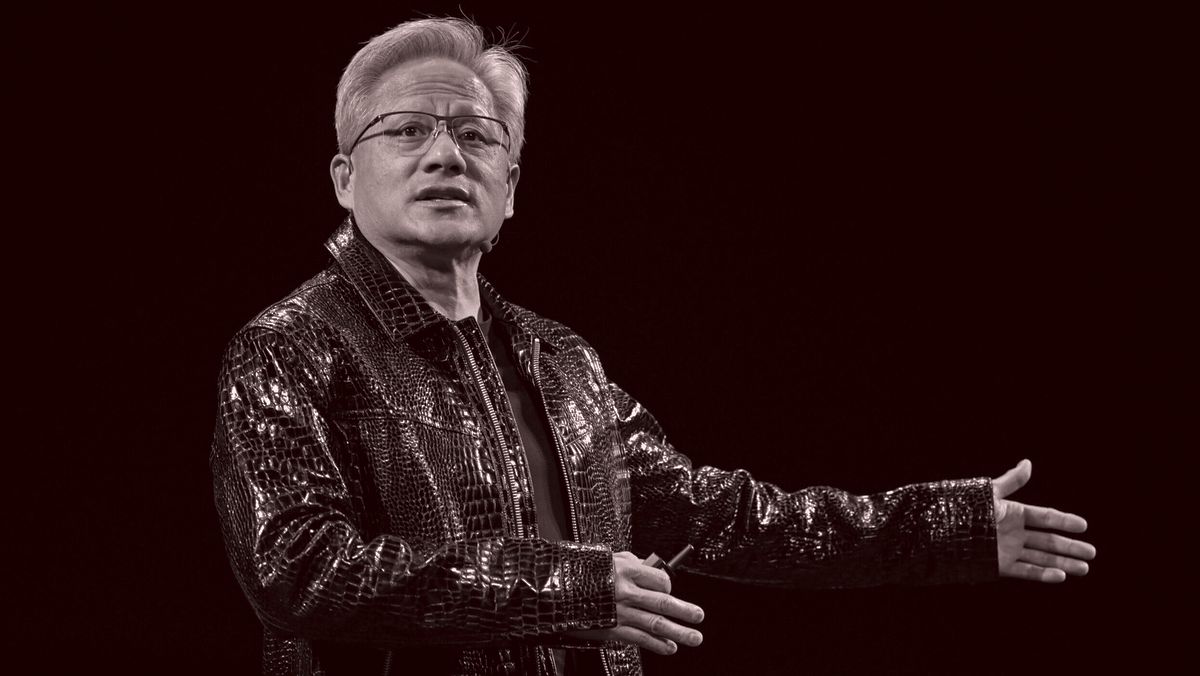
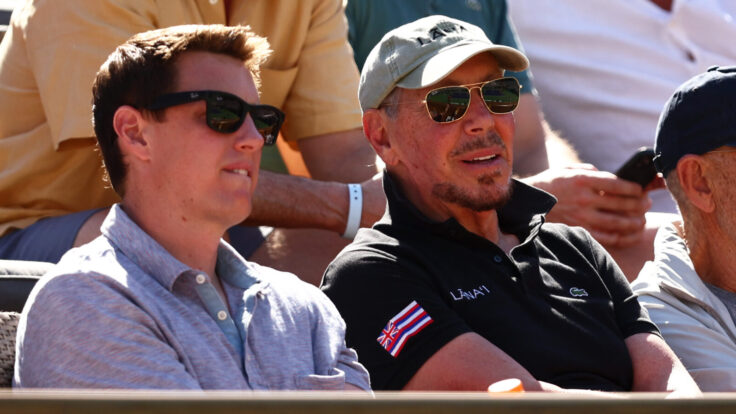
Then, last week, word spread that DeepSeek—a side project funded by a Chinese hedge fund—had created a model comparable to OpenAI’s GPT-4o for a fraction of the cost and requiring a tenth of the computing power that Nvidia specializes in providing. DeepSeek’s chatbot quickly shot to No. 1 in Apple’s app store. Investors in a variety of technology stocks freaked out and ran for the exits. The world’s 500 richest people supposedly lost $108 billion of wealth on Monday, led by Larry Ellison, whose net worth declined by $22.6 billion; and Jensen Huang, Nvidia’s co-founder, who lost $20 billion, or some 20 percent of his fortune. Elon Musk lost $6.4 billion of his net worth on Monday. Of course, they all remain impossibly wealthy—so wealthy, in fact, that these one-day losses are basically immaterial to them. The Nasdaq is down again today, but it’s still more or less flat over the past two months.
Still, it’s no surprise that DeepSeek’s breakthrough, which some V.C.s are likening to a “Sputnik moment” for the U.S. tech sector, is reverberating in the market, forcing executives and investors to modulate their A.I. euphoria and reassess their assumptions. While Microsoft and OpenAI are investigating whether the Chinese insurgent piggybacked on their models to build its own (that’s rich…), the real shock is the implication that the cost of A.I. may not scale along with demand. “Jevons paradox strikes again!” Satya Nadella, the C.E.O. of Microsoft, wrote Monday on LinkedIn, referring to the theory that “as A.I. gets more efficient and accessible,” it will be reduced to a commodity. Great news for markets in the long term, although perhaps a short-term problem for Nvidia.
|
One faithful Wall Street eminence, a lusty contrarian, wrote to me on Monday that his “decades” of market experience has led him to the conclusion that “stocks have their sharpest drops from their highest peaks when all see only upside.” I’d say we experienced a healthy dose of reality on Monday. I think we have a few more doses to take before we’re done here, even if in the longer run, owning stocks—at least over the past 45 years or so—has proved to be a major wealth generator.
As the dust settles after Monday’s selloff, I’ve noticed some cooler, perhaps wiser, heads prevailing. BNP Paribas Securities’ chief U.S. economist, James Egelhof, wrote that the DeepSeek breakthrough will be good news in the long run. “We think cheaper A.I. means more A.I., more quickly,” he wrote. “This should mean a greater and more rapid productivity boom as the A.I. rollout snowballs. We are not concerned about recession risks directly ensuing from, for example, reduced investment in data centers, and we think software investment might rise to offset declines in data center investment.”
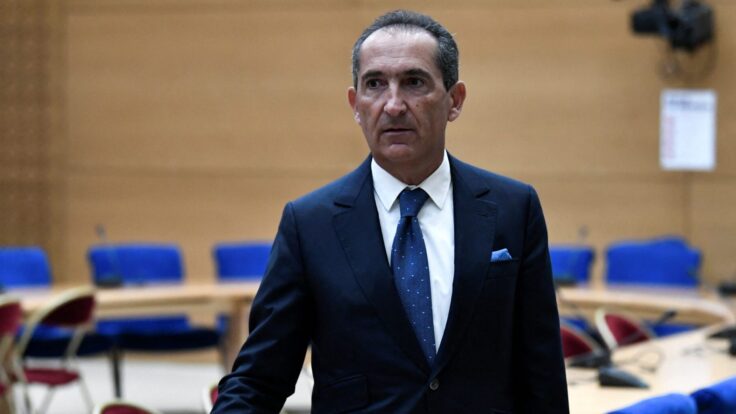
Then there’s Pat Gelsinger, the former C.E.O. of Intel, who knows a thing or two about chips and falling off a high perch. (Intel, which has had its lunch almost completely eaten by Nvidia, is often mentioned as a takeover candidate these days.) “Wisdom is learning the lessons we thought we already knew,” he posted on X on Monday, saying DeepSeek offers three lessons. First, computing “obeys the gas law—[m]aking it dramatically cheaper will expand the market for it. The markets are getting it wrong, this will make A.I. much more broadly deployed.” Second, “[e]ngineering is about constraints. The Chinese engineers had limited resources and had to find creative solutions.” And, finally, “Open Wins.” DeepSeek, Gelsinger said, will help “reset the increasingly closed world of foundational A.I. model work.” He signed off, “Thank you DeepSeek team.”
Tom Lee, despite being a perennial bull, has been pretty much right to be exuberant for the 34 years or so he’s been studying and commenting on the stock market. I think we’re still in need of a major correction, myself—especially in a number of these crazy meme stocks, such as Tesla and MicroStrategy, among many others, which have gotten far out over their skis for no good reason. But Lee said something else on CNBC that stuck with me. “Markets just generally do fire, ready, aim,” he remarked, quoting the old Wall Street truism. That’s what happened on Monday.
|
|
|
|
Join Puck’s chief political columnist, John Heilemann, as he roams the corridors of power and influence in America on this twice-weekly interview show, taking you beyond the headlines with the people who shape our culture: icons and up-and-comers, incumbents and insurgents, moguls and machers in the overlapping worlds of politics, entertainment, tech, business, sports, media, and beyond. The conversations are rich and revealing, unrehearsed and unexpected… and reliably impolitic. A Puck-Audacy joint, new episodes drop every Wednesday and Friday.
|
|
|
|
An essential, insider-friendly Hollywood tip sheet from Matthew Belloni, who spent 14 years in the trenches at The Hollywood Reporter and five before that practicing entertainment law. Subscribers also receive What I’m Hearing+, a companion email from Eriq Gardner focused on entertainment law, as well as weekly box office analysis from Scott Mendelson.
|
|
|
Need help? Review our FAQ page or contact us for assistance. For brand partnerships, email ads@puck.news.
You received this email because you signed up to receive emails from Puck, or as part of your Puck account associated with . To stop receiving this newsletter and/or manage all your email preferences, click here.
|
|
Puck is published by Heat Media LLC. 107 Greenwich St, New York, NY 10006
|
|
|
|