{{ 'now' | timezone: 'America/New_York' | date: '%b %d, %Y' }}
|
|
|
Happy Sunday and welcome back to The Best & The Brightest. I’m Leigh Ann
Caldwell, writing from the local ski resort on this chilly M.L.K. weekend. At least there’s snow.
The Senate will be out of session this week, but the House is in, to the consternation of reporters who cover both chambers. So tonight, I’m taking a closer look at the dilemma facing House Democrats—namely, their desire to hold Trump accountable while reckoning with the reality that they have very little power, and that another wave of impeachments might
not be the best way to win over new voters.
Plus, exclusive news on Hakeem Jeffries’ plans to investigate Kristi Noem, and Reps. Jamie Raskin, Joe Neguse, and Joe Morelle’s shadow committee to safeguard the midterms…
Also mentioned in this issue: Bennie Thompson, Chris Coons, Robert Garcia, Pete Aguilar,
Robin Kelly, Dave Min, Melanie Stansbury, Al Green, Shri Thanedar, and many more.
But first…
|
- Climate
change in Copenhagen?: A bipartisan group of lawmakers traveled to Copenhagen this weekend to reassure the Danes that there is opposition in Congress to Trump’s attempt to forcibly take over Greenland. Democratic Sen. Chris Coons, who led the delegation, told me yesterday that Danes are “dumbstruck,” “alarmed,” and “wounded” by the president’s aggression toward a NATO ally. (During the trip, which was packed with meetings, the lawmakers visited a memorial to Danish soldiers who died
fighting in Iraq and Afghanistan on behalf of the U.S.)Coons said his Danish colleagues are searching for something to offer the Trump administration in lieu of buying, or invading, Greenland. But the path feels very narrow. Vice President J.D. Vance and Secretary of State Marco Rubio wouldn’t entertain anything less than control of the territory during meetings with Danish officials, including Foreign Minister Lars Løkke Rasmussen,
Coons told me.
I asked Coons whether Trump was threatening the very existence of NATO. “Yes. Yes. Yes. Yes. Yes. Yes,” he said, “This is a 75-year-old partnership that has kept the peace in Europe. What will change if they have to look at us as an enemy?”
- Bessent says Trump aims to avoid “hot war” in the Arctic: Meanwhile, on Meet the Press today, Treasury Secretary Scott Bessent defended Trump’s threat to
impose an additional 10 percent tariff (rising to 25 percent this summer) against Denmark and a half-dozen other European nations that mobilized troops to Greenland. The arrival of military forces from the U.K., Germany, France, the Netherlands, Finland, Norway, and Sweden was ostensibly in response to Trump’s warning that Europe could not defend Greenland against Russia and China—but it was also very clearly a threat that Europe intends to defend the territory against the U.S., too.“It
is a strategic decision by the president,” Bessent said, referring to the use of tariffs as leverage. “This is a geopolitical decision. And he is able to use the economic might of the U.S. to avoid a hot war. So why wouldn’t we do that?”
- Dems’ D.H.S. leverage: Democrats are beginning to feel comfortable talking about immigration again, as new polls find cratering support for ICE tactics after the killing of Renee Good. On the Hill, the most immediate outlet for Democratic pushback is the appropriations process: Congress is currently locked in a stalemate over funding for the Department of Homeland Security, and Democrats are demanding new accountability measures—including more training for ICE, a prohibition on masks, mandated body cameras, and a requirement that agents obtain warrants before making arrests. I’m
told that a number of Republicans are open to some of the accountability measures in the bill, and there are rumors that a D.H.S. bill will actually be released this week. I’m skeptical.We’ll see where this goes. But Democratic leadership is not in favor of holding up passage of the D.H.S. funding bill beyond the January 30 deadline, and funding for ICE and Customs and Border Protection is already locked in for several years thanks to the One Big Beautiful Bill. Failing to fund
D.H.S. would instead shut down T.S.A., FEMA, and other critical, non-immigration functions. A continuing resolution of last year’s funding levels is probably the most likely outcome.
|
|
|
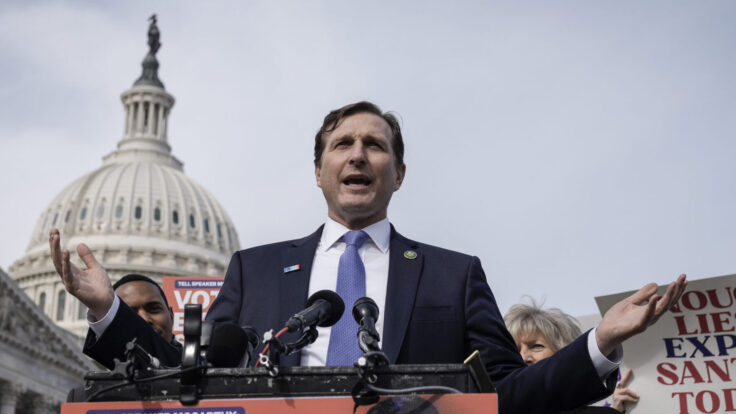
While House Democrats are divided over how to challenge Trump, leadership is quietly
building a case against the Homeland Security secretary—beginning with potential shadow hearings, outside the official committee structure, that would gather the evidence against her.
|
|
|
Over the past several weeks, as Donald Trump has made a show of expanding and redefining
presidential power, Democrats have been anxiously discussing how to hold him accountable, both legislatively and politically, in text chains, conversations on the House floor, and closed-door caucus meetings. “No doubt about it, the military actions and threats and ICE’s gestapo tactics have added a lot of urgency to our conversations and deliberations,” one House Democrat told me. The killing of Renee Good by an ICE agent—captured in videos that have been viewed by 69 percent
of Americans, according to a recent poll—has only added to the feeling that Democrats must find a way to push back.
The question, especially for party leadership, is what to do about it. Democrats are still in the minority; they have no say over committee agendas, no authority to issue subpoenas, and no control of committee resources or budgets. And Democratic strategists have pointedly counseled leadership to stay away from the I-word: So far, only a few Capitol Hill outliers are
actually calling to impeach the twice-impeached Trump—including serial impeachment advocate Rep. Al Green and oddball Rep. Shri Thanedar—although that could change. Rep. Melanie Stansbury of New Mexico gave an eyebrow-raising speech on the House floor last week, saying “there will be consequences” if Trump seizes Greenland, and retiring Republican Rep. Don Bacon
told the Omaha World- Herald that he’d support impeaching Trump under those circumstances. But for most House Democrats, one member told me, “the immediate priority [is] stopping the damage he’s doing.” Any articles of impeachment, the congressperson added, would be “about 100 pages long,” but that’s not
practical right now.
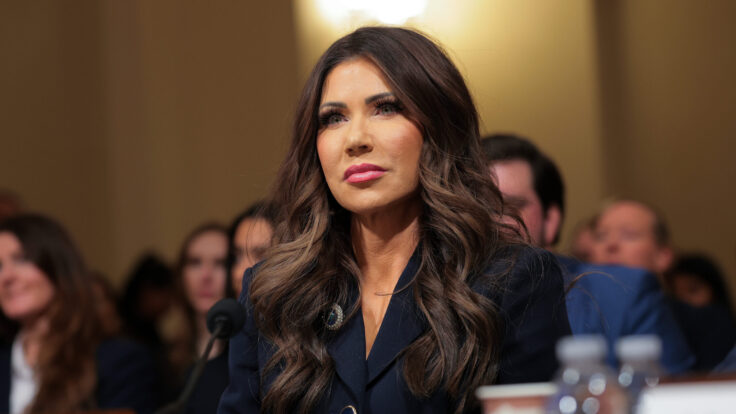
However, impeaching Department of Homeland Security Secretary Kristi Noem, who has become the face of ICE overreach, is not out of the question. As my colleague Peter Hamby reported last week, support for ICE has collapsed over the past year—47 percent of Americans believe the agency is making the country less safe,
compared to just 34 percent who say it’s making the country safer. In fact, almost half of Americans—46 percent—now support “abolishing ICE,” according to a new poll from The Economist and YouGov.
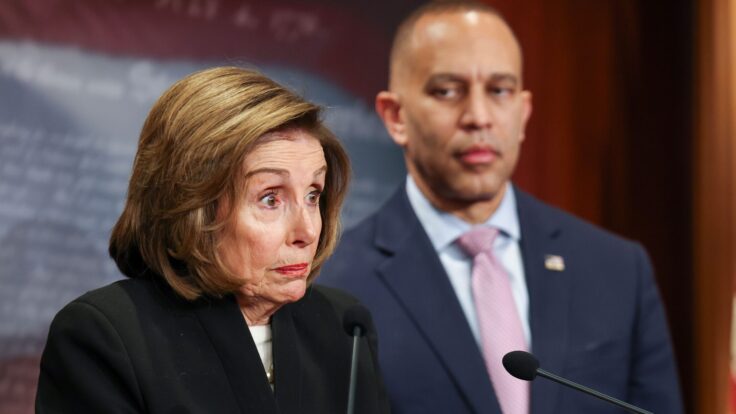
That rapid shift in public opinion may have emboldened House Democratic leader Hakeem Jeffries, who is now laying the groundwork for extensive oversight of Noem and ICE, especially if Democrats retake the chamber in November, according to two people familiar with the
effort. Late last week, Jeffries hosted a meeting with Reps. Jamie Raskin, Robert Garcia, and Bennie Thompson—the top Democrats on the Judiciary, Oversight, and Homeland Security Committees, respectively—as well as Whip Katherine Clark and Rep. Joe Neguse, a member of his leadership team, to discuss how to hold Noem and other D.H.S. officials accountable. Asked explicitly about whether Noem could be impeached, Jeffries has said twice in the last
week, “We haven’t ruled anything in, and we haven’t ruled anything out.”
|
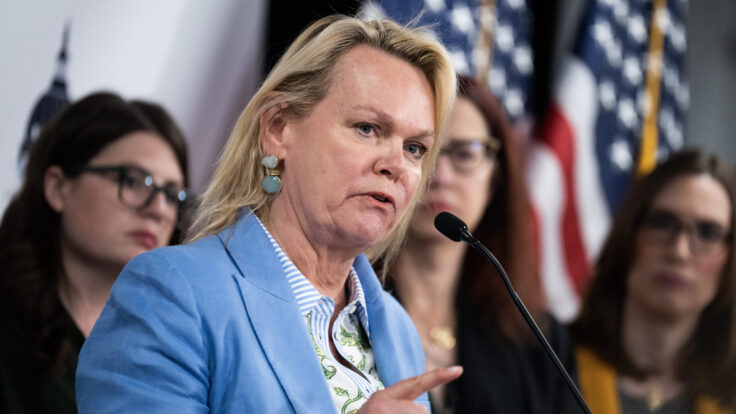
Rep. Robin Kelly isn’t waiting. On Wednesday, the Illinois congresswoman introduced articles
of impeachment against Noem on charges of obstructing Congress, self-dealing, and violation of public trust. Eighty-six House Democrats immediately signed on. Party leaders haven’t exactly endorsed the impeachment articles—“Members are going to find their way to get their angst out about unqualified folks, and that’s perfectly understandable,” Rep. Pete Aguilar, the number three in House Democratic leadership, told me—but they haven’t quashed them, either. And many members are
taking calls to impeach Noem “very seriously,” said one senior Democrat aide.
Another senior Democrat told me that even if impeaching Noem is not the primary objective or outcome, the case against her may include shadow hearings held outside the official committee structure, as well as collaboration with cities and states to obtain documents and information about her conduct. There’s also plenty of publicly available information, of course—from Noem’s controversial deployment of ICE, to
her spending more than $150 million to buy two Gulfstream G7s, to accusations of politicizing FEMA (when she’s not calling to abolish it). ProPublica has reported on how a company run by the husband of Noem’s spokesperson received fast-tracked D.H.S contracts totaling $220 million, while The Washington Post has
revealed how D.H.S. pushed a nearly $1 billion contract to a company led by a donor to a pro-Trump group.
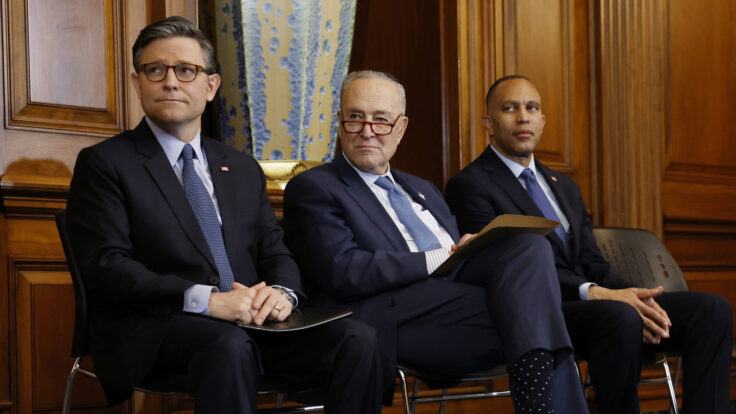
In the current Republican-controlled House, articles of impeachment are probably D.O.A.—although Speaker Mike Johnson has an extraordinarily narrow minority, and a few dissidents might be tempted to cross party lines and support a
privileged impeachment resolution if the politics of ICE become that toxic. But Democrats are taking the long view, following the meticulous Nancy Pelosi playbook. The former speaker oversaw two Trump impeachments by slowly building a case and moving to impeach only when the votes were there—a situation that Democrats would very much like to find themselves in after the midterms.
In the meantime, Democratic aides think a thorough investigation could be litigated
in the political sphere in front of voters before November—and, perhaps optimistically, curb ICE’s worst behavior. “We’re having a lot of conversations about what that looks like, what the best way to achieve the result that we all want is—and that is both oversight and accountability of the administration in the short term, and winning in November, and then more oversight and accountability,” Rep. Aguilar said.
|
The changing political tide risks creating some whiplash. After all, it wasn’t that long ago that Democrats
were reeling from the aftermath of calls to “abolish the police.” And it was just over a year ago that Democrats lost a presidential election in large part because of the chaotic flow of immigrants over the southern border. But while Trump has kept his promise to close the border, where crossings are at their lowest level in 50 years, voters clearly have less patience with his administration’s aggressive internal deportation campaign, creating a political opening for
Democrats.
Republicans, for their part, insist that the pushback against ICE will remind undecided voters in swing districts that Democrats can’t be trusted on immigration. They’re tracking anti-ICE rhetoric and targeting Democrats like frontliner Rep. Dave Min of California, who signed on to Rep. Kelly’s impeachment resolution. Democrats are indeed trying to walk a fine line: criticizing Noem and demanding accountability and guardrails for overzealous ICE agents, while
being careful not to call for ICE to be defunded or abolished.
No Democrat, for example, has signed on to Rep. Shri Thanedar’s bill to abolish ICE, a progressive mantra wielded by Alexandria Ocasio-Cortez and others during Trump’s first term. Yet the politically adroit A.O.C. herself has doubled down on her objections to ICE, tying the “rogue agency,” as she calls it, to the political fortunes of J.D. Vance, her putative opponent in a potential 2028
presidential race, who has called Renee Good a “deranged leftist” whose death was “a tragedy of her own making.” (A.O.C. has not, however, called for ICE to be abolished during Trump 2.0, which is a notable shift in her rhetoric.)
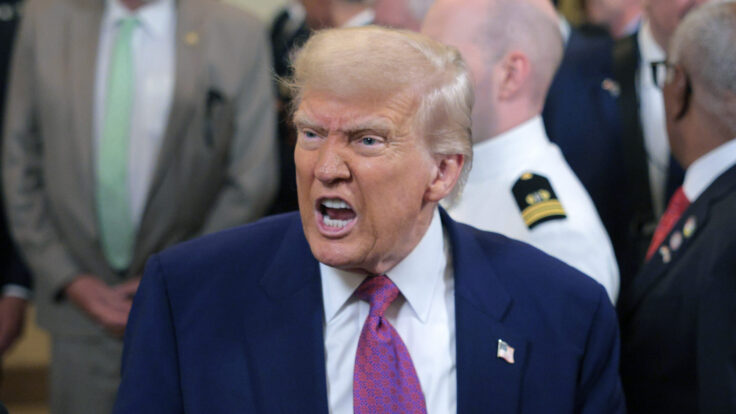
Trump, meanwhile, trolls on—musing about invoking the Insurrection Act to send troops into Minneapolis and other blue cities, and even suggesting to Reuters last week that he might cancel the midterm elections. With a president who seems to view law enforcement
and the military as his to deploy at whim, Democrats are preparing for the unexpected come November, according to two party sources.
Worried that Trump will try to undermine the midterms, Reps. Raskin, Neguse, and Joe Morelle—the top Democrat on the House committee that oversees elections—are starting to game out a variety of scenarios, including legal strategy and election protection. What happens, after all, if Trump, who still believes the 2020 election was
stolen from him, decides to deploy troops on or near Election Day under the guise of combatting fraud? Or if he tries something less dramatic, like eliminating mail-in voting? Democrats want to be prepared.
|
|
|
Join Emmy Award-winning journalist Peter Hamby, along with the team of expert journalists at Puck, as they let you in on the
conversations insiders are having across the four corners of power in America: Wall Street, Washington, Silicon Valley, and Hollywood. Presented in partnership with Audacy, new episodes publish daily, Monday through Friday.
|
|
|
The industry’s go-to source for unflinching reporting on the trillion-dollar business of artificial intelligence - perhaps the
single most important technology of our time. Ian Krietzberg, the powerhouse journalist behind The Deep View, delivers twice-weekly insights into the latest dealmaking and breakthroughs in A.I., and how the intersecting worlds of finance, entertainment, media, and politics are being transformed in its wake.
|
|
|
Need help? Review our
FAQ page or contact us for assistance. For brand partnerships, email ads@puck.news.
You received this email because you signed up to receive emails from Puck, or as part of your Puck account associated with {{customer.email}}. To stop receiving this newsletter and/or manage all your email preferences, click here.
|
Puck is published by Heat Media LLC. 107 Greenwich St., New York, NY 10006
|
|
|
|