{{ 'now' | timezone: 'America/New_York' | date: '%b %d, %Y' }} |
|
|
Welcome back to The Best & The Brightest. I’m Leigh Ann Caldwell, writing to you
on a momentous day. In Israel, the last remaining living hostages kidnapped by Hamas on October 7, 2023, have been released to their families. In Gaza, the bombardment has stopped, allowing millions of displaced Palestinians to begin to rebuild their lives. Who knows whether the peace can hold, but today offers rare hope amid a horrendous two-year war that started with the murder of 1,200 Israelis and has since taken the lives of some 67,000 Palestinians.
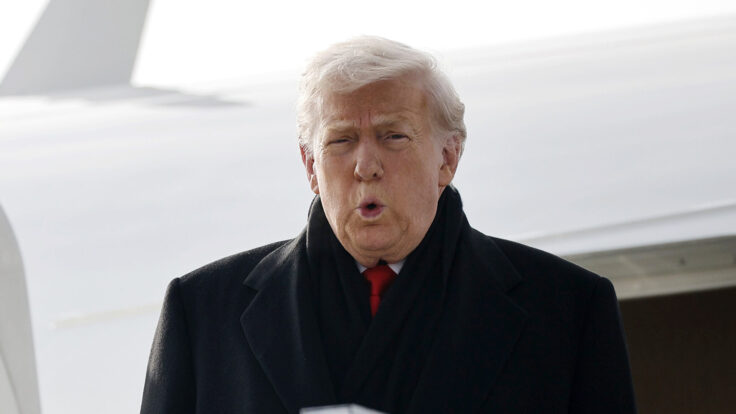
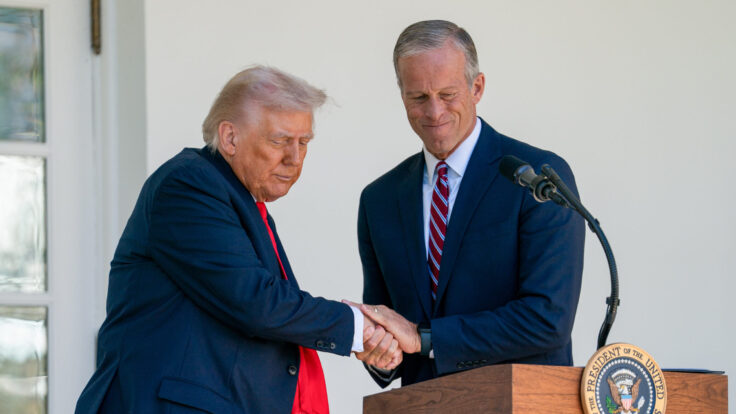
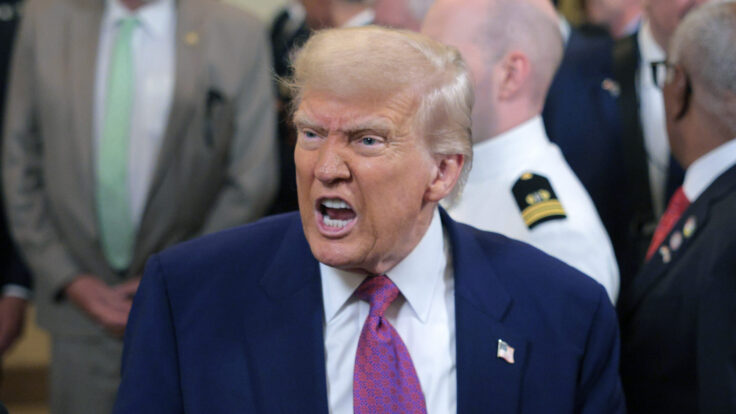
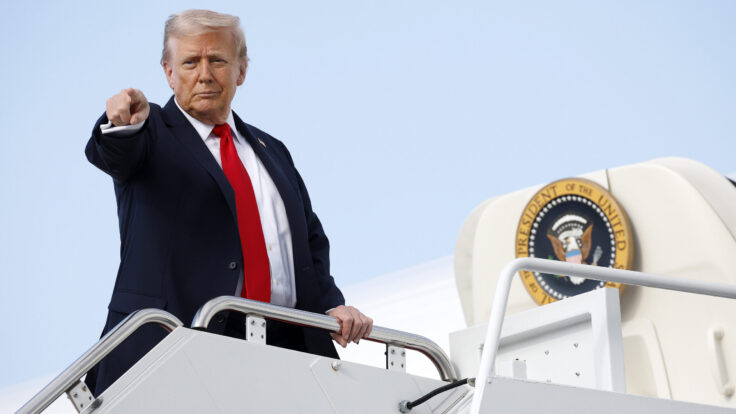
President Trump
is basking in the glory of having pushed Israel and Hamas, along with Egypt, Qatar, and Turkey, to an agreement. But his success overseas hasn’t been mirrored at home, where the U.S. government is shut down and the administration is considering the specious invocation of the Insurrection Act to justify military troops in American cities.
Meanwhile, tonight, my partner Bill Cohan has a close look at the Genius Act, the crypto legislation signed into law this summer that,
as Bill writes, could disrupt the entire global payment system. Curiously, though, he finds that almost no one on Wall Street is talking about it. His illuminating interview with Chris Land—general counsel to bill co-sponsor Sen. Cynthia Lummis of Wyoming—is below the fold. |
|
|
What Section 453 really means
Section 453 doesn’t block lawsuits or give blanket immunity to pesticide
companies.
Section 453 ensures labels are based on the EPA’s safety assessment under their guidelines and keeps companies accountable when they break these.
Explore more about Section 453 here |
|
|

| Abby Livingston
|
|
- Democrats hunker down:
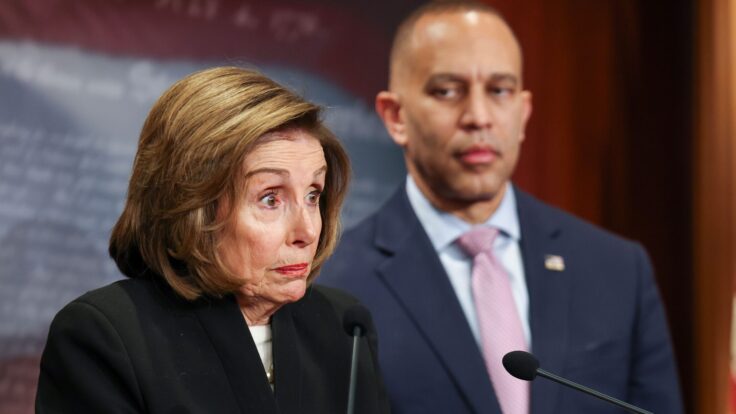
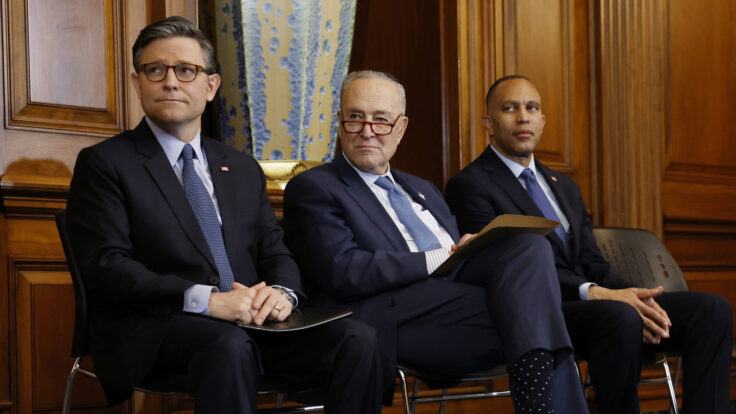
We’re two weeks into the Great Shutdown of 2025, and there’s no indication of a breakthrough. Democrats, in particular, are elated with public polling that shows voters are largely blaming Republicans for the impasse, and House Democratic sources have described a sense of unity behind House Minority Leader Hakeem Jeffries—which wasn’t a given when this whole drama started. Even the most nitpicking Dem sources I’ve spoken to are pleased with how the politics are playing
out.
Still, some Republicans say they’re encouraged that their polling hasn’t collapsed as it did in previous shutdowns, and that the current messaging war will be determinative. “Both sides think they’re winning,” one wired G.O.P. House operative told me. “And when both sides think they’re winning, there is no impetus [to end it].”
Trump has also eased the pressure to negotiate a speedy resolution to the standoff by
decreeing that military members will be paid from previously appropriated funds—neutralizing a pressure point that would have emerged for Dems had troops missed their first paycheck on October 15. Now, media attention is turning to the nation’s most critical airports, where staffing shortages among unpaid air traffic controllers
and T.S.A. agents could create havoc for constituents, although the administration might try to intervene there, too.
Two other dates to keep in mind are October 20 and November 1—the paydays for Senate and House staffers, respectively. Most voters won’t lose any sleep over congressional staff falling behind on their rent. But many Hill staffers live paycheck to paycheck, and members of Congress, who will still be getting paid themselves, could face some internal revolt.
|
|
|
And now, on to the main event… |
|
|
An illuminating conversation with Chris Land, the general counsel to Wyoming Senator Cynthia
Lummis, about the Genius Act—the potentially game-changing stablecoin legislation that nobody’s talking about. |
|
|
Over the summer, Congress did something quite startling: It passed bipartisan legislation with the potential
to disrupt the traditional system of global payments, long dominated by Wall Street banks. And yet, for some strange reason, very few people on Wall Street seem to be talking about the Genius Act—the backronym is for Guiding and Establishing National Innovation for U.S. Stablecoins—which President Trump signed into law on July 18.
Stablecoins are a type of cryptocurrency pegged to a real and stable asset, like the U.S. dollar or short-dated Treasury bills. They
can move around the world instantly, like other crypto tokens, but theoretically without the same risks. They’re also cheaper to transact than other forms of settlement. Until recently, stablecoins existed in a sort of legal grey area, which prevented more risk-averse financial institutions from building new products on the blockchain. But now that there’s a regulatory framework in place, it’s game on. |
|
|
Why glyphosate is backed by regulators worldwide For 50 years, glyphosate-based products have been approved by regulators in the U.S., EU, Canada, Japan and more. Bayer stands behind these findings, and Section 453 reinforces these science-based processes, keeping labels reliable and consistent. Learn more about Section 453 here |
|
|
For my own edification, as well as yours, I decided to call up Chris Land,
the general counsel to Wyoming Senator Cynthia Lummis, one of the two Republican co-sponsors of the Genius Act along with Sen. Bill Hagerty of Tennessee. Land worked on writing the legislation, alongside Luke Pettit, a former senior policy advisor to Hagerty who is now the assistant secretary for financial institutions at the U.S. Treasury. (Pettit, in effect, is charged with implementing the
new law.)
In layman’s terms, the Genius Act provides the regulatory architecture for the speedy and safe movement of stablecoins around the world, outside of the traditional banking system, where “wiring” money can take several days to settle and often costs a fee. Obviously, the old way of doing things has been plenty lucrative for the banks, which is why, Land told me, many of them opposed the legislation. But since our dealmaking president supported the bill—a favorite of the crypto
industry, which donated tens of millions of dollars to Trump’s campaign—the big banks had to reluctantly go along, perhaps hopeful that the president would get around to deregulating them, too.
In Land’s telling, the Genius Act represents a “paradigm shift” in the payments system. As I’ve explained many times, we have what is known as a fractional banking system, meaning that we deposit our hard-earned cash in the bank, which is then free to take that money and lend it to
borrowers, earning money along the way. The system works as long as everyone doesn’t withdraw his or her money at the same time, as happened in 2023 at Silicon Valley Bank. Under our fractional banking system, we’ve decided we can tolerate this kind of risk, as long as it doesn’t happen too often—we generally see such crises every 20 years or so.
The Genius Act, however, explicitly prohibits stablecoin issuers from making loans against their reserve assets—every digital dollar is
meant to be fully backed by a nearly riskless security, such as Treasuries. The other benefit, in theory, is to separate the payment and lending functions of banking. “The U.S. payment system is one of the worst in the world, among first-world countries,” Land told me; it’s slow and hasn’t seen major innovation for “a generation or two.” Cutting down transmission times, he added, “is actually good for the economy,” with the potential to unlock hundreds of billions of dollars of “trapped
capital.” |
So what’s in it for the stablecoin issuers? Say you’re Ford Motor Company, and want to send $1 billion in
cash to a subsidiary in Australia. Absent the new law, the money would likely have to be wired through multiple financial institutions, taking several days and racking up a bunch of fees in the process. Under the Genius Act, though, a nontraditional bank, like Circle or Tether, would deposit $1 billion worth of stablecoins, backed 100 percent by Treasuries as well as the issuer’s capital, into Ford’s digital wallet. The stablecoin could then be transferred “instantly” to the Australian
subsidiary on the blockchain. “They don’t have to go through all these banks and pay fees and take time to settle,” he said.
Okay, so how does Circle make money? First, Land explained, the stablecoin issuer takes a small fee on the transaction, something like 25 basis points. And since it’s required to hold Treasuries as security for the full amount of the stablecoins, Circle gets the interest income from those securities when, say, the Australian subsidiary of Ford redeems the
stablecoins for dollars, causing Circle to liquidate some of its Treasury inventory. “It’s a combination of both transaction fees and the yield on the bonds,” Land said. The stablecoin issuers also make money from the float, too, since there are redemption limits on how much of the money can be redeemed at any one time. |
|
|
Circle, which went public in June, now has a market cap of $38 billion. The company’s $1.7 billion in 2024
revenue was derived mostly from the interest income on the reserves backing its stablecoins. Meanwhile, the privately held Tether owns around $100 billion worth of Treasury securities, making it among the largest holders of such securities in the world. (In 2024, Cantor Fitzgerald, the company owned by the family of Howard Lutnick, the Commerce Secretary, bought a $600 million convertible debt instrument in Tether, convertible into a 5 percent stake in the company.) Not bad for
a pair of companies that were launched in 2013 and 2014, respectively.
This success demonstrates why the big Wall Street banks, which had been slow to experiment with crypto products during the Biden era, are now adjusting their outlook under Trump. JPMorgan Chase, for instance, is looking at issuing a stablecoin. In July, C.E.O. Jamie Dimon said that he thinks stablecoins are “real,” and allowed that the bank needed to learn about the product to
understand it “and be good at it.” David Solomon, the C.E.O. of Goldman, has said that his firm is studying stablecoins and is anxious to see how they fit into the financial services industry.
Land noted that we’re still in the “pre-adoption” phase of stablecoins, where many financial institutions are trying to decide whether or not to issue them, and looking to see whether the interest from customers is sufficient to make it a new source of revenue. He
predicted that banks such as Goldman and Bank of New York Mellon are more likely to be early adopters, while Bank of America, which is more consumer-oriented, doesn’t appear to have much interest in stablecoins. Another possibility is that Wall Street will come together to offer an alternative stablecoin currency that would compete with the dollar. There has been recent reporting that nine big banks are considering a plan to jointly issue a stablecoin backed by a basket of G7 currencies.
|
Regardless, it strikes me that there’s been surprisingly little discussion thus far, amid the legacy players,
about a fintech innovation that could completely change the payments market within a few years. And there are larger, geopolitical impacts to consider, too. As Andy Mukherjee wrote for Bloomberg last week, the rise of U.S. stablecoins could draw capital from across the global financial system, especially in countries
with high inflation or unstable governments that are looking for access to dollars without having to worry about fees or capital controls. According to one estimate, U.S. stablecoins could draw $1 trillion from banks in emerging markets over the next few years, strengthening the dollar—bad news for
China, and also for America’s trade balance, although I doubt Trump was thinking about the consequences of digital dollarization when he signed the Genius Act into law.
It’s likely good news for Wyoming, though, which is among the reasons why Senator Lummis co-sponsored the bill. “It’s an economic development project for Wyoming,” Land explained. “Essentially, she wants Wyoming to turn into a financial services hub for crypto, kind of like South Dakota did in 1981 with credit cards,”
creating something like 10,000 new jobs in the state.
And it’s probably good, in the long run, for the whole country, too. The move toward digital currencies is inevitable, and there may be real first-mover advantages to countries that can perfect the regulatory infrastructure first. The Genius Act is not a perfect law by any stretch of the imagination, I’m sure, but the fact that it got passed at all, in this crazy, do-nothing Congress, makes it a major accomplishment, even if most
people are clueless about what it actually does. |
|
|
Join Emmy Award-winning journalist Peter Hamby, along with the team of expert journalists at Puck, as they let you in on the
conversations insiders are having across the four corners of power in America: Wall Street, Washington, Silicon Valley, and Hollywood. Presented in partnership with Audacy, new episodes publish daily, Monday through Friday. |
|
|
Unique and privileged insight into the private conversations taking place inside boardrooms and corner offices up and down Wall
Street, relayed by best-selling author, journalist, and former M&A senior banker William D. Cohan. |
|
|
Need help? Review our FAQ page or contact us for assistance. For brand partnerships, email ads@puck.news. You received this email because you signed up to receive emails from Puck, or as part of your Puck account associated with {{customer.email}}. To stop receiving this newsletter and/or manage all your email preferences,
click here. |
Puck is published by Heat Media LLC. 107 Greenwich St, New York, NY 10006 |
|
|
|







_01K77C0D9VDDGVNNP1DBKASPB4.jpg "Bayer")