Welcome to Dry Powder. I’m Bill Cohan.
This morning, as expected,
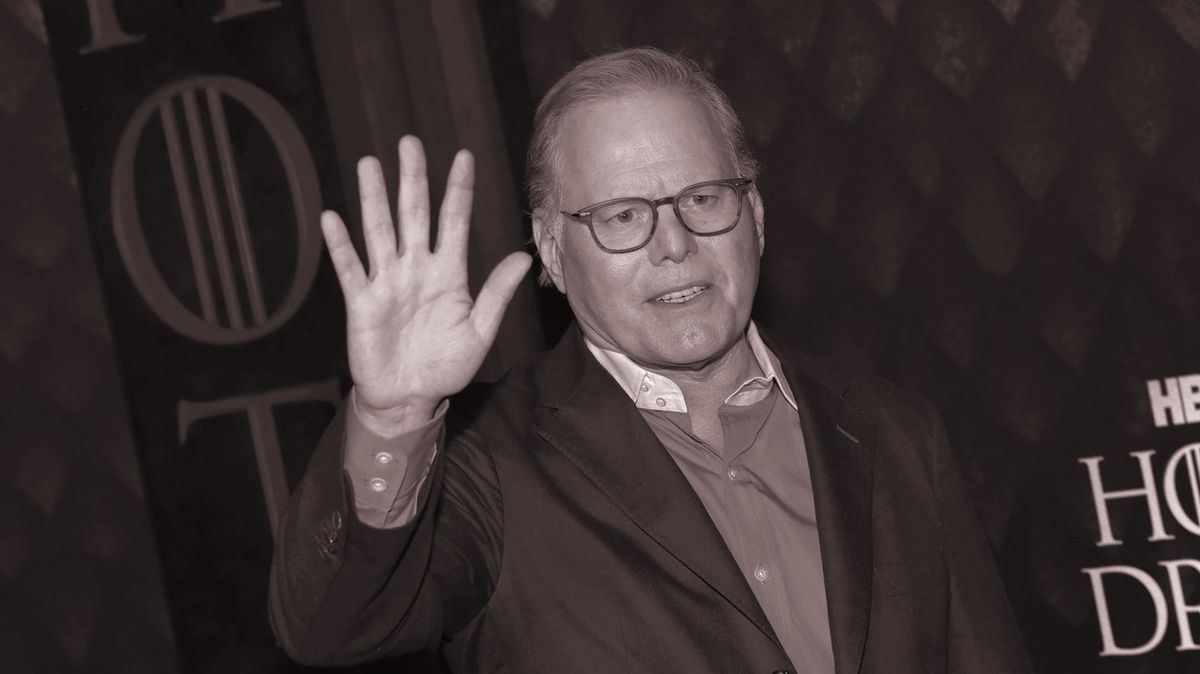
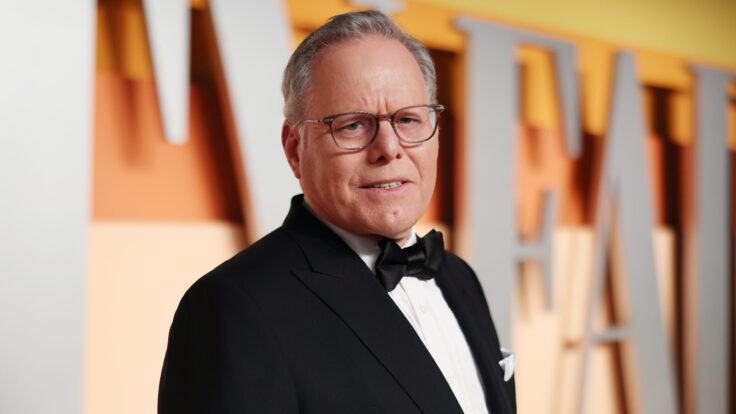
David Zaslav and the Warner Bros. Discovery board swatted away Paramount Skydance’s $30-a-share bid, reaffirming their nuptials with Netflix. Notably, this followed Versant’s somewhat awkward public market debut on Monday, which arguably cast a new light on the endlessly debated, all-over-the-map valuation of the equity of WBD’s Global Networks stub. WBD, of course, thinks that’s nonsense, as does our buddy Rich Greenfield. Vanguard, BlackRock, and State Street
may think otherwise. Below, I’ll break it all down and see where we land.
Also mentioned in tonight’s issue: Larry Ellison, Shari Redstone, The Pierre, Mario Gabelli, Netflix, Howard Lutnick, Michael Eisner, Lanai, Tory Burch, BlackRock, JPMorgan Chase, Raymond James, Samuel Di Piazza Jr., Jessica Reif Ehrlich, and more…
P.S.:
Join me and Ian Krietzberg, Puck’s A.I. correspondent and newest partner, next Wednesday at 5:30 p.m. in Boston, for an intimate evening of cocktails and conversation presented in partnership with the good folks at Tishman Speyer. To R.S.V.P., just email Eric@puck.news. Trust me, you won’t want to miss this one.
But first… |
- The
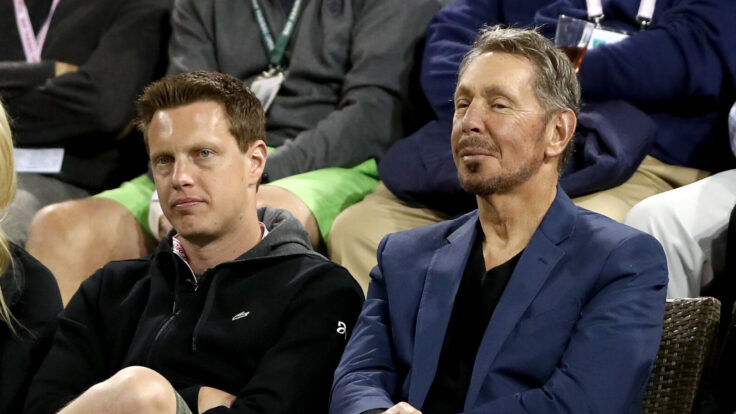
Larry–Shari house swap: You’d think that Larry Ellison would have his hands full with the battle for Warner Bros. Discovery, but it appears he’s made time for a few intriguing personal real estate moves. In November, Ellison’s trust fund paid $24 million for two co-op apartments in The Pierre on Fifth Avenue, which were owned by a trust related to Shari Redstone, according to The Real Deal. Shari, as you know, is the former controlling shareholder of
Paramount Global, which Ellison and his son David bought from her family last August.
Did Larry and Shari cut some sort of side deal for the two Pierre apartments as part of the overall deal for Paramount Global? Who knows! But it’s worth noting that Larry had been the largest creditor of National Amusements, the Redstone family holding company, before the Ellisons’ deal for Paramount was consummated. (Shari, for her part, was hardly the only wealthy person to live in The Pierre:
Other famous residents include Howard Lutnick, who owns the penthouse; Michael Eisner, the former Disney C.E.O.; and Tory Burch.)
Larry, who also owns big chunks of Lanai and Malibu, appears to be reshuffling his real estate portfolio. Last month, he
sold his little-used home in San Francisco’s Pacific Heights neighborhood for $45 million—one of the priciest sales of the year
in the city. (He’d paid around $3.9 million for the home in 1988.) But he’s also been a major buyer in Manalapan, Florida—trying to make the town south of Palm Beach a thing, I suspect. He spent $173 million on a 33-bedroom estate there in 2022, and more recently paid $277.4 million
for the Eau Palm Beach Resort & Spa, a 309-unit oceanfront property.
|
And now, back to Warners… |
|
|
The battle for Warner Bros. Discovery is increasingly coming down to how Netflix and
Paramount Skydance value the declining TV assets (and CNN) that David Zaslav is determined to separate from the Warners mothership. Versant, which just started trading on Nasdaq this week, may provide the answer. |
|
|
The latest news in the operatic battle for Warner Bros. Discovery broke just this morning: As expected, the
WBD board of directors declined to endorse Paramount Skydance’s $30-a-share bid. In its filing with the S.E.C., WBD insisted that the “risk-adjusted value” of PSKY’s offer “is not superior” to the deal they’ve already signed with Netflix. So, unless the Ellisons decide to up the ante again, the PSKY crowd will have little choice but to either commit more money to the deal or take their case directly to WBD shareholders.
The latter won’t be easy. The PSKY tender
offer closes on January 21, unless it’s extended—giving the company two weeks to persuade major WBD shareholders, like Vanguard, BlackRock, and State Street. It’s been a tough sell so far, according to PSKY’s own S.E.C. filings: As of December 19, only 0.02 percent of WBD’s 2.5 billion outstanding shares had been tendered to PSKY. But it’s still early days, and most shareholders wait until closer to the end before tendering.
Meanwhile, the PSKY team has little choice but to focus on the
equity value of Global Networks—the remainco of TV assets (CNN, Food Network, TNT, etcetera) that David Zaslav has determined must be separated from the Warners mothership. Indeed, that stub value has increasingly become the battleground between the two offers. The Ellisons originally determined that the cable assets were worth $1 a share, which would make their overall $30-a-share all-cash deal for the entirety of WBD more valuable. Samuel Di Piazza
Jr., the chairman of the WBD board of directors, recently said on CNBC that Global Networks was worth between $3 and $5 a share—and that, as a result, the overall Netflix bid was worth between $32 and $34 per share, with $23.25 a share in cash and $4.50 a share in Netflix stock, plus the value of the Global Networks stub, besting Paramount’s offer. Last month, Jessica Reif Ehrlich, the Bank of America research analyst, put the value of the Global Networks stub at $3 per
share, while Morgan Stanley valued the stub at $1.50 per share. Raymond James took the bold position of saying the stub would be valued between $0 and $2 per share.
So what are these cable assets worth? Of course, that has become the $108 billion question. Beyond Di Piazza’s commentary, WBD has said nothing about its precise internal value of the stub in its S.E.C. filings. Nor has the company revealed the value placed on the stub by its bankers at Allen & Co. and JPMorgan
Chase in their fairness opinions recommending the Netflix deal.
Regardless, the Ellisons and their partners at RedBird Capital find this math nonsensical. To help make their case, the PSKY crew has been closely tracking the inauspicious stock market debut of Versant, the cable asset refugees recently spun out into the public market by Comcast. On Monday, the stock closed down around 11 percent, to around $40.50 per share, and by the end of Wednesday had fallen even further, to
$33 and change. The Ellisons will presumably argue that the disappointing stock action on Versant proves that their offer was superior all along. “It is the ultimate tail wagging the dog,” one deal participant told me the other day. (Usual disclosure time: Through our recent acquisition of Air Mail, Zaz is a de minimis investor in Puck; RedBird is a minority shareholder.) |
I tend to agree with Mario Gabelli, the longtime Paramount investor and Squawk Box
oracle, that it was inevitable that Versant would trade down at first blush, until the stock landed into the hands of investors who really want to own it. Gabelli tweeted on Monday that Versant trading down was caused by index funds rebalancing their portfolios, which he called an “obvious dynamic.” Fair enough, Mario.
But what are the implications of Versant’s valuation for the presumed valuation of Global Networks? That’s where things begin to get interesting. At
around $33.40 per share, Versant’s market cap is about $5.2 billion. Comcast spun it off with $2.25 billion of debt, making Versant’s enterprise value $7.4 billion. Versant is expected to generate around $2 billion of EBITDA in 2026, giving it an implied EBITDA multiple of 3.7x, with modest leverage of 1.25x EBITDA.
In its revised tender offer on December 22, as I previously reported, the PSKY crowd increased its valuation of Global Networks to $1.40 per share, from $1. But that was before Versant started trading publicly and PSKY was “generously applying” a 4.8x multiple to 2026 EBITDA. Now that Versant’s EBITDA multiple is closer to 4x, what are the implications for Global Networks? In my calculations, I’ll be generous and use a 4x multiple, myself, since the stock ought to trade up once it gets into the hands of people who want it.
(This is not investment advice.)
As you would expect, the 2026 EBITDA projections for Global Networks are all over the map, too. Jessica, too, thinks it will come in between $4.5 billion and $5 billion. Let’s split the difference and take $4.75 billion, and even use that generous 4x EBITDA multiple, reflecting the fact that Global Networks is expected to be spun off with $15 billion of debt, or a leverage multiple of 3.2x—much more than the leverage Comcast put on Versant.
Using 4x
2026 EBITDA of $4.75 billion gives Global Networks an enterprise valuation of $19 billion, an equity value of $4 billion (after subtracting out the $15 billion of debt), and a share price of $1.60 for WBD shareholders. At that valuation for Global Networks, the deal calculus gets a lot closer, and suddenly the PSKY bid begins to look more attractive than the $27.75 + $1.60, or $29.35, per share that Netflix is bidding. I suspect that this is the sort of analysis that
PSKY will be presenting to WBD shareholders.
For its part, WBD thinks the comparison of Global Networks to Versant is bunk. In its Wednesday S.E.C. filing, WBD wrote, “While PSKY continues to point to Comcast’s Versant as a comparable public company, Discovery Global’s business has greater scale and profits, with a geographically diversified footprint and strong international presence.” Rich Greenfield, at LightShed Partners, sides with WBD on this one. “Not only is
Versant’s valuation a false equivalence,” he wrote on Wednesday, “it is increasingly clear that Paramount is simply not listening to what the WBD board has repeatedly and vocally told it that it needs to see to seriously entertain its offer.” For what it’s worth, Rich thinks that Global Networks will be bought outright at some point, making the trading multiple in the meantime largely irrelevant. We’ll see. |
The Debt
Shift Calculation
|
Meanwhile, there is a growing sense on Wall Street that Global Networks may not be able to handle $15 billion
of debt as an independent company, especially given the secular decline of cable TV. Jessica predicts that the entity’s 2027 EBITDA will be down to $4.5 billion, from roughly $4.75 billion this year. Of course, WBD can spin off Global Networks with as much, or as little, debt as it wants. And 3.2x leverage is hardly fatal—unless that linear TV ice cube melts considerably faster than projected.
But the apportioning of that debt could have material consequences for Vanguard, BlackRock,
State Street, and WBD’s other big institutional investors. Let’s assume, for the sake of argument, that WBD agrees that $15 billion of debt is too much and will threaten the trading value of Global Networks stock once it is spun off. Let’s also assume that WBD decides $10 billion of debt is the right amount for Global Networks, and that $5 billion of debt must be shifted over to WBD’s Streaming and Studios business on top of the $10 billion of debt that it is already scheduled to carry as part
of the breakup of the company. That would put $15 billion of debt on S&S instead of $10 billion—or another $2 a share in debt on S&S, the company that Netflix is buying.
If that were to happen (a big if, at this point), Global Networks probably would be worth the $3-to-$5-a-share range that Di Piazza suggested on CNBC—$2 a share more, given the removal of the $5 billion in debt. (Again, this is not investment advice.) But now, with that $5 billion in debt on S&S instead
of Global Networks, it seems logical that Netflix would reduce the cash portion of its bid by $2 a share, or down to $21.25 in cash, plus the $4.50 in Netflix stock, plus the Global Networks stub equity—unless it wanted to raise its bid, which seems unlikely at this point since it has a signed merger agreement with WBD, and PSKY has not raised its offer.
If such a shift in the debt from Global Networks to S&S were to occur, it would add a whole new level of valuation complexity to the
Netflix deal for WBD. The cash portion of the deal for WBD’s Streaming and Studios business would be reduced by $2 per share, forcing the company’s shareholders to underwrite both the Global Networks equity and the Netflix equity—and figure out whether all that adds up to more than PSKY’s $30 a share.
Yes, WBD disagrees with this argument, too. “PSKY’s claim that the merger consideration in the Netflix Merger can be reduced depending on the net debt allocated to the Discovery
Global business is misleading,” the company noted in its S.E.C. filing. “[T]he debt allocation mechanism does not result in a reduction in the total value received by WBD stockholders.”
I have no idea whether WBD’s big three institutional investors will buy into PSKY’s argument. But the way Versant is trading at the moment, with far less debt, does have the potential to change the alchemy of this deal. Suddenly Paramount Skydance’s offer of $30 a share, all in cash, is potentially looking
a lot tastier. In any event, it is much easier to value, and, for that reason alone, might push WBD’s big institutional shareholders into the PSKY camp. If somehow PSKY winds up with 51 percent of the WBD shares being tendered by January 21, we will have a whole new ballgame here—and perhaps that’s one reason why PSKY hasn’t yet raised its bid. |
|
|
Puck sports correspondent John Ourand and a rotating cast of industry insiders take you inside the executive suites and owners
boxes where the decisions that shape the entire sports business are made. You’ll hear interviews with players, network execs, and everyone in between. The Varsity is an extension of John’s private email for Puck by the same name. New episodes publish every Wednesday and Sunday. |
|
|
Puck’s daily political newsletter from Washington on what’s really happening in this town, from the White House to the Pentagon
to Capitol Hill, K Street, and the campaign trail. |
|
|
Need help? Review our
FAQ page or contact us for assistance. For brand partnerships, email ads@puck.news.
You received this email because you signed up to receive emails from Puck, or as part of your Puck account associated with {{customer.email}}. To stop receiving this newsletter and/or manage all your email preferences, click here. |
Puck is published by Heat Media LLC. 107 Greenwich St., New York, NY 10006 |
|
|
|