• Washington
  • Wall Street
  • A.I.
  • Hollywood
  • Media
  • Fashion
  • Sports
  • Art
  • Join Puck Newsletters What is puck? Authors Podcasts Gift Puck Careers Events
  • Join Puck

    Directly Supporting Authors

    A new economic model in which writers are also partners in the business.

    Personalized Subscriptions

    Customize your settings to receive the newsletters you want from the authors you follow.

    Stay in the Know

    Connect directly with Puck talent through email and exclusive events.

  • What is puck? Newsletters Authors Podcasts Events Gift Puck Careers
Happy Labor Day, and welcome back to Dry Powder, arriving a little later this week on account of the holiday.
 ‌ ‌ ‌ ‌ ‌ ‌ ‌ ‌ ‌ ‌ ‌ ‌ ‌ ‌ ‌ ‌ ‌ ‌ ‌  ‌ ‌ ‌ ‌ ‌ ‌ ‌ ‌ ‌ ‌ ‌ ‌ ‌ ‌ ‌ ‌ ‌ ‌ ‌  ‌ ‌ ‌ ‌ ‌ ‌ ‌ ‌ ‌ ‌ ‌ ‌ ‌ ‌ ‌ ‌ ‌ ‌ ‌  ‌ ‌ ‌ ‌ ‌ ‌ ‌ ‌ ‌ ‌ ‌ ‌ ‌ ‌ ‌ ‌ ‌ ‌ ‌  ‌ ‌ ‌ ‌ ‌ ‌ ‌ ‌ ‌ ‌ ‌ ‌ ‌ ‌ ‌ ‌ ‌ ‌ ‌  ‌ ‌ ‌ ‌ ‌ ‌ ‌ ‌ ‌ ‌ ‌ ‌ ‌ ‌ ‌ ‌ ‌ ‌ ‌  ‌ ‌ ‌ ‌ ‌ ‌ ‌ ‌ ‌ ‌ ‌ ‌ ‌ ‌ ‌ ‌ ‌ ‌ ‌  ‌ ‌ ‌ ‌ ‌ ‌ ‌ ‌ ‌ ‌ ‌ ‌ ‌ ‌ ‌ ‌ ‌ ‌ ‌  ‌ ‌ ‌ ‌ ‌ ‌ ‌ ‌ ‌ ‌ ‌ ‌ ‌ ‌ ‌ ‌ ‌ ‌ ‌  ‌ ‌ ‌ ‌ ‌ ‌ ‌ ‌ ‌ ‌ ‌ ‌ ‌ ‌ ‌ ‌ ‌ ‌ ‌ 
Dry Powder

Happy Labor Day, and welcome back to Dry Powder, arriving a little later this week on account of the holiday.

For today’s email, I debated my Puck partner Matt Belloni about the wisdom of Netflix’s new ad-supported tier, Dan Loeb’s plans for Disney, and whether John Stankey got the better of David Zaslav. Plus a few observations on the defenestration of Brian Stelter at CNN and whatever M&A strategery Brian Roberts has got cooking.

But first, a few thoughts on Illumina beating the Biden administration’s antitrust case against its $7.1 billion acquisition of the cancer-detection startup Grail…

Illumina’s Holy Grail
Illumina’s victory over the Federal Trade Commission this week may yet be a situation in which the company wins the battle but then loses the war. As I reported last year, Illumina C.E.O. Francis deSouza took an unprecedented risk in 2020 when he went ahead with a $7.1 billion deal to fully acquire Grail, an early cancer detection startup that Illumina had spun off three years earlier, before getting the necessary regulatory approvals in the U.S. or Europe. That was a pretty bold and unusual move but deSouza embraced it with alacrity, arguing to me, in effect, that the benefits of being able to roll out the Grail tests to more people, more quickly, merited the risk of closing the deal despite the pending regulatory battles. Not surprisingly, in 2021, the F.T.C. lodged an administrative complaint and the two sides went to court.

But while Illumina may have won this round with the Biden administration, there are potentially more rounds to go. The F.T.C. staff could still appeal the administrative judge’s ruling to the full commission, potentially sending the case up to a federal appeals court. And then there is the regulatory drama still unfolding in Europe, where an E.U. court recently ruled that its competition regulator also has jurisdiction over the Illumina-Grail merger, even though Grail does no business in the E.U. countries and has no plans to do so for at least another 10 years. Illumina said it plans to appeal the E.U. court decision.

In the meantime, Illumina has kept Grail separate from the rest of the company and will presumably divest it again at some point if forced to do so, probably for considerably more than what it paid for it. The technology, after all, really is quite miraculous—a $950 test that uses Illumina's genetic sequencing to uncover early-stage cancers long before symptoms may even appear. “The potential for this to save lives is so enormous that we felt we have a moral obligation to make sure we did everything we could to make sure this deal got a full and fair review,” deSouza told me a year ago. “Ultimately, of course, we will abide by whatever the outcome is, but we didn’t want to feel like there was something we could have done that we didn’t do. We have a moral obligation, we feel, to at least have this deal heard.”

That’s all fine and good, Francis, and I applaud your moral stance. But what about that stock price decline? Since my last interview with deSouza, Illumina’s stock has fallen by more than half, 58 percent to be precise. Where a year ago, Illumina was a company with a market value of $70 billion, its market value is now around $31 billion. That might put him in the crosshairs before the Grail matter is resolved.

Netflix’s U-Turn & the Next CNN Purge
The real conversation inside Hollywood and Wall Street about Reed and Ted’s ad-tier about-face, Zaslav’s narrative heel-turn, Chapek’s ESPN dilemma, and the long arm of John Malone.
WILLIAM D. COHAN WILLIAM D. COHAN
Matt Belloni: Happy Labor Day, Bill, I’m betting Nantucket is slightly less scorching hot than L.A. Anyway, the debate in entertainment this fall—well, besides whether Black Panther 2 will outgross Avatar 2—will be whether Netflix and Disney+ can successfully launch an ad-supported model. Both will likely offer the ad tier with a price point in the $8 range, much less than the no-ads service. So both Disney’s Bob Chapek and Netflix’s Reed Hastings and Ted Sarandos are hoping that the loss of that subscription revenue can be made up with juiced subscriber numbers and all that ad cash. What’s the current thinking on Wall Street about whether that feat is possible?

William D. Cohan: Wall Street sees the ad-supported layer as a revenue opportunity for both companies, for sure. How much remains to be seen, though the reported $65 per 1,000 views that Netflix is asking for ads is indeed aggressive. The question is whether saving around $7 a month is worth getting bombarded with ads for plaque psoriasis and Skyrizi. Streaming is one of the few places where you can avoid mind-numbing ads. You can’t even do that in the movie theater anymore, to the extent that anyone goes to movie theaters anymore.

Belloni: I hear you on the annoyance, but I totally disagree. Consumers are going to love the ad tier. Not for the ads, but for the lower price point. Wells Fargo analyst Steven Cahall estimated in June that 30 percent of Netflix customers will choose the ads by 2025, and that Netflix’s overall subscriber count will jump to 272 million (and growing) from 220 million (and shrinking) today. He also thinks revenue per subscriber will increase 3 percent to $14.20 worldwide. That’s exactly the scale and revenue growth investors are demanding.

Cohan: I don’t want to sound like a privileged elitist here, but to avoid ads for a year for roughly $85 sounds like the bargain of the century. And I think Cahall is smoking something if he thinks Netflix’s subscribers are going to increase by 52 million, or 24 percent, just because they can save a few bucks. Now if the trade-off were between free, as in rabbit ears on linear TV, and $15 a month, that might result in a boost in subscribers. But I don’t think the ad tier is the Holy Grail these companies think it will be. My take is that introducing ads will cost Disney and Netflix more in the long run in terms of prestige and consumer annoyance. It’s not too late to change your minds, Bob and Reed!

Belloni: Disney’s share price is down about 10 percent since Dan Loeb began his latest campaign for changes last month. I don’t see Chapek selling ESPN, though you’ve written he might listen to Loeb and either trim costs, or buy back Hulu from Comcast sooner rather than later. How long will this Loeb drama play out?

Cohan: There’s no reason for Disney not to get control of Hulu as soon as it can, so I think that will probably happen on the accelerated timetable that Loeb would like. So get that done, Bob. As for ESPN, I don’t think Dan is wedded to the spin-off idea. I think he’s wedded to ways to reduce Disney’s $37 billion of net debt, and one idea he has is spinning off ESPN, loading it up with some of that $37 billion, and floating it away. Dan seems quite fixated on paying down the debt, which normally I’d be all for doing. But $37 billion isn’t too much debt for a company like Disney, where the EBITDA fortunes are on the rebound after the pandemic closures. On the other hand, Dan is a billionaire and I am not, so he probably knows more about paying down debt than I do.

Belloni: The slow-moving layoffs and cost-cutting shrinkage at Warner Bros. Discovery will also likely dominate the headlines for the next few months. People often ask me how I think the new C.E.O. David Zaslav is doing, and I feel like that depends on who you talk to. To Hollywood people, his moves, like scrapping the Batgirl film and ending scripted programs on the Turner networks, have turned him into a corporate villain of sorts. But to the New York finance crowd, he’s doing exactly what he promised investors—and what needs to be done to save this company from its $50-something billion in debt. Where do you stand?

Cohan: I love the guy, so I am trying hard to be objective here. He’s got around $52 billion of debt and at best $12 billion of EBITDA coming in 2023. That number was projected at $14 billion before the recent re-forecast, so that’s not good for David or for Wall Street. The stock is down 48 percent in the past six months, so that’s also not good. On the other hand, he’s certainly showing Wall Street that there are few, if any, sacred cows, and he’s willing to do whatever it takes to get the house in order financially while not diminishing terribly the quality of the product. I hated to see my friend Andrew Morse get zotzed along with CNN+, but that decision was hardly a surprise. It was a surprise to see another friend, Brian Stelter, get defenestrated. Still not sure I understand that.

Belloni: Me neither. Regardless of what John Malone thought of it, Brian’s show was small-potatoes for CNN, and I’m betting if its leader Chris Licht had told him to quit it with the Fox News diatribes, Brian would have re-positioned himself. The White House correspondent John Harwood announced his exit on Friday, hours after he called Donald Trump a “dishonest demagogue,” so the CNN purge is only beginning.

Cohan: It’s certainly not business as usual at the old WarnerMedia, and that’s probably for the best. TimeWarner has been a bloated whale for decades now, so if Zaz can finally whip it into shape, then hallelujah. I still worry about the debt. Unlike Disney, for WBD, $53 billion is a big number, especially so if that $12 billion in 2023 EBITDA slips again. I’m afraid it’s increasingly looking like AT&T’s John Stankey might have gotten the better of Zaz by sticking him with all that debt.

Belloni: Speaking of debt, Cineworld, the second largest movie theater company, has been teetering on the brink of bankruptcy, which would be a fitting symbol of an extremely challenged theater industry. A smart investor texted me that these theater companies are “uninvestable” right now. How will this slow-moving car crash play out?

Cohan: Through more and more bankruptcies, alas. (With the apparent exception of AMC, which benefits from being a meme stock and can pull off financing moves that others can only dream about.) Back in the day, I helped Norman Lear buy his movie theater business, known as Act III Communications. It was a great business, huge margins—50 percent on the films; 80 percent on the popcorn—and Lear made a lot of money buying and selling the theaters. But as we both know, the pandemic changed that dynamic dramatically and the days of total domestic box-office revenue of $10 billion or $11 billion are a thing of the past.

Belloni: Did you see Top Gun: Maverick in the theater?

Cohan: I didn’t, but I can’t wait to stream it on my picture-perfect TV screen. Your friend is right. The movie theater industry is uninvestable right now. (This is not investment advice.) I wouldn’t go near it with a ten-foot pole, and that’s taking into account that it’s always interesting to think about investing in an industry when no one else is. This is one where people aren’t investing for good reason.

Belloni: Comcast C.E.O. Brian Roberts has been pretty quiet this summer. That usually means something’s cooking. Besides $1 billion in cost cuts at his TV networks, which Bloomberg says are coming, what would you guess it is?

Cohan: My money is still on the combination of NBCUniversal with WBD. It just makes too much sense for the two moguls, Roberts and Zaz, not to be thinking through it. In fact, it’s borderline irresponsible if they don’t kick the tires on this deal. Aside from that, I’m not sure what else Comcast can do. Paramount Global is probably out because of the NBC-CBS overlap. I suppose some sort of gaming deal could be in the offing, perhaps in the realm of Electronic Arts, market value of $35 billion, or TakeTwo Interactive, market value of $20 billion. But I’m not sure I see Comcast getting into this kind of content. His better bet, it seems to me, is Comcast owning 51 percent of the combined NBCU/WBD, with Zaz running it. That feels like a winner, and will allow WBD to spread out its debt over more EBITDA and confuse the stock analysts for another couple of years while everything gets figured out.

Belloni: But they can’t actually do that deal for a few years, right? The reverse Morris Trust rules that came with the WBD spinoff have set a ticking clock, of sorts, on consummating another transaction.

Cohan: April 2024, but given how long it takes these kinds of deals to close, there’s no time like the present to begin. They don’t need to wait until Allen & Co.’s conference next year in Sun Valley to chit chat about this.

Belloni: Speaking of NBC’s owner, your big book on the rise and fall of General Electric, Power Failure, is coming out this fall (Nov. 15). Congrats. Tell me something I don’t know about GE’s tumultuous ownership of NBC Universal.

Cohan: That GE decided to sell NBCU to Comcast in 2009 as a desperate measure to raise cash to try to keep GE Capital, and by extension GE itself, out of bankruptcy. It was that bad. The decision came pretty much on the same day that GE’s stock hit a low of $6.66 in March 2009, and Keith Sherin, GE’s C.F.O., went on CNBC to try to calm investors down about how bad things were at GE. Brian Roberts had been after Jeff Immelt for years to sell NBCU to Comcast, ever since Comcast lost out to GE on buying Universal’s assets from Vivendi. Brian kept after Immelt—playing golf, having dinners—and ended up being able to buy NBCU without having to endure an auction and, for a price, around $30 billion, that turned out to be quite the steal.

Belloni: Zaslav was there at NBCU as a cable TV executive when the Comcast acquisition happened, right? Very ironic that he could ultimately run those assets if combined with WBD.

Cohan: Zaz was at GE/NBC for the birth of both CNBC and MSNBC, so it would be a very fitting denouement for NBCU to end in his purview, if not total control. And by the way, since Zaz had to go to Malone to get the OK for CNBC initially, it would also be ironic that Malone, in his 80s, would once again be a behind-the-scenes power at NBCU, as apparently he is already at CNN, according to our colleague Dylan Byers. Brian’s got to do something here and so does Zaz. A match made in heaven.

FOUR STORIES WE'RE TALKING ABOUT
McCarthy’s REDRUM Moment
The presumptive future Speaker is facing serious headwinds from his own caucus.
TARA PALMERI
Netflix’s Catch-22
Netflix’s Catch-22
Has the company’s yearslong quest to build a library of original content resulted in a pyrrhic victory?
JULIA ALEXANDER
CNN Anxieties
CNN Anxieties
Dylan and Peter discuss to whether Don Lemon is safe from the feared John Malone shoulder tap.
PETER HAMBY & DYLAN BYERS
September of Stelteritis
Can the news industry program its way out of the Linear Big Bang?
DYLAN BYERS
swash divider
Facebook Twitter Instagram LinkedIn
You received this message because you signed up to receive emails from Puck

Was this email forwarded to you?

Sign up for Puck here

Sent to


Unsubscribe

Interested in exploring our newsletter offerings?

Manage your preferences

Puck is published by Heat Media LLC

227 W 17th St

New York, NY 10011

For support, just reply to this e-mail

For brand partnerships, email ads@puck.news

SEE THE ARCHIVES

SHARE
Try Puck for free

Sign up today to join the inside conversation at the nexus of Wall Street, Washington, A.I., Hollywood, and more.

Already a member? Log In


  • Daily articles and breaking news
  • Personal emails directly from our authors
  • Gift subscriber-only stories to friends & family
  • Unlimited access to archives

  • Exclusive bonus days of select newsletters
  • Exclusive access to Puck merch
  • Early bird access to new editorial and product features
  • Invitations to private conference calls with Puck authors

Exclusive to Inner Circle only


Latest Articles from Wall Street

Geoffroy van Raemdonck
William D. Cohan • September 6, 2022
The Saks Financial Colonoscopy
Amid a torrent of bankruptcy filings, a blunt declaration by Saks Global’s newly appointed chief restructuring officer lays out precisely what went wrong and when, and who got screwed hardest—plus which risk-hungry investors are likely to call the shots moving forward. As it turns out, the company’s capital structure became “unsustainable” almost immediately after its $2.7 billion acquisition of Neiman Marcus Group in December 2024.
David Ellison
William D. Cohan • September 6, 2022
The Ellison Way of Parenting
David Ellison’s latest schemes to wrest Warner Bros. from Netflix have proved insufficient after his previous negotiating tactics ran up the price. Meanwhile, he’s losing the respect of the WBD guys across the table. But will his dad come to the rescue with another, say, $10 billion to bail him out?
Patrick Drahi
William D. Cohan • September 6, 2022
A History of Creditor-on-Creditor Violence
Wall Street invented the coercive liability management exercise, which allows companies to play their creditors against one another as they extract beneficial terms for themselves—a now-routinized tradition referred to as “creditor-on-creditor violence.” But now Apollo, Oaktree, BlackRock, and JPMorgan Chase are teaming up to put an end to this mess.


Larry Ellison, David Ellison
William D. Cohan • September 6, 2022
The Zaz–Ellison Dagger Contest
Warner Bros. Discovery’s most recent S.E.C. filing reveals the latest battle lines between the company and its hostile suitor. In particular, the document evinces a deep distrust of Paramount Skydance’s proposed deal financing, recasting the $108 billion all-cash offer as an $87 billion L.B.O. that could fall apart before closing.
David Zaslav
William D. Cohan • September 6, 2022
What Is Zaz TV Really Worth?
The battle for Warner Bros. Discovery is increasingly coming down to how Netflix and Paramount Skydance value the declining TV assets (and CNN) that David Zaslav is determined to separate from the Warners mothership. Versant, which just started trading on Nasdaq this week, may provide the answer.
greg abel
William D. Cohan • September 6, 2022
Make Berkshire Hathaway Great Again?
Greg Abel, the handpicked successor to Warren Buffett, faces one of the most exalted and daunting jobs in finance: determining what to do with the staggering $358 billion bequeathed to him by the most legendary investor of his generation. Herewith, three proposals for what Abel should buy with all that cash.


David Ellison, Larry Ellison
William D. Cohan • September 6, 2022
Zaz Is From Mars, the Ellisons Are From Venus
Murmurs from sources close to the Warner Bros. Discovery deal illuminate the latest machinations surrounding the Paramount-Netflix showdown—and where this thing is headed.


Get access to this story

Enter your email for a free preview of Puck’s full offering, including exclusive articles, private emails from authors, and more.

Verify your email and sign in by clicking the link we just sent.

Already a member? Log In


Start 14 Day Free Trial for Unlimited Access Instead →


Latest Articles from Wall Street

Larry Ellison
William D. Cohan • September 6, 2022
“Larry Didn’t Show Up, and David Got Ahead of His Skis”
Everything you wanted to know about the Warner Bros. Discovery board’s doubts with the Ellisons’ bid (but were afraid to ask) is revealed in its 14D-9 filing—a mother lode of alleged Paramount missteps, from squabbles over consent provisions and breakup fee reimbursements to junior lien debt and the financial capacity of the world’s fifth-richest man.
larry ellison david ellison
William D. Cohan • September 6, 2022
Ellison Irrevocable Trust Issues
Despite their numerous bids for all of WBD, a rift has opened between the principals at Paramount Skydance and the board and advisors of their target company—at least for now. Can money heal all wounds?
larry ellison david ellison
William D. Cohan • September 6, 2022
The Ellisons at the Gates
Paramount has raised the stakes in its hostile bid for Warner Bros. Discovery, and may yet go higher. Now Netflix must decide how much it wants to venture into junk credit-rating territory, or play games with its stock, to secure the prize.


Larry Ellison, David Ellison
William D. Cohan • September 6, 2022
Netflix’s $83B Math & The Ellison Hostile Meter
A talmudic reading of the mishegas following the $83 billion Netflix-WBD deal: Zaz’s personal economics; the likelihood that this turns hostile; the unusual consortium of banks underwriting the deal; the value of the Gunnar stub; regulatory open questions; the $5.8 billion breakup fee; and more.
Leon Black
William D. Cohan • September 6, 2022
The Epstein Monologues
The recently released, one-sided correspondence between Jeffrey Epstein and Leon Black illustrates a discourse between a hustler and a billionaire with too much money and too little time on his hands. So why couldn’t Black get rid of him sooner?
Mike Mayo
William D. Cohan • September 6, 2022
Wall Street Enters the “Cockroach” Wars
The multitrillion-dollar growth of private credit is fueling an acrimonious debate on Wall Street over whether this surging shadow market is the future of finance or the seed corn of the next crisis. Is Rowan right? Or Dimon? Or Gundlach? As Mike Mayo put it, someone is wrong.


david zaslav
William D. Cohan • September 6, 2022
Zaz the World Turns
News, notes, and palace intrigues from all sides of what might become the largest M&A deal of the year: the three-way tussle for David Zaslav’s Warner Bros. Discovery.
Get access to this story

Enter your email to get access to one article and free previews of our private emails from Puck authors and editors.

OR

Already a Member? Sign in


Latest Articles from Wall Street

wall street 1929
William D. Cohan • September 6, 2022
The Spirit of ’29
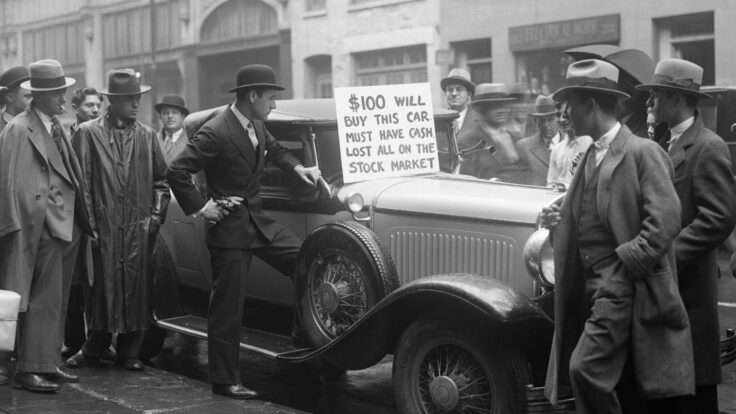
Financial history doesn’t repeat itself, but it does often rhyme. Amid a speculative frenzy, deregulation, trade wars, and a handful of megacaps propping up the markets, some of Wall Street’s brightest minds wonder whether 2026 might resemble 1929.
Marc Rowan
William D. Cohan • September 6, 2022
Street Credit
A recent string of bankruptcies and defaults suggests some challenges in the seemingly indomitable private credit market. And yet, according to some O.G.s, things have never been better. Apollo’s Marc Rowan lays bare the risks and rewards.
David Ellison
William D. Cohan • September 6, 2022
Ellisonology 101
In his first earnings call as C.E.O. of Paramount Skydance, David Ellison offered a masterclass in corporate optimism, promising “synergies” and artfully dodging questions about a possible Warner Bros. Discovery takeover. Alas, the time to act is here.


Michael Bloomberg
William D. Cohan • September 6, 2022
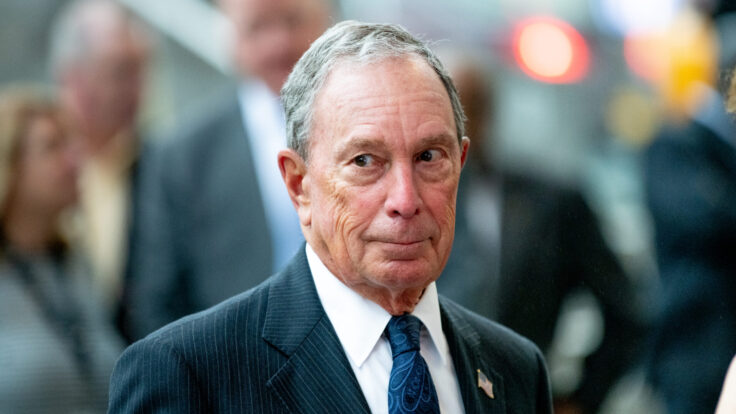
What Does Bloomberg Want for Bloomberg L.P.?
A modest proposal for how New York’s $100 billion man could bequeath his namesake, and its monumental profits in perpetuity.
Jim Chanos
William D. Cohan • September 6, 2022
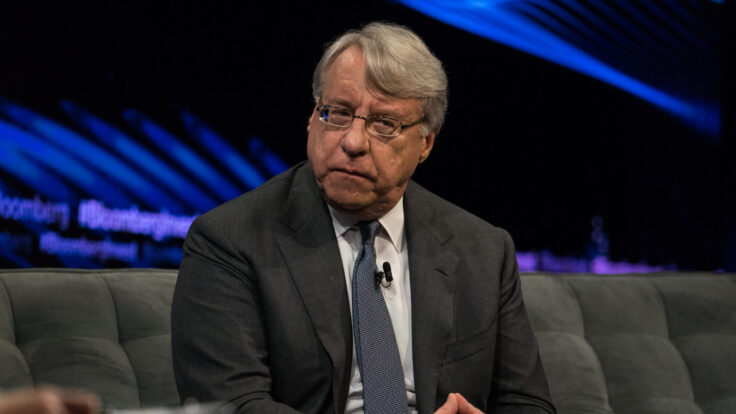
The Mag Seven Itch
The market is notching record highs for the so-called Magnificent Seven—or should that be Mag 10?—but a subterranean counternarrative is forming as once-secure food and consumer staples crater, and cracks emerge in the $3 trillion private-credit boom.
Brian Roberts
William D. Cohan • September 6, 2022
The Brian Roberts–WBD Bull Case
A new analyst note highlights a heightened sense around Wall Street that Comcast co-C.E.O. Brian Roberts doesn’t merely want WBD, but also truly needs the company—and has a real shot at the asset.


Jamie Dimon
William D. Cohan • September 6, 2022
Jamie’s Castle in the Sky
Dimon’s $3 billion (or maybe as much as $5 billion, really) new headquarters is the physical embodiment of his fortress balance sheet and a metaphor for our fractional banking system. But the seeming permanence of its bronze facade shouldn’t fool old Wall Street hands, who know nothing is forever.


  • Terms
  • Privacy
  • Contact
  • FAQ
  • Careers
© 2026 Heat Media All rights reserved.
Create an account

Already a member? Log In

CREATE AN ACCOUNT with Google
OR YOUR EMAIL

OR

Use Email & Password Instead

USE EMAIL & PASSWORD
Password strength:

OR

Use Another Sign-Up Method

Become a member

All of the insider knowledge from our top tier authors, in your inbox.

Create an account

Already a member? Log In

Verify your email!

You should receive a link to log in at .

I DID NOT RECEIVE A LINK

Didn't get an email? Check your spam folder and confirm the spelling of your email, and try again. If you continue to have trouble, reach out to fritz@puck.news.

CREATE AN ACCOUNT with Google
CREATE AN ACCOUNT with Apple
OR USE EMAIL & PASSWORD
Password strength:

OR
Log In

Not a member yet? Sign up today

Log in with Google
Log in with Google
Log in with Apple
Log in with Apple
OR USE EMAIL & PASSWORD
Don't have a password or need to reset it?

OR
Verify Account

Verify your email!

You should receive a link to log in at .

I DID NOT RECEIVE A LINK

Didn't get an email? Check your spam folder and confirm the spelling of your email, and try again. If you continue to have trouble, reach out to fritz@puck.news.

YOUR EMAIL

Use a different sign in option instead

Member Exclusive

Get access to this story

Create a free account to preview Puck’s full offering, including exclusive articles, private emails from authors, and more.

Already a member? Sign in

Free article unlocked!

You are logged into a free account as unknown@example.com

ENJOY 1 FREE ARTICLE EACH MONTH

Subscribe today to join the inside conversation at the nexus of Wall Street, Washington, A.I., Hollywood, and more.

START 14-DAY FREE TRIAL

  • Daily articles and breaking news
  • Personal emails directly from our authors
  • Gift subscriber-only stories to friends & family
  • Unlimited access to archives
  • Bookmark articles to create a Reading List
  • Quarterly calls with industry experts from the power corners we cover