Happy Sunday, and welcome back.
You're reading Dry Powder. In today's email: What I'm thinking about junk bond yields, the new streaming cold war, the future of Paramount Global, and a reckoning at GE. Enjoy, Bill
|
|
|
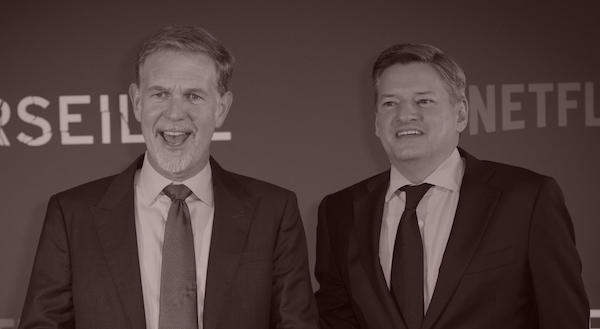
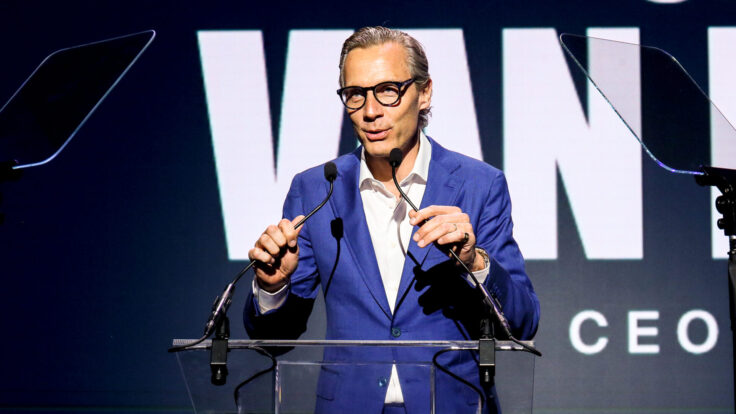
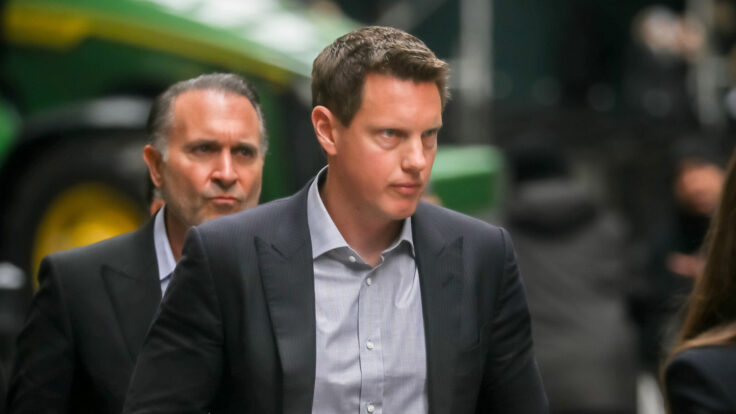
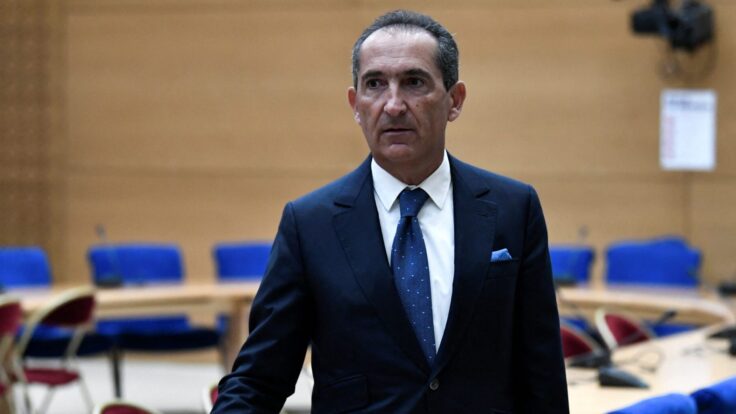
With markets off their euphoric highs, the conventional wisdom appears to have changed overnight for Netflix, Zaslav, and the bond desk at Goldman Sachs. Does it change the risk calculus for Shari, too? |
|
|
I was asked the other day where I see markets headed, with a war in Europe and a global oil shock compounding what was already a gnarly tangle of Covid-era supply chain disruptions. The Federal Reserve, after a decade of spiking the monetary punchbowl, is finally beginning to raise rates. As America’s financial bubble hangover begins, this person asked me, where does the smart money go?
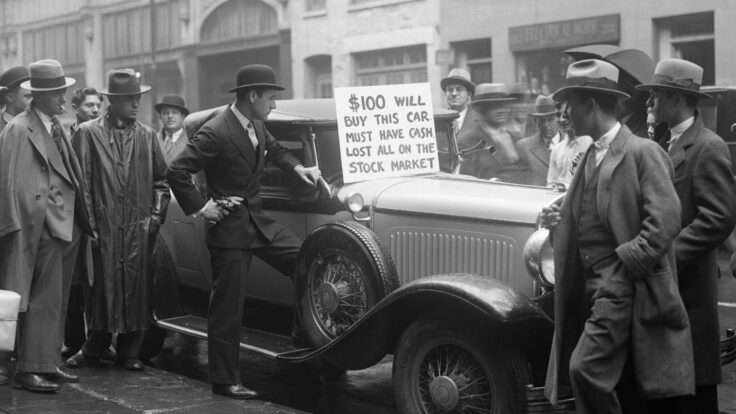
Alas, despite the rally last week in the equity markets, we are just still at the beginning of the cyclical downturn in the financial markets. Investors are eager for some sign that we’re turning a corner, such as a pullback in the price of oil, but credit markets continue to swoon. My favorite bellwether, the yield on the average junk bond, closed at 5.94 percent on Friday. At the beginning of 2022, the yield on the average junk bond was 4.35 percent. That’s a difference of 159 basis points, or 37 percent, in fewer than three months.
What that means, generally speaking, is that anyone who bought a junk bond in early January at a price that yielded a 4.35 percent return has now lost some 37 percent of the market value of that bond, since the price of a bond is inversely related to its yield. If your financial advisor encouraged you to buy a junk bond at the beginning of the year, thinking that 4.35 percent yield looked attractive, not only were they badly mistaken, but the value of that bond staring you in the face, day-after-day, has gone down 37 percent after not even three months. No one feels good with a 37 percent loss in their portfolio, even if they can hold the bond to maturity—7 years? 10 years?—and hope for the best, that it pays off at par. It could also lose more value of course, or the company that owes you the money could go bankrupt, reducing the value of that bond much closer to zero than to 100. I dare say if the stock market had fallen 37 percent in fewer than three months, the financial crisis that would be brewing across the country would share some space on MSNBC with Ukraine and the pandemic.
But since most people don’t understand the bond market, or realize it even exists, this kind of major repricing goes underreported or unnoticed. But I promise you that on the bond desk at Goldman Sachs the traders have noticed, as have Goldman’s clients—pension funds, endowments, hedge funds, sovereign wealth funds—many of which thought a 4.35 percent yield was just grand in a zero interest rate environment. But, in fact, that low yield for a bond containing that much risk was an awful investment idea, as I have been writing about for years now.
It was a travesty of risk assessment. When you loan money to a company with less-than-stellar credit—an issuer of junk bonds—you had better be getting properly compensated for the risk you are taking. That does not mean 4.35 percent (or even less last fall, when the average junk-bond yield touched below 4 percent—egads!). Back in the days when Mike Milken ruled the roost, investors wouldn’t touch a junk-bond unless it yielded 8, 9, 10, 11, 12 percent plus warrants, which were equity kickers that were attached to the junk bond (and that occasionally Milken took for himself). In other words, investors wouldn’t go near the risk inherent in a junk bond unless they were getting rewarded seriously for the risk they were taking.
So what happened? I don’t know for sure, but a big part of it has been the Federal Reserve’s so-called Zero Interest Rate Policy, or ZIRP. When safer bonds yield close to zero for some 12 years, a bond yielding 4 percent can start looking pretty attractive, I guess. Not to me. I have argued that the bond market has been univestable for years—with the notable exception of March and April 2020, at the beginning of the pandemic, when everyone freaked out and the yield on the average junk bond was 11.5 percent. That was a great time to invest in the bond market!
In any event, ZIRP is now ending, and it looks like the Fed may well raise interest rates at every one of its meetings this year in order to fight inflation. The Fed also looks like it will be stopping its aggressive buying of bonds—known as Quantitative Easing—that has increased the assets on the Fed’s balance sheet ten-fold to $9 trillion. As the Fed continues to raise short-term interest rates and winds down Q.E., the yield on the average junk-bond will move past 6 percent and probably get closer to 10 percent. Along the way, you will probably be able to hear the wailing from all those people who thought buying a junk-bond that yielded less than 4 percent made sense. When you do, think of the haunting Edvard Munch 1895 pastel “The Scream,” which another junk-bond aficionado, Leon Black, paid $120 million for in 2012.
|
We’re making investments in safety and security—and seeing results Facebook has invested $13 billion over the last 5 years to help keep you safe. Over the last several months, we’ve taken action on: - 62 million pieces of explicit adult content
- 51.7 million pieces of violent and graphic content
See how we're working to help you connect safely. |
Netflix’s New Math
As my partner Matt Belloni recently noted, there’s plenty of agita on Wall Street these days about the economics of streaming video, leading some inside Hollywood to question whether the total addressable subscription market for Netflix and its leading rivals might be smaller than they imagined. With the markets off their euphoric highs, the conventional wisdom seems to have changed overnight. Disney+ is adding an advertising tier, HBO Max is experimenting with pre-roll ads, and former Disney executive Kevin Mayer predicted at SXSW last week that even Netflix would have an ad supported tier within two years. Given its immense stock slide, does Netflix have a choice?
Personally, I wouldn’t think that such a momentous decision—offering an advertising tier to its pricing model—would have anything to do with the slide in the price of Netflix’s stock, which is down 36 percent so far this year. This isn’t Reed Hastings’ first rodeo. He knows better than anyone how volatile the Netflix stock can be. And even if, as Matt pointed out, the total addressable market for SVOD isn’t as big as everyone hoped, or was just total fiction to begin with, of course on-demand streaming is here to stay, either with or without advertising, and more and more people are going to sign up for it, even if they do so at a slower rate than previously projected.
Let’s take a step back for a minute and look at the numbers. First of all, Netflix is to be applauded for using EBITDA, instead of Adjusted EBITDA to report its financial performance. Second, the company has been putting up some mad EBITDA numbers over the years: $18.6 billion in 2021, a 20 percent increase over 2020, which was a 30 percent increase above 2019. Netflix’s market value these days is about $170 billion, or about 9 times historical EBITDA (my calculations add back the amortization of Netflix’s “content assets;” some analysts add this back, some don’t). Are you kidding me? That must be why, in part, the hedge fund manager Bill Ackman bought $1 billion worth of Netflix stock after its January plunge. Netflix still has around 222 million worldwide subscribers willing to pony up a monthly fee for the service. The company deserves credit for popularizing monthly recurring revenue in the consumer market.
I’m not convinced that Netflix needs to either add a new tier with advertising or add advertising to the existing streaming service to satisfy the naysayers and to grow its business. One of the pleasures of Netflix, HBO, Showtime, Hulu and other streaming services is that they eschew annoying advertising. By contrast, if you want to be annoyed, you can try watching the NCAA men’s college basketball tournament on CBS, TNT, TBS and TruTV and you’ll get all the advertising you can handle. Hastings made a big mistake once before, when he announced that he was going to split Netflix’s red envelope business from its emerging streaming service. But he quickly reversed course and the rest is history. I’m betting, intellectually anyway, that he won’t make another blunder like that again by stinking up the joint with advertising.
|
Selling CBS
Last week I described the speculation among some media M&A insiders regarding the potential for a private equity company to grease the wheels of a Paramount Global sale by helping to spin out its CBS news and affiliate station assets. The assumption on Wall Street is that Shari Redstone is a seller, or would like to be a seller, if only she could divorce those nettlesome broadcast assets—which would surely come under intense regulatory scrutiny in a sale—from the rest of Paramount’s film and television portfolio. Apollo Global Management, I posited, would be ideally positioned to take it off her hands.
Nobody wanted to comment on this thought experiment, and the only out-and-out denial that something like this was in the works came from “someone familiar” with Paramount Global’s thinking, who said there was “zero chance” of Paramount Global jettisoning some or all of CBS to effectuate a larger deal. Fair enough. But I remain convinced this may be Redstone’s best—perhaps only—way to sell the company that she has put in play from the moment, in 2019, that she re-combined CBS and Viacom against her father’s wishes. Who, after all, could possibly buy Paramount Global as long as it owns CBS? The broadcast network can’t be bought by a foreign company, so that eliminates a huge swath of potential acquirers. It can’t be bought by anyone who owns a rival television broadcast news network and so that eliminates both Disney (ABC) and Comcast (NBC) and probably the Murdochs, who own Fox. It’s truly a shame about Comcast, since Brian Roberts would be a great owner, and NBCUniversal and its fifth- or sixth-place streamer, Peacock, could use the scale.
You can continue going down the list, eliminating potential buyers for one reason or another. Once upon a time, David Zaslav, at Discovery, coveted CBS but I think we can safely say those days are over, at least in the near-term as he integrates what he created in Warner Bros. Discovery. Meanwhile, I’m sure that Shari is holding out hope that the likes of Apple, Amazon, or another tech platform might take a swing at Paramount Global, but I just don’t see it. (Maybe I’m wrong about that, and more power to her if so.)
So that’s the calculus that led me to Apollo, which has amassed quite a collection of local television stations, is ambitious, has tons of cash, and knows more than a thing or two about structuring deals to have favorable tax implications for both buyer and seller. There is also the argument, voiced by one of my favorite Wall Street media sources, that Shari might just hang on to Paramount Global. After all, she spent years of her life building to this position, fighting to re-combine Viacom and CBS, and getting the board of Paramount Global into her pocket—why give it up now? She’s the one getting the invite to the Allen & Company conference or to Aryeh Bourkoff’s Deer Valley conference. Will that still happen if she doesn’t own Paramount Global?
Meanwhile, as my intrepid partner Eriq Gardner noted on Friday, there is the not-so-small matter of the estate tax conundrum that Sumner Redstone left behind for Shari to clean up. Taken together, if Shari isn’t talking to Apollo, she sure better be. I have Marc Rowan’s number if you need it, Shari, although I am sure that Aryeh can put the two of you in touch, too.
|
And Finally, GE…
I don’t mean to keep beating a dead horse, or maybe I do, but when you get served up some metaphorical raw meat on a silver platter, it’s hard to ignore it. This past week, GE filed its proxy statement with the Securities and Exchange Commission, in preparation for its annual shareholders meeting on May 4. Buried deep within the proxy was the news that Larry Culp, GE’s C.E.O. and board chairman, had agreed to forgo $10 million of his annual guaranteed $15 million stock grant for 2022, bringing his 2022 guaranteed compensation down to $11 million, comprised of $6 million of salary and bonus and the reduced $5 million of stock compensation. In the proxy, GE portrayed the decision as coming from the board’s compensation committee after it met repeatedly with GE’s shareholders, a majority of whom objected to Culp’s total pay package in a non-binding resolution last year.
As longtime readers will be aware, I’ve been one of the voices raising the alarm over what’s become of GE, once America’s most valuable and respected public company. (I’m also writing a book on the topic, Power Failure: The Rise and Fall of General Electric, which will be published this fall.) Prior to being reduced in size, Culp’s compensation had included not only his $21 million annual package but also another 1.16 million or so GE shares—worth around $111 million these days—after the board recut his 2018 deal, at the height of the pandemic panic, to dramatically lower the hurdles Culp needed to clear for him to unlock his full stock grant. As the market quickly recovered throughout 2020 and 2021, of course, Culp’s new targets were easily met. Few executives have been rewarded so handsomely for doing so little.
My friend Al Root, over at Barron’s, applauded the board’s decision to take $10 million away from Culp. “The move shows that sometimes boards do listen to shareholders,” Root wrote on March 18. But if the board were really listening to shareholders, as Root is suggesting, it would take back Culp’s ill-deserved, re-cut August 2020 stock grants and here’s why: GE’s stock has not budged during his more than three years at the helm. The day Culp took over from John Flannery, on October 1, 2018, GE’s stock opened at around $100 per share; it’s now around $96 a share, a decrease of 4 percent, at the time when the S&P 500 increased more than 60 percent. Sure, Culp has made some bold moves: He reduced GE’s debt; sold GE’s bio-pharma business to his former company, Danaher, for what some Wall Street analysts think was a price 50 percent below what it was actually worth; sold GE Capital’s aircraft leasing business; and announced that he would be splitting GE into three parts, picking up an idea that originated with Flannery. But what Culp has not done during his tenure is increase the company’s stock price. That should be the reason that a C.E.O. gets rewarded—not just because he is able to convince his board of directors that they should give him what he wants.
|
FOUR STORIES WE'RE TALKING ABOUT |
|
|
| As markets slip, media companies are beginning to ask, what if everything Netflix thought it knew turns out to be a lie? |
|
|
|
Joe Biden’s former Ukraine advisor reveals how the White House assesses Putin’s military objectives, his sanity, and his endgame. |
|
|
| How an unsigned editorial upended Twitter, presaged a new Times agenda, and revealed its challenges in the post-Trump era. |
|
| |
Redstone likely can’t sell Paramount Global until she finds a way to flip its broadcast and affiliate assets. Could private equity step in? |
|
|
You received this message because you signed up to receive emails from Puck. Was this email forwarded to you?
Sign up for Puck here. Sent to {{customer.email}}
Unsubscribe Puck is published by Heat Media LLC.
64 Bank Street
New York, NY 10014 For support, just reply to this e-mail. For brand partnerships, email ads@puck.news |
|
|
|