Welcome back to The Varsity. I’m John Ourand, keeping an eye on the
regional sports network mess in Chicago, where the Cubs’ Marquee Sports Network just made some head-scratching moves, reports Jeff Agrest. Just months after Comcast cliff-pathed the R.S.N. to a digital tier, the team got rid of Marquee’s
G.M., Diane Penny, and much of its digital content team. That leaves “TV neophyte” Colin Faulkner, the Cubs’ chief commercial officer, to oversee game coverage and production, marketing, and talent. Dear reader, this offers further proof that the R.S.N. crisis is not just relegated to small or midsize markets anymore. It’s affecting everyone.
Anyway, in tonight’s issue, Julia Alexander looks into how leagues can eventize
their games—thereby making their rights even more important to the deep-pocketed streamers starting to flex their muscles in the live-sports market. Traditional all-star games aren’t working as well as they used to, which is why leagues have seen increased interest around events like the NHL’s 4 Nations tournament, the NBA Cup, and MLB’s Home Run Derby. As always, Julia’s work is available only to Inner Circle subscribers, so click here to upgrade.
Take it away, Julia… |
Stat of the Week: 130,000
|
That’s the rough number of Twitch followers that New York Giants rookie Cam Skattebo
has gained since joining the platform in late October, following a gruesome season-ending ankle injury. Rather than resting up at home, the lovable, mascot-esque running back has produced some truly insane streams: headbutting his gaming chair, downing an energy drink from his cleat, and demonstrating a strong aversion to shirts. He’s even been joined by his teammate and fellow rookie, quarterback Jaxson Dart.
Skattebo isn’t the first NFL pro to launch a
streaming career while on injured reserve. (You might recall JuJu Smith-Schuster also took up the hobby in 2019…) But Skattebo, who earned national affection during his tenure at Arizona State, has embraced the platform wholeheartedly. Maybe his dislocated ankle will launch a thousand injury side hustles. |
- Kalshi under fire: Until recently, Kalshi seemed like the sports betting—sorry, I mean prediction market—story of the year. The platform, where users can wager on outcomes as varied as the next U.S. president or best picture Oscar winner, derived 90 percent of its user activity in September from sports betting. Indeed, that statistic emerged amid a new class action, filed last week in New York federal court, which claimed that the company
has been operating an unlicensed sports book, misleading consumers, and misrepresenting betting odds. Or, put another way, that it’s not a prediction market platform after all! Luana Lopes Lara, Kalshi’s founder, called the accusations “baseless.”
Alas, the lawsuit only adds to Kalshi’s existing legal headaches. A Nevada judge recently lifted a preliminary injunction that prohibited state regulators from going after the company. These developments portend both increased
scrutiny of the prediction markets industry, which includes competitors like Polymarket, and a broader contemplation of an existential question: What exactly is the difference between a prediction market and a gaming company? - Amazon’s Black Friday takeover: Quite suddenly, Amazon has evolved into a veritable buffet of delights for sports fans. On Black Friday, for example, the platform began the day streaming a golf tournament, then moved into
its annual NFL game—a particularly good Bears–Eagles contest, at least compared to that original rainy Jets debacle that inaugurated the Black Friday concept. Amazon then rounded out the day with an NBA doubleheader (Knicks vs. Bucks, then Mavs vs. Lakers). It’s pretty impressive considering the streamer only really got into sports a decade ago. It’s also a reminder that Prime Video boss Jay Marine is truly committed to investing in sports.
Of course, this is only the
most superficial layer of Amazon’s sports dominance. Peacock, Fox One, and Paramount+ are all available as add-ons within Prime Video, thereby allowing sports fans to access most of their favorite live programming without having to leave Amazon’s app, and solving the problem of discovery and tracking credit card payments. As I’ve written before, Amazon’s biggest advantage is that, like its founder, the company has thought bigger than its rivals, re-creating the ease of cable by
aggregating streaming platforms. Now, its various investments in sports leagues and partnerships might make it one of the most successful streaming services ever. - The rest is on Netflix: On the heels of reports that Netflix is gearing up to bid for Premier League rights in some capacity, the streamer is showing its dedication to increasing its footie footprint in other ways. Gary Lineker—the former pro soccer player turned BBC
presenter who’s become a podcast magnate over the last decade with shows like The Rest Is History (one of Bob Iger’s personal favorites) and The Rest Is Politics U.S., co-hosted by Anthony Scaramucci—is reportedly bringing his massive The Rest Is Football podcast to Netflix for the World Cup next year, according to new reports out of England.
The deal, which is reportedly worth seven figures and expected to be announced this
week, will expand Lineker’s show from three days a week to every single day during the World Cup, per The Times. Although Netflix doesn’t have any of FIFA’s men’s games, it does have the exclusive rights for the 2027 and 2031 FIFA Women’s World Cups, which may be more fertile ground for Lineker depending
on how this round goes. Regardless of whether U.S. audiences tune into Lineker’s coverage, it’s another sign of Netflix’s sincere intentions in sports and video podcasts.
|
|
|
As audience attention continues to crater and traditional all-star
formats wane, leagues and their broadcast partners are doubling down on new, gimmicky midseason spectacles. Is any of it working? |
|
|
For younger generations in particular, the joy of sports is really all about individual
moments: an incredible dunk during an otherwise uneventful NBA opener, a hilarious assist during an October hockey game, a wild play at the plate during a dog-days MLB series. Adam Silver provocatively acknowledged as much when he called the NBA a “highlights league.” The trouble for rights-holders is that many fans aren’t watching those clips on ESPN, or CBS, or even Netflix—each of which paid hundreds of millions, if not billions, to annually broadcast those
games. Instead, the engagement is taking place on TikTok, Instagram, and YouTube—platforms that are difficult to monetize.
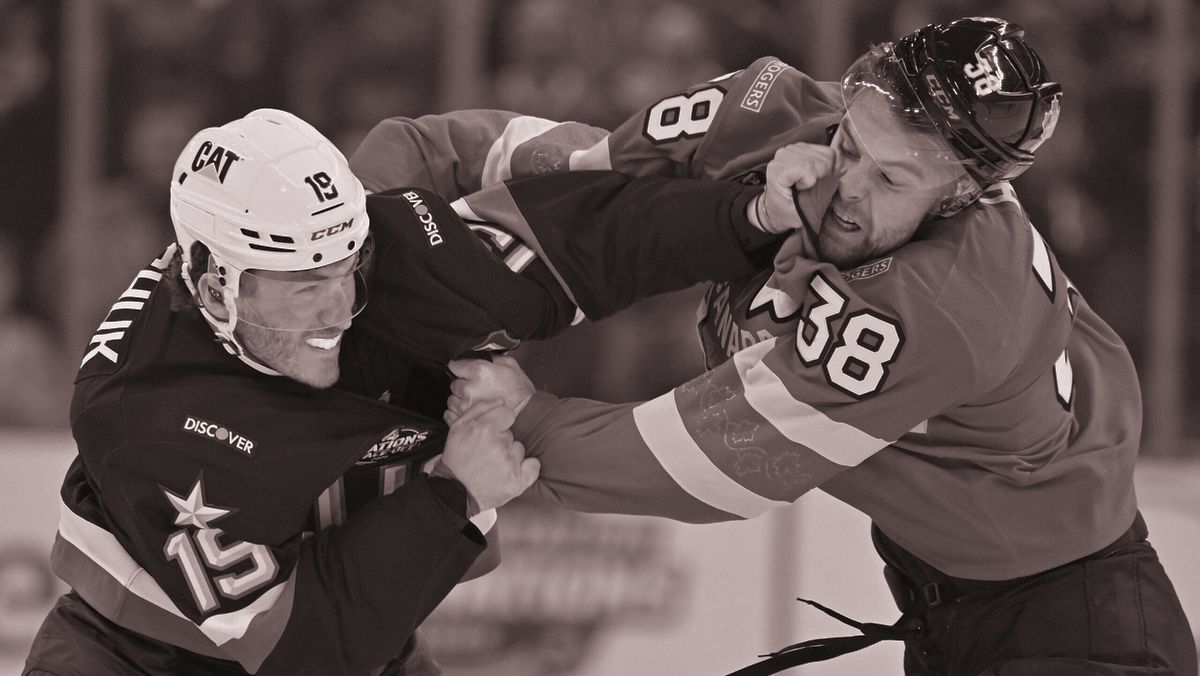
One trendy antidote to this attentional crisis has been a profusion of new, gimmicky—and I’m using that word with maximum affection, I promise—tournaments and competitions. Silver launched the Emirates NBA Cup (née the NBA In-Season Tournament) in 2023. Gary Bettman successfully introduced the NHL’s 4 Nations Face-Off
in-season tournament last year. Jay Marine reportedly paid $100 million for an Amazon Black Friday NFL game, and even the PGA Tour has the Creator Classic, which joins tour pros with popular YouTube golf creators. Meanwhile, these programs exist alongside long-running annual events, like the various all-star games, WWE’s suite of annual spectacles, and MLB’s Home Run Derby, which is heading to Netflix in 2026 as part of Gabe Spitzer’s expanded
sports strategy.
Of course, these new events are responses to the secular challenges of existing programming. Over the past 15 years, the NBA, MLB, and NFL have each seen their all-star game viewership fall significantly, in step with the decline of pay TV. These games all made a ton of sense in a monocultural landscape, when the Pro Bowl was good enough to sate the hunger of football fans the weekend after the Super Bowl. But in a fragmented media universe where everyone is in perpetual
competition, lower-stakes contests rarely constitute must-see viewing—especially when the best highlights are available on social media just seconds after they happen on television.
Are these gimmicky events going to succeed where their forebearers fell short? Certain executives are drawn, gimlet-eyed, to this type of programming because it helps differentiate their services from the competition—but there’s also plenty of money flowing at the consumer level, thanks to the rise of
sports betting. Indeed, while casual viewers might not tune into something like the Creator Classic, these showcases certainly appeal to the casual wagerer—as well as the curious advertiser. Meanwhile, media partners are always on the hunt for special sports events, there’s far less “must-watch” content for ad partners out there, and we’re obviously in the midst of an attention deficit pandemic. These factors make something like the 4 Nations tournament a rather juicy proposition.
|
While clips from these events will inevitably be spliced and distributed across social
media, the value for leagues and broadcasters still comes primarily from their performance on game day. And, based on existing data, there are several ingredients that make these newfangled broadcasts successful. The NHL’s 4 Nations tournament and the NBA Cup, in particular, offer illuminating case studies.
This year, the championship game for the 4 Nations tournament drew 16.1 million viewers in North America, with more than 9 million viewers in the U.S. and just over 6 million in
Canada. It was the second-most-watched NHL game in the last decade, just behind Game 7 of the 2024 Stanley Cup Final. Sure, the eye-popping numbers might be attributed to a particularly heated political environment—Donald Trump had just referred to Canada as the 51st state—but perhaps an even more significant cultural-fandom dynamic was at work.
Last year, according to a YouGov study, almost 50 percent of respondents reported watching the
Olympics “to support their country,” while an additional 26 percent said they wanted to feel like they were part of a global event. And in a survey from CivicScience last year, about 43 percent of Americans between the ages of 21 and 24 said they either had bet or planned to bet on the Olympics. (Audiences who bet on a game are much more likely to tune in.) In line with these trends, the 4 Nations tournament tapped the modern four-quadrant erogenous zones for sports fans: eventization and
gambling friendliness, yes, but also patriotism and fandom. In other words, it leaned into viewers’ identities—essentially willing a monoculture back into existence.
This dynamic might also help explain the NBA Cup’s discouraging numbers between 2023 and 2024. While the inaugural event drew an average of 1.67 million viewers and viewership for the championship game peaked at more than 5 million, last year’s final matchup between the Bucks and Thunder was down 35 percent, to just
under 3 million viewers. Meanwhile, the league as a whole was contending with viewership declines.
Instead of engaging new audiences, the tournament seemed to rely on the league’s most hardcore existing fans—you know, the types who regularly watch the NBA during football season. Silver, to his credit, seems to understand these dynamics: Next year’s All-Star Game will introduce a “U.S. vs. World” format, and he’s focused on establishing a European expansion league of some kind. Indeed, as
Matt Brabants, the NBA’s head of international partnerships, told Forbes last year, the NBA saw an 11 percent increase in Saturday and Sunday primetime viewership between 2023 and 2024, after it shifted to incorporate European audiences—including in countries like France, home to Victor Wembanyama. Also, more than 75 percent of the NBA’s social media followers across accounts are non-U.S. users, per the league. The NBA has eternally been an
American-centric league, but Silver has his own 4 Nations opportunity right in front of him. |
For streamers, these events have a threefold allure: growing their footprint in international
markets, finding high-profile programming for advertisers, and increasing engagement for subscribers across regions. To wit, Netflix’s gamble on the Home Run Derby, and its commitment to carrying the World Baseball Classic in Japan, is essentially a bet on the power of Shohei Ohtani in one of the streamer’s most important markets. For its part, Amazon secured the rights for most knockout games for this year’s NBA Cup, and just brought its annual Black Friday game to
international markets for the first time.
At the end of the day, it’s incumbent upon league executives to create new events that appeal to global fans and draw enough viewership to entice heavy bidding from potential partners. That’s where the “gimmicks” come in: They work because they stand out in a distracted media environment, drive enough highlights to encourage people to tune in on their own, appeal to the nascent gambling class, and are differentiated enough for advertisers
who want the largest possible return on their investment. They’re also a good reminder to legacy-bound leagues—all of whom are watching their fans increasingly engage via short-burst content—that history isn’t always their friend. |
Thanks, Julia. See you all on Thursday.
John |
|
|
Puck sports correspondent John Ourand and a rotating cast of industry insiders take you inside the executive suites
and owners boxes where the decisions that shape the entire sports business are made. You’ll hear interviews with players, network execs, and everyone in between. The Varsity is an extension of John’s private email for Puck by the same name. New episodes publish every Wednesday and Sunday. |
|
|
Ace media reporter Dylan Byers brings readers into the C-suite as he chronicles the biggest stories in the industry:
the future of cable news in the streaming era, the transformation of legacy publishers, the tech giants remaking the market, and all the egos involved. |
|
|
Need help? Review our
FAQ page or contact us for assistance. For brand partnerships, email ads@puck.news.
You received this email because you signed up to receive emails from Puck, or as part of your Puck account associated with {{customer.email}}. To stop receiving this newsletter and/or manage all your email preferences, click here. |
Puck is published by Heat Media LLC. 107 Greenwich St., New York, NY 10006 |
|
|
|