{{ 'now' | timezone: 'America/New_York' | date: '%b %d, %Y' }} |
|
|
|
Welcome back to Dry Powder. I’m Bill Cohan.
It’s unfortunate,
but history tells us that while many investors will mint fortunes amid the A.I. craze, countless individuals buying in will get immolated, too. And while plenty of Wall Street contrarians are sounding the alarm, few are likely to listen. Is the smart money waiting on the sidelines for the hype cycle to subside, giving them the chance to pick up the assets for pennies on the dollar? More on that below the fold.
Also mentioned in this issue: Derek Thompson,
Michael Hartnett, Howard Marks, John Kenneth Galbraith, Warren Buffett, Ed Zitron, Michael Moritz, and Bill Gurley.
But first… |
-
Two in the bush: As you’ve no doubt heard by now, Allbirds is exiting the footwear business through a $39 million sale to American Exchange Group, and the dowdy footwear brand once adored by misguided V.C.s is transforming itself into an A.I. compute infrastructure company called NewBird AI. The newly reorganized company, which received $50 million from an unnamed institutional investor, is planning to use the money to hoover up lots of G.P.U.s and then lease or buy data centers, with
the hope of renting out the compute power. You can’t make this stuff up.
On the news of the pivot, the Allbirds stock price went from about $2.50 a share, on a split-adjusted basis, to an intraday high of about $23 a share—a 600 percent one-day leap. The market cap briefly touched around $150 million, which is quite a drop from the company’s staggering, insane $4 billion valuation after it went public in November 2021, but an improvement from the long period, in 2025, in which it was
trading around $1 per share.
Anyway, the stock has since fallen back to around $4.20 a share. Perhaps it’s a leading indicator of oversaturation in the A.I. sector, or maybe it’s just the result of an idiotic plan. (This is not investment advice, but some ideas are too stupid for words.) In any event, since reaching its all-time high in 2021, Allbirds’ stock has collapsed 99.2 percent, despite its pathetic move to try to cash in on the A.I. boom. - Brightline,
big iffy: Last month, I documented the serious headwinds facing Brightline, the Florida commuter rail service backed by Fortress, the big hedge fund. In short, Brightline has way too much debt—roughly $6.3 billion at the moment—for its still-unprofitable business, although its fans say this is a situation of “good company, bad balance sheet.” Well, according to
a new report in Debtwire, it’s now crunch time for Brightline, and bankruptcy could be the only option if the company and its creditors fail to reach a deal on an out-of-court restructuring, and soon. According to the report, Brightline received a “going concern” opinion in its 2025 audit, released in April, warning that the company did not have the cash to pay its debts when they would become due this year—starting in about two weeks, to be precise.
On June 15, according to the report,
Brightline has an obligation to redeem a $985 million tranche of commuter bonds—now trading around 63 cents on the dollar—plus accrued interest of around another $100 million, or a total of a cool $1.08 billion. Debtwire does not believe the company has the ability to meet this obligation, hence the need for the serious restructuring negotiations, which are currently in full flower. If the company somehow gets past the June 15 challenge, Debtwire reports that it has another hurdle on July
15, when interest payments totaling another $282 million are due on two tranches of tax-exempt bonds, with a face amount of around $1.3 billion, which are trading in the range of 33 to 36 cents on the dollar. Those interest payments would follow another $2.2 billion tranche of bonds that has a smaller $58 million payment due on July 1.
This is a seriously complicated capital structure, and I don’t envy the financial and legal advisors who have to try to sort it all out in the next
few months, if they even can. As I mentioned in my piece, some of the debt in the Brightline capital structure—around $1.1 billion—is insured by Assured Guaranty Municipal. As you would expect, that debt is holding its value and trading near par. By contrast, the $1.12 billion of taxable bonds tied to Brightline East LLC with an 11 percent coupon, due in January 2030, are trading at a mere 8.5 cents on the dollar. Yikes. The clock is ticking on this one.
|
|
|
|
As several of the leading A.I. companies prepare to go public and see their
valuations soar above the $1 trillion mark, a number of Wall Street contrarians are trying to remind everyone that we’ve seen this movie before. |
|
|
|
Amid all the hyperventilating about eye-popping A.I. company valuations and the seeming
insanity of the current investment cycle, old Wall Street hands might feel something tickling in the back of their brain—a memory from the dawn of the internet age, when a group of buzzy companies built the fiber-optic network carrying trillions of bits and bytes across the country that we now take for granted. Needless to say, those internet infrastructure companies were a huge hit on Wall Street. In 1998, Global Crossing went public at a valuation of around $5 billion, and rocketed to
a peak valuation of around $50 billion in 1999 and early 2000. In 1996, McLeod USA went public at a valuation of roughly $1 billion, and three years later, my friends at Forstmann Little, the now-defunct buyout firm, made a $1 billion investment in the company in exchange for a 12 percent stake at a roughly $8 billion valuation. By the first quarter of 2000, McLeod’s valuation peaked at around $27 billion.
I could go on and on. Wall Street loved these companies, including Winstar, XO
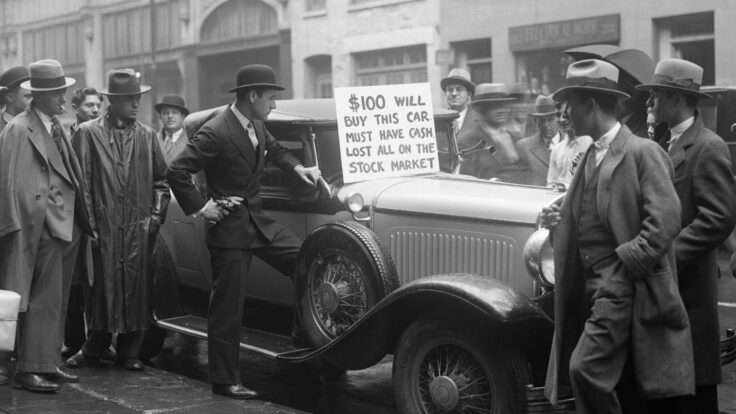
Communications, PSI Net, 360 Communications, Viatel, etcetera. All of them were desperate for capital—both debt and equity—and the Street was only too happy to oblige. I remember, because I was in the room for some of this theater. Estimates vary, but at their peak, sometime in the first quarter of 2000, the combined market capitalization of these so-called emerging telecom companies was something like $3 trillion. But, not surprisingly, the vast majority of them eventually crashed and burned,
either getting rinsed in a full-fledged bankruptcy proceeding, through a major debt restructuring, or from being scooped up by an O.G. telecom company.
The moral of the story, of course, is that Wall Street is often quick to fall in love with the new, shiny thing (think of all those underwriting and M&A fees!) only to misjudge the valuations, the cost, the demand, the management—pretty much everything. And yet, without all those fiber networks and all that eviscerated capital, we likely
wouldn’t be able to doomscroll, stream our favorite shows on our pocket computers, or text one another endlessly. In other words, despite hundreds of billions of dollars in losses, the assets that remained proved to be essential infrastructure.
Is history repeating itself with the massive capital expenditures now flowing freely into the A.I. boom? Will the so-called hyperscalers and neoclouds, with their gargantuan valuations and insatiable demand for capital, end up like the Global
Crossings, McLeods, and XOs of a generation ago? Is the smart money waiting on the sidelines for the hype cycle to subside—or crash and burn—giving them the chance to pick up the assets for pennies on the dollar? Some contrarians on Wall Street certainly think so.
We are currently in the uber-hype phase, with some valuations heading into the trillions of dollars. OpenAI is already valued at $850 billion, and will be past $1 trillion once it likely goes public later this year. Anthropic,
which now seems to occupy pole position among enterprise clients, is valued at $965 billion (and raised a fresh $65 billion earlier this week), and will also surely hit $1 trillion or more once it goes public. SpaceX is not an A.I. company, but it does have an “A.I. segment,” thanks to its acquisition earlier this year of X/xAI, which generated $3.2 billion in revenue in 2025 and a loss from operations of $6.3 billion. Still, the company is expected to be valued at as much as $2
trillion when it goes public in a few weeks. Meanwhile, Alphabet is already valued at $4.6 trillion; Nvidia at $5.1 trillion; Microsoft at $3.2 trillion; and Meta at $1.6 trillion. You get the idea. |
The
Brevity of Financial Memory
|
Naturally, everyone on Wall Street—and beyond—wants to know how long the good times will last. Last
November, in a Substack post, the journalist Derek Thompson wrote about news reports “filled with widespread fears that America’s biggest corporations are propping up a bubble that will soon pop.” He went on to compare the current A.I. hype cycle to the railroad infrastructure boom-and-bust of the second half of the 19th century. “A.I. is already transforming America in a similar fashion, driving overall economic growth and powering the stock market to all-time
highs,” he wrote. “As a share of U.S. G.D.P., the A.I. build-out is on track to exceed every major technology since—you guessed it—the railroads.” Thompson is not alone in making the comparison. Michael Hartnett, the chief investment strategist at Bank of America, also likened the A.I. economy to “the biggest bubble since the railroads.”
In December, Oaktree Capital Management co-founder Howard Marks wrote a missive with the headline, “Is
It a Bubble?” Marks, one of my heroes on Wall Street, said that he isn’t a stock market investor or a “techie,” but rather a student of human behavior who knows how forgetful people can be when yet another get-rich scheme materializes. “One of the most interesting aspects of bubbles is their regularity, not in terms of timing, but rather the progression they follow,” he wrote. “Something new and seemingly revolutionary appears and worms its way into people’s minds. … The early participants enjoy
huge gains. Those who merely look on feel incredible envy and regret and—motivated by the fear of continuing to miss out—pile in.”
John Kenneth Galbraith, the great economic historian, also addressed “the extreme brevity of the financial memory” in his masterwork, A Short History of Financial Euphoria. “Past experience,” he wrote, “is dismissed as the primitive refuge of those who do not have the insight to appreciate the
incredible wonders of the present.” Warren Buffett touched on this concept in 1999, while writing about the amazing development of the combustion engine and the automobile. “If you had seen at the time of the first cars how this country would develop in connection with autos, you would have said, ‘This is the place I must be.’ But of the 2,000 companies, as of a few years ago, only three car companies survived,” he wrote. “So autos had an enormous impact on
America but the opposite direction on investors.”
There are plenty of more contemporary skeptics. On May 26, Ed Zitron, the outspoken A.I. critic, wrote an essay titled “The Revenge of the Business Idiot,” in which he argued that “A.I. is a perfect storm of failed concepts and organizations, and the apex of the Era of the Business
Idiot, an epoch where we’re ruled by people so thoroughly disconnected from the actual workforce that it was inevitable that a technology would be created specifically to grift them.” Similar warnings of excess have come from such Silicon Valley venture capital stalwarts as Michael Moritz and Bill Gurley, who was notably a little muted during his recent appearance on the All-In podcast.
Thompson summed up the
concern well in his November essay. “I am not rooting for a bubble, and quite the contrary, I hope that the U.S. economy doesn’t experience another recession for many years,” he wrote. “But given the amount of debt now flowing into A.I. data center construction, I think it’s unlikely that A.I. will be the first transformative technology that isn’t overbuilt and doesn’t incur a brief painful correction.”
Unfortunately, we are still coming up on the phase of excess where the individual
investor gets immolated by the Wall Street hype machine. We have yet to see the I.P.O.s of SpaceX, OpenAI, Anthropic, and numerous other A.I.-related companies, but many of these are illusory, short-term plays for quick riches. And, once again, the head fake will work because investors seem to have no memory for the harsh lessons of the past. At the same time, others understand the moment we are in and will stay away until the bubble deflates, at which point they will pounce on the valuable
infrastructure that still exists as the exuberant capital structures get washed away. Only they will have paid pennies on the dollar—and be on their way to making another fortune. (This is not investment advice.) |
|
|
|
Join Puck’s chief political columnist, John Heilemann, as he roams the corridors of power and influence in America on
this twice-weekly interview show, taking you beyond the headlines with the people who shape our culture: icons and up-and-comers, incumbents and insurgents, moguls and machers in the overlapping worlds of politics, entertainment, tech, business, sports, media, and beyond. The conversations are rich and revealing, unrehearsed and unexpected… and reliably impolitic. A Puck-Audacy joint, new episodes drop every Wednesday and Friday. |
|
|
|
Puck’s daily political newsletter from Washington on what’s really happening in this town, from the White House to
the Pentagon to Capitol Hill, K Street, and the campaign trail. |
|
|
|
Need help? Review our FAQ page or contact us for assistance. For brand partnerships, email ads@puck.news. You received this email because you
signed up to receive emails from Puck, or as part of your Puck account associated with {{customer.email}}. To stop receiving this newsletter and/or manage all your email preferences, click here. |
Puck is published by Heat Media LLC. 107 Greenwich St., New York, NY 10006 |
|
|
|
|