{{ 'now' | timezone: 'America/New_York' | date: '%b %d, %Y' }} |
|
|
|
Welcome to The Hidden Layer. I’m Ian Krietzberg.
Ever since ChatGPT
started churning out mediocre college essays, economic doomsayers have been bracing for widespread A.I.-driven job destruction. And the intensifying push for enterprise adoption has only revived the hand-wringing. At HumanX earlier this month, the question of A.I.’s labor impact came up repeatedly. And yet no one had a clear answer—probably because no one really knows.
So today, we’re kicking off the first entry in what will be an ongoing series highlighting the professions most at risk
for A.I. disruption. Plus, news and notes on Anthropic’s very ironic Mythos security breach (oops) and the seemingly exponential surge of token use across the board.
Also mentioned in this issue: Geoffrey Hinton, Steve Forthuber, Hannah Milch, Louis Blankemeier, Nathan Goldschlag, Carl Frey, Sundar Pichai, Holly Grant, Sam
Altman, and more… |
Two Things You Should
Know…
|
- Mythos
unchained: Mythos, the Anthropic model that’s allegedly too dangerous to be publicly released, has been breached. According to
Bloomberg,
all it took was a couple of users in a Discord channel deploying fairly standard cyber tools.
The breach is notable on several fronts: It occurred on the very same day the model was announced; Mythos’s advertised cybersecurity powers apparently didn’t help Anthropic protect itself; and these Discord users seem to have access to a bunch of other unreleased Anthropic models, too. The users told Bloomberg they’re not bad actors and were just playing around, but the incident
certainly raises questions about who else might have unauthorized access to Mythos.
An Anthropic spokesperson told me that the company is “investigating a report claiming unauthorized access to Claude Mythos Preview through one of our third-party vendor environments.” Good call. The spokesperson added that Anthropic doesn’t have any evidence that the breach extended beyond that third-party environment, or that any Anthropic systems were compromised.
|
|
|
|
A MESSAGE FROM OUR SPONSOR |
The frontier has moved. Buying tech and AI is easy. Turning it into measurable performance is not. In our work with
leading companies, these transformations deliver ~20% EBITDA uplift—but only when they focus on a few domains and change how the work gets done. In Rewired, we show how capabilities turn technology into repeatable, compounding value. Learn More |
|
|
|
- How
many tokens?: On Wednesday, Google C.E.O. Sundar Pichai noted that the company’s models now process 16 billion tokens per minute from their enterprise customers, up from 10 billion last quarter. All those tokens aren’t free, and this massive increase in Google’s token-churning coincides with
seemingly universal hits to many enterprises’ bottom lines. The fintech firm Ramp reported earlier this month that it has seen A.I. token spend soar 13x among its customers since January 2025, and a number of executives told me that their spend on Anthropic alone has recently increased tenfold. Amid proliferating
stories of token spend outpacing employee salaries and companies having to institute stricter token budgets, I have yet to encounter anyone who finds these increases sustainable. “There will ultimately be a reckoning at some point in the near future because of the outpacing of spend to return,” Holly Grant, a
senior executive running strategy and innovation at DXC Technology, told me the other day.
|
Quote of the Week: The
Dot Dot Dot
|
“I think we have fallen in the frame as tech nerds of talking about, We’re gonna build superintelligence
and… dot dot dot. It’s going to be great for you. And we have not filled in enough of the dot dot dot.”
—Sam Altman, talking to the folks at Core Memory about where he’s gone wrong in his messaging around superintelligence. |
- Anthropic
and Amazon this week announced an expansion of their partnership, with Amazon injecting a further $5 billion into Anthropic (on top of the $8 billion already invested) and agreeing to furnish the lab with 5 gigawatts of A.I. chips. Amazon will have the option to invest another $20 billion if Anthropic reaches certain unspecified commercial
milestones. Amazon also recently clinched a spot as one of OpenAI’s largest investors by sending a $50 billion check. It appears we’ve reached the stage of the A.I. boom where none but Amazon can keep the competition alive.
- Pharmaceutical giant Merck wants an agentic A.I. makeover, and they’ve signed a multiyear, billion-dollar
deal with Google to do it.
- Robinhood Ventures Fund made a $75 million investment in OpenAI—small change for a company used to raising tens of billions per
round, but enough to enable nonaccredited Robinhood users to gain some exposure to the lab as it nears an I.P.O. I’m sure that’ll go well.
|
And now for the main event… |
|
|
|
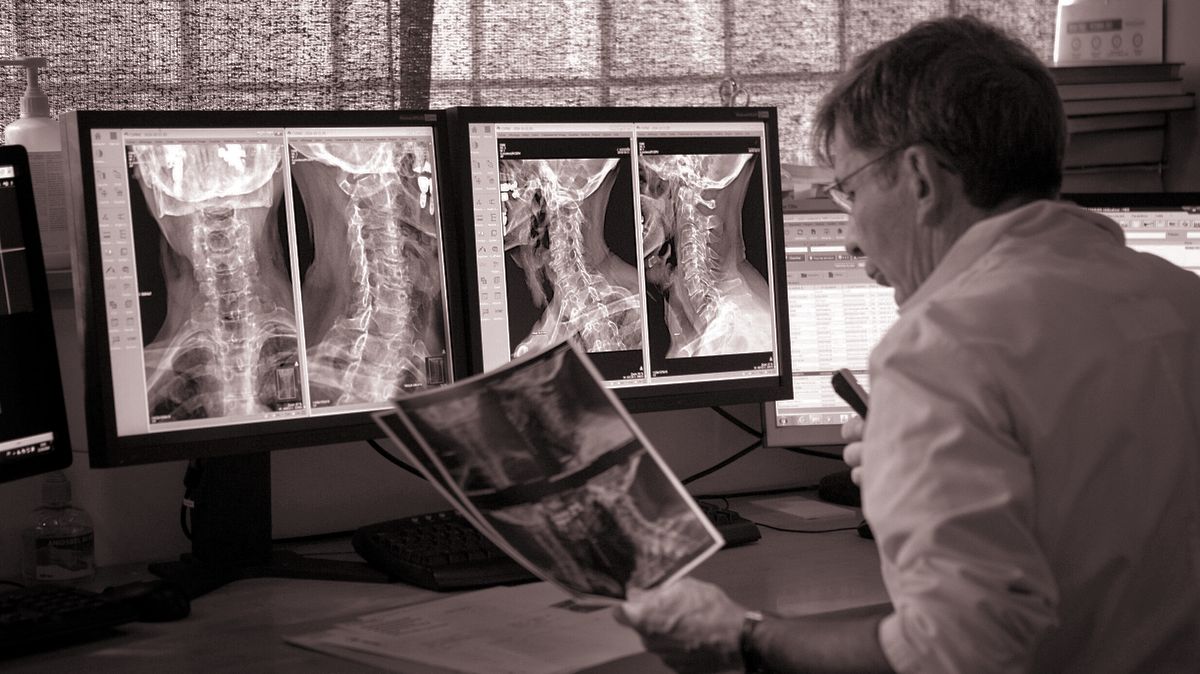
Years ago, the field of radiology was predicted to be among the first to be decimated by
A.I. job extinction. And yet today, radiologists are more in demand than ever, and the field’s job-extinction moment is seen as a false alarm. |
|
|
|
A decade ago, Geoffrey Hinton, one of the best-known scientists in artificial intelligence,
issued a death sentence for an entire profession. “People,” Hinton said, “should stop training radiologists now.” He gave it five years until deep-learning A.I. systems would be outperforming human radiologists to the point of the latter’s sudden and dramatic obsolescence. Of course, his obituary proved premature. The radiology
industry, which had roughly 230,000 jobs in 2014 and 270,000 jobs in 2024, is expected to grow 5 percent through 2034, per the Bureau of Labor Statistics. And the demand for imaging services in the U.S. is only expected to grow as the population ages.
Concerns that technology will vaporize the labor force are as old as work itself. But the realities are
historically far more nuanced. Nathan Goldschlag, the director of research at the Economic Innovation Group, reminded me that 40 percent of the U.S. workforce worked on farms in the year 1900. Today, it’s 1.2 percent. Automation, he said, didn’t erase the need for labor; it just reallocated us. “A lot of the
discussion now is, This time is different because it’s going to be really fast. This time is different because it’s going to hit knowledge workers. This time is different because it’s A.G.I., so it can do the new tasks,” he said.
As always, no one really knows how this new technology will remake the workforce. And as many economists I’ve spoken to point out, we’ve heard This time is different before—and somehow still have jobs today. For his part, Hinton
maintained that he was right directionally; he just got the timing wrong. Soon, he told the Times last year, it’ll be “a combination of A.I. and a radiologist, and it will make radiologists a whole lot more efficient in addition to improving accuracy.” |
|
|
|
A MESSAGE FROM OUR SPONSOR |
The frontier has moved. Buying tech and AI is easy. Turning it into measurable performance is not. In our work with
leading companies, these transformations deliver ~20% EBITDA uplift—but only when they focus on a few domains and change how the work gets done. In Rewired, we show how capabilities turn technology into repeatable, compounding value. Learn More |
|
|
|
Hinton’s amended prediction is proving more accurate than the first: A.I. is helping radiologists meet an
ever-increasing demand for imaging. “What we’re trying to do,” said Steve Forthuber, the president and C.E.O. of eastern operations at RadNet, one of the country’s largest providers of diagnostic imaging services, “is use A.I. and other forms of innovation and technology to address this shortage in technologists and radiologists, so that we can create greater capacity and meet all this demand.”
Louis Blankemeier, the co-founder and C.E.O. of Cognita, an
A.I. radiology startup that was recently acquired by Radiology Partners, told me that he’s intent on building what he described as the “supervised self-driving of radiology,” in which A.I. systems handle the bulk of the workload and their output is checked by the human radiologists who have spent over a decade training for the job. “Geoffrey Hinton does not understand anything about radiology,” he said. “Most people don’t know how complicated radiology is. Even if you’re an A.I. expert, it’s
hard to talk about how A.I. can solve a problem when you don’t understand the problem.” He thinks the field of radiology will be “human plus A.I.” for a long time.
Carl Frey, an economist and A.I. professor at the Oxford Internet Institute, reiterated that the Hintonian discourse about radiology is another example of the facile philosophizing about the A.I.-powered jobspocalypse. It’s a “fairly safe bet to say there will be a lot of automation,” he acknowledged—but, he
added, everything from consumer preferences to regulatory intervention will slow it down as wage and productivity gains rise to counterbalance it. “The only thing I feel fairly comfortable with is that we will have more automation, and I feel relatively comfortable that that’s going to be a fairly gradual process,” he said. “We will certainly offset a large part of it, but maybe not all. Or we may use A.I. to create new industries and products, and more than offset it.” It’s something
of an open question. |
In radiology, machine assistance is not a new phenomenon.
Computer-aided detection has been around since the late 1980s. Adoption surged into the early 2000s. But in 2007, a study in The New England Journal of Medicine found that these techniques actually reduced radiologists’
accuracy. “It’s this kind of cautionary tale that is the premise for all of my research, which is that small experiments do not translate to real-world use of a technology,” Dr. Hannah Milch, an associate professor of radiology at UCLA, told me. “My research is to prevent mistakes from the past.”
These days, when Milch sits down to interpret a mammogram, she’s no longer the first one to read it. An A.I. system scans it first, categorizing different levels of risk and
flagging certain parts of the image for closer inspection. After seeing what the A.I. comes up with, Milch does her full, standard read, then makes a final decision—which, she told me, “may be the same as what A.I. thought, but very frequently it’s different.” Forthuber described a similar scenario, in which radiologists across RadNet’s 425 imaging centers use A.I. as an initial pair of eyes. The result, he said, has been a measurable increase in the accuracy and efficiency of their mammogram
scans. Milch noted that this scenario, in which the A.I. system acts as decision support for radiologists, has become fairly standard practice across the industry.
Behind this transition has been a growing understanding, which Milch also acknowledged, that clinical A.I. models have gotten very good and are getting better, even if we don’t yet have robust evidence to prove it. There’s been only one large-scale randomized controlled trial—conducted in Europe and
published in January—that assessed the real-world applicability of A.I. tools for mammography. Though the study supports the notion
that these systems can boost radiologists’ accuracy and efficiency, Milch has found that most other data on them doesn’t translate to her practice. “What’s interesting is that [the A.I.] makes egregious errors,” she said. “Its negative predictive value is very good—the bigger issue is the false positives. It doesn’t seem nearly as good as the radiologist in my everyday practice, though the data suggests it’s on par.” To help close the evidence gap, Milch is co-leading the first large-scale
randomized controlled test of A.I. in breast cancer screening in the United States—a $16 million, multi-institutional clinical trial that was funded in September 2025.
The obvious question is whether—or, perhaps, when—this kind of work might eventually happen without the radiologist at all.
Forthuber, for one, said, “It’s not happening for us at this time.” But, he added: “Could it happen for very routine, absolutely normal scans? Perhaps.” He sees even that eventuality as a positive. If straightforward screenings can be outsourced to A.I., the radiologists can busy themselves with more-complicated cases. “You’re not going to need fewer radiologists,” he added. “You’re still going to need more who can focus on the increased demand.”
Milch also thinks that completely removing
the radiologist from the picture is a long way off, but she believes that’s the direction we’re moving in—only it’s not as dire as it sounds. She could see A.I. systems autonomously taking over the “normal” part of the workload—those scans in which nothing is wrong—and predicts a transition period that could well last “many years” where the human radiologists take care of the abnormal scans. “I think there is a shift happening that, from where I sit, is mostly very exciting, because it’s going
to make us do better work and help patients more,” she told me. “It will shift the radiologist role, but I think for the better.”
“Radiologists are fine,” Milch added. “We have plenty to do.” |
That’s all for today. I’ll see you next week.
Ian |
|
|
|
Join Emmy Award-winning journalist Peter Hamby, along with the team of expert journalists at Puck, as they let you in on the
conversations insiders are having across the four corners of power in America: Wall Street, Washington, Silicon Valley, and Hollywood. Presented in partnership with Audacy, new episodes publish daily, Monday through Friday. |
|
|
|
A professional-grade rundown on the business of sports from John Ourand, the industry’s preeminent journalist, covering the
leagues, players, agencies, media deals, and the egos fueling it all. |
|
|
|
Need help? Review our
FAQ page or contact us for assistance. For brand partnerships, email ads@puck.news.
You received this email because you signed up to receive emails from Puck, or as part of your Puck account associated with {{customer.email}}. To stop receiving this newsletter and/or manage all your email preferences, click here. |
Puck is published by Heat Media LLC. 107 Greenwich St., New York, NY 10006 |
|
|
|
|