 |
|
Welcome back to Dry Powder. I’m Bill Cohan.
In today’s issue, my candid chat with Paramount’s long-suffering Class A shareholder Mario Gabelli, who says he doesn’t want to get all litigious over David Ellison and the RedBird guys’ deal for Paramount… as long as he’s receiving a similar price for his shares as Shari Redstone is getting for hers. In our chat, Gabelli outlines his thesis and intimates his tactics. One thing is certain: He is not going quietly into that good night.
But first…
- Some fascinating art market news from my partner Marion Maneker: Christie’s announced Tuesday during their regular semi-annual press call that the auction house had sold $2.1 billion in art in the first half of the year, down from $2.7 billion last year. But the sell-through rate remained very strong, with 87 percent of lots finding buyers, the same as last year. The overall hammer ratio, which measures the aggregate presale estimate of all lots against the total hammer price of those lots, rose from 1.07 last year to 1.11 this year. And 82 percent of the bids were placed online.
C.E.O. Guillaume Cerutti, who characterized those numbers as “resilient,” predicted that the art market will soon see a rebound to higher volume, either later this year or in 2025. Some important collections currently making the rounds—Mica Ertegun and Lily Safra are recently deceased collectors that come to mind—will need to be sold soon, depending on the guarantee and the seller’s market confidence.
Christie’s first-half numbers don’t include private sales, which the auction house only reports at the end of the year. But the house did break out auction sales per category: $1.3 billion came in 20th and 21st century art; $362 million in luxury; $217 million in Asian and World art; $132 million in so-called Classics; and $77 million in Old Masters. Notably, Asian/World art and Classics both saw double-digit gains in auction volume.
Meanwhile, Sotheby’s isn’t releasing half-year numbers. But I’m told the auction house was able to generate $2.3 billion in gross sales in the first six months of the year, including their classic car and real estate divisions (not to be confused with Sotheby’s International Realty, which is licensed to real estate conglomerate Anywhere). Since Christie’s doesn’t compete in either market, the figures are not direct comparisons. Sotheby’s total was down a similar percentage to Christie’s, too. (Sign up for Wall Power here.)
- Drain the Swampscott: Barstool Sports founder Dave Portnoy is one of those only-in-America but also really only-outside-of-Boston success stories: Decades ago, he started an underground alternative zine that he pivoted into an anti-politically correct, eye-poking sorta MAGA-adjacent bro-tastic sports and lifestyle media company that famously reviewed pizza slices on the East Coast. It was almost a Pat McAfee version of Grantland, the beloved and dearly departed Bill Simmons property from the aughts.
Then Portnoy, who hails from coastal Swampscott, Massachusetts, enjoyed a series of liquidity events. First, he sold a controlling position in Barstool to The Chernin Group for reportedly a little less than $10 million in 2016. Four years later, he enjoyed a second windfall when gaming concern Penn Entertainment took over the company in a deal worth $450 million. Then, last year, Portnoy bought the whole shebang back for $1 after Penn had to quickly divest—the company projected an $800 million loss during its stewardship—in order to complete a partnership venture with ESPN, which may have wanted nothing to do with the man known as El Pres (and who many people consider to be a real Masshole). Anyway, it all added up to a boatload of money for Portnoy. Last year, he paid $44 million, the highest price ever, for an oceanfront estate in Nantucket, edging out the likes of billionaires John Henry, who paid $42 million for his place, and Steve Schwarzman ($32 million for his Nantucket waterfront estate), and me.
Alas, over the weekend, we “almost lost Captain Dave,” as he referred to himself in an Instagram video recounting his fateful decision to take his modest 27-foot motorboat out for a spin, with his mother as the only passenger. He unhooked the boat from its mooring in the Nantucket harbor and then started drifting in the heavy winds that were buffeting the island. Unfortunately for Captain Dave, he failed to check whether the boat’s engines were working before he unmoored it. They weren’t. His radio wasn’t working either. “Captain Dave was almost lost to mother ocean,” he said in the post. “No power, no radio, no anchor, no nothing. Heavy, heavy winds, and next thing you know, Captain Dave is lost at sea. Just blowing, trying not to crash into ships in the harbor.” He sent up a flare from a flare gun, which he happened to have on the boat. “Captain Dave is not really a flare gun guy, or any other type of fireworks guy. Captain Dave shoots his fucking gun into the sky. Distress signal. Still nothing.”
The next thing he knew, “some girl” in “what looks like a rowboat” came by to help Captain Dave and Mama Dave. She climbed aboard his boat and asked him to film a TikTok with her. “No time,” he said. Instead, she called in the Coast Guard—“four burly dudes”—who rescued him. Portnoy said he was worried his “life was over” since he figured “Captain Dave had to be halfway to the Caribbean.” (According to the Nantucket Current, his boat never left the harbor.) He then paraphrased George Costanza: “The sea was angry, my friend. Captain Dave may never go on a boat again.”
Needless to say, Portnoy’s retelling is hilarious, and comes on the heels of another video he made last week about some problems he encountered while trying to do some home improvement work on his estate, prompting one Nantucket wag to write me that Portnoy is a better pizza critic than yachtsman. “You can take the guy out of Swampscott, but you can’t take the Swampscott out of the guy,” he wrote. “He desperately wants to become a Nantucketer, but he is a fish out of water. Writing a big check for a splashy house does not make one a native or one who knows the difference between a bow and a stern.”
It’s been a busy summer for the North Wharf set, as I detailed in a previous dispatch focused on the billionaire row over the “clam shack”—the settlement of which has turned out to be a lone bright spot amid this summer of discontent. Now, on to another fish tale…
|
 |
| Casus Gabelli |
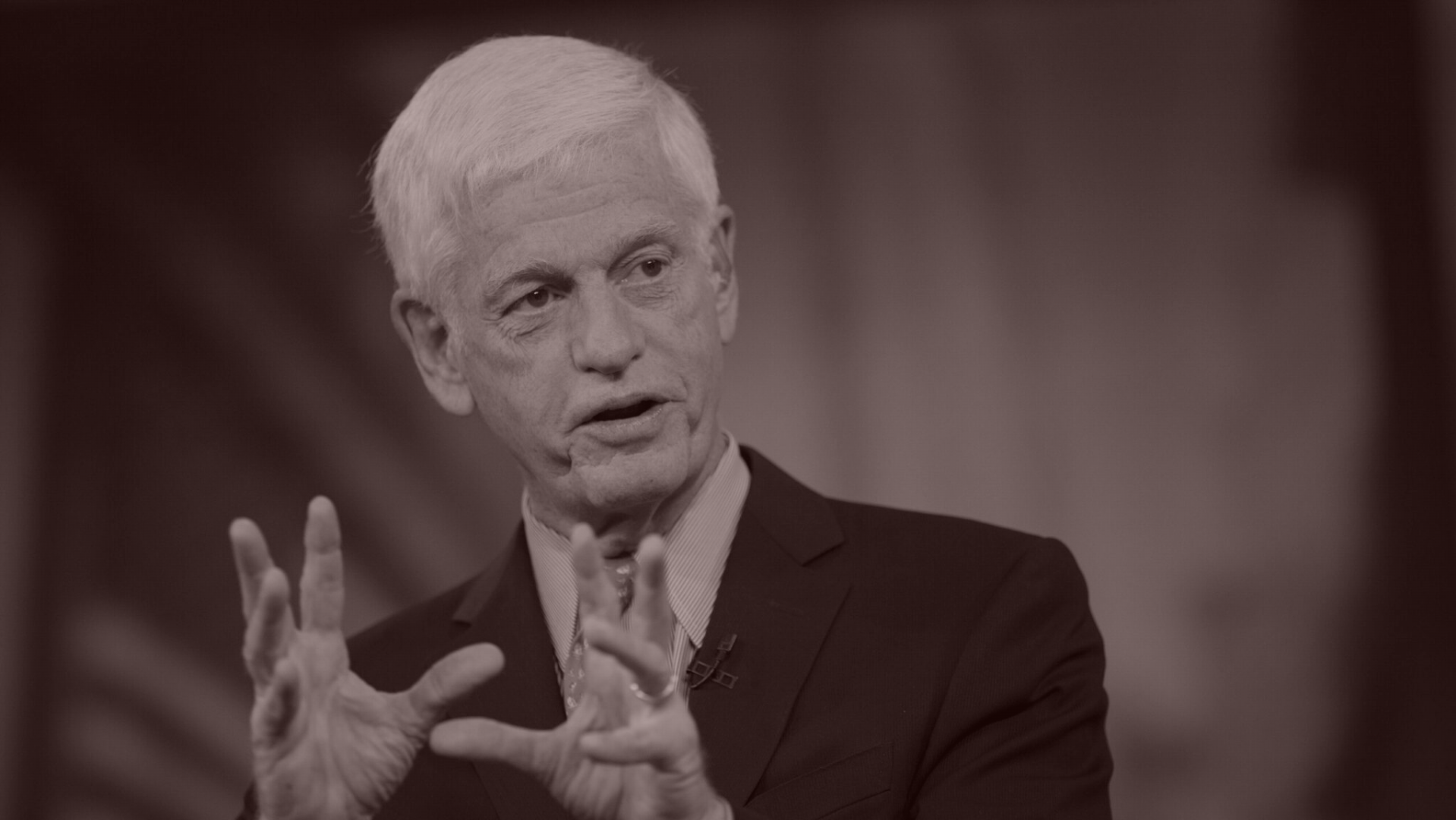
| Can Paramount’s long-suffering Class A shareholder successfully twist Shari’s arm and find out what, exactly, David Ellison and the RedBird guys are paying for her slice of the pie? Herewith, a conversation with Mario Gabelli, the architect of Operation Fishbowl. |
|
|
|
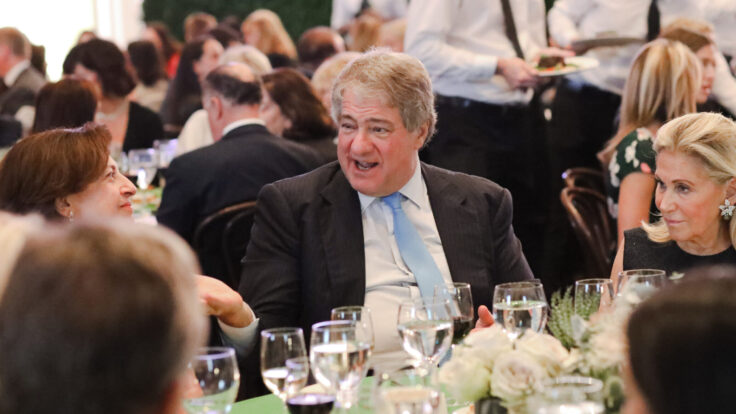
| Mario Gabelli’s “Operation Fishbowl,” his recently teased inquiry into the particulars of the Paramount deal, is officially underway—heralded recently by his modest Twitter campaign and a letter to Delaware Chancery Court. It’s not a full-blown lawsuit, at least not yet. For now, the octogenarian money manager, who, like me, is a graduate of Columbia Business School—Gabelli ’67; Cohan ’87—is on the hunt for information about the deal Shari Redstone cut with Skydance’s David Ellison and RedBird Capital’s Gerry Cardinale for National Amusements Inc., her family’s holding company that controls 77 percent of the voting shares of Paramount Global. Gabelli’s request is reasonable. After all, he is a fiduciary for 4.9 million of those Class A voting shares, making him the largest non-Redstone holder, and so he wants to know specifically what Ellison/RedBird is paying her for her A shares. According to Gabelli, he and the 690 clients whose money he manages own 53 percent of the 9.2 million A shares that the Redstone family does not own. (Gabelli also owns 921,000 nonvoting B shares in Paramount.)
It’s hard to know what Shari is going to get for her A shares, at least from the documents currently available. Gabelli is thinking that maybe Paramount’s next quarterly earnings report—which will be filed with the Securities and Exchange Commission in August—will have more information about the deal. I’m thinking that maybe the proxy statement that Paramount files as part of the $4.5 billion tender offer that Ellison/RedBird will undertake to buy some of the non-Redstone shares—both voting and nonvoting—will have that information. In the meantime, as my partner Eriq Gardner revealed this week, Gabelli has appealed to the Delaware courts.
We know, at the least, that Shari is getting $2.4 billion all-in for NAI. I’m told that when all is said and done, however, she’ll end up with $1.75 billion for NAI’s equity. As I wrote previously, she will be responsible for paying off NAI’s liabilities, which were higher than previously thought, including the $175 million she owes to her investment banker, Byron Trott, and his firm, BDT & MSD Partners. She owes another $475 million or so in liabilities to NAI’s banks, chiefly Wells Fargo, plus whatever else she owes that nobody ever knew about because she was never required to disclose the inner workings of her private holding company.
What Gabelli wants to know specifically is how Ellison/Redbird or Shari is allocating that $1.75 billion of equity between NAI’s own voting and nonvoting shares in Paramount. Shari and her family own 31.5 million A shares and 31.4 million B shares (at least according to Gabelli; the 2024 proxy pegs Shari’s B shares at 32 million). He’d also like to know how much of that $1.75 billion is being allocated to the value of NAI’s more than 1,200 movie screens around the world (my guess is probably very little, and Cardinale told me they would be sold eventually) and how much is being allocated to Shari’s venture capital investments (she has a small venture capital firm), and whether those investments are valued at cost or at their market value. “What price did Shari get?” Gabelli asked Monday on CNBC, before illuminating his most significant concern. “And what price should our clients get for the voting stock? Obviously, there are premiums for change of control. She owns control. But we have a majority of the minority. Why don’t they want us to be there?” |
|
|
| Gabelli, who knows that Ellison/RedBird is offering him $23 a share for his 4.9 million A shares, like every other voting shareholder not named Redstone, wants to know whether Shari is also getting $23 a share, or whether she’s getting more than he is for the same security. In a Monday interview with me, he conceded that Shari is entitled to more than he is for her A shares because she can convey control of Paramount by selling NAI. It’s just a question of degree, apparently. “All we want to do is take a look at the books and records, put a microscope on them—just like what we do with 10Qs and 10Ks for companies,” Gabelli told me. “If the analysis of the records indicates that NAI got $25 and my clients got $23, okay, but if she got $35 and my clients got $23, eh…” And here the Bronx-born Gabelli, who is nothing if not old-school folksy, made clear he would not be content with that discovery.
He’s also not happy that he will be subject to what he thinks is a coercive tender offer to the non-Redstone shareholders. “They’re trying to squeeze me out at $23 a share, right?” he asked rhetorically. Gabelli is concerned that the $4.5 billion that Ellison/RedBird have allocated to buy the non-Redstone shares will only go so far, depending on how many people tender their shares versus how many are willing to keep their stock and take a ride on the Ellison/RedBird railroad. As it stands now, Ellison/RedBird is offering $23 in cash for the non-Redstone A shares and $15 in cash for the non-Redstone B shares. But if enough shares are tendered, the cash will be allocated (somehow) on a pro rata basis. After the cash runs out, those who choose to tender their shares will get stock in New Paramount for the balance of their positions.
That’s got Gabelli miffed. “If I don’t take the cash—and some of my clients have been in this thing for a long, long, long time, and they’re taxable, right?—so they slam you down with 1.53 shares of the common,” he said. I suggested to him that maybe Ellison/RedBird, with its new management team and fancy ideas about infusing “technology” into Hollywood, might get the Paramount stock moving upward again. “Darling, darling, go somewhere else with that one,” he replied. “The point is that I’ve done this so many times. I’ve seen this play over and over again. Don’t give me the bullshit about 1.53 [shares] equals [a] $30,” the stock price Ellison/RedBird claim to be targeting under their ownership. (Love this guy!)
Gabelli told me he’s not opposed to what Ellison/RedBird are proposing at Paramount. In fact, he seems to like the new management team of Ellison and Jeff Shell, and possibly Jeff Zucker (who might be called in to helm CBS after the deal closes, if it closes, in a year). He likes all the talk about introducing more technology into the Hollywood mix. “Paramount is not the challenge,” he told me. “That’s easy to fix. They can bring in Skydance because that will give them the content and technologies. So, I agree with that. … I like the concept that with Ellison, Paramount is getting a talent that understands content and technology, and that is important to them, and this is one way to do it.” He said that Shari, unfortunately for her, got “clobbered” by macroeconomic factors “beyond her control.” But, he continued, “Don’t squeeze my clients out at $23. I’ve got 700 clients in this thing.”
The way Gabelli figures it, he just wants for himself and his 700 clients what Shari got, or close to what Shari got, for her A shares. Which is why he wants to know what Shari got for her shares, and why his attorney wrote the letter to Delaware. “At [$]30, they’re going to pay me another $10 for 10 million shares,” he said, using a round number. “That’s all that we’re talking about.”
Gabelli said that he thinks that, in the end, he’ll get the information that he’s seeking from Shari and NAI, and he’ll get for the non-Redstone A shareholders, including those he is a fiduciary for, that $100 million extra in cash, if it in fact turns out that Shari is getting materially more for his A shares than they are. “They don’t want to run the risk that I’m going to be correct in Delaware, and basically stop the deal when it goes to the shareholders,” he said. “And I don’t want to stop the deal. My clients are looking at me as a fiduciary to look at the scale and see what does NAI get and what do they get for their A shares. Period.”
Where he goes from here is still up in the air. “We’re going to look at what the data says,” he told me. “We’re going to be driven by that data, and then we’ll make a decision.” He reiterated that he’s not currently suing anybody over this deal—but he still could, and might have no choice but to do so. “One way or the other, we’ll get the information out of Paramount and NAI,” he said. “And if they don’t give it to us, unfortunately, we have to figure out the next step. That’s part of what I call Operation Fishbowl.” Gabelli has been around a very, very long time, and he’s seen it all on Wall Street. And he’s humble enough to remind me “not to confuse a bull market with brains; you just got to survive.” I wouldn’t bet against him. |
|
|
|
| FOUR STORIES WE’RE TALKING ABOUT |
 |
| Biden Private Drama |
| On the Democratic malaise after the Trump assassination attempt. |
| JULIA IOFFE |
|
 |
|
 |
|
 |
|
|
|
|
|
 |
|
|
|
Need help? Review our FAQs
page or contact
us for assistance. For brand partnerships, email ads@puck.news.
|
|
You received this email because you signed up to receive emails from Puck, or as part of your Puck account associated with . To stop receiving this newsletter and/or manage all your email preferences, click here.
|
|
Puck is published by Heat Media LLC. 227 W 17th St New York, NY 10011.
|
|
|
|