{{ 'now' | timezone: 'America/New_York' | date: '%b %d, %Y' }} |
|
|
Hello and welcome back to The Best & The Brightest. I’m Leigh Ann
Caldwell.
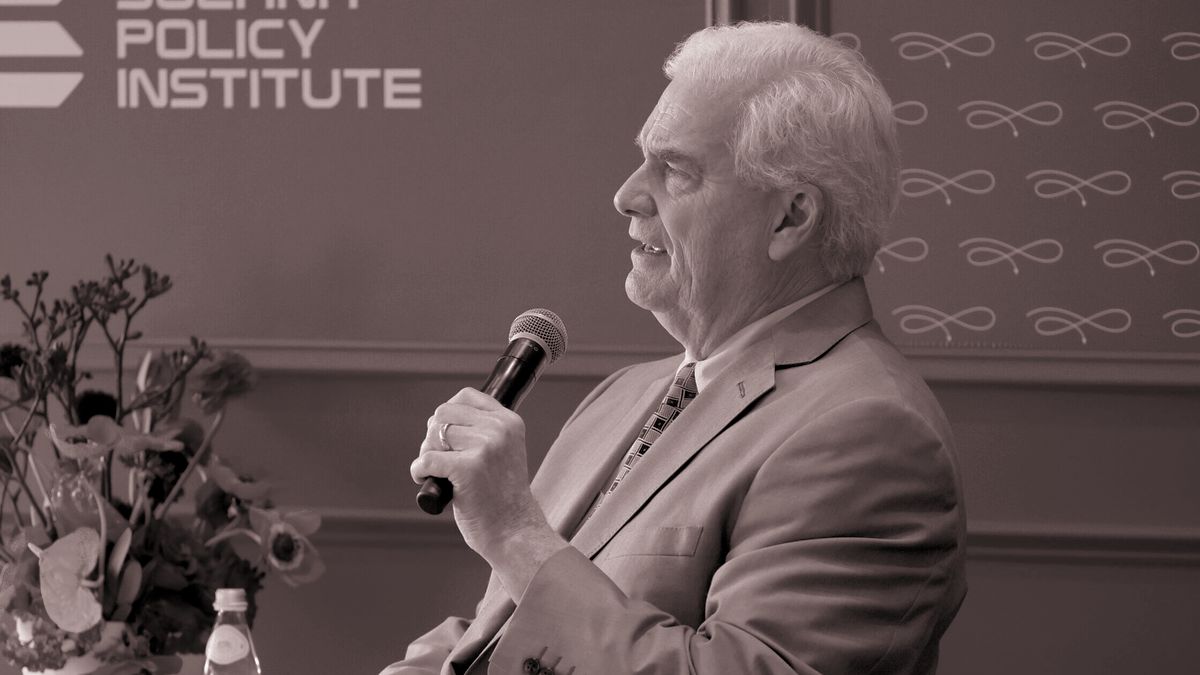
This morning, House Republican Whip Tom Emmer joined me for the latest Puck Power Breakfast, presented by the Solana Policy Institute, on the rooftop of the Riggs hotel. We had a phenomenal turnout, including Irish Ambassador Geraldine Byrne Nason. Emmer is one of the Hill’s earliest adopters and advocates of cryptocurrency, so naturally we chatted about the latest in crypto regulations and the prospects for related legislation, but he
also weighed in on the possibility of a government shutdown on October 1, and gave his thoughts on Jimmy Kimmel’s suspension.
I have all the juicy details from our informative, feisty, and sometimes funny conversation below. The full conversation will air as a special Saturday episode of The Powers That Be, so stay tuned. And if
you missed my partner Ian Krietzberg’s conversation with Senator Mark Kelly on his proposed regulatory road map for A.I., published earlier today in his private email, The Hidden Layer, you can find that
here.
But first… |
- Murkowski
for governor?: A few weeks ago, I wrote about rumors spreading around Alaska that Sen. Lisa Murkowski was considering a run for governor in 2026. I finally caught up with her yesterday on the Hill to ask if she was thinking about it. And she confirmed it. “I have not ruled it out,” she told me.
If Murkowski does leave the Senate to run for governor, it would be a huge deal and yet more evidence of the G.O.P.’s transformation in the age of Trump—a development about
which Murkowski has been quite vocally concerned. Trump tried to defeat her in 2022 by backing a candidate far to her right. But Murkowski’s deep roots and relationships in the state, especially with Alaska Natives, helped her win—even though she openly backed her friend, Democrat Mary Peltola, for the state’s at-large House seat.
Peltola, who lost to Nick Begich in the last election, is also considering a run for governor, though Murkowski told me that
Peltola’s decision wouldn’t affect her own. (She did note that Peltola is getting pressure from Alaska Democrats to run for governor and pressure from Washington Democrats to run for Senate.) Meanwhile, the current governor of Alaska, Mike Dunleavy, has suggested that he’s going to run for Murkowski’s seat in 2028.
Murkowski has cultivated a unique coalition of moderate Republicans and Democrats in Alaska, though a recent
poll suggests her vote in favor of the One Big Beautiful Bill Act has hurt her standing in the state. On the other hand, Alaska is a notoriously difficult state to poll. Regardless, Murkowski doesn’t seem to be in any rush. “I am in the luxurious position of not having to even think about making the decision for months,”
she told me.
|
|
|
A MESSAGE FROM OUR SPONSOR |
Hospitals are here when you need us most – but hospitals across America are at risk of closure. |
|
|

| Abby Livingston
|
|
- Dems defend Kimmel:
Democrats are responding with fury to ABC’s decision to put Kimmel on ice. Even former President Barack Obama entered the fray, writing: “After years of complaining about cancel culture, the current administration has taken it to a new and dangerous level by routinely threatening regulatory action against media companies unless they muzzle or fire reporters and
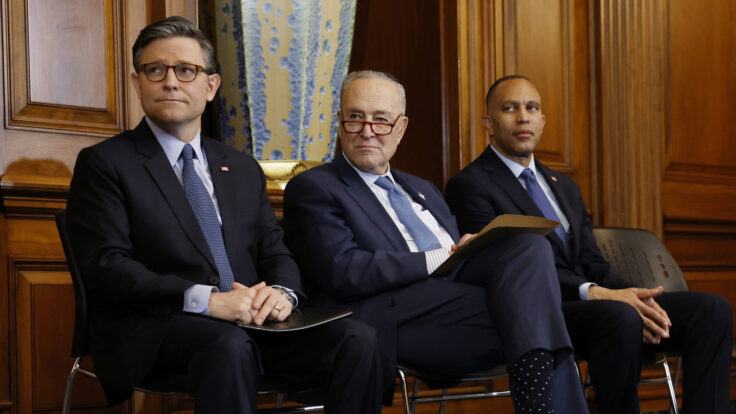
commentators it doesn’t like.” But House Minority Leader Hakeem Jeffries had one of the more forceful responses, not only calling for the resignation of F.C.C. Chair Brendan Carr—who threatened ABC and its parent company, Disney, hours before the network suspended the late-night host—but also issuing a threat of his own. He called ABC’s decision
“an act of cowardice” and a possible “pay-to-play scheme” and warned media companies that a House Democratic majority will investigate, even if it “requires the relentless unleashing of congressional subpoena power.”
- The Mace–Omar feud escalates: Yesterday, Nancy Mace called for Ilhan Omar’s
deportation, and Omar retorted that Mace ought to go to rehab. But it turns out that wasn’t the low point of the congresswomen’s ongoing feud. This round kicked off over Omar’s critical comments about Charlie Kirk after his assassination. By Wednesday, Mace had put a censure resolution on the House floor, arguing that Omar’s statements were “reprehensible and affect the dignity and
integrity of the proceedings of the House and do not reflect credibility on the House.” Even as the measure failed (by way of a fascinating coalition), the war of words escalated when Mace posted that Omar had “mocked the
cold-blooded assassination of an innocent American husband and father,” and that the Minnesota Democrat “incited political violence.” Omar retorted in kind, writing that “literally none of this is true” (she had called political violence “absolutely unacceptable and
indefensible” on the day of Kirk’s murder). Omar added: “We have to stop allowing members who are experiencing mental breakdown to continue to work without getting them the help they need. This is an emergency, let’s help her before she hurts herself or one of us.”
|
|
|
The House Republican whip dishes on Brendan Carr’s F.C.C., shutdown politics, and, of
course, cryptocurrency. |
|
|
Rep. Tom Emmer of Minnesota has one of the hardest jobs in Washington. As the Republican
whip, he’s responsible for wrangling the very narrow G.O.P. majority to ensure the passage of any and all bills brought to the floor. Yes, the job has gotten somewhat easier with Trump barking at members who step out of line. Still, Emmer has to act as psychologist and player coach to 219 Republican members who constantly need to vent, complain, and demand something before they hand over their precious yea.
Emmer is in the middle of that routine right
now, as he works to secure all but one Republican vote for a seven-week stopgap funding bill to keep the government open. The House plans to vote on the measure tomorrow and send it off to the Senate, where the bill’s fate is much murkier given the need for at least seven Democrats to back it. And Senate Minority Leader Chuck Schumer is being “foolish,” Emmer told me, by threatening to withhold support unless Republicans agree to demands around healthcare, including an extension
of the Affordable Care Act tax subsidies that expire at the end of the month. (It’s notable that Emmer didn’t criticize the Democratic leader of his own chamber, Hakeem Jeffries.) |
|
|
A MESSAGE FROM OUR SPONSOR |
Hospitals need your help to stay. Protect 24/7 care—because when the doors close, it is too late. |
|
|
Emmer and I spoke at the Puck Power Breakfast, presented by the Solana Policy Institute, this morning—the day
after the Brendan Carr–Jimmy Kimmel dustup. Emmer said Carr was “doing a great job,” that nobody watched Kimmel’s show anyway, and that the F.C.C. should “make sure people are being honest about what they’re reporting.” We also discussed his views on crypto legislation, a subject dear to Emmer’s heart as an early adopter and longtime evangelist. A condensed and edited excerpt of our conversation is below. (We’ll also be posting the
audio from our chat as a special Saturday episode of The Powers That Be.) |
Animals at
the Watering Hole
|
Leigh Ann Caldwell: Should the F.C.C. have threatened to take away ABC’s
license because of what Jimmy Kimmel said about Charlie Kirk?
Tom Emmer: I think Brendan Carr is doing a great job. When we talk about these late-night shows, they want any excuse they can find, like, Oh, it’s the Trump people. Nobody’s watching them. They can’t sell advertising. There’s a reason why they’re taking them off the air. I guarantee you, if the show we’re talking about was so successful, it may not have mattered.
But should the F.C.C.
threaten taking away a broadcast license based on speech?
I think they should make sure people are being honest about what they’re reporting. We don’t need somebody at CBS deciding that they’re going to edit a presidential candidate’s interview because she can’t put a sentence together and she doesn’t make any sense. And we don’t need them editing the other candidates so that it looks like the context is not what was intended. I think that’s very valid, and I think regardless of
your political persuasion, you would want that.
The House is going to vote on a short-term government funding extension bill this week, and I assume you’re going to get enough Republicans on board to pass this. But what is the Republicans’ plan if the government shuts down?
Animals at the watering hole tend to look at each other differently as the water recedes. And there’s one of two things they can do: Go after each other, or figure out how to get through it.
We’ve been figuring out how to get through it. Mike Johnson’s call is that we’re going to do a seven-week, short-term continuing resolution. There are Republicans and Democrats who are working together on the appropriations phase. They’re very close to closing the first three bills, and they have another three right away that they can also do the same thing. With that in mind, this is the way that we advance the Trump agenda, which is why we’re going to get the votes to pass
it. |
Photo: Paul Morigi/Getty Images for Puck |
We know that the goal is to get a full-year funding bill. Now, the rhetoric that’s coming out of the minority
leader in the Senate, primarily, is just foolish. This is a clean continuing resolution. They included some things after the tragic assassination last week—they requested an additional $28 million for security of the Supreme Court, another $30 million for security for the executive branch, and then there’s an added $30 million for Congress. The other 70 pages are basically extenders of things that already exist. The shutdown helps no one. And if Chuck Schumer is absolutely crazy enough to follow
through on these statements, he’s the one in his party that’s going to be impacted by it. |
You’re one of the original supporters and adopters of crypto. What did you see then that made you
think this was something to embrace?
Some believe the government needs to provide more of the solutions; others believe that it needs to be coming from the person. And we know that the line is somewhere in between those. As for myself, I fall on the [side of] self-determination, individual decision-making. My philosophy is decentralization, ultimately, of all the central authority and all the central services. I saw back then the opportunity to empower individuals to make
decisions that they believe are best for themselves and their families without having to be restricted by intermediaries or others, including the government.
The House passed the Clarity Act, which is now stuck in the Senate. What sort of insight are you getting from them about what, specifically, is holding this up?
The idea that this is stuck is not accurate. I think Republicans and Democrats alike are waking up on the Senate side, and they are diving in. There
are champions who want to be heavily involved in all of this. The advantage we have on our side, and the reason they should take Clarity as the base text, is we’ve got five years under the leadership of [former House Financial Services Chairman] Patrick McHenry, and now [current chairman] French Hill. You had Fit
21, which was the original one that went through several iterations until that passed in the last Congress. And now we have the Clarity Act, which is an improvement on that. There’s a ton of time that’s been invested into getting where we’re at with Clarity. Is it perfect? Can it be improved? Absolutely.
The Senate Banking Committee has released their
[portion of the bill]; the Ag Committee has not yet. I think the Banking Committee wants to do something by the end of September, and the Ag Committee by the end of October. French Hill has the greatest example: He says the Genius Act without Clarity is like a cellphone without cell towers. There’s two sides to a coin that are necessary. Stablecoins are going to be very important for exporting U.S. dollars all around the globe; but when you talk about domestic use, you’re going to need Clarity.
You’re going to need a regulatory framework that people can rely on so they have some certainty and predictability. |
|
|
So what’s going to change in the Senate bill, and is it acceptable to the House?
I
want to be careful by not drawing lines in the sand, because I know that there’s so much talent over in the Senate. In my opinion, they should be relying on all the work we’ve done over the past five years. [The Senate] created something called “ancillary assets,” which is a new term they put in there. Ours has a control-based decentralization test, which is used to determine whether you’re starting with a security, whether you’re a commodity, or whether you’re cash. The work has already been
done. I think they should go back to using ours as the base text, rather than confusing it with this vague term.
They improved on the software developer piece. They’ve given more protection to software developers. The regulatory class has been trying to cast a broad net over the entire industry, and if you’re a software developer who does nothing more than create the technological infrastructure that’s going to be used, you shouldn’t be subject to traditional banking laws.
[They
also included] the Blockchain Regulatory Certainty Act, which I think I’ve offered three or four congresses. You have 50 jurisdictions all taking care of their own financial rules and regulations at the state level, and money transmission is a big deal. If you’re a money transmitter, you have to get a license in every one of these jurisdictions, which is totally unreasonable. The Blockchain Regulatory Certainty Act, much like the improvement the Senate is making with the software developer
piece, I think is very necessary.
Do you think they could pass it by the end of the year?
I do. In this administration, anything is possible. |
Photo: Paul Morigi/Getty Images for Puck |
There are some concerns from some Democrats about the conflicts of interest of this administration
when it comes to crypto. The president and his family have made between $1 billion to $2 billion on crypto. Is that a problem?
Show me where anything that has been done by the Trump family is illegal. There’s nothing. And by the way, [former S.E.C. Chairman] Gary Gensler is the one who allowed this to exist. The thing that they’re doing with memecoins—Congress at some point, perhaps with the president’s direction once we get the framework passed, will be looking
at how we can improve in other areas. But no, I don’t think it’s fair at all for people to attack a family that, frankly, was wealthy before they came into [government]. They’ve been just continuing what they did in their history.
You don’t think that’s having any influence on any decisions that are being made, or that could be made, from a regulatory standpoint?
I have worked very hard to make sure that this is a non-partisan issue. You don’t ever hear me
talk about crypto as bipartisan, because when you say bipartisan, you’ve already designated there are two differences of opinion. This is not about Republicans; this is not about Democrats. This is about Americans and what’s best for our country. And I’m grateful that we have a president in office who’s figured this out. This is the number one thing in terms of the golden age of digital assets that he is going to be responsible for creating.
Much like we saw with the delay on the Genius
Act, there were some members on the other side of the building that tried to make it political. I think they needed to be reminded that there is a huge group of voters out there from 18 to 40 years old. This is their issue, and they’re tired of politicians making it about us.
Crypto played a big role in the last election. Do you expect that to continue in 2026, and do you think it will help Republicans more in the midterms?
I think it’ll help any elected official
at the federal level who is advocating for 21st century finance. I don’t have any empirical evidence, but I think Congress is about 10 years behind Main Street. You have to keep electing people that actually reflect where the mainstream voters are. When it comes to the influence on the financial side of campaigns, I think they’re going to support anyone that is aligned with their issues, and party persuasion is not going to matter. |
|
|
Puck fashion correspondent Lauren Sherman and a rotating cast of industry insiders take you deep behind the scenes of this
multitrillion-dollar biz, from creative director switcheroos to M&A drama, D.T.C. downfalls, and magazine mishaps. Fashion People is an extension of Line Sheet, Lauren’s private email for Puck, where she tracks what’s happening beyond the press releases in fashion, beauty, and media. New episodes publish every Tuesday and Friday. |
|
|
Unique and privileged insight into the private conversations taking place inside boardrooms and corner offices up and down Wall
Street, relayed by best-selling author, journalist, and former M&A senior banker William D. Cohan. |
|
|
Need help? Review our FAQ page or contact us for assistance. For brand partnerships, email ads@puck.news. You received this email because you signed up to receive emails from Puck, or as part of your Puck account associated with {{customer.email}}. To stop receiving this newsletter and/or manage all your email preferences,
click here. |
Puck is published by Heat Media LLC. 107 Greenwich St, New York, NY 10006 |
|
|
|