{{ 'now' | timezone: 'America/New_York' | date: '%b %d, %Y' }} |
|
|
Hello and welcome back to The Best & The Brightest. I’m Leigh Ann Caldwell with
you on this last day in June, where we are more than 11 hours into a marathon session of Senate votes, a requirement before the budget reconciliation bill known as the One Big Beautiful Bill heads to Trump’s desk. That final vote is expected later tonight, or early tomorrow morning. It depends on how long Democrats can offer amendments and delay the process.
Tonight, my colleague Abby Livingston talks to Democratic strategists and
operatives about Zohran Mamdani’s shocking victory in New York City, and what it may mean for the Democratic Party writ large.
But first… |
- More
on the Senate’s BBB showdown: A final vote on the G.O.P.’s One Big Beautiful Bill Act is imminent, and if it passes, it will move to the House as early as tomorrow. The bill, as readers know, would make permanent current individual and business tax rates, cut Medicaid by about $900 billion, increase funding for border security and immigration enforcement by $150 billion, increase defense funding by $150 billion, repeal renewable energy tax credits, end some taxes on tips and overtime, and
much more. Senators are currently proposing tweaks to the bill to make it more palatable to voters back home.
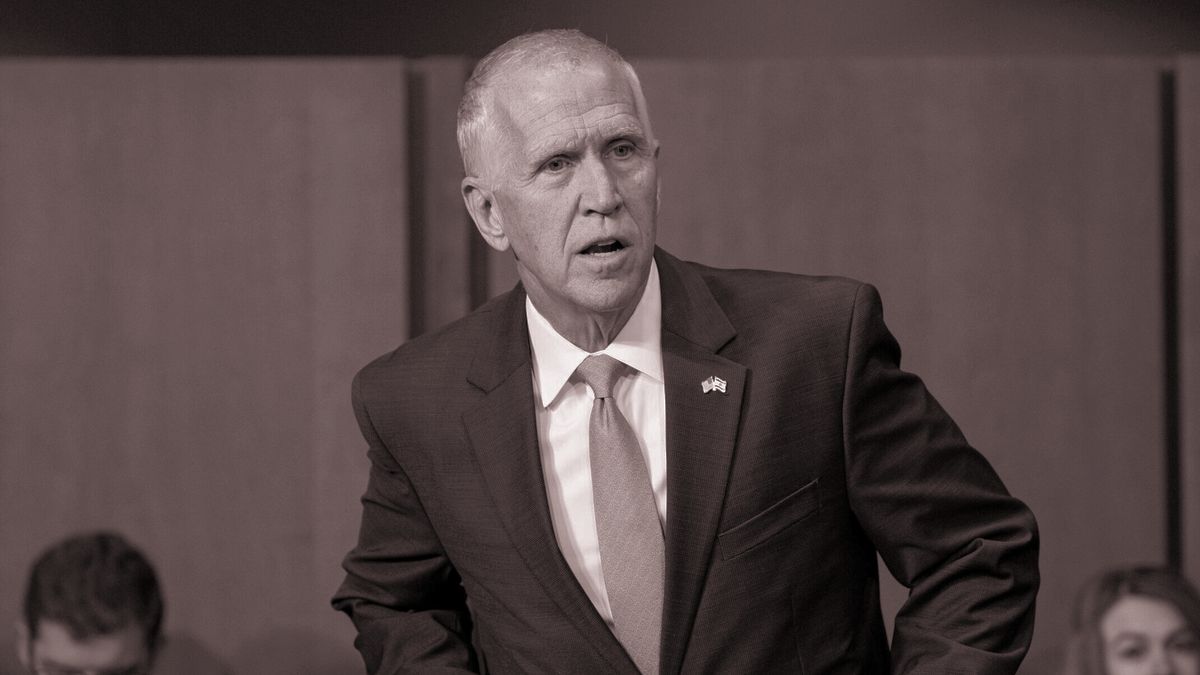
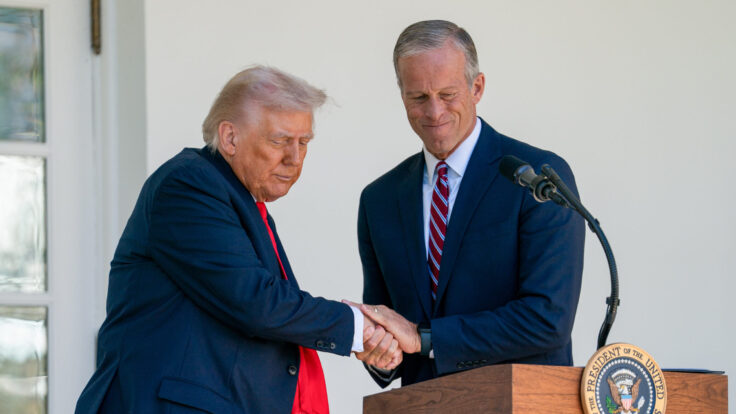
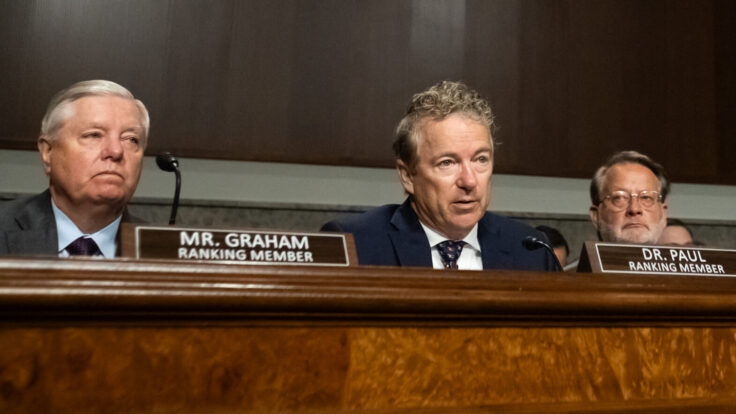
Senate Majority Leader John Thune can afford to lose only three Republican votes, and all eyes are on Sens. Lisa Murkowski and Susan Collins. Their colleague Sen. Rand Paul is voting against it because it calls for increasing the debt limit by as much as $5 trillion. Sen. Thom Tillis, whose
just-announced retirement means he’s no longer worried about facing a primary, or losing a general election, in his purple state of North Carolina, says he remains against it.
For her part, a yes from Collins may depend on the passage of an amendment she’s proposed that would double a $25 billion fund for rural hospitals and raise the tax rate on earners making more than $25 million, to 39.7 percent (basically setting them back to their pre-2017 Trump tax cut levels). Murkowski,
meanwhile, is a real unknown; Republican leadership and the White House have both tried to appease her—unlike the other three, who have mostly been written off. (They’ve ignored Paul’s debt limit concerns; they lowballed Collins’s $100 billion hospital fund ask; and they sidestepped Tillis’s complaints about the impact of Medicaid cuts on North Carolina.)
After talking to Trump last week, Republicans added provisions that would help Murkowski’s Alaskan constituents impacted by Medicaid
and food assistance cuts. But Senate Parliamentarian Elizabeth MacDonough has since ruled that a key Medicaid provision fails to meet budget reconciliation guidelines, so it’s unclear whether there’s enough cushion for Murkowski to vote for the bill. My guess: She’ll vote against if she’s not the deciding vote, and in favor if she is. But we’ll see very soon. As North Dakota Sen. Kevin Cramer told me tonight, he thinks that Thune has “always had the
votes.”
Assuming the bill makes it back to the House, Johnson and Trump will have some work to do to preserve the Senate version, since the Medicaid cuts therein have alarmed some of the more centrist G.O.P. reps. Some House Republicans worried about Medicaid had a conference call today to mull things over. Meanwhile, the SALT caucus—the New York, New Jersey, and California Republicans—are weighing a compromise provision to the Senate bill’s version of SALT: it will still raise the cap
from $10,000 to $40,000, but shorten the duration from 10 to five years. Sen. Markwayne Mullin, the Oklahoma Republican who’s still close to his former House colleagues, says the SALTines will agree to it. “Our whole point is to find a landing spot—not necessarily get a deal, but find a landing spot that gives them more reasons to vote for it, rather than against it,” Mullin told me. Senate Republicans, who really dislike SALT, are begrudgingly on board after Treasury
Secretary Scott Bessent went through the numbers with them late last week. “He kind of closed the deal,” Mullin said.
|
|
|
Democratic strategists and operatives are processing Zohran Mamdani’s shocking victory in
New York in real time: the implications for incumbents, lessons for candidate recruitment, the challenge of managing the far left, and why the Israel issue isn’t going away. Herewith, some of their early takeaways. |
|
|
As you’ve surely read everywhere during this off-cycle campaign season lull, Zohran
Mamdani’s shock win over Andrew Cuomo in New York City’s Democratic mayoral primary has progressives jubilant and moderates spooked. Where the Bernie Sanders left sees validation, centrists see mostly danger for their midterm hopes, which run through purple districts that may now be flooded with ads tying the party to the outré ideas of a 33-year-old democratic socialist. (The conservative internet is already all over his
proposal to shift the city’s tax burden from the outer boroughs to “richer and whiter neighborhoods,” for example.)
And yet, with all the usual caveats—it’s a municipal primary, it’s New York, etcetera—the race’s outcome has highlighted subtle shifts in party dynamics that will undoubtedly affect candidate recruitment and messaging next fall. I called
up a half-dozen ultra-wired Democratic operatives, strategists, consultants, and pollsters. Here are their early takeaways. |
Andrew Cuomo, the baggage-laden former governor, ran the sort of classic, machine politics campaign that
might have worked just four years ago. He raised a ton of money, largely avoided the press, coasted on his high name I.D., secured the endorsements of key unions and religious groups, and spent tens of millions of dollars on mailers and TV ads in the final stretch of the race.
Much of the state’s Democratic political establishment held its nose and lined up behind Cuomo, almost as if out of muscle memory: fading former heavyweights (David Patterson, Michael
Bloomberg), New York congressional members (Adriano Espaillat, George Latimer, Tom Suozzi, Ritchie Torres), plus the usual roster of unions and state lawmakers. Of course, Bill Clinton also backed his former HUD secretary, because he always endorses his former staffers.
But de facto incumbency doesn’t imply inevitability, especially these days, and endorsements matter even less. Like
Hillary Clinton in 2016 or Joe Biden in 2024, Democrats weren’t thrilled with the presumptive nominee, the donor class overlooked obvious flaws, and none of the usual party brokers had the political imagination or guts to foresee that voters might roll the dice on something very different.
Name recognition, after all, cuts both ways. Yes, there’s a bridge named after his dad, and LaGuardia is no longer known as a third-world airport. But
Cuomo also resigned in disgrace, in 2021, following multiple sexual harassment allegations (all of which Cuomo denies) and a well-documented scandal over his handling of nursing home patients during the pandemic. In retrospect, the determination of many New York Democrats to shrug off inconvenient facts mirrored the national party’s
complicity in Biden’s age problem. Democratic leaders circled the wagons, even as Cuomo was openly running on vengeance, à la Trump. “The stakeholders of the establishment have got to stop putting personal and professional loyalties over candidate quality,” a New York Democratic strategist close to the campaign told me. “If they don’t, they’ll keep being wrong on races, and blamed for poor race outcomes.”
A massive surge of younger New Yorkers voted for
Mamdani, but many operatives insisted that a lot of Democrats also simply voted against Cuomo. Cuomo “became a repository for much of the Democratic base’s fury at the aging establishment” the New York Democratic strategist told me. “Everyone hates the status quo, and that washed up on Cuomo’s shore.” |
Communication Is Everything
|
Most Democrats agree that Mamdani ran a masterful campaign, featuring a lucid message about affordability via
an endless stream of social videos, clever branding, and a podcast-heavy media strategy that ensured that he was ubiquitous in the final stretch. While Cuomo ran TV ads, Mamdani went viral with a man-on-the-street video explaining how the city’s dysfunctional permitting system inflated Halal prices, and submitted himself to long-form interviews with Bloomberg’s Joe Weisenthal and The Bulwark’s Tim Miller in a bid to win over finance bros and anti-Trump
moderates.
Of course, it helps to have a candidate who is articulate, charismatic, and effortlessly good on camera. Many Democrats believe that Mamdani is as naturally talented as Alexandria Ocasio-Cortez, and a few have even compared him to a young Barack Obama. Some operatives hope that members will learn from his playbook of sincerity, creativity, and unscriptedness (i.e., authenticity), which means speaking your mind and being unafraid to
make mistakes.
His mastery of the attention economy, however, has gotten Mamdani into trouble more than a few times. During the Bulwark interview, he refused to condemn the pro-Palestinian slogan “Globalize the Intifada,” setting off a fresh controversy in the final days of the campaign. But Mamdani survived partly by doubling down and refusing to apologize. Some Democrats are still hyperventilating about his views on Israel, and his repeated stance that he won’t “police speech,” but
they’re trying to take some lessons from his approach, too. “It’s okay to get ratioed!” said a House Democratic operative. |
Brooklyn Isn’t Bucks County
|
Many progressives have seized on Mamdani’s win for their own purposes, but establishment
consultants are quick to point out that moderate Abigail Spanberger cleared her Virginia Democratic gubernatorial primary ages ago, and centrist-ish Dem Mikie Sherrill was “the consensus candidate” in New Jersey’s own primary for governor earlier this month. If all three of these contenders
win in November, it won’t tell us all that much about party fetishes. Indeed, next year’s midterms could mint other rising stars all over the Democratic ideological spectrum. It’s still a broad-tent party, after all, and what works in Park Slope or the People’s Republic of Bushwick isn’t going to fly with voters in Scranton or Virginia Beach.
And yet all concede that the lefties are often better at getting attention. In 2019, the Democratic presidential field raced to the left, largely in
the belief that the A.O.C. wing represented the future—while ignoring the success of newly sworn-in, semi-anonymous moderates like Sherrill, Spanberger, Elissa Slotkin, Angie Craig, and Lauren Underwood. Notably, almost all of those formerly obscure members now are contenders for statewide offices, whether in the Senate or governors’ mansions, and Slotkin has already vaulted into the upper chamber. A.O.C., so far at least, hasn’t
attempted a statewide bid. If Kamala Harris hadn’t locked herself into once-fashionable positions on police reform or taxpayer-funded gender transition surgeries for prisoners, strategists confided in me, perhaps she would be in the White House instead of back in Brentwood.
Anyway, if Mamdani does win the mayoralty, he will have an outsize voice in shaping the party’s future simply as the leader of the nation’s media capital—even now, Republicans
are gleefully turning him into a national foil. But perhaps the more interesting Democrats are the ones running competitive campaigns in the New York City media market: Kathy Hochul, who’s up for reelection next year, as is Long Island’s Laura Gillen (a swing-district Democrat who came out with a visceral condemnation of Mamdani the
day after the election), and the Democratic candidates running to challenge vulnerable Republican Reps. Mike Lawler, Nick LaLota, and Andrew Garbarino. |
Another clear takeaway from this race is the degree to which Israel continues to divide the Democratic
Party—a particularly fertile topic in New York. Mamdani, who is Muslim, was repeatedly singled out in interviews and on the debate stage for his criticism of Israel’s government, a third rail for most politicians in both parties. And while he secured a cross-endorsement from fellow candidate Brad Lander, the local party’s highest-ranking Jewish member, his attempts to fuse his pro-Palestinian politics with an inclusive message about combatting antisemitism hit snags at every
turn, especially after he was pressed about the phrase “Globalize the Intifada.” (Mamdani argues that the word, while charged, is simply the Arabic translation of uprising.)
There are signs of bridges being built: Longtime Democratic congressman Jerry Nadler, who is Jewish and represents the Upper West Side, endorsed Mamdani immediately
after the primary. (Nadler, one of those older lawmakers who could face a primary challenge next year, also has much to gain on that front in aligning with Mamdani.) Chuck Schumer defended Mamdani from “disgusting” Republican attacks after his victory, although he has yet to endorse him.
The Democratic establishment, itself conflicted about how to support Israel’s right to exist as a Jewish state while criticizing its conduct in Gaza, is particularly unsettled
by what Mamdani’s victory might say about these longstanding political taboos. During the first mayoral debate, Mamdani was the only candidate to say he wouldn’t make his first trip abroad to Israel, arguing that the job of the mayor should be to stay in New York—earning praise from both the far left and the far right. Both Tucker Carlson and Marjorie Taylor Greene said he “gave the right answer” in the debate.
Mamdani’s stance on Israel may have
been a factor in winning some factions of the left, but it’s perhaps less surprising that it didn’t scare enough voters off. Foreign policy isn’t typically a leading issue for local races. Polls taken ahead of the election suggested that cost of living was top of mind for New Yorkers; in a Manhattan Institute
poll, Israel didn’t crack the top 10 issues. But more than anything, Mamdani succeeded in not being distracted by topics other than affordability in New York—and his relentless focus on the economy is probably what won the race. |
|
|
Join Emmy Award-winning journalist Peter Hamby, along with the team of expert journalists at Puck, as they let you in on the
conversations insiders are having across the four corners of power in America: Wall Street, Washington, Silicon Valley, and Hollywood. Presented in partnership with Audacy, new episodes publish daily, Monday through Friday. |
|
|
Unique and privileged insight into the private conversations taking place inside boardrooms and corner offices up and down Wall
Street, relayed by best-selling author, journalist, and former M&A senior banker William D. Cohan. |
|
|
Need help? Review our FAQ page or contact us for assistance. For brand partnerships, email ads@puck.news. You received this email because you signed up to receive emails from Puck, or as part of your Puck account associated with {{customer.email}}. To stop receiving this newsletter and/or manage all your email preferences,
click here. |
Puck is published by Heat Media LLC. 107 Greenwich St, New York, NY 10006 |
|
|
|