{{ 'now' | timezone: 'America/New_York' | date: '%b %d, %Y' }} |
|
|
Welcome back to Dry Powder. I’m Bill Cohan.
I was surprised to discover
that few of my interlocutors on Wall Street had heard of the Genius Act, which Congress passed and the president signed into law this summer, and has the potential to disrupt the traditional system of global payments that has long been dominated by the big banks. For a closer look at the new law, I called up Chris Land, the general counsel to Wyoming Senator Cynthia Lummis, one of the co-sponsors of the Genius Act. I expect you’ll find our
conversation as fascinating as I did…
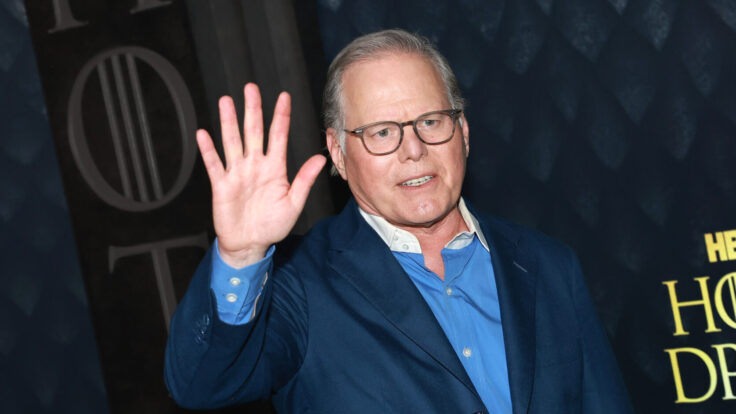
But first, a quick note on the Zaslav-Ellison chess match: |
- The
next Ellison shoe to drop…: In the midst of the much-anticipated Ellison family bid for Warner Bros. Discovery, my spidey sense tells me that Paramount Skydance is close to advancing a fully financed offer for all of WBD without the help of outside private equity firms—although I suspect that an institution like Apollo or Blackstone might provide some of the debt financing. The equity for the bid will come, as you would expect, from the Ellisons—Larry’s
fortune is around $350 billion these days—and perhaps to a lesser extent from RedBird Capital, his existing PSKY partner.
The price to be offered is still unknown. However, it will more than likely represent a premium to the $17 or $18 per share that WBD is trading at these days—a threshold reflecting the fact that the stock has already run up some 50 percent in the last month. Given that increase, an additional premium probably isn’t necessary. But the PSKY crew will presumably
offer one anyway, as a deal sweetener, in order to complicate David Zaslav’s argument to WBD shareholders that his split-up plan will unlock more value in the future. (Earlier today, Bloomberg reported that WBD had already rejected a bid in the low $20 range.)
For WBD shareholders, this may all come down to a classic question of present value versus future value: Would they prefer the Ellisons’ cash today, or the promise of the equity value of the two parts of WBD
sometime in the future? As a tactical matter, the PSKY crew will argue that Zaz hasn’t delivered on the original promise of the WBD deal after he bought the company from AT&T back in April 2022. More importantly, I predict that the Ellisons will continue to sweeten their bid, perhaps forging a mutually beneficial dynamic that allows Zaz to declare he fought the good fight while still delivering them their coveted asset.
But I don’t think it will come cheap. As I
reported on Wednesday, Bank of America star analyst Jessica Reif Ehrlich believes that the WBD split-up plan could be worth $30 a share to shareholders. So if the Ellisons really want this thing, it may take something like $35 a share to get the deal done. In any event, Zaz and his mentor John Malone, plus WBD’s
new fortified, deal-oriented board, know how to maximize shareholder value, and that is exactly what they will do.
|
And now, on to the main event… |
|
|
An illuminating conversation with Chris Land, the general counsel to Wyoming Senator Cynthia
Lummis, about the Genius Act—the potentially game-changing stablecoin legislation that nobody’s talking about. |
|
|
Over the summer, Congress did something quite startling: It passed bipartisan legislation with the potential
to disrupt the traditional system of global payments, long dominated by Wall Street banks. And yet, for some strange reason, very few people on Wall Street seem to be talking about the Genius Act—the backronym is for Guiding and Establishing National Innovation for U.S. Stablecoins—which President Trump signed into law on July 18.
Stablecoins are a type of cryptocurrency pegged to a real and stable asset, like the U.S. dollar or short-dated Treasury bills. They
can move around the world instantly, like other crypto tokens, but theoretically without the same risks. They’re also cheaper to transact than other forms of settlement. Until recently, stablecoins existed in a sort of legal grey area, which prevented more risk-averse financial institutions from building new products on the blockchain. But now that there’s a regulatory framework in place, it’s game on.
For my own edification, as well as yours, I decided to call up Chris
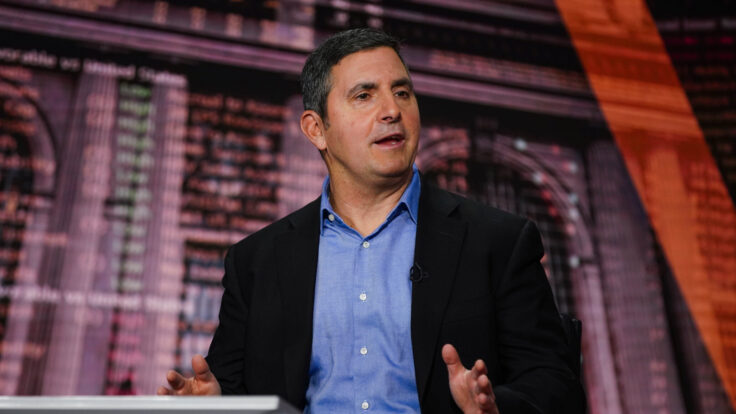
Land, the general counsel to Wyoming Senator Cynthia Lummis, one of the two Republican co-sponsors of the Genius Act along with Sen. Bill Hagerty of Tennessee. Land worked on writing the legislation, alongside Luke Pettit, a former senior policy advisor to Hagerty who is now the assistant secretary for financial institutions at the U.S. Treasury. (Pettit, in effect, is charged
with implementing the new law.)
In layman’s terms, the Genius Act provides the regulatory architecture for the speedy and safe movement of stablecoins around the world, outside of the traditional banking system, where “wiring” money can take several days to settle and often costs a fee. Obviously, the old way of doing things has been plenty lucrative for the banks, which is why, Land told me, many of them opposed the legislation. But since our dealmaking president supported the bill—a
favorite of the crypto industry, which donated tens of millions of dollars to Trump’s campaign—the big banks had to reluctantly go along, perhaps hopeful that the president would get around to deregulating them, too.
In Land’s telling, the Genius Act represents a “paradigm shift” in the payments system. As I’ve explained many times, we have what is known as a fractional banking system, meaning that we deposit our hard-earned cash in the bank, which is then free to take that money
and lend it to borrowers, earning money along the way. The system works as long as everyone doesn’t withdraw his or her money at the same time, as happened in 2023 at Silicon Valley Bank. Under our fractional banking system, we’ve decided we can tolerate this kind of risk, as long as it doesn’t happen too often—we generally see such crises every 20 years or so.
The Genius Act, however, explicitly prohibits stablecoin issuers from making loans against their reserve assets—every
digital dollar is meant to be fully backed by a nearly riskless security, such as Treasuries. The other benefit, in theory, is to separate the payment and lending functions of banking. “The U.S. payment system is one of the worst in the world, among first-world countries,” Land told me; it’s slow and hasn’t seen major innovation for “a generation or two.” Cutting down transmission times, he added, “is actually good for the economy,” with the potential to unlock hundreds of billions of
dollars of “trapped capital.” |
So what’s in it for the stablecoin issuers? Say you’re Ford Motor Company, and want to send $1 billion in
cash to a subsidiary in Australia. Absent the new law, the money would likely have to be wired through multiple financial institutions, taking several days and racking up a bunch of fees in the process. Under the Genius Act, though, a nontraditional bank, like Circle or Tether, would deposit $1 billion worth of stablecoins, backed 100 percent by Treasuries as well as the issuer’s capital, into Ford’s digital wallet. The stablecoin could then be transferred “instantly” to the Australian
subsidiary on the blockchain. “They don’t have to go through all these banks and pay fees and take time to settle,” he said.
Okay, so how does Circle make money? First, Land explained, the stablecoin issuer takes a small fee on the transaction, something like 25 basis points. And since it’s required to hold Treasuries as security for the full amount of the stablecoins, Circle gets the interest income from those securities when, say, the Australian subsidiary of Ford redeems the
stablecoins for dollars, causing Circle to liquidate some of its Treasury inventory. “It’s a combination of both transaction fees and the yield on the bonds,” Land said. The stablecoin issuers also make money from the float, too, since there are redemption limits on how much of the money can be redeemed at any one time.
Circle, which went public in June, now has a market cap of $38 billion. The company’s $1.7 billion in 2024 revenue was derived mostly from the interest income on the
reserves backing its stablecoins. Meanwhile, the privately held Tether owns around $100 billion worth of Treasury securities, making it among the largest holders of such securities in the world. (In 2024, Cantor Fitzgerald, the company owned by the family of Howard Lutnick, the Commerce Secretary, bought a $600 million convertible debt instrument in Tether, convertible into a 5 percent stake in the company.) Not bad for a pair of companies that were launched in 2013 and 2014,
respectively.
This success demonstrates why the big Wall Street banks, which had been slow to experiment with crypto products during the Biden era, are now adjusting their outlook under Trump. JPMorgan Chase, for instance, is looking at issuing a stablecoin. In July, C.E.O. Jamie Dimon said that he thinks stablecoins are “real,” and allowed that the bank needed to learn about the product to understand it “and be good at it.” David
Solomon, the C.E.O. of Goldman, has said that his firm is studying stablecoins and is anxious to see how they fit into the financial services industry.
Land noted that we’re still in the “pre-adoption” phase of stablecoins, where many financial institutions are trying to decide whether or not to issue them, and looking to see whether the interest from customers is sufficient to make it a new source of revenue. He predicted that banks such as Goldman and Bank of New York
Mellon are more likely to be early adopters, while Bank of America, which is more consumer-oriented, doesn’t appear to have much interest in stablecoins. Another possibility is that Wall Street will come together to offer an alternative stablecoin currency that would compete with the dollar. There has been recent reporting that nine big banks are considering a plan to jointly issue a stablecoin backed by a basket of G7 currencies. |
Regardless, it strikes me that there’s been surprisingly little discussion thus far, amid the legacy players,
about a fintech innovation that could completely change the payments market within a few years. And there are larger, geopolitical impacts to consider, too. As Andy Mukherjee wrote for Bloomberg last week, the rise of U.S. stablecoins could draw capital from across the global financial system, especially in countries
with high inflation or unstable governments that are looking for access to dollars without having to worry about fees or capital controls. According to one estimate, U.S. stablecoins could draw $1 trillion from banks in emerging markets over the next few years, strengthening the dollar—bad news for
China, and also for America’s trade balance, although I doubt Trump was thinking about the consequences of digital dollarization when he signed the Genius Act into law.
It’s likely good news for Wyoming, though, which is among the reasons why Senator Lummis co-sponsored the bill. “It’s an economic development project for Wyoming,” Land explained. “Essentially, she wants Wyoming to turn into a financial services hub for crypto, kind of like South Dakota did in 1981 with credit cards,”
creating something like 10,000 new jobs in the state.
And it’s probably good, in the long run, for the whole country, too. The move toward digital currencies is inevitable, and there may be real first-mover advantages to countries that can perfect the regulatory infrastructure first. The Genius Act is not a perfect law by any stretch of the imagination, I’m sure, but the fact that it got passed at all, in this crazy, do-nothing Congress, makes it a major accomplishment, even if most
people are clueless about what it actually does. |
|
|
Join Puck’s chief political columnist, John Heilemann, as he roams the corridors of power and influence in America on this
twice-weekly interview show, taking you beyond the headlines with the people who shape our culture: icons and up-and-comers, incumbents and insurgents, moguls and machers in the overlapping worlds of politics, entertainment, tech, business, sports, media, and beyond. The conversations are rich and revealing, unrehearsed and unexpected… and reliably impolitic. A Puck-Audacy joint, new episodes drop every Wednesday and Friday. |
|
|
Puck’s daily political newsletter from Washington on what’s really happening in this town, from the White House to the Pentagon
to Capitol Hill, K Street, and the campaign trail. |
|
|
Need help? Review our FAQ page or contact us for assistance. For brand partnerships, email ads@puck.news. You received this email because you signed up to receive emails from Puck, or as part of your Puck account associated with {{customer.email}}. To stop receiving this newsletter and/or manage all your email preferences, click here. |
Puck is published by Heat Media LLC. 107 Greenwich St, New York, NY 10006 |
|
|
|