{{ 'now' | timezone: 'America/New_York' | date: '%b %d, %Y' }} |
|
|
Hi, and welcome back to Line Sheet, where 65 percent of you have never heard of
Olivia Nuzzi, and none of you know the names of the politicians she’s allegedly been involved with. You’re welcome.
In this very special Inner Circle issue, I’ve got details about what really happened to Missoni, which may be acquired by Authentic Brands Group in the coming weeks. It’s a pretty extraordinary story. Meanwhile, the Meghan Markle cover is here, and so is the race to land Oscar hopeful
Jessie Buckley as a brand ambassador. Plus, another great store is closing. I’m sorry!
Tomorrow on Fashion People, The Ringer’s Amanda Dobbins joins me to discuss Vanity Fair’s new Hollywood Issue and Harper’s Bazaar’s Meghan Markle cover. Also, P.R. guy Adam Shapiro follows up with an explainer on the fast-growing opportunity for luxury brands in India, where
his firm, L52, just opened an office. (Saks Fifth Avenue and Galeries Lafayette are there, too.) Listen here and here.
Also, I was on veteran luxury exec Pauline Brown’s SiriusXM show to discuss selling “sexiness” in today’s
marketplace. Listen here. She also wrote about it in her great newsletter.
Mentioned in this issue: Missoni, Authentic Brands Group, Jamie Salter,
Marc Jacobs, Marco Bizzarri, Ralph Lauren, Target, Bergdorf Goodman, Filippo Grazioli, Meghan Markle, Kim Kardashian, Jessie Buckley, The Row, Graanmarkt 13, and many, many more… |
Three Things You
Should Know…
|
- The
dislike of Meghan Markle is real: Meghan Markle’s Harper’s Bazaar cover, which I told you about a while ago, has landed, and the results are lackluster. Not because Markle isn’t beautiful (she is) or because the clothes aren’t right (they are). She is the picture of bare-faced elegance. And yet, there is nothing magnetic or particularly memorable
about the photographs.
Who is to blame? In the end, only her. There’s no denying Markle’s ambition, or her love for her husband, or the influence she has over her followers. But the reality is that she lacks a certain presence—and self-awareness—required to fully captivate the world. If she hadn’t been crowned a princess, she would not have turned into Kim Kardashian. At the recent Balenciaga show, I looked up when Lauren Sánchez walked by me. When Markle
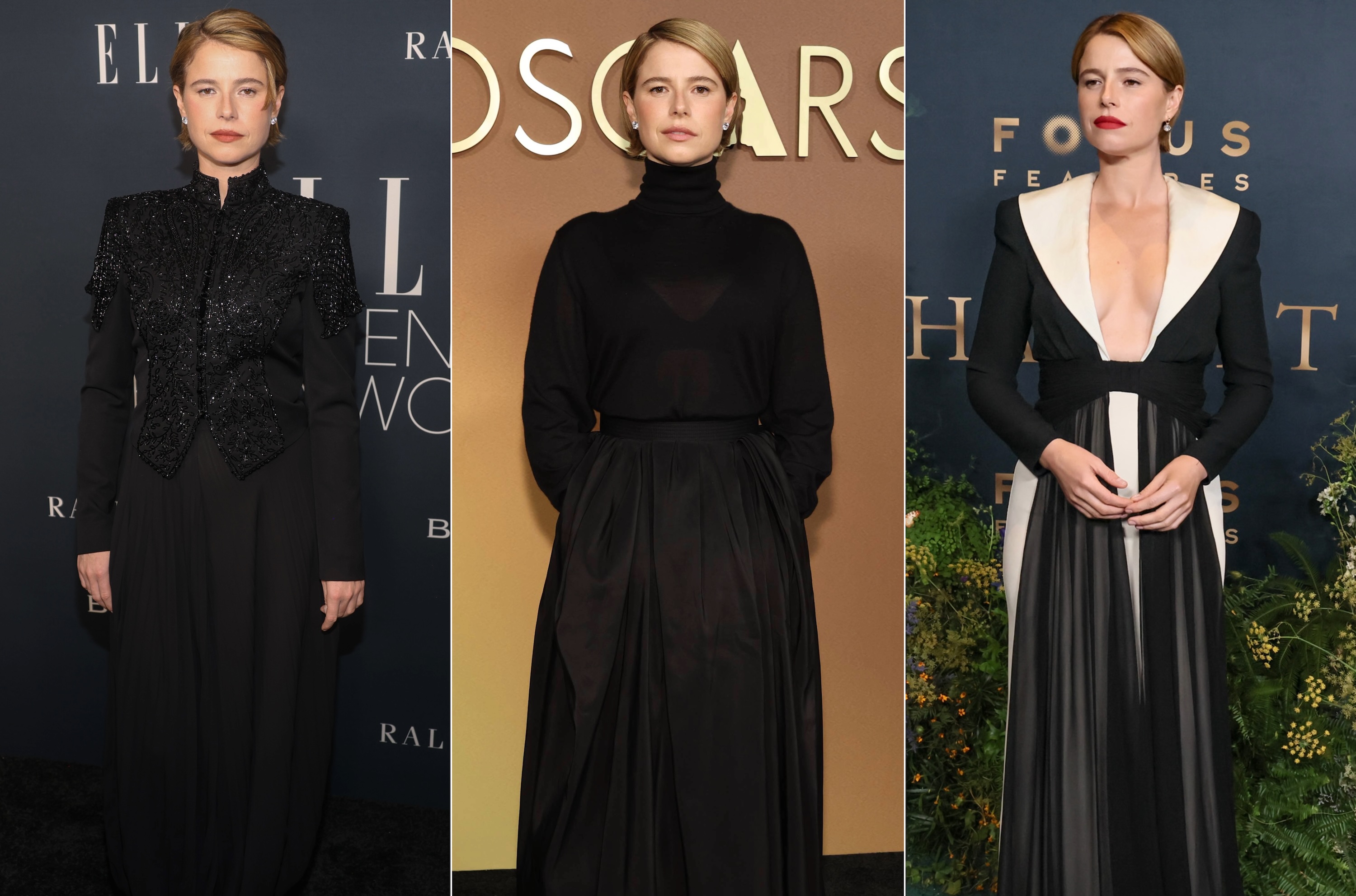
passed by, I didn’t notice until she was already gone. That sort of sums up this cover. - The making of Jessie Buckley: We’ve reached the time when Oscar campaigns really get up and running, and also when brands start hunting for likely winners to sponsor—either for a short-term, one-off awards season contract or something longer. Hamnet star Jessie Buckley is the clear frontrunner in the best actress race, and she has a new stylist,
Danielle Goldberg, just in time. In some ways, they are a natural match: Goldberg tends to work with young indie stars, and is often tapped during awards season when an actress is looking to shape a new narrative.
|
Photos: Kayla Oaddams/WireImage; Amy Sussman/Getty Images; Rodin Eckenroth/FilmMagic |
- So far,
Goldberg has put Buckley in a full black skirt and turtleneck from The Row (not the most successful look, but a palate cleanser), a black beaded Ralph Lauren ensemble (my personal favorite), and a gorgeous black-and-white Valentino gown. (Goldberg rarely works with Valentino, so it was extra special.) Will Buckley sign some sort of deal in the run-up to the Oscars?
It boils down to two more specific questions for Buckley and her team—including Goldberg: whether or not she wants to bother
with it (there is a small contingent of actors who don’t) and what she’s willing to sacrifice in terms of freedom of dress, etcetera. The bigger houses pay better, but are often far more restrictive about what can be worn outside of the brand. Some houses have a giant celebrity roster right now (like Dior); others are on the hunt for new faces (like Loewe). Anyway, there’s always a chance the right partner doesn’t surface. Kirsten Dunst didn’t get her Gucci deal until
after she was in the best supporting actress race in 2021.
|
|
|
A MESSAGE FROM OUR PARTNER |
|
|
- Another
store bites the dust: Ilse Cornelissens and Tim Van Geloven, founders of Graanmarkt 13, the charming Antwerp concept shop, restaurant, and hotel, announced this morning that the store would be closing. They’re going to auction off all the furniture (Victor Thonet chairs, Vincenzo De Cotiis couches, etcetera) starting December
3.In a piece published in Sabato, the weekly lifestyle supplement connected to the Belgian business papers De Tijd and L’Echo, Cornelissens and Van Geloven explained their reasoning: They sold the property about 10 years ago, moved to Amsterdam a few years after that, closed the adjacent restaurant last year, and were just ready to
move on. (The couple also owns Kassl Editions, the outerwear brand.)
It’s too bad, given the lovely product mix (Sofie D’Hoore, B Sides, Extreme Cashmere, Raff Collective), beautiful merchandising, and gorgeousness of the Vincent Van Duysen–designed townhouse. (I once spent two nights in the apartment above the store, still the best “hotel” experience of my life.) Years ago, I interviewed Cornelissens and Van Geloven about their no-discounts philosophy; they never did
sales after 2017.
This sounds like a personal choice, but it’s just another example-slash-proof point that retail is never a sure thing. I had a lot of conversations this week with brands reckoning with the Ssense fallout, worried that other major accounts may buckle under pressure. Some of them will, and brands need to build some of this chaos into their projections. The model is broken, yes, and these concepts are cyclical and rarely last more than 20 years, great business or not.
|
|
|
The family-owned Italian brand may have more unmet potential than any heritage fashion
house. And ABG, which is attempting to acquire the company, has the capital to unleash the opportunity. But at what cost? |
|
|
Earlier this week, I started looking into Authentic Brands Group’s potential acquisition of Missoni, the
Italian fashion house best known for its unforgettable zigzag knit. I say potential, if only because we know how precarious these deals can be—especially with ABG. Founder and C.E.O. Jamie Salter has demonstrated a willingness to pay a premium for premium brands. But Salter’s price requires the total control that naturally comes with any asset transaction, and yet historically befuddles many fashion people and creatives who yearn for the right owner who will respect
the heritage, etcetera.
These aren’t unreasonable asks, of course, but it’s not how ABG operates. Salter strips out unnecessary costs, makes ruthless and unsentimental decisions, and finds commercial opportunities that are alternatively brilliant and heinously tacky, such as those Barneys condos in Tulum or the Sports Illustrated soccer stadium in Harrison, New Jersey. ABG’s recent attempt to acquire Marc Jacobs from LVMH fell apart over related reasons. It’s pretty hard to imagine Salter’s executives agreeing to the runway when all they probably wanted was to optimize the tote business.
Similar concerns abound with any such Missoni transaction. ABG, which is U.S.-based, would likely erase what is left of the brand’s history once it takes control. I’ve heard that Fondo Strategico Italiano (FSI), the state-backed private equity fund that took a
significant minority stake in the family-owned business in 2018, would prefer a European buyer—or at least one who keeps the operations based in Italy—and would like to stay in the business to ensure that the main line continues to be made on the ground there. FSI, after all, has a unique investment thesis: The firm buys into Italian-based family businesses in which the heirs still participate, promising them the resources to globalize their operations. Just the archives of Missoni, which was
founded in the early 1950s by Ottavio and Rosita Missoni, are worth a lot of money—at least to Italians, but maybe to someone else too.
And yet, money always wins. The multiple strategic groups and private investors who have shown interest in the business over the past couple years—I’ve heard everyone from former Gucci C.E.O. Marco Bizzarri to Mayhoola reviewed it—never took a deal over the line because of the financial
demands of FSI. The company, which poured in €70 million in exchange for a 41.2 percent interest, apparently wanted to double the valuation—which, of course, would be almost $400 million.
Few of the remaining independent fashion houses have as much promise as Missoni, a point I’ve heard reiterated for years by investors, executives, and designers. Its use of Raschel weaving machines has created a distinctive warped knit that’s recognized all over the world. And like Ralph Lauren,
it has an alluring visual identity that appeals across cohorts and can play easily in dozens of different categories. As its smash-hit 2011 collection with Target proved, it comps well to Ralph, which sells as easily at Kohl’s as it does at Bergdorf Goodman. At one point, Missoni x Target was the big-box retailer’s largest one-off collaboration ever, both in terms of revenue and number of products offered (more than 220, including a bicycle).
Target’s e-comm operations initially crashed under the demand. |
|
|
A MESSAGE FROM OUR PARTNER |
|
|
So far, however, that name recognition hasn’t translated to massive sales for the business itself. The brand
currently generates well under €150 million a year in revenue. And yet that slim figure is part of what excites investors, including ABG. |
Very unlike the Laurens, however, the Missoni family was not business-oriented.
The Missonis never hired a real C.E.O. while different family members played different roles. Ottavio died in 2013 at 92; Rosita died earlier this year at 93. Angela Missoni, their daughter, took charge of creative in the 1990s and remained in the position for two decades. Her brother Vittorio ostensibly ran the business, but he died in a plane crash in the same year as their father. Their other brother, Luca, is a visual artist who managed the
archive for years. While the Missoni business made the family very rich, it did not make them billionaires. There was no surprise when they sold a meaningful stake in 2018, especially to FSI, with its family deference and intentions to honor the integrity of its heritage brands. Anyway, for all involved, this was presumably a stairstep deal to get to the real liquidity event.
The vast majority of the FSI investment was deployed as capex in the hopes of globalizing the operation and
attracting the attention of a major strategic buyer—maybe Kering, maybe OTB, maybe LVMH. At first, FSI engaged the family on an expected basis, bringing on Angela’s daughter, Margherita, to design M Missoni, the diffusion line. But communication between the investment firm and the family’s multiple factions soon broke down, I’m told.
The family obviously owns a majority of the business, but FSI negotiated for various rights. Soon after it took its stake, FSI installed
operating partner Michele Norsa, who spent time managing Valentino, before it was sold, and the then-independent Salvatore Ferragamo. Norsa is a well-regarded executive, but, at 77, is “from another era,” as someone close to the business put it. Soon, both Angela and Margherita—who was featured prominently in the brand’s Target campaigns and is viewed by many as its clear creative successor—were phased out of the business.
Norsa eventually went back to Ferragamo, and
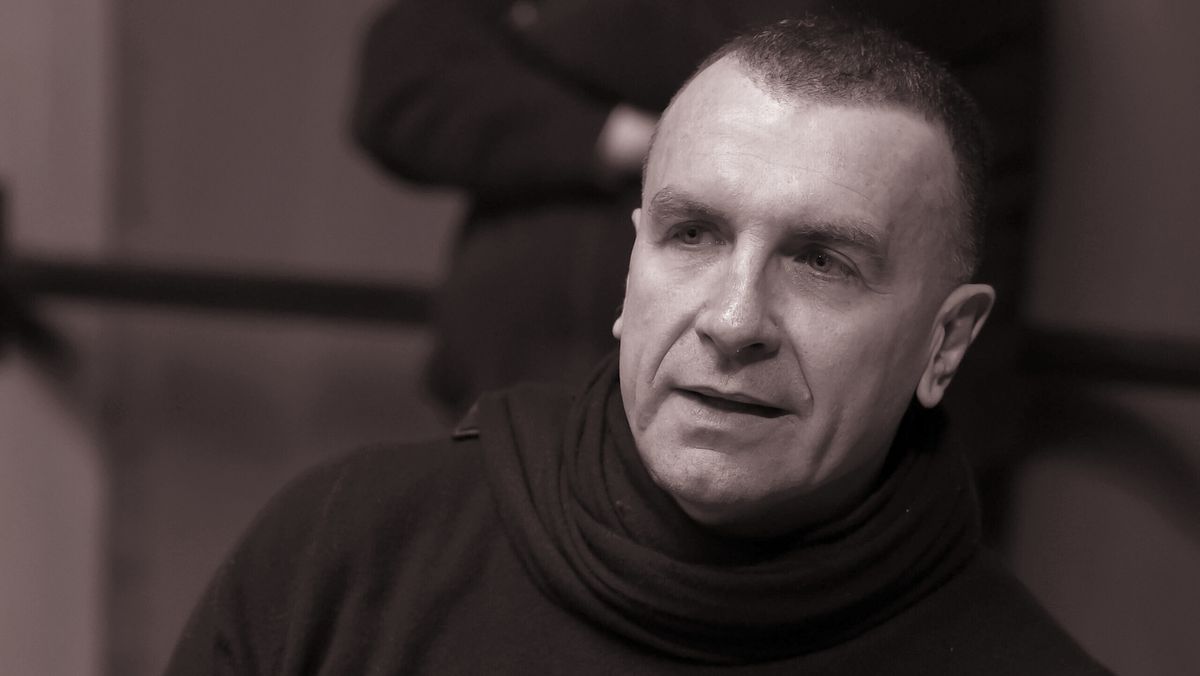
Livio Proli, a longtime deputy of Giorgio Armani, was appointed C.E.O. in 2020. Proli was certainly part of Armani’s inner circle—he served as the business’s managing director—but little was known of him outside that company, rife with its own interpersonal dynamics and controversies. Internally at Missoni, many employees and other executives have bristled at Proli’s approach, noting his obsession with provocative and promiscuous clothing (one of his favorite
mottos, according to multiple employees, is “la figa vende,” or… just Google it). He also hates color, they say, an important part of the Missoni brand book.
And then there was the exit of creative director Filippo Grazioli, who was fired from the role after just two years. Grazioli, viewed by the industry as an intriguing young talent, got wind of his exit months before it was announced—and while Proli was denying it in the press. When I reported that he was on
his way out in July 2024, and that his fall 2024 show would be his last, the company issued a flat-out denial. In October, his exit was announced. (His predecessor, Alberto Caliri, became his successor.) Meanwhile, the family association has entirely dissolved publicly, and I’m told that Proli and his team share little financial information with the majority shareholders. (A rep for the company declined to comment on all of the above.)
In 2023, the same year that FSI
hired Rothschild to explore a sale of Missoni, Margherita launched a new line: Maccapani, her father Marco’s family name. Maccapani, in many ways, is what a modern Missoni could be—sans zigzag, company heritage, and pure luxury positioning. But that zigzag is really what ABG presumably would be buying. “This is the sort of deal where you can have $2 billion in purchase orders overnight,” one interested investor told me.
In the end, ABG will likely win because of its
ability to fulfill such orders. A strategic group or more taste-driven private investor would want to keep Missoni’s position as a luxury brand, but they wouldn’t want to pay what FSI is asking. “It’s pretty amazing, and shows the power of the brand management companies and the lack of traditional luxury buyers for these smaller legacy fashion brands,” said one person who reviewed the deal. “They will milk the licenses all over the world… and categories.”
Is that a good or bad thing? I
guess it depends on your level of cynicism. From one view, ABG will do what should have always been done: use Missoni’s instantly legible identity to make a lot of money. But they will also inevitably degrade its value. (When I reached out to family matriarch Angela Missoni about this, she did not respond.) As they say in Italian, che peccato! |
As the tariff wars rage on, independent brands have become increasingly reliant on e-commerce solution
providers like Swap, which makes things like international shipping, returns management, and overall logistics easier to manage. Now, Swap has raised $40 million (from the likes of Iconiq Growth, Cherry Ventures, QED Investors, and 9900 Capital) to fuel its U.S. and continental Europe expansion plans. [The SaaS News]
One of my favorite writers ever, Jean Godfrey-June, launched a newsletter. It’s worth subscribing if only to learn lessons on how to become a better writer. [Godfrey’s Guide]
This woman is a gift. [Brent Atwater’s
Age With Style]
Tim Blanks with Annie Leibovitz. [BoF]
More stuff about labor issues in Italy! [BoF] |
Until tomorrow,
Lauren
P.S.: We use affiliate links because we are a business. We may make
a couple bucks off them. |
|
|
Puck’s daily art market email, anchored by industry expert Marion Maneker, offers unparalleled access to the mega-auctions and galleries,
elite buyers and sellers, and the power players who run this opaque world. Wall Power also features Julie Brener Davich, a veteran of Christie’s and Sotheby’s, who provides unique insights into how the business really works. |
|
|
Puck sports correspondent John Ourand and a rotating cast of industry insiders take you inside the executive suites and owners boxes where
the decisions that shape the entire sports business are made. You’ll hear interviews with players, network execs, and everyone in between. The Varsity is an extension of John’s private email for Puck by the same name. New episodes publish every Wednesday and Sunday. |
|
|
Need help? Review our FAQ page or contact us for assistance. For brand partnerships, email ads@puck.news. You received this email because you
signed up to receive emails from Puck, or as part of your Puck account associated with {{customer.email}}. To stop receiving this newsletter and/or manage all your email preferences, click here. |
Puck is published by Heat Media LLC. 107 Greenwich St., New York, NY 10006 |
|
|
|