 |
|
Welcome back to The Best & The Brightest, I’m Tina Nguyen.
I am coming to you live from my apartment, as I file this insider look at how Congress’s conservatives are raging against the dying of the light (i.e., a bipartisan budget being passed) and scramble to get ready for tonight’s Puck event at the French embassy in Washington, D.C. I’m not not going to get dressed up to honor Andrea Mitchell. (Hope to see some of our readers there!)
If you missed it, my partner Teddy Schleifer has an exclusive look at Facebook billionaire Dustin Moskovitz’s recent meeting with Joe Biden in San Francisco, and how Moskovitz is looking to supercharge his political agenda—regulating A.I., ringfencing Elon Musk, and thwarting Donald Trump—in 2024. (Also, sign up for The Stratosphere if it’s not already part of your Tuesday political diet. It will make you smarter, faster, and better at your job.)
But first, here’s Abby Livingston with a crucial update on the Andy Kim mini-revolution in New Jersey…
|
| The Tammy Murphy Surprise |
|
| The first thing anyone learns about New Jersey politics is “the line,” which is the local argot for a county party’s endorsement. The line is everything for an aspiring officeholder in Jersey. For one thing, it determines where they appear on the ballot: clustered in the same column as the rest of the establishment’s preferred candidates, or off to the side, in a lonely, separate column.
The system has proven near-unbeatable for decades. But Andy Kim, the three-term U.S. representative who launched his campaign for the Senate after Democratic Sen. Robert Menendez was indicted (several times) by federal officials, is suing to get rid of this relic of party machine politics. The effort alone has sent shockwaves through New Jersey, not least because Kim is simultaneously challenging the lines while actually winning eight of them—most recently in Atlantic and Morris counties. Here’s how we got to this point…
- Indictment ripples: The starting point was Menendez’s indictments. He was the North Jersey power broker, and while he has yet to step down or announce his election plans, his career is, for now, mortally wounded per the polls. Kim and New Jersey First Lady Tammy Murphy—who has loads of key New Jersey endorsements and Emily’s List support—both stepped into the power vacuum. It was assumed that once the campaign contours were set, Murphy would pick up Democratic endorsement after endorsement across the state. But that’s not happening: Murphy and Kim are tied at eight county line endorsements apiece.
- Snowballing support: Kim is clearly gaining momentum. Case in point: On Monday, Jersey City Mayor Steven Fulop pulled his Murphy endorsement. “[I]t’s not always comfortable to admit a mistake but clearly I made one here and this convention season has demonstrated [Kim] is the better candidate to represent NJ,” he tweeted. “The backbone of our party volunteers and activists have spoken loudly and we should listen to them.” Such a statement would have been unfathomable to any longtime New Jersey political observer just seven months ago.
Fulop’s bravery is not common in New Jersey. The governor always sets the tone and marching orders in his or her party, and like every other Garden State chief executive, Gov. Phil Murphy wields enormous power and influence within state politics. And it’s not just in the north—just this weekend, Kim won the Atlantic County line, which directly bucked the will of South Jersey boss George Norcross (whose brother, Donald Norcross, serves in the state’s congressional delegation), who endorsed Murphy.
When I pinged a Jersey Democratic source to get a sense of where things stand, this insider pointed out that Tammy Murphy is banking the endorsements from many of the state’s Democratic stronghold counties. But, in this view, Kim’s cause is a political winner. “Just by filing the lawsuit,” this person noted, “Kim has managed to score a ton of positive press, inspire activists statewide, and build enthusiasm and purpose for his campaign.”
|
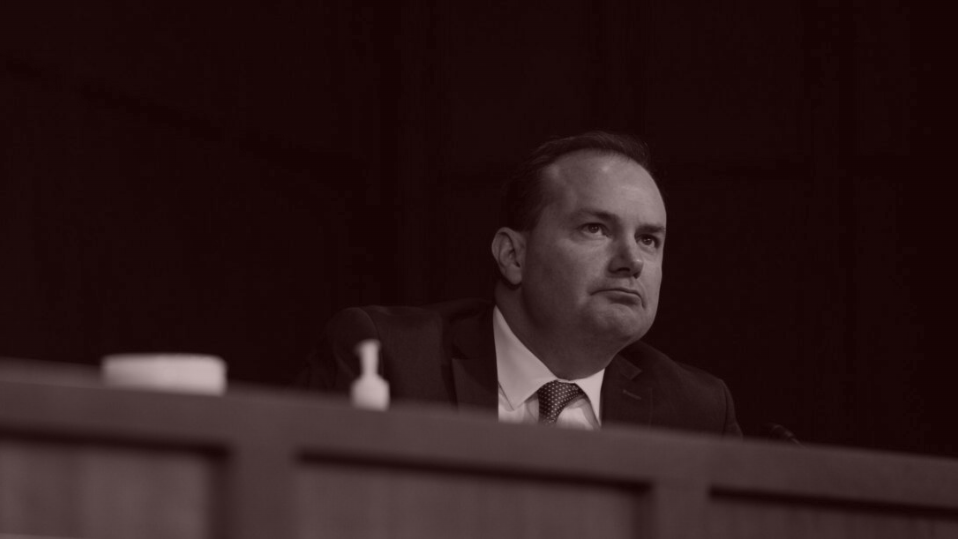 |
| Lee’s Rebellion & Senate TikTok Gymnastics |
| Fresh intel on the latest micro-dramas roiling Capitol Hill: How Republicans are working through their feelings about a TikTok ban, and the hardliner plot to intervene in Johnson’s budget legislation blitzkrieg. |
|
|
|
| It’s widely assumed, probably correctly, that the House version of the TikTok ban will face more pushback in the Senate, in large part due to growing questions among Republicans. The sources of their concerns (some of which are merely post-hoc rationalizations for aligning with Trump) vary considerably. There is, of course, the very real impact of the Jeff Yass-fueled Club for Growth pressure campaign, as well as genuine fears about further empowering Meta and Mark Zuckerberg, a greater bogeyman than Xi Jinping in some corners of the far right. But there is also an emerging libertarian argument, recently espoused by Sen. Rand Paul, which posits the bill could unfairly target American investors in ByteDance (a.k.a. Yass) while setting a precedent that the government can target companies for alleged foreign influence without the burden of proof.
Even among the China hawks on the populist right, who are campaigning for a full-fledged TikTok ban, there are concerns about what it means for a social media company to be “indirectly” held by a hostile foreign power. At the moment, the bill can directly target ByteDance since 1) the company is based in China, which has strict laws about government compliance, and 2) the Chinese Communist Party owns a so-called “golden share” of the company, theoretically allowing it backdoor access to the app, per Chinese law. (ByteDance has denied this, although independent analysts note that it’s hard to verify.)
The related worry among some Republicans is that the provision could be weaponized by Democrats to go after other sites or apps where MAGA viewpoints flourish—such as Truth Social, Rumble, or Telegram—if they take foreign money from, say, investors linked to one of the Gulf states. “Folks are rightfully concerned that these bills contain loose language that could be used to target other platforms or individuals. It’s unnecessarily muddying the waters on what could otherwise be a clean hit against the Chinese Communist Party and its propaganda interests, just because Biden and the D.O.J. said so,” Raheem Kassam, the co-host of Steve Bannon’s War Room podcast and editor-in-chief of populist news site The National Pulse, told me. “If the Senate bill is any worse or broader than the House bill, there will be even wider-spread disquiet.”
For now, opposition to the bill will be dependent on how the Senate Intel Committee marks up the legislation, and there’s little reason to believe that it would diverge heavily from the House’s bill. (Marco Rubio, the ranking chair of the committee, has drafted previous versions of a TikTok-targeted bill with his House counterparts.) But despite Trump voicing some amount of opposition to the bill, he hasn’t gone nuclear against those voting for a ban—the key signal of his engagement on an issue. |
|
|
| If all goes well, Congress will finally complete the work of funding the government by the end of this week, ending months of piecemeal fights and micro-dramas over the budget. So far, the plan is to release the full text close to the deadline before a partial government shutdown, herd everyone to the House floor, pull some procedural mishegoss to quickly usher the vote through, and shoot the bill over to the White House with bipartisan support—ideally, without the conservative hardliner caucus revolting against Mike Johnson, as they did with his predecessor.
Anything beyond symbolic objections are unlikely, I’m told—there are currently no plans for a motion-to-vacate, or anything so dramatic. But the Freedom Caucus powder keg is real, and their grievances are well-documented, as I’ve reported extensively over the past several months.
The Homeland Security bill’s border outlays are getting specific attention. If hardliners believe that the bill will increase funding for processing migrants and keeping them on American soil once they cross the border, rather than simply blocking them from entering the U.S. altogether, they’re going to cause a fuss. If overall spending increases as well, that’s just a rotten cherry on top. And it’s not helping that congressional negotiators have yet to share the bill’s final text (it’s expected to be released tomorrow) and may suspend a rule that requires members be given 72 hours to read it before voting. Congressional hardliners in the House and Senate, I’m told, are assessing their options.
Of course, they don’t have much leverage. Johnson previously passed the first tranche of government funding with the support of Democrats and the suspension rule—a procedure unique to the House—which accelerates a bill’s path to a floor vote without debate. It’s a tactic he’s used before, though not without backlash from his right-wing detractors, who feel Johnson has used it to “roll” them. “His strategy has been to pioneer the use of the suspension calendar for ordinary business in a way we never really thought we’d see,” lamented Russ Vought, the head of the Center for Renewing America and an outside activist ally to the hardliners.
Alas, from the looks of the calendar, once the text of the bill drops tomorrow—it is expected to be anywhere from 1,000 to 1,500 pages—Republican insiders fear that Johnson will push it to the floor for an immediate vote, giving members virtually no time to read it before it’s passed with Democratic support and raced off to the Senate. But it’s not clear what countervailing tactics are available to House hardliners, beyond attempting to depose Johnson.
Meanwhile, on the Senate side, I’m hearing that Sen. Mike Lee is recruiting allies to tank the deal and extend a C.R. to allow time for more debate—or at least time for hardliners to voice their strenuous objections. “[Lee] calls leadership ‘The Firm,’ mainly because of how secretive the deal is,” a Republican ally off the Hill told me, pointing to Lee’s recent statements calling for leadership to either release the text ASAP, or bump the voting deadline to give members at least 72 hours to read the bill.
Theoretically, a large enough opposition bloc could stop the budget from even being considered, but given that the Senate is controlled by Chuck Schumer, who can also circumvent their ability to add further amendments, that’s likely futile. There are some procedural options involving cloture that Senate conservatives could use to buy more time and push amendments through, though killing it outright upon arrival (and being blamed for a shutdown) seems off the table. “Rather than senators being able to exercise one of their most basic rights, which is to amend legislation, they’re forced with [a choice between] ‘agree to this bill, or you’re responsible for shutting down the government,’ which is just not how the appropriations process is supposed to work,” a top Senate conservative G.O.P. staffer familiar with the ongoing talks told me.
Outside activist allies, who frequently reinforce and amplify the power of the small hardliner bloc in Congress, will also put pressure on Johnson, framing the budget as a secretive, Swamp-made bill that could inadvertently increase the budget by up to a trillion dollars. Heritage Action has already started, tweeting their displeasure at the expedited calendar and calling the system “broken”; Jim DeMint, of the Conservative Partnership Institute, has begun amplifying tweets from members of Congress griping about needing to read the bill. It’s yet another strange twist: this budget fight might mark the first time that Johnson’s parliamentary tactics have riled conservatives outside of the House, even if, as ever, nobody can identify a viable alternative path. |
|
|
|
| FOUR STORIES WE’RE TALKING ABOUT |
 |
|
 |
| Netflix’s Endgame |
| A close look at Netflix’s savvy use of licensed content. |
| JULIA ALEXANDER |
|
 |
| Reality Bites Bravo |
| Penetrating the lawsuits threatening the essence of reality TV. |
| ERIQ GARDNER |
|
 |
| Pitaro Murmurs |
| News and notes on the Iger succession bake-off. |
| JOHN OURAND |
|
|
|

|
 |
|
|
|
Need help? Review our FAQs
page or contact
us for assistance. For brand partnerships, email ads@puck.news.
|
|
You received this email because you signed up to receive emails from Puck, or as part of your Puck account associated with . To stop receiving this newsletter and/or manage all your email preferences, click here.
|
|
Puck is published by Heat Media LLC. 227 W 17th St New York, NY 10011.
|
|
|
|