Happy Thursday, and welcome back to The Hidden Layer. I’m Ian
Krietzberg.
Today, we’re taking a look at the superintelligence-fueled chaos that has enveloped Meta. Plus, news and notes on a joint NASA-IBM project to predict solar activity, and some sobering new data on the number of businesses that are rethinking their plans for A.I.
Mentioned in today’s issue: Yann LeCun, Alexandr Wang, NASA, Andy Stone, Shengjia Zhao, GPT-5, IBM, Meta, Mark
Zuckerberg, MIT, Sam Altman, and… the Hindu sun god.
Let’s get into it… |
-
The productivity paradox: Three years into the generative A.I. boom and the gold rush to hyperscale data centers and chip production, just how much value these companies are actually creating for enterprise clients—and for the economy writ large—remains an open question. In March, S&P Global Market Intelligence found that 42 percent of surveyed companies had
abandoned their A.I. initiatives, up from 17 percent the year before. Two months later, McKinsey reported that while almost eight in 10 companies reported using gen A.I., just as many saw no impact to their bottom line.
Of course, it could be that we’re still too early in the adoption cycle for productivity gains to manifest, as
was also the case during the personal computing revolution (though Microsoft turned a profit the same year it was founded, 1975, and Apple
turned a profit two years after its founding in 1976). But the warning signs continue to pile up. The latest comes from MIT’s Media Lab, whose State of AI in Business 2025 reports that “just five percent of integrated A.I. pilots
are extracting millions in value, while the vast majority remain stuck with no measurable P&L impact.” The Media Lab, which surveyed hundreds of enterprise leaders, found that while 80 percent of businesses have explored tools like ChatGPT, only 40 percent have deployed them—and those deployments are mainly boosting individual productivity, not creating monetary value. Oof.
Meanwhile, the bloom seems to be coming off the rose for some of the publicly traded A.I. behemoths. Since Monday,
shares of Nvidia have dropped 4 percent, Palantir is down 12 percent, TSMC fell by 6 percent, and Google, Microsoft, Meta and Amazon all fell by about 3 percent. Maybe investors are anticipating a correction, though it’s rarely wise to bet against the Wall Street hype machine. (As my partner Bill Cohan always says, this is not investment advice.) For what it’s worth, Sam Altman seems to agree: “Are we in a phase where investors as a whole are
overexcited about A.I.?” he told The Verge last week. “My opinion is yes.”
|
|
|
As AI adoption accelerates, power has become the defining constraint—and opportunity—for data center growth. Our
latest 2025 Mid-Year Power Report reveals a dramatic shift in how industry leaders are planning for the future. Read the report. |
|
|
-
Forecasting the sun: Meteorologists are increasingly experimenting with A.I. models for terrestrial weather forecasting, including at Google DeepMind, which has been tracking Hurricane Erin. (I’ll have a little more on this next week.) But what about models for heliophysics, predicting the activity of the sun—a critical capability when a single powerful solar flare can
knock out dozens of satellites? That’s the goal of Surya, a new A.I. model freshly unveiled by NASA and IBM, aimed at protecting “our technological civilization from the
star that sustains us.” (Surya is the Hindu sun god.)
Historically, solar weather prediction has relied on partial satellite views of the sun’s surface, but Surya was trained on a massive, curated, high-resolution dataset of solar observations, conducted by NASA over the past nine years, in an attempt to overcome those classical limitations. To process all that data, the organizations had to develop custom, multi-architecture training solutions, since NASA’s images are 10 times
larger than those typically used to train A.I. models.
Surya, however, does more than classify solar flares—which the model has excelled at, achieving a reported 16 percent improvement in accuracy over previous methods. It can also predict where a solar flare will occur, up to two hours in advance, which can allow satellite operators on the ground to respond before their precious hardware gets fried. (You can
check it out now, and peruse the dataset, on Hugging Face.)
|
“Kudos to the The Wall Street Journal for trying to make the mundane sound exciting
since all that’s happening here is some basic organizational planning…”
—A disgruntled Andy Stone, a top Meta spokesman, sharing the “full statement” he wanted the Journal to print, as Meta does its best to downplay the significance of what indeed looks like a pretty big shake-up of its A.I. team.
A little more on this below the fold…
|
|
|
In the span of a few months, Meta has split its A.I. unit in two, launched a
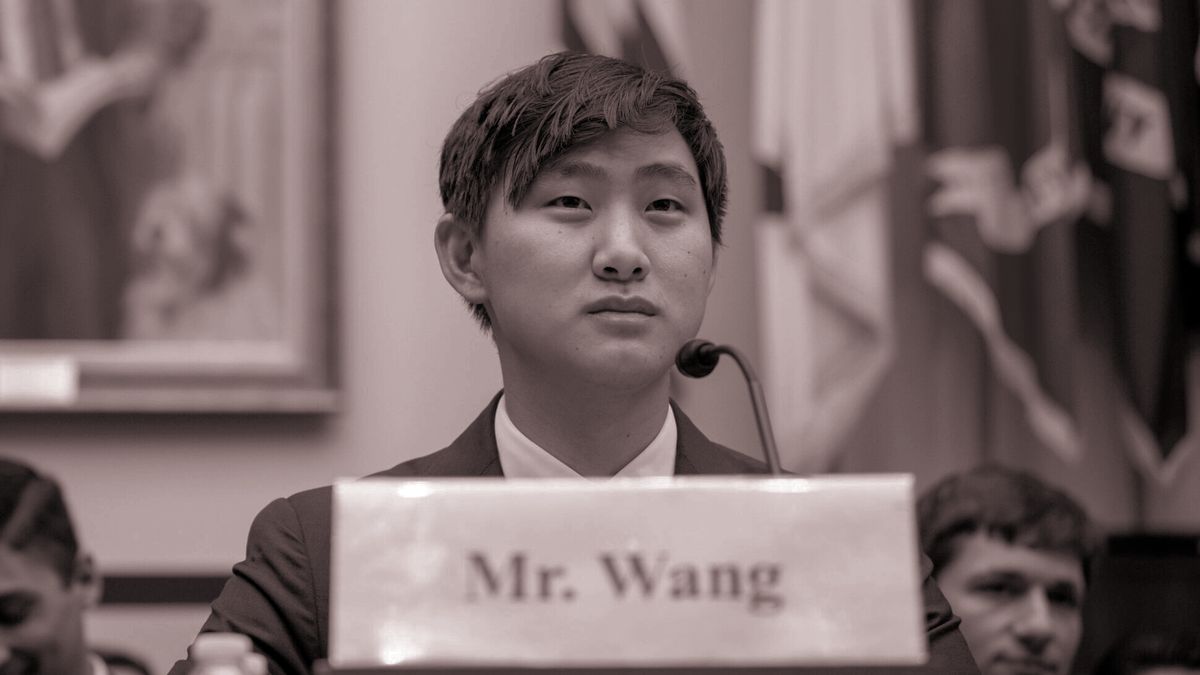
superintelligence lab, gone on a multibillion-dollar hiring spree, and restructured the same unit again. Now, it has put 28-year-old Alexandr Wang in charge of the whole enchilada. Meta says there’s nothing to see here, but the scramble says a lot about where the industry is now—and where it’s headed. |
|
|
Two months after launching Meta Superintelligence Labs—an umbrella organization intended to unify the
company’s A.I. efforts under the leadership of Alexandr Wang, the precocious 28-year-old founder of Scale AI—Mark Zuckerberg is restructuring the company’s A.I. division yet again. Back in May, of course, Meta decided to split its A.I. division into two groups: a products team focused on A.I. integrations for
Facebook, Instagram, and WhatsApp; and AGI Foundations, dedicated to the company’s large language model, Llama, and the race to achieve artificial general intelligence. After that split, Zuckerberg went on an end-of-days–style hiring spree to get ahead of the competition, attempting to poach top researchers from rival A.I. companies with rumored compensation offers of $100 million or more.
Now, according to
multiple reports, Meta’s A.I. division is splitting into four distinct groups: TBD Lab, which will handle Meta’s L.L.M./superintelligence efforts; a product unit; a team
focused on data centers and infrastructure; and FAIR (Fundamental A.I. Research), a separate research lab that has been run by Yann LeCun. In an internal memo obtained by Business Insider, Wang announced the dissolution of the AGI Foundations team and also suggested that the research coming out of FAIR would partially
fuel the efforts at TBD Lab. Perhaps most interestingly, Wang revealed that every divisional head—except for Meta’s new chief scientist, ChatGPT co-creator Shengjia Zhao—will now report directly to him. That includes LeCun, the famed, 65-year-old researcher who also serves as chief A.I. scientist for FAIR. (Talk about getting layered…)
No layoffs have been announced, but the Times reported that Meta executives are mulling the idea of downsizing the A.I. group.
Meta declined to comment on layoffs and would not confirm the contents of the memo. Instead, I was referred to an X post from spokesperson Andy Stone, essentially mocking the media’s fixation on Meta’s restructuring. Nevertheless, Stone confirmed on X that Meta has paused hiring for its A.I. division, which he described as “some basic organizational
planning: creating a solid structure for our new superintelligence efforts after bringing people on board and undertaking yearly budgeting and planning exercises.” |
|
|
As AI adoption accelerates, power has become the defining constraint—and opportunity—for data center growth. Our
latest 2025 Mid-Year Power Report reveals a dramatic shift in how industry leaders are planning for the future. Read the report. |
|
|
For his part, Wang wrote in a
post on X Thursday that Meta is “truly only investing more and more into Meta Superintelligence Labs as a company. Any reporting to the contrary of that is clearly mistaken.” |
Sure, it’s possible to look at this “basic organizational planning” as a normal and necessary reorientation
after an expensive hiring spree. But the reality is that Zuckerberg has been scrambling for months, and that Meta is still confronting many of the same challenges that it was in April. Indeed, the kaleidoscopic shifts in focus from FAIR to AGI Foundations and now to Meta Superintelligence Labs says a lot about where the industry is now, and where it’s headed.
As I reported earlier this month, OpenAI’s underwhelming GPT-5 release was a moment of reckoning for both Silicon Valley and Wall Street—an overdue reality check on the feasibility and timeframe for achieving A.G.I. or superintelligence (both terms lack agreed-upon definitions and are basically interchangeable, although the industry has recently begun to favor the latter). But nothing about Meta’s restructuring seems to offer a novel path toward achieving superintelligence. In his
note, Wang suggested that Meta’s roadmap involves “scaling large models to achieve superintelligence across pre-training, reasoning, and post-training.” In short, basically what every other company has been doing—relying on L.L.M.s alone to reach the promised land. (He did note that the team will explore “omni”—another word for multimodal—models, or models that can generate text, images, and video.)
And yet, over the past several years, multiple studies have indicated
that L.L.M.s are probably not up to the task. It’s something that LeCun—who has explicitly argued that L.L.M.s do not provide a path toward A.G.I., and that he “hates” that term—has been trumpeting for months. Earlier this year, he dismissed L.L.M.s as mere token generators. “I am more interested in next-gen model architectures,” he
said at an Nvidia event. These models should be able to do four things, per LeCun: “understand the physical world, have persistent memory, and ultimately be more capable to plan and reason.” One irony of the restructuring is that LeCun will now, apparently, be more involved in Meta’s effort to achieve superintelligence,
which seems predicated on doing exactly what LeCun warned against, which is to just keep scaling up L.L.M.s in the hopes that, with enough compute, the Rubicon will be crossed. (I’m sure that was a fun Zoom.)
Of course, this is not Zuckerberg’s first moon shot—remember the Metaverse?—but this time, the bar for success is even less clear. Meta makes virtually all of its money from advertising on social and messaging platforms, and Zuckerberg seems anxious to control future
commercial platforms, too—hence his interest in virtual reality, and now superintelligence. Theoretically, the technology could transform wearable products into a viable commercial platform, too. After all, Meta’s investment in virtual reality and smart glasses is set to top $100 billion this year. But that seems like a rather lackluster endgame for a technology
Zuckerberg has called “one of the most important innovations in history.” Perhaps, with all of his rivals engaged in the same arms race—and Sam Altman talking about building a social network—he simply doesn’t want to get left behind.
Alas, right now, being able to brand Meta as at the forefront of A.I. research might be as important for the company’s stock price and talent retention as actually building a viable commercial product. And as long as Zuckerberg’s
A.I. push doesn’t distract from the company’s core competency—generating tens of billions of advertising dollars every quarter—investors will likely stick around for the ride. Who knows, maybe in another six months, Meta Superintelligence Labs will be renamed again—with the promise that ultra-mega-intelligence is within reach. |
That’s all for today. I’ll see you next week.
Ian |
|
|
Join Emmy Award-winning journalist Peter Hamby, along with the team of expert journalists at Puck, as they let you in on the
conversations insiders are having across the four corners of power in America: Wall Street, Washington, Silicon Valley, and Hollywood. Presented in partnership with Audacy, new episodes publish daily, Monday through Friday. |
|
|
A professional-grade rundown on the business of sports from John Ourand, the industry’s preeminent journalist, covering the
leagues, players, agencies, media deals, and the egos fueling it all. |
|
|
Need help? Review our FAQ page or contact us for assistance. For brand partnerships, email ads@puck.news. You received this email because you signed up to receive emails from Puck, or as part of your Puck account associated with {{customer.email}}. To stop receiving this newsletter and/or manage all your email preferences, click here. |
Puck is published by Heat Media LLC. 107 Greenwich St, New York, NY 10006 |
|
|
|