 |
 |
|
Welcome to The Best & the Brightest. I’m Tara Palmeri.
What a week! McConnell announces he’s a lame-duck leader, Trump gets thrown another lifeline with the Supreme Court effectively delaying his insurrection trial, and Biden got some tough feedback in Michigan where 100,000 voters wrote in “uncommitted” in protest to his handling of the war in Gaza. (To be fair, Trump is facing trouble in Michigan, too, with 30 percent of Republican primary voters still sticking by Nikki Haley in the swingy state.)
🎙️ Earlier this week, I spoke with the always sunny CNBC analyst Ron Insana, who agrees with the White House that by November 2024, “Bidenomics” will not be a dirty word. Also, don’t miss the latest episode of my podcast, Somebody’s Gotta Win, with reporter Hunter Walker, where we dig into Biden’s uphill mission in Michigan. Walker wrote an entire book about how Biden was able to bridge the divide with progressives in 2020, The Truce: Progressives, Centrists and the Future of the Democratic Party. He’s not so sure he can do it again in 2024. (Subscribe here and here.)
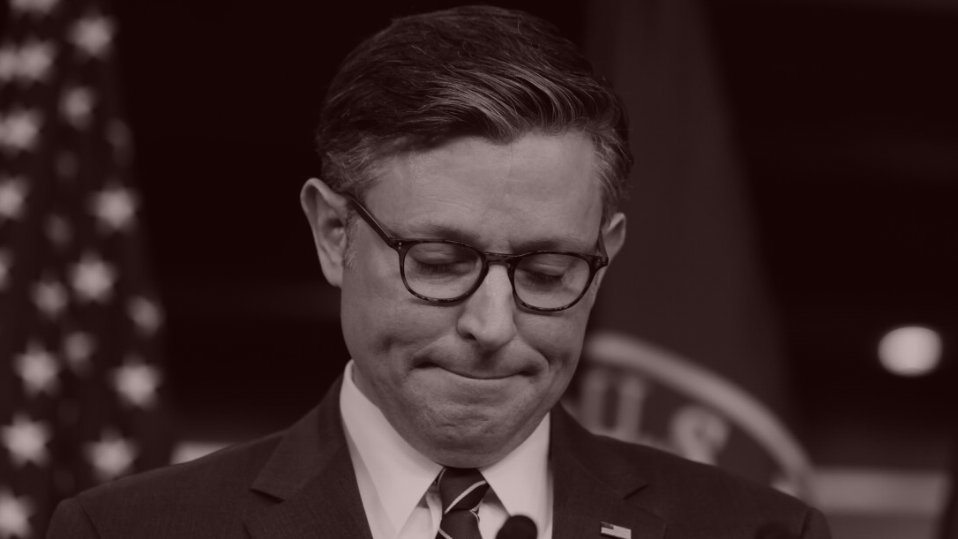
In tonight’s edition, I explore the education of Mike Johnson as he attempts to transform from “yes man” into a political animal with a coterie of loyalists who can report back to him about future uprisings. Let the parlor games begin about who has been selected to be a part of his kitchen cabinet. I also explore how No Labels’ quixotic attempt to run a unity ticket in 2024 could end up destroying any legitimacy they have left in Washington.
But first…
- Hunting Hunter: The Hunter Biden deposition, due to drop tonight, is already drawing backlash. After denying Biden fils the opportunity to testify publicly, Republicans now want an open hearing after all. Perhaps they’ve realized that Hunter, a skilled lawyer who is working with rainmaking defense attorney Abbe Lowell, was capitalizing on the muted impact of a transcribed testimony. “When you get the transcript, it’s going to read like a transcript,” said one G.O.P. member. “It reads better than it sounds, which is why I want to have a live hearing. I think we should have done the deposition first. No matter how smart your lawyer is, if you don’t answer the question directly [in the hearing], then it sounds like you’re being evasive.”
For his part, I heard that Hunter enjoyed tangling with MAGA all-stars like Marjorie Taylor Greene, whom he invited to speak to him at the desk because she was shouting at him from the back of the room; and Matt Gaetz, who made a fool of himself with some document stunt; and Harriett Hageman, who seemed to be unaware of the most basic information about addiction. Hunter explained that he realized he was an addict when he had his first drink at 11 years old.
|
| Now, the latest intelligence from Abby Livingston on the McConnell succession race on Capitol Hill… |
|
A MESSAGE FROM OUR SPONSOR
|
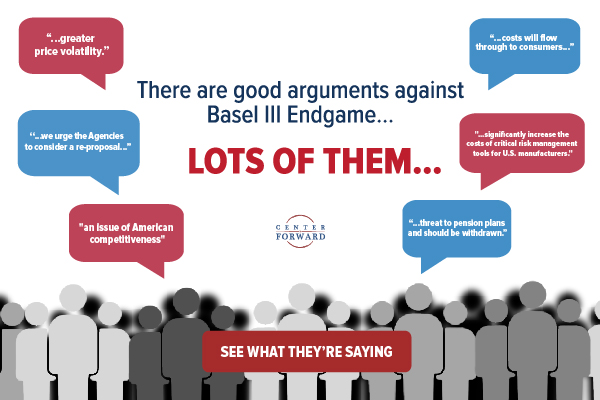 |
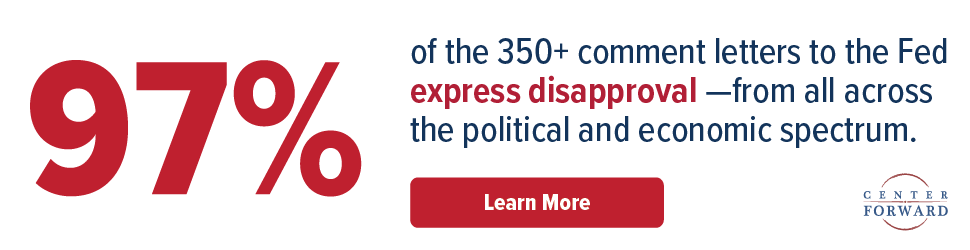
| The Federal Reserve’s Basel III Endgame proposal will undermine the U.S. economy – and American competitiveness. That’s why so many companies, organizations and people are speaking out in rare agreement against the proposal and its harmful impact on the U.S. economy and our capital markets, which generate investments, innovation, growth, and jobs. In fact, 97% of the 350+ comment letters submitted to the Federal Reserve express disapproval.
Organizations from across the political and economic spectrum are urging the Fed to reconsider the rule, saying it would have significant negative consequences and would be bad for both consumers and economic stability. Even lawmakers from both sides of the aisle agree that the Fed should carefully consider the proposal’s consequences on capital markets.
America has spoken. Will the Fed listen?
Protect our capital markets. Protect our economy. |
|
|
| McConnell Succession Convulsions |
|
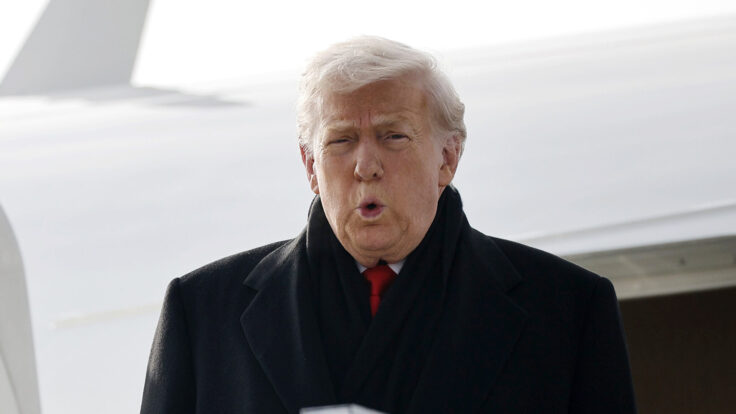
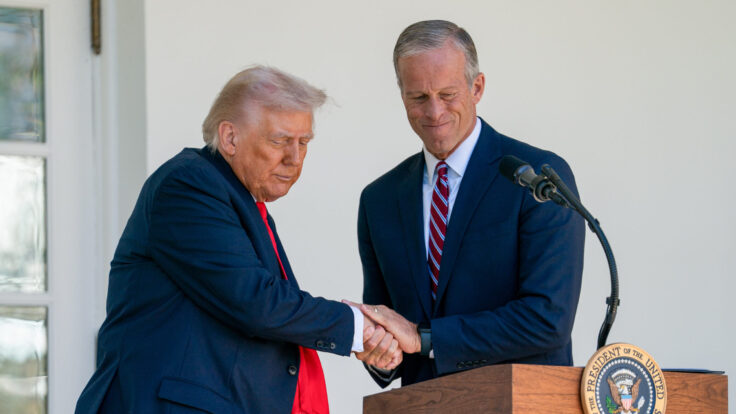
| Among the more puzzling themes to emerge from my conversations surrounding Mitch McConnell’s succession is how many in the political class are treating it as a talent search. Sure, there are the Johns (Barrasso, Cornyn, and Thune), but today’s chatter focused on who else might run. At times, the speculation crossed into spitballing, and none of it really made any sense. Even Donald Trump weighed in, reportedly encouraging N.R.S.C. chairman Steve Daines to run, which is a name I’ve heard thrown around privately, even though his standing in the party won’t be clear until we know how well his N.R.S.C. tenure goes. (Plus, where would the votes to support him materialize from?)
There could be a narrow lane for an establishment dark horse if Barrasso, for instance, decides to run for whip instead of leader. But my sense is that after 10 years of House G.O.P. turmoil and turnover, and because Senate leader elections are so rare, the political class is conditioned to treat this race as a speaker’s fight. Here’s why these two things are not the same:
- The next Senate G.O.P. leader only needs to win the conference vote, which entails securing the support of the majority of Republicans, and not a public floor vote, which also includes Democrats, as we’ve seen so many times this term in the House. Not securing sufficient votes will see candidates ousted from the next round of voting. I can’t imagine a scenario, in November, in which all of the Johns suddenly discover they’re not viable, and Senate Republicans are forced to scramble for other options. (Then again, weirder things have happened in recent years…)
- This is the first truly competitive Senate G.O.P. leader race in over 20 years. To put things in perspective, Politico didn’t even exist when Senate Republicans chose McConnell. So the concept and process of choosing a Republican leader is novel to most working senators and political obsessives.
In that time, the Senate has not been the graveyard of Republican ambitions that the House has become. To wit, by the time Mike Johnson’s speakership began this past fall, the House G.O.P. had burned through not just one generation of talent—i.e., Eric Cantor, Paul Ryan, and Kevin McCarthy—but also the next generation, after so many of the up-and-comers failed in their speaker candidacies in October. That’s not how the Senate works, at least for now.
- The Senate, of course, is much smaller than the House, and the social world is more intimate. I’ve received no indication that a critical mass of Republican senators is unhappy with their options at this point. Instead, the central tension of this race seems rooted in affection for both Cornyn and Thune, and ultimately having to choose one over the other. Moreover, this is not the kind of thing where a senator can wake up and decide to run for leader. Whoever leads this party at the Senate level must be prepared to raise millions of dollars for the N.R.S.C. and within the legal parameters of the super PAC world. This takes years—if not decades—of preparation. This has not been as much of a consideration on the House side, at least of late, because all the big fundraisers failed in their speaker bids.
- Trump does not have the juice to influence the Senate that he has in the House. As I wrote yesterday, he probably has de facto veto power over a Senate contender, but he likely does not have the affirmative power to install a favored contender. Part of that is because the Senate is exponentially less MAGA than the House. But it’s also surely because this will be a secret ballot, as opposed to a televised, open vote on the House floor. He may never know who followed his orders and who didn’t.
- That’s not saying other contenders won’t emerge. Senate sources who are gaming out whipping anticipate there could be a MAGA contender (e.g., Rick Scott, who’s run before) who might pick up some traction. But as it’s been explained to me, that candidate would be more likely to disrupt the vote counting (like, playing kingmaker) than have any obvious path to leadership.
|
|
|
| So it’s finally put up or shut up time for No Labels—the disorganized dark money group that counts Nelson Peltz, Steve Schwarzman, and Harlan Crow as donors—to execute its quixotic plan to assemble a unity-ticket to challenge the increasingly inevitable disappointment of a Trump-Biden rematch. Over the last two years, the third-party group has raised tens of millions on the assumption that No Labels and its opportunistic C.E.O., Nancy Jacobson, could recruit a viable candidate—Larry Hogan, say, with Joe Manchin as V.P. Sure, No Labels has been able to get their name on the ballot in 16 states. Unfortunately, they just haven’t been able to find that dream ticket, which will prevent them from ballot access in many others.
So on March 8, just three days after Nikki Haley is set to be demoralized in 16 states on Super Tuesday, No Labels is handing over the power to their 800 delegates to make a choice about whether to move forward, and with whom. Their ideal candidate, of course, has been Haley, herself.
In fact, No Labels emissaries have been trying to persuade Haley through back channels, but she’s emphatically resisted. Joe Lieberman, who sits on the board, has told donors that the organization has three strong options, including a Republican governor, but he won’t share names. So far, No Labels has also flirted with total non-starters like Chris Christie and Hogan and Manchin, until they got turned down. (Hogan is now running for Senate in Maryland.) It’s hard to see anyone leaving their party to run as a spoiler, and No Labels had made it clear they need a Republican on the top of the ticket so as not to hand the election to Trump.
Supporters of No Labels are starting to wonder if this whole romantic endeavor could truly and spectacularly backfire on a group almost everyone in Washington has been suspicious about. And often for good reason. To wit: Lieberman and Jacobson are barely in communication—their friction is merely one example of the organization’s dysfunction. (A No Labels spokesperson denies this, saying the two were on a call together this afternoon.)
The group has long maintained its relevance by deploying money to protect moderates like Manchin, Reps. Josh Gottheimer, Brian Fitzpatrick, and Jared Golden, and being chaired by board members like Susan Collins. But that effort, too, has backfired with some of the very members that it was designed to help. While Jacobson has praised the Problem Solvers Caucus as an example of the bipartisanship that No Labels hopes to uplift, and originally worked with the group, Democratic members of the caucus began griping last summer when Jacobson started pushing her Republican-leaning “unity” ticket. Perhaps that’s why No Labels is going back to its roots, launching a high six figure ad campaign urging Speaker Mike Johnson to put the Senate’s Ukraine-Israel-border package on the floor so that Democrats can cross the line and vote for the bill. “No matter what happens with the 2024 project, supporting Problem Solvers will continue to be central to the N.L. mission,” said No Labels spokesperson Ryan Clancy. |
|
A MESSAGE FROM OUR SPONSOR
|
|
| The Federal Reserve’s Basel III Endgame proposal will undermine the U.S. economy – and American competitiveness. That’s why so many companies, organizations and people are speaking out in rare agreement against the proposal and its harmful impact on the U.S. economy and our capital markets, which generate investments, innovation, growth, and jobs. In fact, 97% of the 350+ comment letters submitted to the Federal Reserve express disapproval.
Organizations from across the political and economic spectrum are urging the Fed to reconsider the rule, saying it would have significant negative consequences and would be bad for both consumers and economic stability. Even lawmakers from both sides of the aisle agree that the Fed should carefully consider the proposal’s consequences on capital markets.
America has spoken. Will the Fed listen?
Protect our capital markets. Protect our economy. |
|
|
|
|
| No Labels isn’t the only entity testing the bounds of competency. Alas, it’s becoming increasingly painful to watch Speaker Johnson struggle with some of the absolute basic duties of his post—like counting votes before putting a historic resolution on the floor to impeach a cabinet secretary, or endorsing a Senate candidate, Rep. Matt Rosendale, without checking in with leadership and subsequently rescinding his endorsement half an hour later. Even Mitch McConnell (who blew past him on Tuesday, essentially abandoning him at the White House) is siding with Chuck Schumer, Hakeem Jeffries, and Joe Biden as Johnson keeps kicking spending bills down the road with continuing resolutions. “The speaker is getting his ass handed to him,” said one former leadership aide. “Everyone is seeing the total ineptitude of his operation and that he has no idea what he’s doing.”
According to those who have spent considerable time around Johnson ever since he was plucked from obscurity, the former backbencher is simply “too nice” for the job and incapable of delivering bad news. Insiders are frustrated by what they perceive as a tendency to waste time, and to delay decision-making while attempting to build consensus. In the process, he’s losing his leverage against the Senate, whose bills seem to be carrying the day. “He has to make a call or otherwise we end up in Groundhog Day,” said one Republican member. “He needs to get a little meaner.”
Then there’s the matter of his team. Instead of relying on allies to keep tabs on the various corners of the conference, until recently, he was known to trapeze around, scheduling individual meetings, some of which he set up himself via text message. Lately, he seems to have realized that he should be relying on his team, who happen to be some of the best aides in Washington, including his chief of staff Hayden Haynes, policy director Dan Ziegler, senior policy adviser Jason Yaworske, floor director Chris Bien, and former Trump press aide Raj Shah in the communications shop. But according to members and aides, Johnson is clueless about how to use them. And as he learns on the job, the conference is just growing more angry and divided. “His personality is a golden retriever, he wants to make people happy,” said a senior G.O.P. aide. “He’s got to be a leader and decide things. He has to say ‘No man, it’s not going to happen.’”
One observation that may explain the behavior is that Johnson appears to be starstruck by his new fame, enjoying his security detail, expanded staff, and flying down to Mar-a-Lago. In the meantime, Republican members have lost patience with him, as evidenced by the flood of mocking leaks following his Bible-thumping speech at the party’s leadership retreat in Miami last weekend. Johnson droned on about the moral decline in the country rather than how to expand their majority. “If you sent staff out [of the room], it meant no fucking leaking,” said a former senior leadership aide. “Members were leaking. It was a bad sign.” |
|
|
|
|
| If there’s one thing everyone can agree on, however, it’s that Johnson is trying to learn in a practically impossible situation, one where he only has a two- to three-vote advantage on any given day. It was a nightmare scenario for even the most experienced leaders, like Nancy Pelosi and Kevin McCarthy, who had been turning the screws for decades before landing at the top. He needs to rely on deputies to keep their eyes and ears on the ground; personally poll-testing 219 members of Congress is no way to run a conference. After all, for as many haters as McCarthy had, he had just as many loyalists, some of whom were hand-picked to cut deals for him.
But perhaps some lessons have started to sink in. On Wednesday evening, Johnson called about two dozen members—representing the range of the ideological spectrum in his conference—into his office to first explain the latest appropriations bills but also to feel them out about quietly keeping him informed. He seemed to be insinuating that they would be his unofficial band of lieutenants who would discreetly report back to him. “He’s realizing that there are leaks. He can’t take every meeting,” said one of those members. “He needs people out in the conference to put out fires and look ahead to potential traps. People to call and figure out, ‘What are you hearing?’”
One of the members who received the Johnson shoulder tap was reluctant to reveal the names of other members in the room for fear of being discharged. Discretion, this member said, is key to remaining in the club with the speaker.
Of course, it’s not unprecedented for leaders to deputize favored members. Some would say McCarthy ran into trouble for allowing members of his inner circle, like Reps. Patrick McHenry and Garret Graves, to cut deals on the debt limit that the House Freedom Caucus did not buy into. There was also resentment that McCarthy had his own kitchen cabinet. But perhaps Johnson has realized that his natural allies in the H.F.C. are no longer reliable, and practically itching to oust him if he puts a Ukraine funding bill on the floor.
Indeed, there’s only so long that he can extend the process with continuing resolutions to avert a government shutdown. And while there doesn’t seem to be a hunger to oust him in an election year, the grumbling is only getting louder and louder, and drawing more attention to the dysfunction, making it harder to argue that Republicans deserve another shot at leadership. And while Johnson might be enjoying his time in Florida with the former president, relishing all the trappings of his new post, everyone knows that Trump is loyal to no one. |
|
|
|
| FOUR STORIES WE’RE TALKING ABOUT |
 |
|
 |
| Johns 3:16 |
| A close look at the post-McConnell succession horse race. |
| ABBY LIVINGSTON |
|
 |
| Godwin’s ABC Blues |
| An insider’s guide to the leadership drama consuming ABC News. |
| DYLAN BYERS |
|
 |
|
|
|

|
 |
|
|
|
Need help? Review our FAQs
page or contact
us for assistance. For brand partnerships, email ads@puck.news.
|
|
You received this email because you signed up to receive emails from Puck, or as part of your Puck account associated with . To stop receiving this newsletter and/or manage all your email preferences, click here.
|
|
Puck is published by Heat Media LLC. 227 W 17th St New York, NY 10011.
|
|
|
|