Welcome back to The Varsity. I’m John Ourand, attending an unofficial Puck
summer soiree, alongside my partners Eriq Gardner and Leigh Ann Caldwell, as you’re reading this tonight. We decided to hang out at Nats Park to watch two of MLB’s worst teams—the hometown nine and the nomadic and mismanaged A’s—throw it around the horn in the oppressive mid-Atlantic heat. Thankfully, Marchand brought his shikebiki folding fan and a Yeti packed with sancerre.
It’s earnings season! Tomorrow morning, we’re
expecting Bob Iger to offer guidance on ESPN’s direct-to-consumer service (don’t call it Flagship!), including a launch date, pricing, and expectations. This morning, though, Lachlan Murdoch laid his cards on the table, telling analysts that the Fox One streaming service will launch for $20 per month on August 21, right in time for the network’s plethora of college football games and a couple weeks before the NFL season kicks off. Obviously, those games will
drive its adoption in the market.
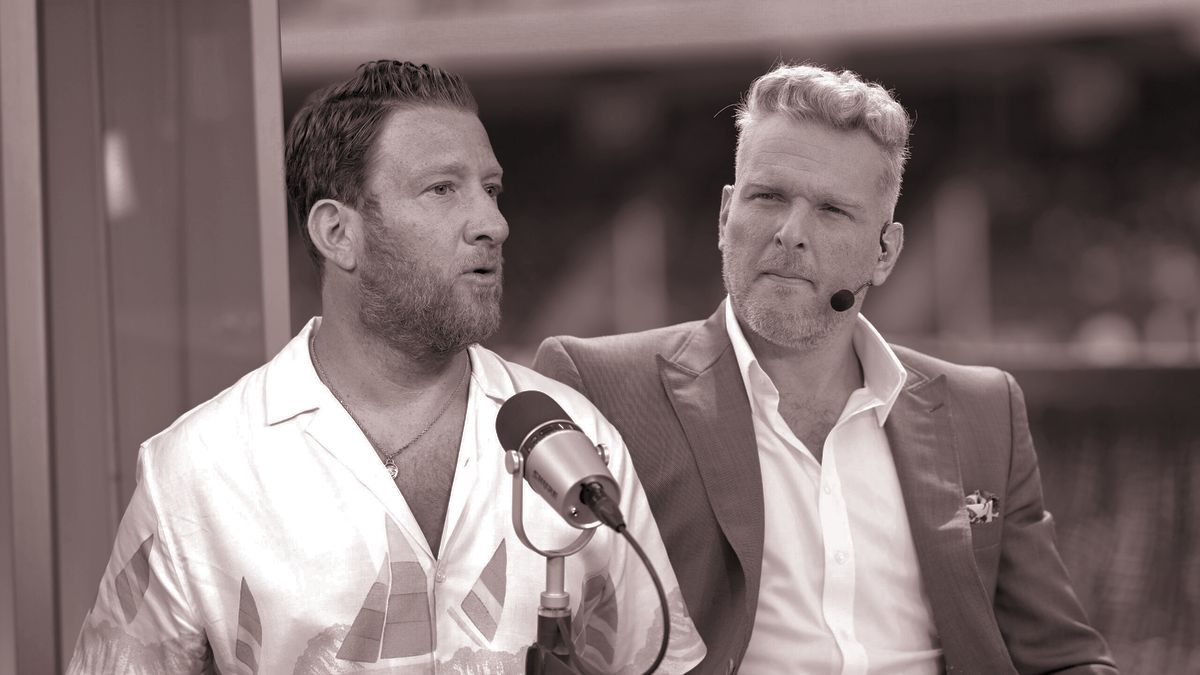
Speaking of which… In tonight’s Inner Circle edition, Julia Alexander has a must-read piece looking into the new stars of college football Saturdays: Pat McAfee and Dave Portnoy. ESPN and Fox hired these two bros in order to appeal to a decidedly younger crowd. But will this strategy actually pay off, or is it just hollow executive pablum about how these legacy players are getting younger
by hiring hot-headed middle-aged rich guys to scream through the TV? Julia has the goods.
Remember, Julia’s stories are available only to Inner Circle members, so click here to upgrade your account, and stop begging me to forward them to you! |
|
|
A MESSAGE FROM OUR SPONSOR |
PERFORMANCE UNLEASHED
Agile, powerful, iconic. The Range Rover Sport is a dynamic SUV with a distinct take on
sporting luxury.
EXPLORE |
|
|
- The
real housewives of ESPN: Given the “Bravofication” of everything, I couldn’t help but laugh when Michelle Obama recently likened ESPN to “watching the The Real Housewives of Atlanta” on her podcast. As she pointed out, “They’re yelling at each other and they don’t get along.” She added that Stephen A. Smith was “just like every other talk show host.”
It’s true, of course—the drama and constant headlines keep audiences invested,
and it’s why ESPN just bestowed upon Smith a new contract worth a reported minimum of $100 million over five years. On his YouTube show, Smith bristled at the former first lady’s comment, saying he revered her personally but was still “a little salty.” Milking the moment, Smith then went on Fox News to vent, arguing that you can call him many things, “but a housewife isn’t one of them.” (Of course, that’s exactly what a housewife would say.) - Apple TV+ ratings mystery: You may have noticed that neither Apple nor Major League Soccer are going out of their way to discuss whether their $2.5 billion partnership is an actual success, though commissioner Don Garber will say both sides are happy. In fact, when Garber recently announced that Apple TV+’s MLS Season Pass has been pulling in 120,000 unique viewers per game in 2025, up 50 percent from the year before, he notably didn’t offer
the average-minute audience metric that Nielsen uses for other leagues. This past Saturday, MLS announced that audience ratings for the first week of its Leagues Cup were up a whopping 100 percent over last year through Apple.
So… what does any of that mean? Sure, Leagues Cup viewership skyrocketed, but did it jump from 1 million to 2 million viewers? 10,000 to 20,000? One person to two? Garber didn’t hide his annoyance during his appearance at a Front Office Sports
conference yesterday, noting that “other than the hassle of people complaining” about the deal, he feels pretty good about it. That’s his prerogative, but it would be useful to have better data around the league’s performance in the run-up to the World Cup—which, by the way, is taking place in North America next year. - A modest proposal for Netflix and the UFC: UFC C.E.O. Dana White has been saying that his organization
will seek out a global partner in 2026, when its current broadcast rights deal expires. That’s understandable—UFC, like boxing, is one of the few truly global sports. It’s just a question of finding the right streaming partner.
Netflix is the obvious answer, but it’s unclear if the streamer’s sports division is willing to go all in on a deal of this size. Brandon Riegg, the company’s top unscripted programming executive,
told The New York Times this week that spending on rights for an entire league wasn’t “the way to go.” But Riegg ought to reconsider. Yes, securing the global rights to UFC would be expensive (White reportedly wants $1 billion a year), the streamer already enjoys a mere 2 percent churn rate in the U.S., and it’s still growing
quickly in international markets. But there are only so many leagues that are both global and popular in the U.S. There’s boxing, which Netflix has leaned into, the Premier League, and UFC. Furthermore, fighters like Conor McGregor provide the contentious personalities that slot neatly into the docuseries that actually perform well for Netflix. If ever there was a league to bet on for Netflix, it’d be this one.
|
|
|
The looming college football face-off between Pat McAfee and Dave Portnoy is the latest,
hugely expensive attempt by aging networks to build brand loyalty among young audiences raised on a diet of clips, viral moments, and highlight reels. It’s a good idea in theory, but will it work in practice? |
|
|
Last month, Fox Sports announced a “wide-ranging” partnership with Barstool Sports and its founder,
Dave Portnoy, that will inject some mad lad energy into its programming and make Portnoy a regular on its flagship Saturday college football pregame show, Big Noon Kickoff. The terms of the deal, which presumably includes a substantial fee, were undisclosed. But the arrangement was inevitable. Traditional sports networks, under pressure to appeal to younger viewers, have been racing to align with internet personalities and digital creators who can generate
controversy and capture attention across platforms. Notably, Portnoy’s appearances on Big Noon Kickoff will put him head-to-head with Pat McAfee on ESPN, where the YouTube star’s College GameDay averaged some 2.2 million viewers last year.
If you think about it for half a second, McAfee and Portnoy should have become the faces of college football broadcasts years ago. Both built digital empires on an irreverent approach to sports
coverage and unwavering aggressiveness in the face of controversy—catnip for college kids tailgating before games. The cult of personality drives attention as traditional TV production values are replaced by sheer authenticity (in all its sleeveless splendor and bawdy humor). These days, attention converts into paying subscribers, and networks like ESPN and Fox have little choice but to give people what they want—especially since they could just as easily watch McAfee or Portnoy on
YouTube instead. The baton pass from Lee Corso’s homey mascot shtick to McAfee’s angsty field goal contest bonanza is the metaphor for this moment in the business.
So far, the strategy seems to be working on the college circuit. Last year, his presence delivered the best ratings in GameDay’s in nearly 40 years on air, with viewership in the coveted 18-24 demographic up 14 percent year over year. McAfee’s moment arrives as college football is growing, too. Last
year, ABC averaged 5.8 million viewers across 46 regular season games—up 56 percent year over year and a new record. ESPN clocked its most watched season since 2016, with an average of 1.9 million viewers per game. Fox Sports also achieved new highs with its Big Ten package. And NBC and Peacock’s simulcast of the Oregon–Ohio State regular season nailbiter was watched by some 10.4 million viewers—the most watched primetime audience for a Big Ten regular season game since 2008.
In short,
college football is big—and getting closer to NFL-level big. If ESPN can convert a portion of those viewers into paying subscribers for its forthcoming streaming app, it may have a sustainable business on its hands. The same goes for Fox. Portnoy’s Barstool Sports YouTube channel netted 40 million views in July, per Social Blade. That should convert to followership for Fox One. |
|
|
A MESSAGE FROM OUR SPONSOR |
PERFORMANCE UNLEASHED
Agile, powerful, iconic. The Range Rover Sport is a dynamic SUV with a distinct take on
sporting luxury.
EXPLORE |
|
|
The downside, of course, is that these viral stars are happy to take Iger and
Murdoch’s money, but they don’t need their platforms. In the old days, landing a seat at a college football roundtable was the dawn of a multidecade commitment. For McAfee and Portnoy, however, it may be a money job or simply a way to enhance their profiles and allow them to monetize the exposure on their own O&O channels. For ESPN and Fox, though, that might be the price of navigating this streaming transition. |
It’s taken a while for network and streaming executives to realize the sheer scope
of their dilemma: In a world of finite time and endless channels, young people gravitate toward platforms, like YouTube, rather than brands, like ESPN. And creators, at least the very top ones, have all the leverage. McAfee’s deal isn’t exclusive, and he’s still producing content on YouTube. Ditto Stephen A. Smith, whose $100 million deal with ESPN allows him to pursue non-sports-related projects, including his own shows on YouTube. (After all, he just
whined about Michelle Obama’s criticism of him on Fox News…) Portnoy, too, will continue to appear across all his own Barstool-branded channels, separate from his deal with Fox.
McAfee confirmed as much last summer at ESPN’s media day: He praised ESPN content chief Burke Magnus and chairman Jimmy Pitaro for their support, but made sure to say that the Up at Noon team would still be producing the show even without ESPN.
McAfee has acknowledged that ESPN has driven viewership to his show, but it’s his show. That means the audience watching him on YouTube is dedicated to him on YouTube, not on ESPN.
McAfee also hasn’t minced words on the direction that old-school sports media coverage is headed, and where entrepreneurs like him and Portnoy are positioned. “The overall storyline about us and ESPN, I think people need to remember, is that we’re strong, baby,” McAfee said during a broadcast
last year. “And we all understand what the future looks like—there’s just some old hags that potentially don’t.” Of course, unspoken in all this is that McAfee’s leverage in Bristol is such that he helped defenestrate longtime executive Norby Williamson, whom he famously called a rat.
The data backs him up. Young fans (13-35) across sports like the NBA and NHL can be up to five times more likely to engage with shoulder programming from influencers and creators than older
fans, per a recent report from global agency Elevate. Younger NBA fans, in particular, are tuning into basketball creators for additional content because they’re so much more interesting. Middle-aged fans may be thrilled by NBC’s revival of “Roundball Rock,” but a new generation is getting their fix from the likes of
Jesse Riedel, a.k.a. Jesser, on YouTube. As YouTube does business with more leagues, the traditional networks will need to fight fire with fire by courting the biggest personalities.
What’s tricky for cable executives like Pitaro and Fox Sports’s Eric Shanks, however, is locating talent who can bridge both worlds. Prior to joining Fox Sports, Portnoy often appeared on Fox News, leaning into the culture war battles that the
network’s executives love to focus on. On Fox & Friends last month, Portnoy said of Disney, “When we did the ESPN deal, they looked like they had a sour taste in their mouth every time they looked at me. … Fox is the exact opposite. They’re embracing everything we do. They’re embracing why people like us.” |
For now at least, the internet’s underlying currency is attention—specifically, short clips that travel and
incentivize audiences to tune into the next broadcast. That’s a lot to swallow for cable networks accustomed to the pay TV system, where premium content drove affiliate revenue. That’s why ESPN and Fox are chasing the next McAfee and Portnoy. And that’s the pickle media executives find themselves in. They need the very people who know they don’t need them or their networks. Just look at what former ESPN star Bill Simmons has done with his Ringer universe. So how do you
best make those deals work for you if you’re ESPN and Fox?
Pitaro and Magnus have figured out part of this with the current McAfee deal structure. ESPN simulcasts the first two hours of McAfee’s show, while the last hour is semi-exclusive to YouTube and ESPN+. Considering that ESPN+ maintains less than 1 percent of a share of U.S. TV sets in any given month, you can assume the vast majority of people watching that final hour are on YouTube. The next step for both will be acquiring and
licensing more exclusive content from top creators in non-GameDay or Big Noon Kickoff spaces, to entice younger audiences to pay for streaming services.
Of course, neither Shanks nor Pitaro can make personalities like Portnoy and McAfee think that returning to outdated formats is in their best interest. Instead, they’ll have to demonstrate that their own distribution model is complementary to their native platforms. This is Ted Sarandos’s approach to
negotiations with YouTube stars at Netflix. If Shanks and Pitaro can convince Portnoy and McAfee that a combination of larger TV reach, stronger monetization, and the support of traditional cable network infrastructure can act as a catalyst for their own ambitions, they’ll get more buy-in from their borrowed talent. Of course, at the end of the day, YouTube can’t give them what Fox and ESPN can: someone saying we really want you—and we’re willing to spend big. We’re about to see how
much that matters. |
Thanks, Julia. See you all on Thursday.
John |
|
|
Puck sports correspondent John Ourand and a rotating cast of industry insiders take you inside the executive suites and owners boxes where
the decisions that shape the entire sports business are made. You’ll hear interviews with players, network execs, and everyone in between. The Varsity is an extension of John’s private email for Puck by the same name. New episodes publish every Wednesday and Sunday. |
|
|
Ace media reporter Dylan Byers brings readers into the C-suite as he chronicles the biggest stories in the industry: the future of cable
news in the streaming era, the transformation of legacy publishers, the tech giants remaking the market, and all the egos involved. |
|
|
Need help? Review our FAQ page or contact us for assistance. For brand partnerships, email ads@puck.news. You received this email because you signed up to receive emails from Puck, or as part of your Puck account associated with {{customer.email}}. To stop receiving this newsletter and/or manage all your email preferences, click here. |
Puck is published by Heat Media LLC. 107 Greenwich St, New York, NY 10006 |
|
|
|