{{ 'now' | timezone: 'America/New_York' | date: '%b %d, %Y' }} |
|
|
|
Hello, and welcome back to The Best & The Brightest, I’m Leigh Ann Caldwell,
flying out of DCA tomorrow morning. I’ll report back on whether there were any ICE agents filling in for T.S.A.
Thanks to everyone who came out last Thursday for Puck’s fantastic event with Center Forward, a bipartisan group that convenes policymakers and insiders, to celebrate House chiefs of staff at the Luxembourg embassy. It was a special evening with Ambassador Nicole Bintner-Bakshian, Center Forward director Riley Kilburg, and
Zach Weidlich from the House Chiefs of Staff Association.
The Senate has been in session this weekend to keep working on the SAVE America Act—legislation that Trump and conservative activists have prioritized, even if it won’t pass. It’s been an exercise in looking busy, but it’s really just pissing everyone off.
In today’s issue, as Democrats struggle to strike a unified message on A.I., a small cohort is urging their party not to fear the tech. Plus, up top, news
and notes on Markwayne Mullin’s secret moderate backchannel and the horsetrading surrounding Trump’s $200 billion Iran supplemental.
Also mentioned in this issue: Josh Gottheimer, Tom Homan, Kristi Noem, Lauren Boebert, Manu Raju, Brian Fitzpatrick, Richard Hudson, Jake Auchincloss, Sam Liccardo,
Marsha Blackburn, Gina Raimondo, Biden, Hakeem Jeffries, Jensen Huang, Sam Altman, Dario Amodei, and more… |
|
|
|
Health care can feel stressful and complicated – especially when patients lack clear
information about their care or what it will cost. This uncertainty can create barriers to getting the right treatment. By offering intuitive digital tools with upfront information, UnitedHealth Group is making health care easier to navigate. This empowers patients to make confident decisions, often helping them save hundreds of dollars each year.
Learn more.
|
|
|
|
- Moderate
Mullin?: Sen. Markwayne Mullin, who is expected to be confirmed as the new D.H.S. secretary this week, has been engaged in private negotiations with Democratic Rep. Josh Gottheimer on ways to reform ICE and Border Patrol to end the D.H.S. shutdown, according to a person familiar with the talks. (These are separate from the negotiations between senators and border czar Tom Homan.)
The White House essentially dismissed these talks,
first reported by the Times, as “informal conversations between lawmakers throughout the course of the shutdown,” in the words of an administration official. “Formal negotiations have always been White House led, and they continue,” this person continued. One key sticking point: the administration has refused to budge on demands that would require ICE agents to get judicial warrants before entering private property. But Mullin seemed to open the door to this possibility during his
confirmation hearing last week, and it has been part of his discussions with Gottheimer—even if the administration isn’t there… or at least not yet.
Mullin might be going rogue in his willingness to compromise, but he’s continuing his pattern of seeking out bipartisan cooperation. I recently scooped Mullin’s involvement in secret immigration-reform talks with Democrats
last summer. One Democratic senator who has worked with Mullin on immigration issues told me he’s “somewhat reasonable, like, rather reasonable” on immigration. The senator also said that Mullin privately doesn’t support deporting 20 million undocumented immigrants, and favors a pathway to citizenship for Dreamers. A House Democrat who has also worked with Mullin, a former rep, said that description of Mullin “tracks.”
While Homan has insisted that ICE and Border Patrol will be
reined in compared to the days of outgoing D.H.S. secretary Kristi Noem, it’s unclear how much independence Mullin will have to lead the agency. “That’s why this is going to be interesting,” the Democratic senator told me.
Sen. Martin Heinrich is one of two Democrats who voted to advance Mullin’s confirmation in the Senate today (Sen. John Fetterman was the other), saying in a statement that he’s seen “first-hand” that Mullin isn’t
someone who “can simply be bullied into changing his views.” But most Democrats aren’t taking Mullin’s private conversations at face value. Moderate Democratic Sen. Catherine Cortez Masto said she’s “concerned he’ll be a rubber stamp to President Trump and Stephen Miller and run a D.H.S. that is not fundamentally different from Secretary Noem’s.” - The $200 billion question: Trump has
been able to pass most of his preferred legislation through the House this term, but an expected $200 billion supplemental for the Iran war could put his winning streak to the test. Rep. Lauren Boebert told CNN’s Manu Raju on Friday that she has informed Republican leadership she’s an absolute no on more money for the war.
Republicans are already making demands in exchange for their votes. Rep. Brian Fitzpatrick, co-chair of the
Ukraine Caucus, told me he’s been talking to members of both parties about demanding more military aid for Ukraine alongside any money for the Iran war. He also told me that with a trillion-dollar defense budget—the largest in U.S. history—Congress should probe the amount being requested for Iran. “This is something that there should be hearings on, a lot of robust hearings,” Fitzpatrick said.
It’s obviously making Republicans uncomfortable. After I asked one Republican House member if
he’ll support the supplemental, he admitted to calling his staff for advice on how to answer. The conclusion: “Withhold comment until we know what it all looks like,” the member said.
|
|
|
|
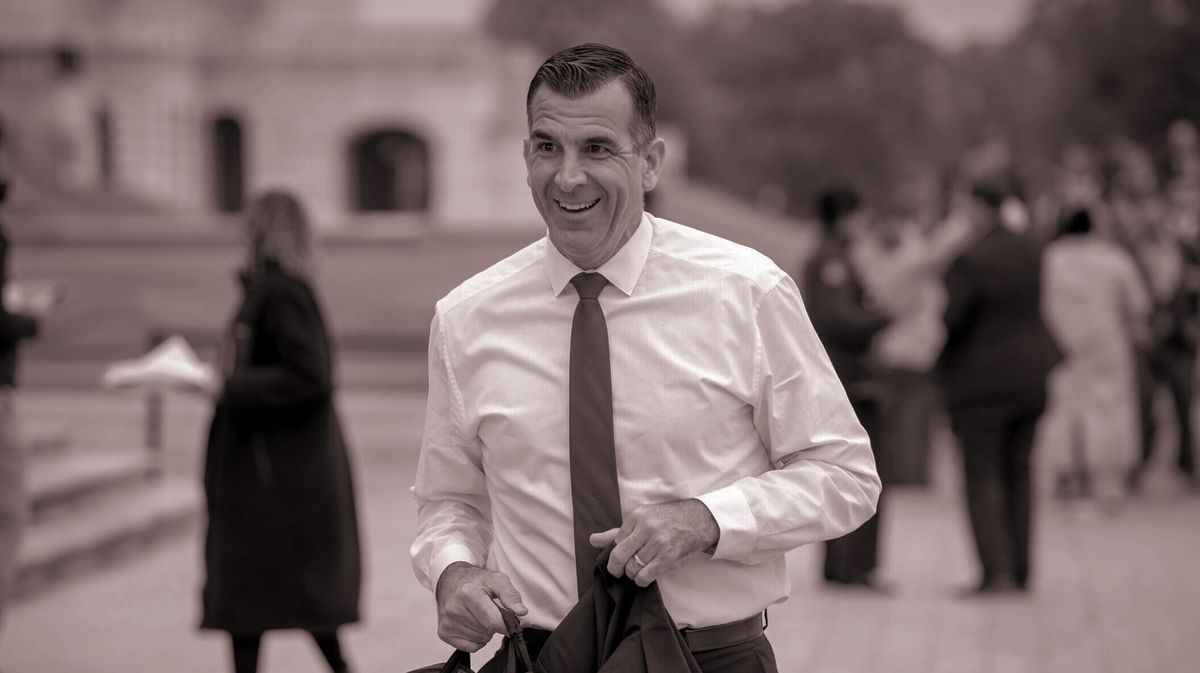
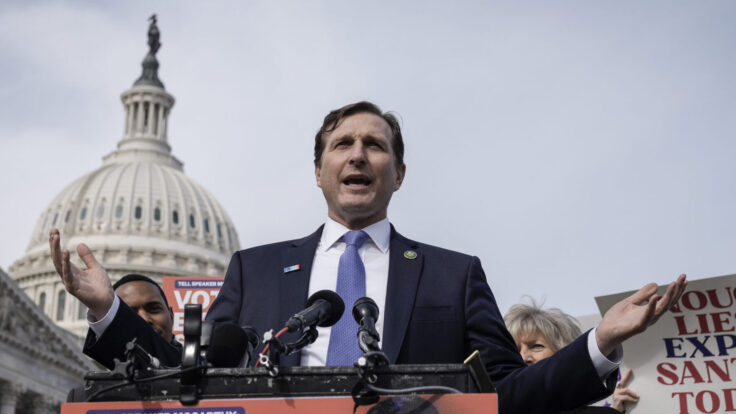
Rep. Sam Liccardo, whose tech mogul district includes Palo Alto and Atherton, believes
Democrats should embrace A.I.—within reason. Between the White House’s tech right bromance and Congress’s comical tech illiteracy, is there space for the party to address the anxiety and opportunity of the platform shift before the world moves on without them? |
|
|
|
In many ways, Trump’s second inauguration created the perfect visual for Democrats both
worried about A.I. and cognizant that the technological earthquake could become a potent wedge issue in 2028. After all, Trump had packed the front rows of his indoor coronation with Silicon Valley oligarchs and billionaires—Sam Altman, Jeff Bezos, Mark Zuckerberg, Sundar Pichai—who had thrown money at him and enjoyed lowered regulations in return. |
|
|
|
For many families, navigating appointments, providers and costs can feel confusing and
unpredictable. UnitedHealth Group is working to make health care both easier to navigate and more affordable. By using the company’s digital tools, parents can find nearby providers and view expected costs before ever scheduling care. Having this clear information in one place empowers them to make confident decisions and often save hundreds of dollars each year. Learn more. |
|
|
|
Broadly speaking, these centibillionaires have spent the past year hammering a nationalistic argument for the
unfettered acceleration of artificial intelligence: The race for A.I. dominance is going to dictate geopolitical hegemony in the 21st century. Therefore, U.S. corporations from Nvidia to Amazon to OpenAI needed the fulsome support of the federal government or else we’ll all face a world in which—and I’m exaggerating for emphasis here, but only slightly—our grandkids will be looking up the Mandarin word for “democracy.”
Is this really true? It’s almost religious dogma in some quarters, but
most citizens have been unpersuaded that this debate involves world-historical stakes. Polls consistently show that most Americans harbor fears about A.I., or at least the specter of what it entails: white-collar job losses, a lawless economy in which large corporations are incentivized to replace humans with robots, where algorithms replace creativity, and their kids are talking to bots instead of making friends. It seemed like an opportunity beckoned to fashion this widespread distaste into a winning political cudgel.
Rep. Sam Liccardo, a freshman House
Democrat representing some of the wealthiest zip codes in Silicon Valley, is pushing his party toward a middle passage. “We need, as Democrats, to acknowledge that the industry is not wrong about the fact that whoever wins the battle to dominate this technology will write the rules for the next century,” Liccardo told me. But he also recognizes that the argument isn’t as simplistic as the industry insists. So he’s been hosting periodic breakfast meetings at the Library of Congress with Silicon
Valley leaders in an attempt to close the information gap between lawmakers and industry. Recently, freshman members sat with Nvidia C.E.O. Jensen Huang, OpenAI’s Sam Altman, and Anthropic’s Dario Amodei. “If we're going to make meaningful progress on A.I. regulation,” Liccardo said, “it’s going to take a coalition of the willing on both sides of the aisle.”
There’s nothing Capitol Hill loves more than committees and commissions to
endlessly study issues and offer recommendations. House Democratic Leader Hakeem Jeffries has created an A.I. task force and recently met with TechNet, a coalition of tech C.E.O.s. At the same time, it’s hard to envision Congress actually creating thoughtful legislation safeguarding A.I. when its own tech aptitude is so derisible. Instead, Liccardo is hoping to create a nimble new entity within a federal agency—composed of academics, industry reps, public safety
advocates, and the like—to set baseline standards around privacy or age verification, for instance. When a tech company meets those national standards, they’d be able to opt out of the emerging patchwork of state regulations that A.I. executives warn will hamper their growth. “I’m trying to find a more productive pathway for approaching regulation that does not have Congress involved in determining the details of model weights and algorithms, because I think most members of Congress would
concede we’re not particularly adept at that,” he said, adding, “We know this technology is moving very quickly. But they would set a preemption standard that would enable companies to demonstrate that they are safe enough to avoid having to deploy an army of lobbyists and lawyers in 50 state capitals.” |
All these debates are unfolding at a time when general A.I. comprehension remains uniformly unsophisticated
and imprecise—calling to mind that old, made-for-SNL segment from the Today show in which the early internet was described as a “nationwide computer billboard.” Many people still associate the tech with early chatbots without fully grasping the tsunami around the corner. (I’m not here to provide that dissertation today. But make sure to
sign up for my partner Ian Krietzberg’s excellent Puck email on the topic, The Hidden Layer, for a sense of where we’re headed.) Anyway, this intellectual chasm has left the door open for both parties to race to define the issue.
On Friday, the White House released its long-awaited legislative
framework for A.I.—a much more comprehensive document than previous efforts, which amounted to little more than tuck-in language preventing state regulation. This new iteration still tries to ensure A.I. standards are set at a national level, while also making a bid for congressional
support by proposing protections for children, consumer safeguards against rising electric bills, education and job training, etcetera. It also suggests “protecting individuals from the unauthorized distribution” of A.I.-generated replicas of themselves—i.e., deepfakes—but urges carveouts for satire and other uses that would presumably protect the president’s own deepfake-heavy social media activity. |
|
|
|
Clearly, the White House also saw the polling on the public’s concerns about A.I. taking their jobs, spiking
their utility bills, and manipulating their kids. But it’s also an acknowledgement that even a Republican trifecta is disinclined to give a free pass to an industry that’s transforming the economy and society. Sen. Marsha Blackburn, a Republican stickler for A.I. protections, especially for children, worked closely with the White House and released complementary legislation this week.
None of it is likely to pass Congress—at least not anytime soon. Even a party mostly
held hostage by the president isn’t sufficiently unified on the issue, let alone able to enlist the bipartisan support they’d need to meet a 60-vote threshold in the Senate. Plus, Congress is exceptionally bad at legislating on technological advances (see also: social media guardrails, net neutrality). It took the startling emergence of ChatGPT three years ago for lawmakers to even conceive of A.I. as something they’d need to grapple with. Yet the legislative branch has remained mostly
paralyzed while Trump has moved to tear down the few roadblocks that exist for A.I. companies. (Though he’s also happy to mete out punishment to those, like Anthropic, that get crosswise with his administration.)
Some Democrats see an opportunity. Gina Raimondo, who was Commerce Secretary under Biden, has been pushing a “grand bargain” in which employers create pathways for jobs in an A.I. economy, and the government is responsible for training and safety
nets. “Companies are about to spend almost $1 trillion laying the infrastructure for an A.I. economy, which is exciting because that allows us to lead, but we also ought to be thinking just as boldly about what infrastructure is required in the age of A.I. to make sure all Americans are brought along,” she told me. “So many of our institutions and policies were just created for a different time and need to be modernized.” This echoes brand-new
polling from Blue Rose Research that finds a majority of voters—57 percent of Harris voters, 53 percent of swing voters, and 51 percent of Trump voters—want the government and tech companies to ensure, and even pay for, good-paying jobs as A.I. advances. (Voters, at least according to this poll, don’t want
direct income support.)
The tech industry, for its part, is prepared to spend tens of millions of dollars on midterm campaigns to ensure friendly faces on the Hill, and conversely, to defeat those it deems obstacles to its agenda. Liccardo sees this as a huge problem—lawmakers are scared to cross an industry that could destroy their careers. “We’ve got one party that is entirely captive to the whims of any industry—cryptocurrency, tech, or any other that is willing to invest tens or
hundreds of millions of dollars into super PACs,” he said. “Democrats have the responsibility to be the adults in the room, to engage meaningfully in the industry.”
Like many Democratic policies, the middle path will likely put a populist wrapper on a technocratic approach. Most Americans remain deeply skeptical of A.I., and while they think it should be regulated, they don’t trust either party to do it effectively.
(Though, despite lacking a coherent message on the issue, Democrats are on equal or better footing than the G.O.P.) “The more sober minds involved in advocating for the hyperscalers understand how deeply unpopular it is to simply steamroll public opinion and gaslight the public about their fears,” Liccardo said.
Rep. Jake Auchincloss, a Massachusetts Democrat, also believes that the party can seize the issue if they get their shit together—especially with younger voters,
who are simultaneously more open to, and more worried about, A.I. “What we have to do is match the optimism and anxiety that is in the youth vote with policies that reflect that it would be a mistake for us to be A.I. catastrophists,” Auchincloss told me in a recent interview. “Oh, there's going to be 100 percent unemployment in five years. You're all going to work for a robot. All you can hope for is that the government will give you a check. That kind of catastrophizing is not
electorally appealing. It’s also not accurate.” |
|
|
|
Join Emmy Award-winning journalist Peter Hamby, along with the team of expert journalists at Puck, as they let you in on the
conversations insiders are having across the four corners of power in America: Wall Street, Washington, Silicon Valley, and Hollywood. Presented in partnership with Audacy, new episodes publish daily, Monday through Friday. |
|
|
|
Unique and privileged insight into the private conversations taking place inside boardrooms and corner offices up and down Wall
Street, relayed by best-selling author, journalist, and former M&A senior banker William D. Cohan. |
|
|
|
Need help? Review our
FAQ page or contact us for assistance. For brand partnerships, email ads@puck.news.
You received this email because you signed up to receive emails from Puck, or as part of your Puck account associated with {{customer.email}}. To stop receiving this newsletter and/or manage all your email preferences, click here.
|
Puck is published by Heat Media LLC. 107 Greenwich St., New York, NY 10006 |
|
|
|
|