{{ 'now' | timezone: 'America/New_York' | date: '%b %d, %Y' }}
|
|
|
Hi, and welcome back to Line Sheet. I’m going out tonight so I’ll have to binge Season 2 of Nobody Wants
This on Friday (before I inevitably fall asleep at 8:30 p.m.). Congrats to Line Sheet stars Erin and Sara Foster, and my friend Hannah Fidell, who directed the first two episodes.
It’s deal season, and I’ve got details on what’s about to go down at Marc Jacobs,
which LVMH is selling off to the highest bidder. There are also some tidbits on the Prada Group’s acquisition of Versace, what’s happening with Armani, earnings news, P.R. musical chairs, and the story of a new talent agency.
Programming note: Tomorrow on Fashion People, my guest is supermodel, actress, famous podcaster, and YSE Beauty founder Molly Sims. We chat about everything from her early experiences modeling to building a career in Hollywood, and
plenty more. It’s fun. The Times’s Jacob Gallagher also joins me to discuss Grace Wales Bonner’s appointment as creative director of menswear at Hermès. Listen here and here.
Mentioned in this
issue: LVMH, Peter Utz, Maggie Jenks Daly, Thierry Conrad, AeLi Park, Stephen Galloway, Kering, Luca de Meo, Bernard Arnault, Marc Jacobs, Jamie Salter, Authentic Brands Group, Morris Goldfarb, John Galliano, Gena Smith, and many, many more…
|
|
|
A MESSAGE FROM OUR SPONSOR
|
With new tariffs, shifting trade routes, and rising costs, resilience is the new growth strategy.
Swap’s Resilient Commerce
Report reveals how leading brands are strengthening global operations through agentic planning, smarter returns, and adaptive pricing — turning volatility into opportunity.
Inside, you’ll learn:
🌍 How tariff changes are reshaping supply chains
📦 Why returns strategy = margin strategy
🧠 Where AI is driving peak-season readiness
💡 What resilient leaders are doing differently
👉
Download the full report
|
|
|
Three Things You Should Know…
|
- A
new game of musical chairs: Now that the creative director switcheroos are mostly done, we’re seeing the second-order changes in marketing, P.R., styling, V.I.P., etcetera. Just a few weeks ago, Hedi Slimane acolyte Peter Utz left Celine to lead V.I.P. at Dior, reporting directly to Jonathan Anderson. Maggie Jenks Daly, Louis Vuitton’s V.I.P. whisperer, recently resigned. Today, it was also revealed that beloved P.R.
Thierry Conrad had left Bottega Veneta for Loewe, where he’s replacing (also beloved) Carmine Spena as global communications director. I was hoping Thierry was taking Marisa Pucci’s job at Dior in New York. But alas, I guess Paris and Jack and Lazaro are too much of a draw. Anyway, there will be more to come: Balenciaga still hasn’t named a C.M.O.; does Chloé have a C.M.O.?; Thierry will need to be replaced at
Bottega; etcetera.
- Call my (creative movement) agent: Everything and everyone is pivoting to video, which means that the way people move—on red carpets, in advertising campaigns—needs to be refined. And not everyone is comfortable in their bodies. Enter talent agent AeLi Park and American dancer Stephen Galloway, also known for his work in the fashion world as a creative movement director—advising models and
actors how to move on set, during live performances, etcetera. They’ve launched a boutique talent and advisory agency called The Movement Kreative, representing dancers including Jacob Larsen, Matthew Rich, Charissa Kroeger, Wim Vanlessen, and others. (Galloway will continue to do this sort of work himself, as well.)Anyway, I’m certain we’re going to see more of these highly specialized micro-agencies emerge as
A.I. and influencer marketing put downward pressure on rates for typical modeling and acting work. More immediately, I also see a world in which generally awkward wealthy people hire agencies like The Movement Kreative to help them move through the world with more ease.
- The most wonderful time of the year?: This earnings season has been generally positive, with LVMH offering the
first glimmer of hope last week that all was not lost in China. Then, on Tuesday, Kering beat (pretty low) expectations, causing the stock to pop 9 percent. (It certainly helps that Luca de Meo is making substantive changes to the
business structure already.) Yesterday, Hermès reported a “very slight” improvement in China, in line with expectations. Zegna Group—whose fast-growing brand Thom Browne is uniquely exposed in the region—reported a big bump in its D.T.C. business, where there are high hopes for the Zegna brand, but also Browne and Tom Ford. Prada Group, whose acquisition of Versace will close within the next 15 days—they hope—reported that year-over-year Q3 sales were up 8 percent overall. The Prada brand itself beat expectations, down just 1 percent in
the third quarter from last year, while Miu Miu climbed another 29 percent. (Miu Miu sales had already doubled in Q3 2024 from the year before, so that’s pretty remarkable.)Analysts, investors, and executives alike are all cautiously optimistic that we’ve entered a new phase of growth after such a wild and ultimately disturbing period. I hope that’s true, and that Chinese consumers like the new Dior clothes. But the United States, which has been an important growth market for
the best luxury brands over the past five years, is almost definitely about to enter a recession. (UBS analysts put the likelihood at 93 percent.) As one industry insider said to me the other day, “We have entered a strange inflection point, not a crash, but a kind of psychological recession that precedes a financial one.” So while it feels good to feel good, we are not out of the woods yet. How people spend money is changing in fundamental, possibly permanent ways, and the industry needs to
adapt.
|
|
|
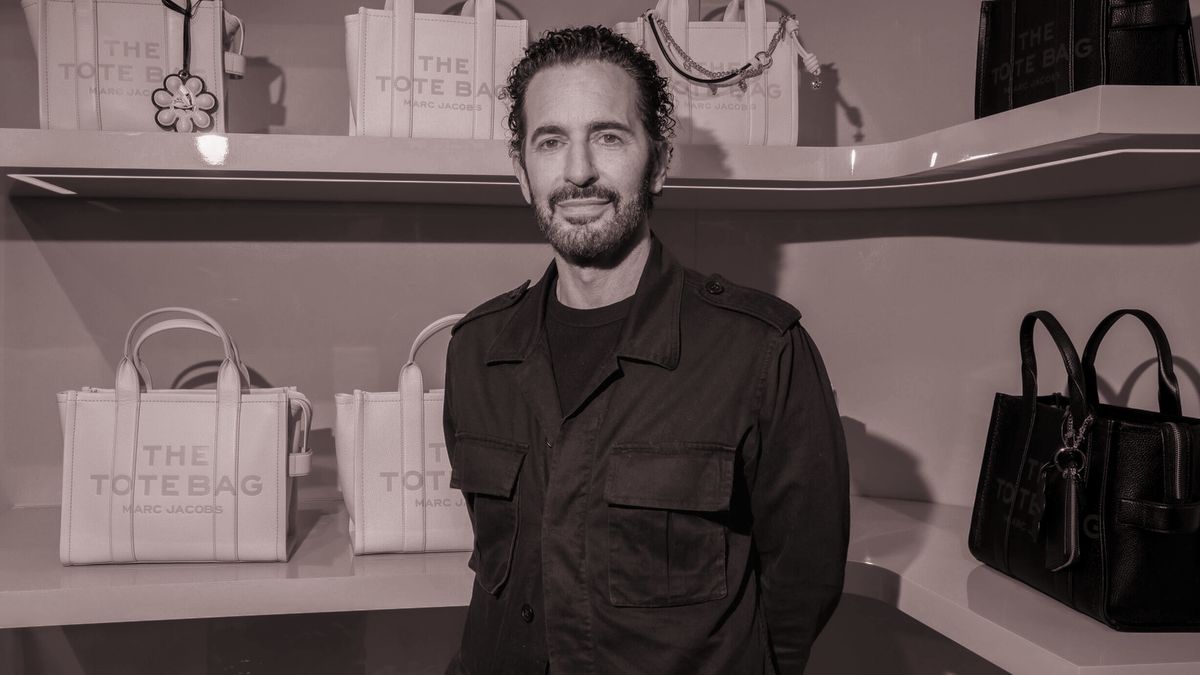
After not knowing what to do with Marc Jacobs, LVMH is finally unloading the brand. The
likely winner? Jamie Salter’s ABG, a license-first asset flipper that recently took to acquiring real businesses.
|
|
|
LVMH’s M&A activity, real and imagined, has been all over the news this week—via the revelation that the
80-brand conglomerate planned to offload its stake in Fenty Beauty, Rihanna’s groundbreaking makeup line, and reports in the French press about the Arnault family’s mixed feelings regarding potentially acquiring a stake in Armani. All of this makes sense, of course. As Rachel Strugatz noted
yesterday, Fenty revenue has crested, and Kendo, LVMH’s beauty incubator, has all but been dismantled. Regarding Armani, I’m told that the reports of family infighting have been overblown: LVMH has a fiduciary responsibility to look into any potential acquisition, but the odds that the group will acquire the Armani stake are minimal.
Armani has a lot of potential, but I don’t think it’s right for LVMH. (If they were going to acquire that type of operation, Ralph Lauren is a better fit.)
Instead, I’m told that L’Oréal, one of the other preferred buyers reportedly acknowledged in Giorgio Armani’s trust and estate documentation, seems to be a more likely acquirer of the minority stake. In his later years, Armani, the man, said to at least some people that he viewed L’Oréal and its Bettencourt family as the most likely partner. L’Oréal holds Armani’s beauty license, and the company’s interest in fashion is growing. Regardless, the Armani board has
18 months to decide, and any acquisition will come down to economics.
|
|
|
A MESSAGE FROM OUR SPONSOR
|
The rise of agentic AI is transforming how people discover, decide, and buy — and most brands aren’t ready for what’s
next.
Swap’s latest report breaks down how AI agents will reshape product visibility, payments, and consumer trust across the entire shopping journey.
Inside, you’ll learn:
🤖 What agentic AI actually means for commerce
🔍 How to optimize for GEO (Generative Engine Optimization)
💳 Why payments are going agent-native
📈 10 reasons to act now
👉
Download the full
report
|
|
|
But LVMH’s sale of Marc Jacobs, a brand they never knew quite what to do with, is going to
materialize. The buyer, I’m told by multiple sources familiar with the deal, is Jamie Salter’s Authentic Brands Group. Yes, as with any deal negotiation, things can always fall through, and a sale could take months to materialize. But right now, it’s ABG.
LVMH wanted a $1 billion valuation for the business, and I assume it received something in the ballpark given that the company generates well over $500 million a year. And there were multiple bidders, likely including
WHP, which owns Isaac Mizrahi (a Jacobs contemporary), Rag & Bone, Joe’s Jeans, and others. ABG is already on the hunt for an executive to manage the brand, and there could be an announcement any day now. A rep for ABG said that the company had no comment at this time. Reps for LVMH and Marc Jacobs did not respond to a request for comment.
|
The acquisition of Marc Jacobs could be transformational for ABG, given the fragrance partnership
with Coty in particular. For the most part, Salter has acquired bankrupt or underperforming, dilapidated businesses and extracted value from them in manners both opportunistic and unsentimental. The Barneys New York apartments in Tulum are a useful recent example of ABG trying to monetize the long tail of brand I.P.
Anyway, it’s all worked well enough for Salter: ABG has raised a truly remarkable amount of money—more than $14 billion by some accounts. At the beginning of 2025, there were
reports that BlackRock planned to sell its $3 billion stake, which valued the company at $20 billion. ABG says it generates $38 billion in retail sales globally. That’s not actual revenue, but the value of the product shipped to stores. It’s still impressive for a company built on Brooks Brothers and Billabong, among others.
With the recent acquisition of a majority stake in Guess, however, Salter has turned his attention to businesses that are fully operational, not simple
licensing plays. It’s inevitable that ABG will partner with an operator on Marc Jacobs, since Salter doesn’t make things. It’s likely to be a manufacturer like G-III, which already owns former LVMH-backed brand Donna Karan International. After all, G-III is the most obvious choice: They lost their deal with Calvin Klein, and owner Morris Goldfarb needs a win. Marc Jacobs is also underpenetrated at mass retail and could ramp up fast.
|
|
|
Of course, there are people involved who wish Bluestar Alliance had won the bid. Bluestar, which
acquired Off-White from LVMH last year, is discreet, and Off-White has ostensibly continued operating as it had been preacquisition. The difference, of course, is that Off-White was already part of a brand-management firm—New Guards Group, which masked itself as a brand accelerator—before entering the Bluestar portfolio. Marc
Jacobs will have to be dislodged from the LVMH machine and plugged into a very different type of business, one that tends to outsource operations.
|
But this could all work out well for Jacobs, who remains a deeply creative person
with more to give to the world. If he stays, which I believe he plans to do, the project could be very lucrative for him. It could also make him available for different creative director gigs outside the LVMH universe. He is, after all, an incredibly valuable entity: Louis Vuitton’s announcement yesterday of yet another Takashi Murakami collaboration is a reminder of his living legacy. The megabrand wouldn’t have Murakami if it weren’t for Jacobs in the first
place.
It’ll be interesting to see how Salter handles the runway element of the business, or whether he can even get behind investing in such a thing. It will require whoever is tasked with running the business to have the confidence to shake things up, and that’s hardly a given. I want to be positive about this for Jacobs’ sake, and the sake of his team, who should be given the opportunity to move in the right direction. Hopefully, they’ll get their chance. A friend reminded me yesterday
that not everyone does. John Galliano—the other designer who played an integral role in the building of Bernard Arnault’s empire—was desperate to buy his brand back from LVMH years ago, and they said no.
|
What I’m Reading… and
Listening To…
|
Gena Smith, longtime head of global executive and creative recruitment at LVMH, is now the
chief human resources officer at J.Crew. (I reported that she was headed there a few weeks ago, and now she has landed.) Big for J.Crew! [Inbox]
Luca de Meo strikes again: McQueen has commenced a “strategic review” of the business, which will result in layoffs at the headquarters in London.
[ WWD]
Get to know Emily Dawn Long, maker of the only dress I bought this year. [ New York Times]
I believe these podcasters have discovered the origin of
the Victoria Beckham grey t-shirt. [ Jam Session]
“You have to do something on the Louvre heist content. It’s too good.” [ Instagram]
|
Until tomorrow,
Lauren
P.S.: We use affiliate links because we are a business. We may make
a couple bucks off them.
|
|
|
Puck’s daily art market email, anchored by industry expert Marion Maneker, offers unparalleled access to the mega-auctions and galleries,
elite buyers and sellers, and the power players who run this opaque world. Wall Power also features Julie Brener Davich, a veteran of Christie’s and Sotheby’s, who provides unique insights into how the business really works.
|
|
|
Puck founding partner Matt Belloni takes you inside the business of Hollywood, using exclusive reporting and insight to explain the
backstories on everything from Marvel movies to the streaming wars.
|
|
|
Need help? Review our FAQ page or contact us for assistance. For brand partnerships, email ads@puck.news.
You received this email because you signed up to receive emails from Puck, or as part of your Puck account associated with {{customer.email}}. To stop receiving this newsletter and/or manage all your email preferences, click here.
|
Puck is published by Heat Media LLC. 107 Greenwich St, New York, NY 10006
|
|
|
|