Welcome back to Dry Powder. I’m Bill Cohan.
Wall Street has always had a
love-hate relationship with Donald Trump. For every Bill Ackman in the president’s thrall, there’s a healthy contingent who regard his occupation of the White House, and many of his economic policies, with barely concealed horror. (To wit: I’d call your attention to my partner John Heilemann’s recent conversation with my friend
Robert Wolf, the former C.E.O. of UBS Americas.) So when I learned over the weekend that Trump had ordered military strikes on Iranian nuclear facilities, I decided to convene an unofficial Wall Street executive roundtable. Their reactions, below the fold.
By the way, Puck is getting into the business of artificial intelligence with The Hidden Layer, a new,
twice-weekly newsletter from Ian Krietzberg, one of the industry’s most respected reporters. Ian’s email officially debuts on July 7 (sign up early here), but until then, we’ll be sharing his insights across Puck. Below, Ian gets behind the wheel, so to speak, of Elon’s new Robotaxis, and explains why autonomous ridesharing is still a long
putt.
Programming note: I will be off on a flight of July Fourth fancy this coming Sunday and the following Wednesday. I will return to your inboxes with the next installment of Dry Powder on July 6. Happy 249th birthday, America! And just remember, it’s a republic if you can keep it.
But first, here’s Ian…
|
|
|

|
Ian Krietzberg
|
|
- Elon’s Robotaxi rollout:
After letting loose a handful of self-driving Model Ys on the streets of Austin, it looks like Elon Musk finally, sort of, made good on his Tesla Robotaxi promise. And yet, even by the standards of existing autonomous vehicles, the launch was… cautious. The service is operating in a small, “geofenced” area of the city. Moreover, Tesla provides human safety operators inside the car (in addition to remote operators), and promises they’ll avoid operating
in inclement weather and at challenging intersections. The service hasn’t been rolled out to the general public, either: The Robotaxi videos circulating on Reddit, YouTube, and Twitter were all posted by a group of content creators and social media influencers hand-selected to soft-launch the product.
Like anything Elon does, however, the launch was attention-grabbing. It also illuminated the remarkable potential of self-driving vehicles, the challenges plaguing them, and the
difficulty in building a profitable business around them. Indeed, while some have predicted that the market for robotaxis will eventually exceed a trillion dollars, other forecasts have been slightly more grounded. A recent Goldman Sachs forecast posited that, assuming there are a few million robotaxis on the road by 2030, the market might
be worth $25 billion. (It’s also unclear whether robotaxis will actually improve margins for ride-hailing companies. Those vehicles can cost $200,000 or more a pop.)
But the technology is impressive. Elon’s Robotaxis (yes, it’s a proper noun for Tesla) are equipped with a modified version of the same software available to any Tesla driver:
F.S.D., or full-self driving, which relies on a bunch of cameras and neural networks (the A.I. technology that makes ChatGPT possible) to navigate roadways and, one hopes, avoid potential hazards. While most F.S.D.-equipped cars still require drivers to monitor the road, F.S.D. Robotaxis don’t require supervision from inside the vehicle—or at least, that’s the goal. The A.I. technology, however, is still
prone to “hallucinations,” which, according to Missy Cummings, the director of George Mason University’s Autonomy and Robotics Center, “doesn’t mean we can’t use them. It just means that we have to up our game in terms of risk
management.”
Tesla’s competitors—mainly Google-owned Waymo—are taking a more expensive approach to risk management, incorporating a suite of sensors, radar, LiDAR, and additional cameras and neural networks into their cars. Waymo, in particular, has a major head start on Tesla: In San Francisco, where its self-driving service has been operating for nearly two years, Waymo now controls more than a quarter of the rideshare market. But both Tesla and Waymo face significant hurdles winning
over regulators and customers, alike. It doesn’t help that NHTSA, the U.S.’s automotive regulator, has been in touch with Tesla regarding traffic
incidents related to hallucinations that have already engulfed its fledgling robo fleet. [Sign up for The Hidden Layer here.]
|
|
|
Plus, in case you don’t already read What I’m Hearing, my partner Eriq Gardner has a few updates on the
Paramount deal…
|
|
|

|
Eriq Gardner
|
|
- Is Shari cooked?:
Recently on The Town podcast, Matt Belloni and Bloomberg’s Lucas Shaw played the overcovered/undercovered game, assessing the Hollywood storylines that have received too much or too little coverage so far this year. Let’s keep it going
from the legal angle. Here’s excerpts from my list that might pique the interest of more than a few Dry Powder readers…
—Overcovered: The theory that Shari Redstone could face bribery charges when—ok, if—CBS pays to settle Trump’s lawsuit to grease the Skydance-Paramount
merger. I first raised the bribery charge possibility months ago, and the chatter has only grown louder, especially with Sens. Elizabeth Warren and Bernie Sanders piling on. Still, I’d be stunned if any settlement triggered criminal charges. There’s just too much fog.
—Undercovered: The idea that Redstone’s windfall could be targeted through civil forfeiture. Do I think authorities will seize the billions of
dollars put in her bank account from the deal? No. But it’s not a tinfoil-hat scenario, either. An ambitious state A.G.—or, say, a future Alexandria Ocasio-Cortez administration—could pursue forfeiture of assets derived from an allegedly corrupt act. And civil forfeiture doesn’t require a conviction. At the very least, this deserves to be part of the conversation.
|
|
|
In an informal survey of the lords of high finance, executives praised Trump’s strike on
Iran, admitted to getting a little verklempt over Israel, and said they won’t worry about the market until there are American boots on the ground. It’s the New York mayor’s race that keeps them up at night.
|
|
|
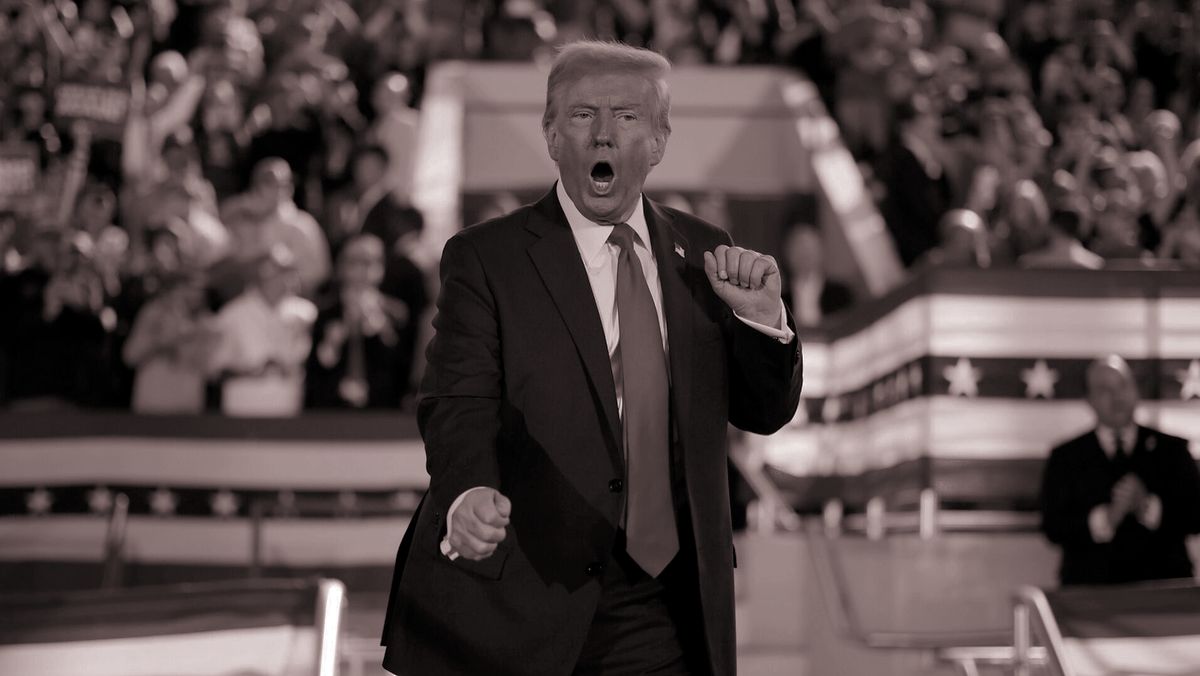
It’s still early, of course, and things could still escalate, but Trump’s decision to bomb
Iran seems to be a big hit on Wall Street. Not only did the major U.S. stock indices rally on Monday and Tuesday, but so did the bond markets, the dollar, and, go figure, Bitcoin. Also surprising: The price of oil declined significantly, too. (There was some giveback today, as markets grappled with the competing narratives about the strike and its degree of success.)
In fact, it’s hard to find much dissent on Wall Street over “Operation Midnight Hammer.” While a
leaked U.S. intelligence report has cast doubt on Trump’s initial claim that Iran’s nuclear facilities had been “obliterated” by American bunker-busting bombs, the president’s decision to act won praise. “It’s pretty much universally applauded,” one Wall Street veteran told me, noting that the best Democrats in Congress could do was complain that Trump took
military action without consulting them—like every other president in recent history. “The world is a better place with the Iranian nuclear program set back, as much as one can set it back,” he said.
Nobody likes the uncertainty of what comes next, the Wall Street bigwig continued—“anything that remotely has the whiff of boots on the ground would obviously be met with violent resistance from all quarters.” And he expressed some concern that having tasted the political spoils of war,
Trump—the self-proclaimed “peace president”—might decide that he likes dropping bombs. “But B-2s knocking out reactors and centrifuges? I think people are fine with that.”
Even before the still-shaky ceasefire was announced—for which Trump took full credit, of course—Wall Street seemed sanguine about Iran’s threat to close the Strait of Hormuz, through which one-fifth of the world’s oil passes. While oil prices initially spiked upon the news of the American military strike, they
quickly settled back down on Monday after Iran declined to take any action to disrupt traffic through the strait. Instead, the Iranian regime took the largely symbolic action of firing missiles at a U.S. military base in Qatar, but only after sending an evacuation notice first. The attack, as planned, was easily intercepted, setting the stage for deescalation.
In fact, everyone on Wall Street I spoke with over the last two days dismissed the idea that Iran would take further action to
close the Strait of Hormuz, or mount much of a response beyond what was foreshadowed in their choreographed attack on the U.S. military base. “Most people agree—among the nuclear powers, anyway—China and us are completely aligned in keeping the Strait of Hormuz open,” said another executive. “Russia would like oil to go to $250 a barrel, but that’s not going to happen. As long as we don’t send in ground troops, or a massive force into the Middle East, where China has to react, as long as it’s
B-2s from Missouri, and some cruise missiles from submarines, I don’t think there’s much to worry about.”
Indeed, as a third executive told me, Wall Street is clearly less concerned with war in the Middle East than with local politics. “More people are focused on the New York mayor’s race,” the executive said, referring to the decisive victory of State Assemblyman Zohran Mamdani—a self-described democratic socialist—over former governor Andrew Cuomo in
yesterday’s Democratic mayoral primary. Mamdani, who will almost certainly become New York’s next mayor in the general election this fall, has proposed raising taxes on millionaires, free childcare, free buses, and a government-run grocery store in each of the five boroughs. (“It’s officially hot commie summer,” tweeted Dan Loeb, the hedge fund manager, after Zohran’s win.)
Yet another fretful Wall Streeter wrote to me, “If you struggled with what might trigger a fiscal
crisis like ’75, struggle no more. Mamdani (with the negligent acquiescence of Albany) will drive the tax base out of NYC by taxing the rich and upper middle class to Florida, and degrading real estate values with more rent control. Deficits will balloon with spending schemes. Ratings agencies will downgrade NYC. Municipal bond markets will rebel. D.C. will punish the city with revenue cuts. Tighten your chinstrap.”
|
I was eager to ask my informal Wall Street roundtable if they viewed the Israeli/American action against Iran
as deserved retribution for the 444-day hostage crisis in the waning days of Jimmy Carter’s presidency—a humiliating event that is well remembered by those of a certain age. “The fact of the matter is that this has been going on since 1979,” one of the Wall Street executives said, agreeing that some sort of retaliation was long overdue. He reminded me that, in 1994, Bill Clinton could have taken out the nuclear weapons capabilities of North Korea. “He talked
about it with his team, debated it seriously, and stood down,” he said. “I can argue that it would be a different world today if North Korea had been taken out at that point. I do think from here, if things escalate in any way, the market will show that, and you’ll see much higher concern than I’m expressing to you now.”
Another member of my Wall Street focus group agreed it was time for a little payback. “Anybody old enough to remember the hostage crisis,” he said, “is secretly, or not
so secretly, saying, ‘It’s about time.’” He said he believes that the Shah of Iran, Mohammad Pahlavi, whom the U.S. installed as leader in 1953, and whose overthrow paved the way for the Iranian Revolution, would have been a marginally better choice for the Iranian people than the government that has made them “suffer” for the last 45 years. “Obviously, you can’t put the toothpaste back in the tube in terms of containing Shia fundamentalist madness,” the executive said. “That’s
got to sort of burn itself out. I’m not an optimist, and saying, ‘Oh, this is it! The Iranian people will rise up and overthrow the government.’ I don't know. The only other organized center of power is the Revolutionary Guard, which might be an improvement over the mullahs, but clearly not making common cause with the ACLU anytime soon.”
Of course, one of the factors underlying Wall Street’s sanguine response, one of the executives observed, is that so many in the industry support
Israel. “So, you’ve got an emotional connection to the State of Israel, and to the security of the State of Israel,” he said. “I think that probably trumps just about everything for a lot of these guys.” Perhaps that’s why, the executive posited, Wall Street leaders have largely shrugged off the potential economic consequences of the bombing. “The emotional piece of it is significant,” he explained. “Most of them are quietly applauding the idea that Israel took unilateral action, and that Trump
jumped in, too, even though some of these guys don’t like Trump.” He predicted that while other Gulf nations will publicly condemn the unilateral actions of the Israelis and the Americans, privately, they couldn’t be happier. “I haven’t heard anyone say to me, ‘Oh my God, what a mistake!’”
While the caverns of Wall Street are about to empty out for a prolonged July Fourth weekend, we all know that the domestic and international news cycle under Trump 2.0 never rests. At the moment, even
though the damage to Iran’s long-term nuclear weapon program isn’t clear (the administration says it will finally brief the House on Friday), and even though Trump’s proclamation of a ceasefire was probably premature—shades of George W. Bush’s “Mission Accomplished,” sans the aircraft carrier—the consensus on Wall Street seems to be that the strike was a success, with some potential caveats. Although Wall Street would probably have said the very same thing during the early days
of the wars in Iraq and Afghanistan, and we all know how that turned out.
|
|
|
Join Puck’s chief political columnist, John Heilemann, as he roams the corridors of power and influence in America on this
twice-weekly interview show, taking you beyond the headlines with the people who shape our culture: icons and up-and-comers, incumbents and insurgents, moguls and machers in the overlapping worlds of politics, entertainment, tech, business, sports, media, and beyond. The conversations are rich and revealing, unrehearsed and unexpected… and reliably impolitic. A Puck-Audacy joint, new episodes drop every Wednesday and Friday.
|
|
|
Puck’s daily political newsletter from Washington on what’s really happening in this town, from the White House to the Pentagon
to Capitol Hill, K Street, and the campaign trail.
|
|
|
Need help? Review our FAQ page or contact us for assistance. For brand partnerships, email ads@puck.news.
You received this email because you signed up to receive emails from Puck, or as part of your Puck account associated with . To stop receiving this newsletter and/or manage all your email preferences, click here.
|
Puck is published by Heat Media LLC. 107 Greenwich St, New York, NY 10006
|
|
|
|