Hello and welcome back to The Best & The Brightest. I’m Leigh Ann
Caldwell.
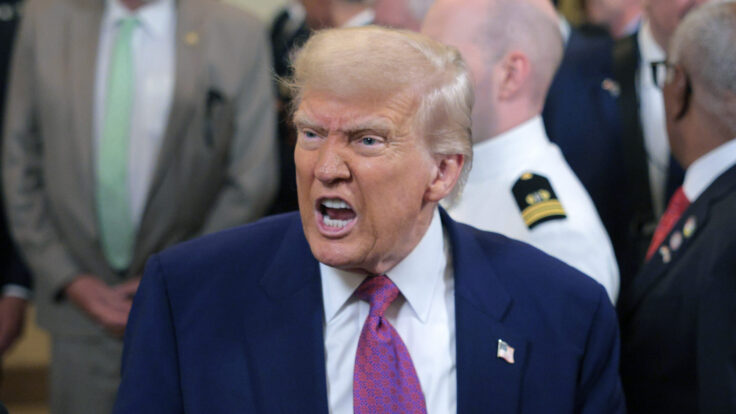
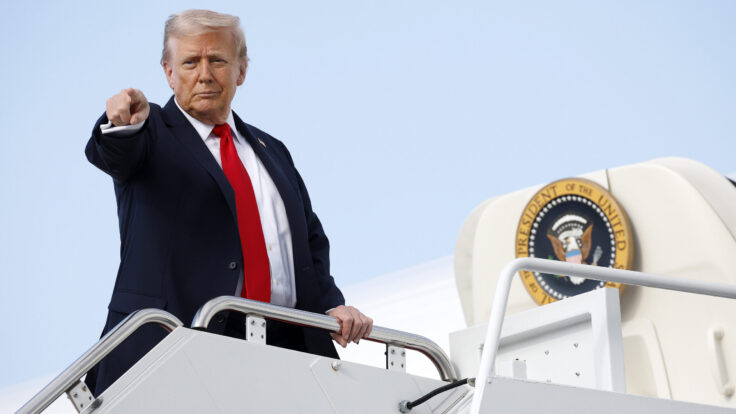
Welcome back to the real world! It’s a very busy time: We’re at the start of a midterm election year, a point in the cycle when politics ramps up and legislating gets abandoned. President Trump, meanwhile, has renditioned the president of Venezuela to Brooklyn, giving Washington and the wider world a fresh scandal to debate. I’ll get to the latest news on Nicolás Maduro’s arrest, the congressional response, and more below.
House Republicans will gather at the Kennedy Center on Tuesday to talk about the year ahead, three Republican sources tell me. Trump is expected to attend and Venezuela will likely be a topic. Plus, I drill down on the challenges facing the biggest names on the Hill and offer a preview of the most important storylines of the year.
Mentioned in this issue: Donald Trump, Nicolás Maduro, Mike Johnson, John Thune,
Hakeem Jeffries, Chuck Schumer, Tim Kaine, Tom Cotton, Rand Paul, Lisa Murkowski, and many more… |
|
|
Glyphosate is backed by regulators worldwide For 50 years, glyphosate-based products have been approved and reapproved by regulators in the U.S., EU, Canada, Japan and more. Bayer stands behind these thousands of findings and legislative language that reinforces science-based processes and keeps labels uniform. At Bayer, we succeed when farmers succeed. Learn more |
|
|
- Will
Congress rein in Trump?: The response to the Trump administration’s middle-of-the-night arrest of Nicolás Maduro has mostly, and predictably, divided along partisan lines. Democrats have almost unanimously called the operation an illegal violation of Congress’s war powers authority. Republicans, at least the ones who have made public statements, have mostly applauded the administration. “It’s a violation of the law,” Senate Democratic leader Chuck Schumer said on
This Week, referring to the Trump administration’s decision not to notify or seek approval from Congress. Democratic Sen. Tim Kaine of Virginia told reporters that he will force a vote on his resolution requiring congressional approval for any further military action. “It’s time for Congress to get its ass off the couch and do what the Constitution mandates we do.”
The vote, which will take place this week, will double as a test of whether Congress continues to
have a say in future military actions. Historically, Republicans have been more comfortable with U.S. aggression in other countries—the invasion of Panama under George H.W. Bush, the invasion of Iraq by his son—and this seems to be another moment of unity between the anti-interventionist right and the traditional hawkish neoconservatives. Regardless of whether they agree with the policy, it’ll be a vote on their authority.
When Kaine forced a similar vote late last year,
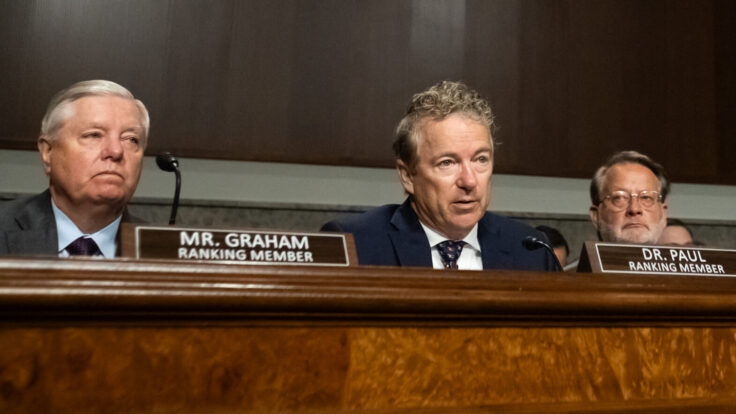
Sens. Rand Paul and Lisa Murkowski were the only Republicans who supported him. At the time, Republicans dismissed the need for war powers authority, arguing that the destruction of alleged drug boats in the Caribbean was not an act of war. Now, Democrats are also charging the administration with lying to Congress. In a classified, all-senator briefing last month, Democratic senators say that Marco Rubio, among other administration
officials, insisted that regime change was not the intended outcome. “Clearly they are not being straight” with Congress or the American people, Schumer told reporters yesterday.
A separate conversation is unfolding in the House, where Democratic leader Hakeem Jeffries asked his members during a Sunday afternoon conference call to come up with an action plan for the situation in Venezuela. According to a member in the meeting, Jeffries discussed the possibility of
Democrats on the House Foreign Affairs Committee holding a shadow hearing. But Jeffries didn’t commit to backing Rep. Ilhan Omar’s war powers resolution, which is being pushed by some Democrats, including those within the Progressive Caucus. (Omar’s resolution differs from Kaine’s, in part, because it calls for the termination of hostilities against any transnational criminal organization designated as a foreign terrorist organization since February 20, 2025.) Instead, the
ranking members will meet with leadership to discuss a war powers resolution “that the whole caucus can support,” according to a second person on the call.
Meanwhile, the White House largely continued its hyperpartisan approach to sharing information with Congress. Administration officials, including Rubio, personally notified top Republican leaders and members of the Intelligence Committees (such as Sen. Susan Collins) shortly after the attack occurred.
But, in a stunning break from protocol and tradition, no Democratic leader has yet been contacted. It was only on Sunday night, according to a source familiar with the situation, that the administration agreed to provide a briefing to the Gang of Eight—to be held on Monday, two days after Schumer and Jeffries first requested information. The top Republican and Democrat on the Senate Armed Services and Foreign Relations Committees will be included, too.
But for all the Republican unity
surrounding the strike itself, there’s little consensus surrounding who should lead the country in Maduro’s absence. Trump has dismissed opposition leader María Corina Machado, who won the Nobel Peace Prize and organized a winning presidential campaign last year, for allegedly not having the “support” or “respect” of her countrymen. And while he and Rubio have suggested that Vice President Delcy Rodríguez should remain in power, under threat of further military
action if she doesn’t comply with Trump administration demands, members of Congress have understandably questioned that strategy—including South Florida Republican Reps. Mario Díaz-Balart, Carlos Giménez, and María Elvira Salazar, who voiced support for Machado. “I don’t think that we can count on Delcy Rodríguez to be friendly to the United States until she proves it,” Sen. Tom Cotton, chair of the Senate Intelligence
Committee, said on CNN’s State of the Union earlier today.
|
|
|
A close look at the challenges, opportunities, and curveballs awaiting the Big Four
congressional leaders in the new year: the M.T.G. mutiny, G.O.P. majority shrinkage, another shutdown, A.C.A. headaches, and Trump. |
|
|
The 119th Congress has been particularly challenging for the leaders of both parties. In March,
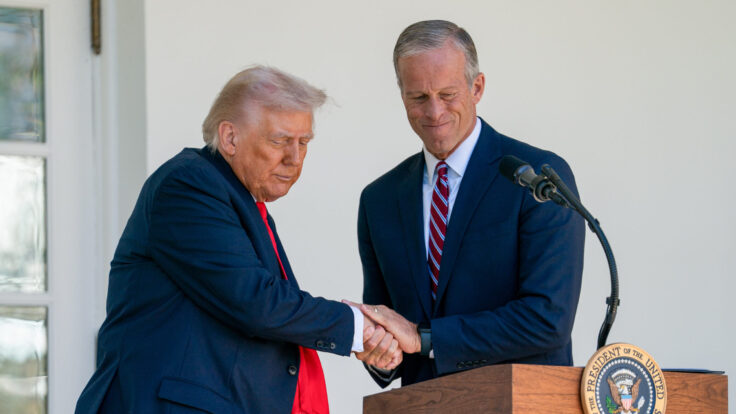
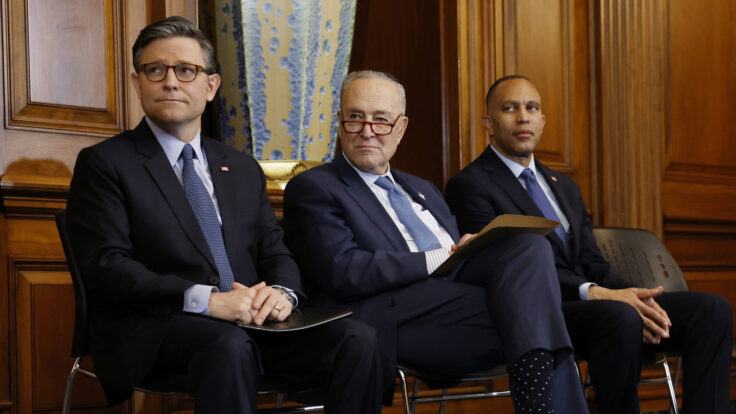
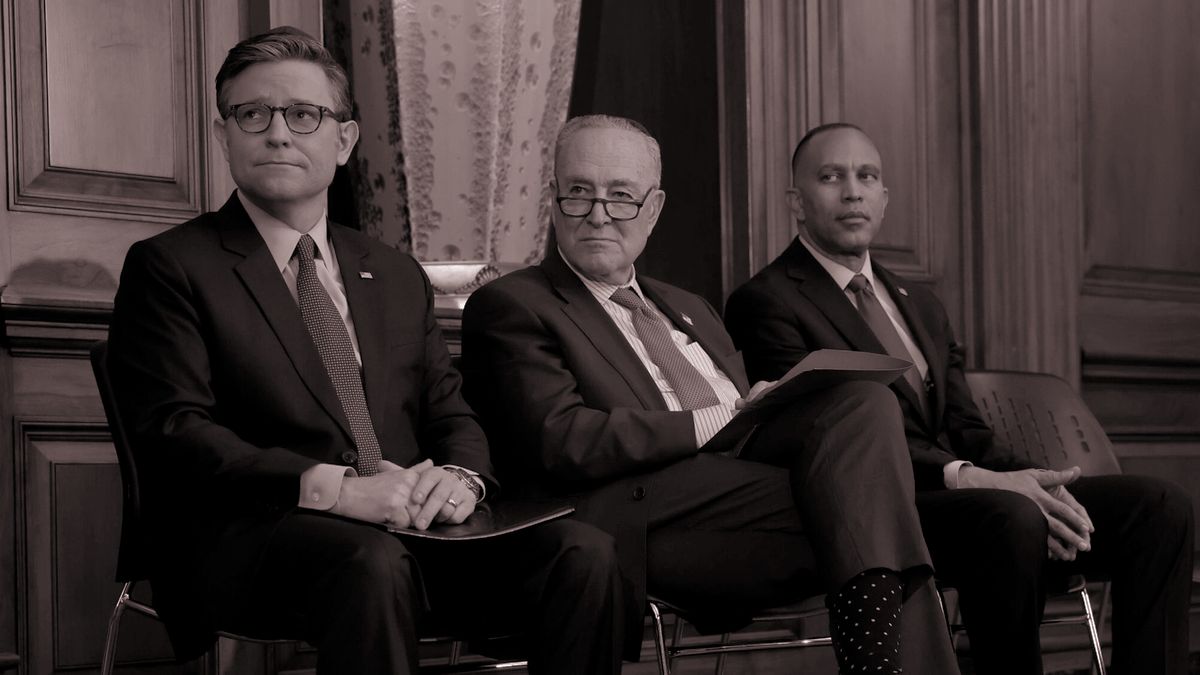
Senate Democratic leader Chuck Schumer’s support plummeted after he failed to articulate an aggressive shutdown plan and kept Trump’s government open. House Speaker Mike Johnson is facing growing turmoil within his conference as members anxiously weigh the prospect of losing their majority—while his own political fate is tied to a president who has said he’s “done” with Congress. Meanwhile, House Democratic leader Hakeem
Jeffries is still trying to prove to his caucus that he can shepherd the party into a new era during his third year on the job. And Senate Majority Leader John Thune, who has deftly navigated a largely deferential Republican conference, is about to face his biggest test yet: maintaining control of his chamber. |
|
|
Giving farmers the tools to succeed What helps farmers? Competition in agriculture and streamlined regulations. Because access to innovative tools means more choices for farmers and stronger food security for Americans. At Bayer, we succeed when farmers succeed. Find out about farming innovation |
|
|
Yet despite their unique challenges, all four leaders’ fates will be tied to the results of this year’s
midterms. Along the way, they’ll have to deal with a mercurial and domineering president; a government funding deadline less than 30 days away; a potential Supreme Court ruling overturning Trump’s tariffs; thorny policy issues concerning A.I. and healthcare; and the fate of a now U.S.-controlled Venezuela—plus whatever other countries Trump decides to occupy. And all this is going down as the public continues to fret about immigration, the economy, and the cost of living. In short, it’s going to
be a defining year for these leaders. Here are some of the pivotal storylines I’ll be watching… |
Johnson is starting the year with a distinct legislative headache. Last month, four centrist members
defied him and signed a Democratic discharge petition to extend Affordable Care Act subsidies. He’s facing a vote on the extension as early as this week, and it’s possible that even more Republicans will sign on—a potentially significant blow to the speaker’s authority. Moreover, the decision to break from leadership could set the tone for a year in which vulnerable members, who have
little to fear from the speaker, might choose to prioritize actions and legislation that help them politically.
Yes, Rep. Marjorie Taylor Greene will officially resign from Congress tomorrow, depriving Johnson of one of his most animated critics. And while few think that Republicans would depose Johnson—on her way out, Greene tried and failed to rally nine members to oust Johnson with a motion to vacate—he still has plenty of haters and
rabblerousers in his chamber. To wit, Rep. Elise Stefanik, a vocal and effective Johnson critic, will be back in Congress after her failed gubernatorial bid. She’ll have plenty of time to cause Johnson headaches—and, given her recent retirement announcement, no reelection campaign to worry about. She’s also earned abundant goodwill among Republican women; she helped elect many of them, and could be an effective organizer—if she decides to finish out her
term.
Alas, Johnson’s razor-thin majority will likely only shrink this year. Following Greene’s resignation, Republicans will have only a two-seat advantage in the House. The January 31 runoff to fill the Democrats’ vacant Houston seat, and an early spring special election to fill New Jersey Governor-elect Mikie Sherrill’s seat, will cut into their margin even more. (Georgia Gov. Brian Kemp will likely call for a special election to
replace Greene in early February.) If Stefanik does call it quits early—or if any other member receives a job offer they can’t refuse—Johnson could temporarily lose his majority. He won’t lose the gavel, but he might have to cede control of the floor.
And yet perhaps the biggest threat to his speakership, and career, is the midterms themselves. If Republicans don’t win back the majority in November, it’s uncertain whether they will even reelect him as minority leader. After all,
in that event, there would be one fewer leadership slot for Republicans, and someone will lose their position—and that includes even the guy in charge. |
This year, Schumer’s main focus is obviously reclaiming Senate seats—but he’ll also have to tame his many
detractors. Some members and liberal groups have questioned whether his backslapping, deal-making style is effective in an era of partisan warfare, when compromising is decidedly off-trend. Schumer will face his next test this month, when funding for much of the government is set to run out again. (Congress passed funding bills for the legislative branch, military construction, and agriculture in November.)
For their part, Democrats tell me there’s little appetite to shut down
the government. On This Week today, Schumer said that there wouldn’t be a shutdown since congressional appropriators are working toward bills to fund the remainder of the government. But how Schumer handles the negotiations will continue to affect his stature within the party. |
|
|
Naturally, many of his critics are younger members, as well as those with presidential ambitions who favor a
much more confrontational and aggressive style of politics. This dispute has spilled into conversations around midterm strategy, with the party divided over the type of candidates to back. Schumer, of course, has repeatedly reminded his members that his “North Star” is to win back the chamber. But a faction of his conference thinks he’s miscalculating, and that his handpicked candidates belong to a bygone generation of establishment politicians. As primaries in key Senate races unfold,
there will be inevitable friction with the progressive wing, which is backing insurgent candidates in Maine, Minnesota, Michigan, and Iowa. |
Jeffries’
Leadership Test
|
This will be a critical year for Jeffries, who showed that he could keep his members mostly unified during
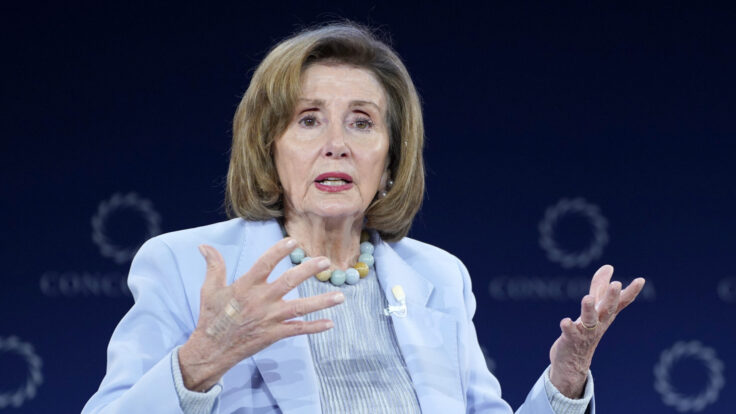
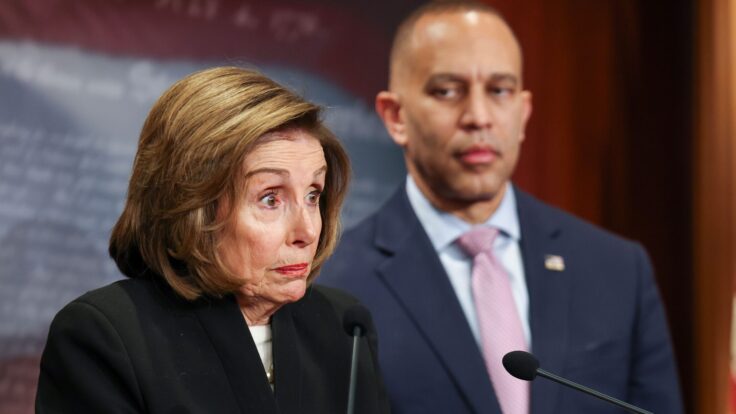
the tumultuous first year of Trump II. But he still has to prove that he can consistently be aggressive, combative, and above all, decisive. He is constantly compared to his mentor, the steely Nancy Pelosi, and her transition out of Congress this year will cement their passing of the torch. The question is whether Jeffries can gain the confidence of members who remain skeptical of his leadership style.
To his credit, the House minority leader
deftly shepherded his party through the government shutdown, made maximalist demands to extend A.C.A. subsidies, and is on the verge of winning a crucial vote on the issue this month—attracting at least four Republicans to his side. But his decision-making process can be slow and deliberative, which irritates some of his members. As Democrats attempt to take the House, his caucus will be watching closely for signs that Jeffries is ready to be speaker, and whether he’ll have to stave off any
dark-horse challenges for the position. |
Of the four leaders, Thune has enjoyed the least tumultuous reign in his first year. Republicans tell me they
appreciate that he takes input from his members—a refreshing change from the years of Mitch McConnell—and informs them of his decisions. This year, his two biggest challenges will be managing his relationship with Trump and proving that he can successfully run the Senate Republicans’ political operation.
When it comes to the president, members appreciate that Thune handles the relationship more deftly than Johnson, who takes a maximally submissive
approach. Senators, for their part, are slightly more protective of their authority than House Republicans. And key issues, such as war powers and tariffs, could pit Republicans against the president. Thune will also have to navigate bipartisan healthcare efforts that don’t reflect Trump’s plan to give Obamacare subsidies “to the people.”
But Thune’s bigger challenge may simply be keeping the Senate. This is the first year in nearly two decades that McConnell hasn’t overseen
Senate Republicans’ political operation. Thune and his team (led by Johnny DeStefano), which works closely with the N.R.S.C. (run by Sen. Tim Scott), are facing a handful of challenging primaries. So far, they’ve been unable to clear the field and keep far-right candidates out of races in North Carolina and Texas. Meanwhile, Georgia, a key pick-up opportunity, is proving nettlesome amid a crowded primary with no clear star
candidate in the race. |
|
|
Join Emmy Award-winning journalist Peter Hamby, along with the team of expert journalists at Puck, as they let you in on the
conversations insiders are having across the four corners of power in America: Wall Street, Washington, Silicon Valley, and Hollywood. Presented in partnership with Audacy, new episodes publish daily, Monday through Friday. |
|
|
Unique and privileged insight into the private conversations taking place inside boardrooms and corner offices up and down Wall
Street, relayed by best-selling author, journalist, and former M&A senior banker William D. Cohan. |
|
|
Need help? Review our
FAQ page or contact us for assistance. For brand partnerships, email ads@puck.news.
You received this email because you signed up to receive emails from Puck, or as part of your Puck account associated with {{customer.email}}. To stop receiving this newsletter and/or manage all your email preferences, click here.
|
Puck is published by Heat Media LLC. 107 Greenwich St., New York, NY 10006 |
|
|
|





_01K77C0D9VDDGVNNP1DBKASPB4.jpg "Bayer")