 |
 |
|
Welcome back to Dry Powder. I’m Bill Cohan, coming to you from the mean streets of Nantucket.
Something strange is happening on Wall Street. Despite a thriving economy, and the fact that the stock and bond markets are rallying, for some reason, deal volume is down 30 percent from last year, and the I.P.O. market is decidedly lackluster. In today’s issue, I chat with a top banker to get some answers…
|
|
A MESSAGE FROM OUR SPONSOR
|
 |
| Discover the core of innovation with Panerai's Submersible QuarantaQuattro Luna Rossa Ti-Ceramitech™. Lighter than steel, yet tougher than ceramic. |
|
|
|
But first…
- The Lionsgate lawsuit: Back in May, I wrote about the “creditor-on-creditor” violence occurring at Lionsgate, which had spun out its studio business into a SPAC, leaving its underperforming Starz business behind. As a result, Lionsgate benefited some of its bondholders by moving them to the new, valuable Lionsgate Studio credit, while a bunch of other bondholders got stuck down at the Starz level, invested in a company stripped of its most valuable asset. (Starz had segment profit of $218 million in the 2022 fiscal year, down from $320 million the year before, and $468 million in 2018.) The bondholders who were relegated to the Starz level were not consulted about the move and, needless to say, were not happy about it.
In particular, the brewing controversy involved the holders of a $715 million tranche of Lionsgate’s publicly traded 5.5 percent senior debt, issued in 2021 and due 2029. On May 2, Lionsgate announced that $383 million of the tranche, or 53.5 percent, would be exchanged for new notes, paying interest at 6 percent per year with their maturity extended one year, to 2030, and that the new notes would be part of the Lionsgate Studio capital structure. (In the end, $389 million of bonds were exchanged, and Fitch then initiated a “high-yield” rating on them.)
Left unsaid in the announcement was that the other $332 million of debt would stay with Starz, the worse credit, and then be layered with a secured term loan. “The key point,” one of the unfortunate bondholders told me, “is that this exchange agreement was not offered to all bondholders! It was apparently proposed by the holders of the majority of the bonds and agreed to by the company. The bondholders who did not participate in the exchange—who were not even informed that the exchange was happening—effectively now hold debt in Starz, while the ones who did participate hold debt in the studio business, which is undoubtedly far more valuable.”
Now, at least one disadvantaged bondholder is trying to fight back. On August 27, in New York State Supreme Court, the massive Canadian Pension Plan Investment Board, or CPP Investments, sued Lionsgate for its “intentional and unlawful efforts to eviscerate the express bargained-for sacred rights, protections and payment guarantees owed to CPP Investments and other similarly situated noteholders.” The pension fund’s lawyers at Latham & Watkins wrote that “the lengths” that Lionsgate and its subsidiaries “have gone to intentionally deprive its noteholders of such rights, protections and guarantees here are nothing short of extraordinary.”
Latham is arguing that the bond indenture contained “numerous express rights and protections” in favor of the bondholders that should have prevented the separation of Starz from Lionsgate while moving some lucky bondholders to the Lionsgate penthouse and the rest down to the Starz basement. Instead of abiding by the protections written into the bond indenture, Latham argues, “Lionsgate conspired with a handful of its most favored lenders in an end-run around the Indenture that consisted of a so-called exchange transaction with those favored noteholders, who allegedly held a bare majority of the Notes at the time, in return for their consent to strip the Indenture of all bothersome restrictions and salient noteholder protections.”
CPP Investments claims that the bonds it owns, now down at the Starz level, have lost 12 percent of their value since the transaction. A bond that once traded at 77 cents on the dollar now trades at 68 cents on the dollar. The new notes, meanwhile, have traded up to 90 cents on the dollar, a 32 percent premium to CPP’s bonds. CPP said it never gave its consent to the change and thus it should be “void as a matter of law.”
We’ll see how this all plays out, but the Lionsgate move is one of the more egregious examples of “creditor-on-creditor violence” and what can happen in an era of cov-lite bonds. I’ll be watching this closely, of course.
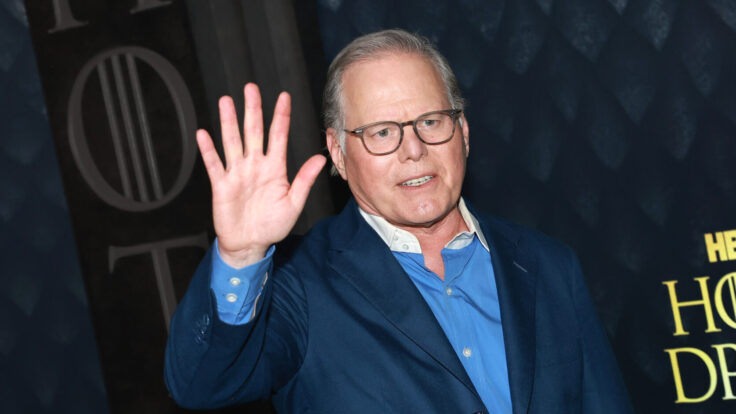
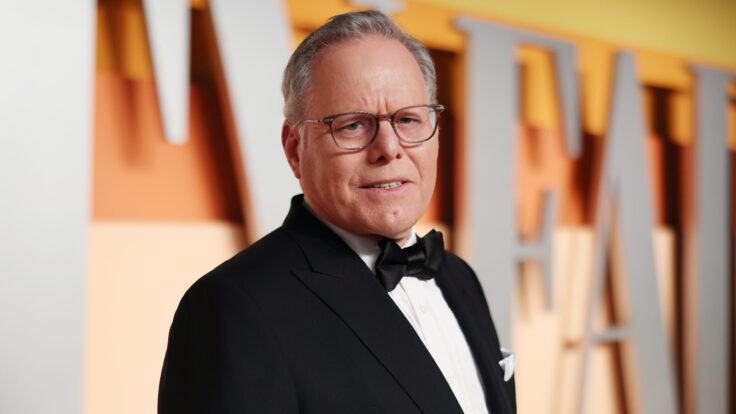
- And now, a quick update on Zaz from John Ourand: These days, David Zaslav is putting some of that $1.5 billion that he saved on the NBA to use. First there was the French Open deal, then the Savannah Bananas broadcast agreement, plus the CFP, Mountain West football and Big East basketball pacts. Now I’m told that Warner Bros. Discovery is close to finalizing a package to renew Shahid and Tony Khan’s All Elite Wrestling. (The Khans, of course, also own the Jacksonville Jaguars.) Insiders are telling me that a formal announcement could come as soon as next week, barring any last-minute challenges. It looks like it will be a four-year deal (three years guaranteed, plus an option), and the $170 million per year number floating around wrestling message boards is apparently in the ballpark.
According to the parameters of the agreements, AEW matches will air on TNT, TBS, and TruTV twice a week—further evidencing Zaz’s strategy of making the latter two networks more valuable and sports-oriented in the cable bundle as the potency of TNT declines sans professional basketball rights. Can WBD survive the renewal wars with a year-round sports lineup that includes October baseball, March Madness, the Stanley Cup, NASCAR, some college football and basketball, a little tennis, made-for-TV golf matches, fake baseball, and now second-tier wrestling? (We’re about to find out!) Meanwhile, this deal marks a clear success for AEW, which launched five years ago with a threshold WBD deal. AEW is also pitching another package, primarily to broadcast channels. There’s no timetable for when AEW will start to push that deal. —John Ourand
|
|
And now the main show…
|
 |
| Wall Street’s M&A Paradox |
| Today, the Fed cut interest rates by 50 basis points. Meanwhile, the economy is thriving, and the stock and bond markets are rallying. So why is deal volume down 30 percent from last year? And why is the I.P.O. market so lackluster? A revealing conversation with a top banker in the C-suite. |
|
|
|
| A strange thing seems to be happening on Wall Street these days. Yes, there have been a few modest corrections here and there, but the equity markets keep hitting new highs; the bond markets have been rallying for much of the past year; and the yield on the 10-year Treasury is around 3.6 percent, after being close to 5 percent a year ago. (Of course, whenever a bond’s yield goes down, its price goes up.) And then, earlier today, the Fed effectively lowered short-term interest rates by 50 basis points, an acknowledgment that post-pandemic inflation may finally be abating. (The markets jumped up, of course, after the Fed’s announcement.) Indeed, the U.S. economy remains one of the healthiest in the world—and, for reasons I do not understand, the Biden administration is not getting nearly enough credit for helping to engineer the “soft-landing” we are enjoying.
And yet, at a time when the investment banking business should be booming, many Wall Street executives are sitting on their hands, or twiddling their thumbs, wondering why they aren’t busier. A recent PWC analysis reveals that M&A deal volume was down 30 percent in the Americas—i.e., mostly the U.S.—during the first half of 2024 compared to the first half of 2023.
Interestingly, the overall value of deals is up 22 percent in the first half of 2024, thanks primarily to what PWC calls an increase in “megadeals,” such as Verizon’s $20 billion acquisition of Frontier Communications or Blackstone’s $16 billion purchase of AirTrunk—both of which were announced earlier this month—or Mars’s $36 billion takeover of Kellanova. In March, Home Depot agreed to spend $18.25 billion on SRS Distribution, a roofing and building supplies distributor. In May, ConocoPhillips agreed to acquire Marathon Oil for $22.5 billion. You get the idea.
Other big deals include Capital One’s combination with Discover Financial ($35.3 billion) and Synopsys’ acquisition of Ansys (also $35 billion), in the technology sector. And, of course, we can’t forget my personal favorite: the Ellisons and Gerry Cardinale’s RedBird Capital purchase of Paramount Global from the Redstone family, in a deal valued at something like $8 billion. As ever, the troika of Goldman Sachs, Morgan Stanley, and JPMorgan Chase lead the M&A league table, according to the Financial Times.
Nevertheless, the volume of deal flow has dropped below what the strength of the economy might predict. Similarly, the I.P.O. market, which was blazing hot during the pandemic, due in large part to the idiotic SPAC bonanza, is not what it once was. It’s true that the number of completed I.P.O.s in the U.S. so far this year is 32 percent higher than it was at the same point in 2023, but both years—as well as 2022—are far behind 2021, when a record 397 I.P.O.s were priced.
In fact, the past three years are still well behind the average volume of I.P.O.s for the six years leading up to 2021, according to Renaissance Capital, which closely tracks such data. Michael Harris, vice chair and global head of capital markets at the New York Stock Exchange, said on Bloomberg TV yesterday that he’s seeing “a lot of activity in our pipeline” for the first half of next year. We’ll see…
Meanwhile, a similar trend can be seen in the corporate bond market for debt issuance by non-financial companies, according to S&P Global. So far in 2024, global bond issuance stands at nearly $1.5 trillion, up 17 percent compared to the same period of 2023. But once again, bond issuance has been far below levels from 2015-2020. For instance, more than $3.3 trillion in non-financial corporate bonds were issued in 2020. Yes, high-yield bond issuance in the first half of 2024 has been a particular bright spot, with some $131 billion issued, up 53 percent compared to the first half of 2023. But again, that issuance is well below historical benchmarks. |
|
|
|
|
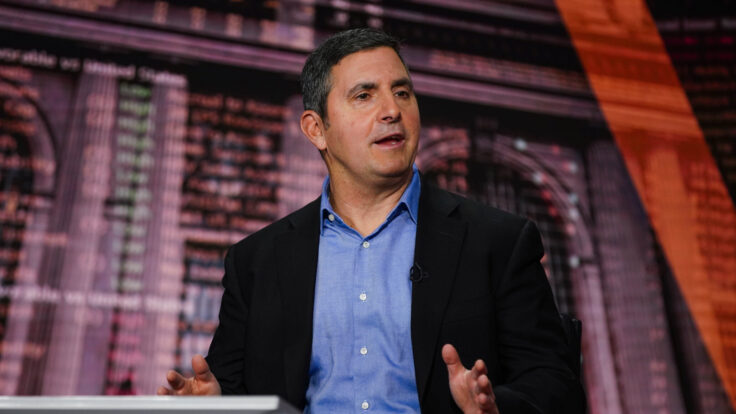
| In any event, with the economy firing on all cylinders, and the prospects for a “soft landing” looking better and better all the time, it remains a mystery why investment bankers aren’t busier. To get some answers, I phoned a friend, the C.E.O. of a powerful investment banking firm, who shared his thoughts on the subject. He said that there are many C.E.O.s who want to do deals right now, but they’re holding off because they think that the regulatory environment will be different in Washington depending on who wins the November election. They are mistaken, my friend said. Under both Donald Trump and Joe Biden, only 2 percent of M&A deals got a second look from regulators, and only eight of those deals went to litigation. “Perception of what happens in November is carrying into everything,” he said. “And I say ‘perception,’ because it actually doesn’t matter.”
The other reality, according to my friend, is that consumer spending has slowed materially, whether at McDonald’s or Starbucks or Disney, and many corporate C.E.O.s are concerned that their earnings may have peaked, or will soon peak, and they don’t want to be perceived as crafting deals at the top of the cycle. After all, if weaker earnings are on the way, a desired company could be had at a lower valuation in the near future. “Most companies think that earnings growth and G.D.P. growth in the country will be lower in 2025,” my friend told me. As a result, he added, C.E.O.s are worried about looking stupid by doing a deal now. He also said that he and the C.E.O.s he speaks with regularly are worried about a sudden “exogenous event,” whether arising between Russia, Ukraine, and NATO, or in the Middle East, or in the Taiwan Strait. “I hear that everywhere,” he said, “and I kind of believe it. Something that will really roil the system.”
But the main factor holding C.E.O.s back from doing deals, he said, was the U.S. presidential election. “You have to appreciate that the C.E.O. looks at the world not from a deal point of view, but from a world point of view,” he explained. “It’s radically different between the two candidates. And you want to see the impact of that—whether it’s on tariffs, whether it’s on Russia, whatever it is.” In most presidential elections, he added, “the variability isn’t this wide.”
The good news, from his perspective anyway, is that the deal flow will pick up materially in 2025, no matter who wins. “It’s the uncertainty of either outcome that’s stopping people right now,” he said, “but I have high confidence that for the deal environment, either outcome is actually just fine. It may not be good for the broader world, but it’s good for my world.”
Unsurprisingly, not everyone agrees with that view. John Paulson, the billionaire hedge fund manager and ardent Trump supporter who has been relentless in his bid to become Trump’s treasury secretary, if he wins, told Liz Claman, over at Fox Business, that if Kamala wins in November, “I’ll pull my money from the market. I’d go into cash and I’d go into gold, because I think the uncertainty regarding the plans they outlined would create a lot of uncertainty in the markets.” Will the lunacy ever stop? |
|
|
|
| FOUR STORIES WE’RE TALKING ABOUT |
 |
| TikTok on Trial |
| An incisive account of TikTok’s rough day in court. |
| ERIQ GARDNER |
|
 |
|
 |
|
 |
|
|
|
|
|
 |
|
|
|
Need help? Review our FAQs
page or contact
us for assistance. For brand partnerships, email ads@puck.news.
|
|
You received this email because you signed up to receive emails from Puck, or as part of your Puck account associated with . To stop receiving this newsletter and/or manage all your email preferences, click here.
|
|
Puck is published by Heat Media LLC. 227 W 17th St New York, NY 10011.
|
|
|
|