 |
|
Happy Sunday, I’m Bill Cohan.
|
|
Welcome back to Dry Powder, my biweekly private email about the most pressing questions on Wall Street—among them, how Warren Buffett beat the E.S.G. steamroller, what investors misunderstand about the Fed, why Lina Khan lowered the boom on Meta, and this summer’s latest economic mystery.
|
 |
| Lina’s Wrath & The Carried Interest Wars |
| Notes on what everyone is mumbling about on Wall Street: Buffett’s boffo earnings, more of “the dead cat bounce,” Lina Khan’s Meta example, and the Ackman diatribe of the summer. |
|
|
|
| Somehow Warren Buffett, at 91 years old, is still living his best life. While other elite value investors were wondering if the time was right to pick up Google, Amazon and Microsoft on the cheap(er), Buffett was mining value where others feared to tread—the oil and gas patch—and amassing significant stakes in companies that are exacerbating our climate problems. He’s been gobbling up Chevron of late and now the 140-year-old oil company has just had its best quarter ever. Buffett, the iconoclast, has been rewarded for his willingness to buy value when others were afraid to get flattened by the E.S.G. steamroller.
Buffett, of course, doesn’t have such concerns. Yes, he theoretically reports to a board of directors at Berkshire Hathaway but as by far the company’s largest shareholder (and surrounded by either family, friends or fans), there isn’t going to be a whole lot of pushback on what Warren decides to buy or sell. If he wants to buy Chevron and Occidental Petroleum, as he has for the last few months, in bulk, no one on his board or at his minimalist office in Omaha is going to question him. He might have a debate or two with Charlie Munger, but other than that, he’s free to roam around the country. Other money managers don’t have such freedom, or think they don’t. They probably think they have to be much more responsive to the E.S.G. police or find themselves in the political crosshairs. That means no fossil-fuel investing even though many of those stocks are printing money and are trading at single digit price-to-earnings ratios.
That reluctance has paved the way for Warren to swoop in, seemingly without political repercussions, and to make a fortune, even though he already has a fortune of $105 billion these days and counting. I think others would follow Warren’s lead if they felt that they could without getting beat up for investing in fossil fuels. All of which raises an interesting question: If you are a money manager, what investing path provides greater job security: staying out of the limelight by avoiding oil and gas stocks, or making a name for yourself by plunging into securities that no one else will touch and then reaping the rewards by outperforming others? We know which path Warren has taken, all the way to the top. But there probably won’t be any other investor like him in our lifetime.
By the way, I’d love to hear from readers on this illustrious distribution about whether we should admire Warren for investing in oil and gas stocks on the cheap, even when such a move is politically incorrect, or whether we should admonish him for helping to enable these companies. It’s quite a conundrum, don’t you agree? |
| More “Dead Cat Bounce” Blues |
|
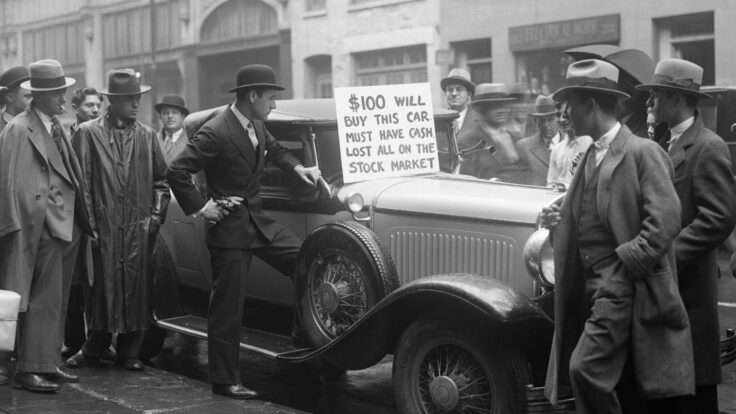
| What to make of this summer’s favorite economic riddle? The economy declined for a second straight quarter, and yet the S&P is about to have its best month in two years, adding fuel to the burning political controversy of the moment, namely whether we are in a recession or not, or whether these are really meaningful concepts in a world in which inflation has surged but unemployment is still near historic lows.
Of course, one never quite knows “what’s going on here” but to me the present stock-market rebound feels more like a triumph of hope over experience. Investors are hoping that the rate of inflation is starting to slow sufficiently for the Federal Reserve to begin putting the brakes on its aggressive raising of interest rates. They hope that corporate earnings will remain relatively high, as some indeed have (most notably Chevron, Exxon, and the other petro giants). They are hoping we are not in a “recession,” even though G.D.P. growth has turned negative for two consecutive quarters. And they are hoping that the declines in various stock and bond indexes—the Dow Jones Industrial Average is down some 10 percent year to date, and the Nasdaq is down 22 percent—is enough of a correction to satisfy the market gods.
I still have my doubts that the rallies we’ve seen in the stock and bond markets are anything more than a “dead cat bounce,” in Wall Street argot. But the truth is that no one knows what the market will do today, tomorrow or a year from now. To paraphrase Howard Marks, the co-founder of Oaktree Capital Management and a leading investor in distressed securities, one can’t predict or know the future but one can know and understand the present—and making a decision about what to invest in or to divest is a “today” decision. I guess that’s what keeps things interesting. There is only the smallest of constituencies for high interest rates and a floundering stock market. Most people prefer a soaring stock market and low interest rates. The change in investor sentiment in the past two weeks is palpable. But I can’t for the life of me figure out what’s driving it, even though I am not complaining about it.
It seems to me that the Fed still has a long way to go to tame inflation by raising interest rates—we’re still some 700 basis points in increases away from real interest rates being positive—even though Fed Chairman Jerome Powell has started hinting that the Fed is thinking about slowing the rate of the interest rate increases. (Remember two years ago when he was not even thinking about thinking about raising interest rates? It’s sort of the converse of that.) And as for being in a recession or not, does it really matter one way or the other? What matters is whether people are feeling good about their economic prospects or not. And at the moment, that seems to be a function of the low unemployment rate as much as anything. It’s been steady at 3.6 percent for a few months now, about as low as we’ve seen in our lifetimes. If the people who want jobs have them, and are making decent salaries, then high gas, food and money prices can probably seem somewhat manageable, emphasis on somewhat. But that calculus will change quickly, and dramatically, if unemployment starts ticking back up. Weekly unemployment claims had been rising in recent weeks but reversed modestly in the week ending July 23. If and when job losses start trending up again, that’s when I think we’ll see a return to the gloomy sentiment we experienced in the winter and spring. Until then, I guess it’s party on, Garth. |
|
|
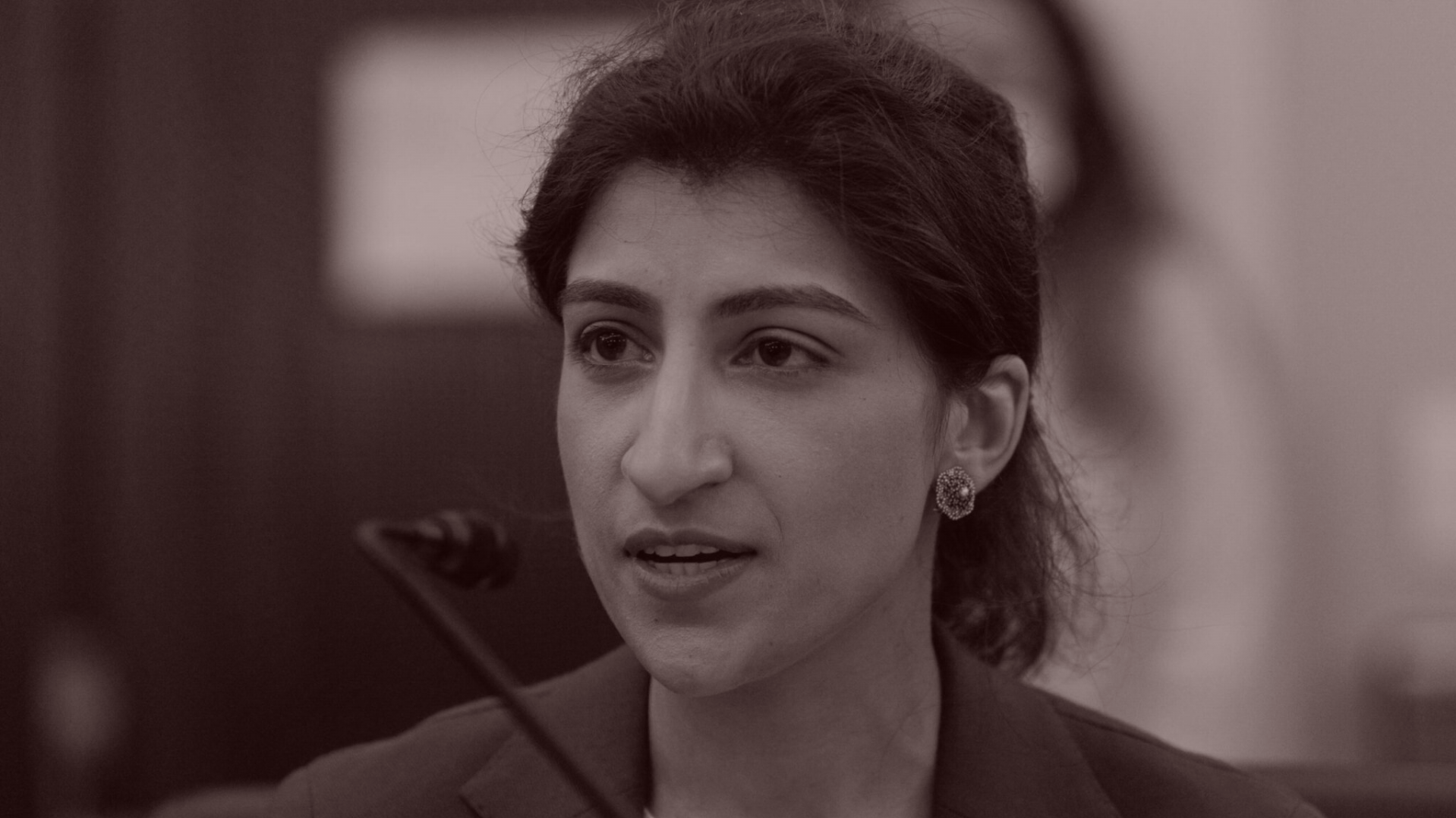
| The head scratching lawsuit filed last week by the F.T.C. to prevent Meta’s acquisition of a small virtual reality fitness app doesn’t make much sense on the merits, but it represents a clear and unmistakable message from the agency’s progressive chair, Lina Khan: There are new sheriffs in town. It’s that simple.
The Biden administration seems intent on making a statement or two about business combinations after a long era during which any kind of merger or acquisition proceeded unchallenged, with the notable exception of the Trump administration’s unsuccessful move to stop AT&T’s acquisition of TimeWarner because Trump, himself, did not like the coverage he was getting from CNN. (I bet AT&T now wishes the acquisition had been blocked.) The agency also took a serious look at the combination of the talent agents CAA and ICM, as my partner Matt Belloni has documented well, before allowing that deal to proceed to closing last month, even though the deal was relatively small.
When there are three examples, it starts to look like a trend. And there is a third: The agency will also be starting a trial on Monday to try to block the combination of Penguin Random House and Simon & Schuster, two of the Big Five book publishers. That, too, is a relatively small deal, at $2.2 billion, but one that the government worries will materially reduce competition in the book publishing business. It has made the rather ludicrous argument that the combination will hurt the industry’s ability to pay big advances to the most successful authors. Well, news flash Washington: whether there are four big publishers or five big publishers, authors who sell hundreds of thousands of books will be paid. That’s a given. Whether the government is changing legal tactics in this case—as it should if it wants to win—will be seen starting on Monday.
In the meantime, it’s clear to me that the M&A regulators in Washington are asserting themselves. Usually when the F.T.C. or the Justice Department makes noises about blocking a deal, the deal architects begin looking for a compromise or an off-ramp. It’s fascinating to me that Penguin Random House and S&S are taking their dispute with the government to trial rather than abandon the deal or look for a compromise (that apparently was not forthcoming). CAA and ICM plowed forward too, despite the government challenges. And of course AT&T ended up with TimeWarner, much to its detriment. It seems to me that the outcome of the PRH/S&S trial will set the tone for the rest of the Biden administration’s M&A agenda. And now there’s another piece of low-hanging fruit for Khan to think about going after if she so chooses: the recently announced combination of JetBlue and Spirit, to create the fifth-largest airline. Will that be a bridge too far in an industry that has already consolidated and is basically dysfunctional at this point?
Khan and her cohorts at the F.T.C. are also examining Microsoft’s acquisition of BlizzardActivision and Amazon’s recently announced acquisition of One Medical. Indeed, Khan seems determined to make her mark, by bringing legal actions against business combinations, regardless of the prospects for victory. “Even if it’s not a slam-dunk case,” Khan told CNBC, “even if there is a risk you might lose, there can be enormous benefits from taking that risk.” |
|
|
| Perhaps the most interesting element of the Manchin-Schumer Pact, or the Inflation Reduction Act of 2022, is the carried interest loophole adjustment, which allows private equity practitioners to use the lower, capital-gains tax rate on the profits they make from managing their profitable investments. It doesn’t raise much revenue—about $14 billion a year—although most people in Washington seem to think it’s overdue. Will the loophole, long a sacred cow of private equity and a pinata for various advocacy groups, finally be truly amended or repealed?
Private equity will fight this, probably by applying extreme pressure on Schumer and reminding him where his bread has been buttered. Our billionaire friend Bill Ackman has something to say about all this, and filled up a Twitter thread recently with his views. “Put simply, there should be no difference in the tax rate on the management fee income investment managers receive compared to the incentive fees they receive as they are simply fees in various forms they charge their clients for the basic service they perform,” he wrote. “They don’t need the extra boost from lower rates to motivate them to work better or harder for their clients. The fees are sufficient to motivate their behavior.”
I’m not sure Steve Schwarzman, and his man in Washington, Wayne Berman, would agree with Ackman’s assessment, especially since Ackman himself has benefited financially from the loophole. A squabble between billionaires is always amusing to watch. Ackman does make one important point, though. He makes the case for entrepreneurs—the people who take the risk of starting the companies we know and love—getting a disproportionate share of the economic spoils. He applauds the system where entrepreneurs, such as Steve Jobs “and a few friends,” were issued 100 percent of the common stock initially of Apple until the idea behind it could be developed sufficiently to attract capital from outsiders at higher and higher valuations. There would have been no Apple, Ackman wrote, without this “system,” which has created “enormous job and wealth creation” and is the “biggest driver” of our economy. He makes a distinction between buying and selling existing companies, as private equity firms do, and the kinds of companies that start in a garage and make it big. “We should never change the system that allows a woman or a man with nothing but a good idea, hard work, talent and drive to own a disproportionate share of an interest in an enterprise,” he wrote. “We need to fix this now before ill-advised politics kill appropriate entrepreneurial incentives which we need to drive innovation and sustain and grow our country.”
Objectively speaking, Ackman is right, even though like other hedge fund and private equity moguls, he made his pile from the carried interest system that he’s now happy to eliminate as part of the Inflation Reduction Act. But this is just the early innings of a fight that private equity somehow manages to win every time it surfaces. How they do it—who they call and what they say—has never been fully explicated. (That would be some great story!) The battle is just beginning. But I wouldn’t bet that this time the outcome will be any different than it has been every other time. |
|
|
|
| FOUR STORIES WE'RE TALKING ABOUT |
 |
| L’Affaire Elon |
| On the second-order consequences of the Sergey-Musk-Shanahan affair. |
| DYLAN BYERS & TEDDY SCHLEIFER |
|
 |
|
 |
|
 |
| Fox News & Free Speech |
| A pair of libel suits could lead to billions in damages for Fox Corp. Is there an exit strategy? |
| ERIQ GARDNER |
|
|
|

|
|
|
| You received this message because you signed up to receive emails from Puck
Was this email forwarded to you?
Sign up for Puck here
Sent to
Unsubscribe
Interested in exploring our newsletter offerings?
Manage your preferences
Puck is published by Heat Media LLC
227 W 17th St
New York, NY 10011
For support, just reply to this e-mail
For brand partnerships, email ads@puck.news |
|
|