{{ 'now' | timezone: 'America/New_York' | date: '%b %d, %Y' }} |
|
|
Hello and welcome back to The Best & The Brightest. I’m Leigh Ann Caldwell. I
hope you all are enjoying the final days, hours, and minutes of summer. My kids go back to school this week, which means we’re all bracing ourselves for the return of busy schedules and youth-sports-packed weekends. Summer was great while it lasted.
In today’s issue, news and notes on the incredible, shrinking House Freedom Caucus—the once-influential bloc of hard-liners whose influence has become massively diminished in Trump II. Indeed, their relevance is so miniscule
now that many are opting to leave Congress altogether. The latest hard-liner to rage-quit the job is Rep. Chip Roy. If the texts I’ve received this week from Republicans are any indication, the feeling is mutual.
But first… |
- Sergio
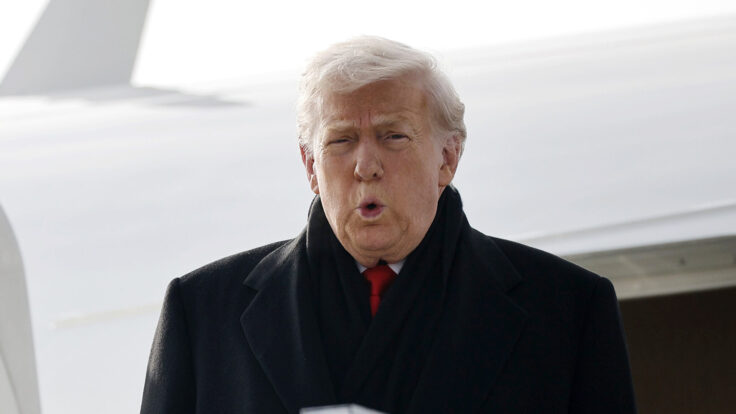
Gor’s soft landing in India: There’s been plenty of chatter over the past 48 hours about Trump’s nomination of Sergio Gor, his staunchly loyal director of the White House Presidential Personnel Office, to be ambassador to India. Gor, who made his name publishing various Trump-branded books, has no career foreign affairs experience. Naturally, this has left some to speculate why he was chosen for the role—especially when relations between the U.S. and India have become
fraught over the tariff wars. Trump called Gor a “great friend” on social media and said he was nominated because “it is important that I have someone I can fully trust to deliver on my agenda.”
Gor has made a few enemies inside the White House in his current role overseeing hiring and loyalty tests. In particular, Gor was instrumental in killing the nomination of Elon Musk’s friend Jared Isaacman to be NASA administrator—revenge, perhaps, for Musk’s
alleged complaints about Gor’s work ethic. His tenure has been plagued by other controversies, too. In June, the New York Post
reported that the man tasked with vetting members of Trump’s administration had yet to be fully vetted himself, with three sources telling the paper that Gor had not yet turned in his security clearance questionnaire. Among the persistent questions surrounding Gor was his place of birth: Gor apparently
told people he was from Malta, but officials there said they had no record of his birth. The Times of Malta later reported that Gor was born in the former Soviet Union. Gor has
said that he was not born in Russia.
“Mr. Gor is fully compliant with all applicable ethical and legal obligations,” White House counsel David Warrington told me in a statement. “His SF-86 form has been completed and submitted. His security clearance is active, any insinuation
otherwise would be completely false.” - Paging Lewandowski: House Democrats on the Oversight and Government Reform Committee have opened an investigation into Corey Lewandowski, the former Trump campaign manager who has become Homeland Security Secretary Kristi Noem’s most trusted aide. Lewandowski currently serves as a special government employee, a role whose parameters include limiting work to 130 days in a
calendar year. But the committee suspects that Lewandowski is performing functions that go beyond those of an SGE, including hiring and firing employees, and approving FEMA contracts.
Lewandowski and Noem, who have been dogged by speculation about their personal relationship, have been working together since Noem was governor of South Dakota. Lewandowski was a key influence by Noem’s side during her hard-right turn toward embracing Trump, as well as her startling
Mar-a-Lago makeover. When Trump was mulling vice presidential candidates, Lewandowski pushed for Noem, and these days he’s never far from her orbit in Washington, a Republican lobbyist told me.
More significantly, the White House has taken note, according to Axios, as officials have become suspicious that Lewandowski is trying to stretch out his 130 days by not clocking in or accounting for the days he’s working. For an administration that’s immune to bad optics over conflicts of interest, even when it comes to judicial rulings, these leaks suggest someone badly wants him out. While Democrats are unlikely to get much cooperation from Homeland Security in providing documents to the committee about
Lewandowski’s role and work hours, the fact that he’s on the White House’s radar may mean the clock is ticking. - The politics of crime: Meanwhile, Trump is threatening to send federal troops to two more Democratic-run cities: Chicago and Baltimore. On Friday, Trump previewed sending troops to Chicago, saying, “Chicago’s a mess.” Later, in a social media post, Trump threatened to mobilize National Guard troops in “crime-ridden Baltimore,” after Maryland
Gov. Wes Moore said on Face the Nation that he’d invited the president to walk the streets of Baltimore with him to see what the city and state are doing to address crime. As with his immigration agenda, Trump’s blunt wedge strategy is forcing Democrats into an uncomfortable position of having to defend their policies and records, while acknowledging an issue that resonates with voters.
Of course, the issue is particularly charged given that the governors of
California, Illinois, and Maryland are all potential presidential candidates in 2028. So I was also interested to see how Rahm Emanuel, the former mayor of Chicago who is floating himself as a potential presidential candidate, addressed crime and policing with Dana Bash on State of the Union this morning. Emanuel, a skillful communicator who has warned Democrats about being too far to the left, acknowledged the nuance and insisted that Democrats do have
a strategy. While murders and other violent crimes have been dropping in big cities, Emanuel said carjackings remain a problem. “That’s where the federal government can work with cities, and work with mayors, and work with county officials, to actually reduce carjackings,” he said. Democrats have a strategy to fight crime, he added. “More police on the beat, and getting kids, gangs, and guns off the streets.”
|
|
|
The bare-knuckled Republican brawlers who once struck fear and trembling inside the House
have become sidelined during the second Trump administration. Now, increasingly, they’re showing themselves out. |
|
|
The House Freedom Caucus, once the most powerful Republican bloc on Capitol Hill, is rapidly losing altitude
in Donald Trump’s second term. For years, the coalition of far-right conservatives held Washington hostage with its no-compromise, scorched-earth tactics. But the G.O.P. largely answers to Trump these days. And the Freedom Caucus, plagued by infighting and diminished influence, appears to be in terminal decline. Nearly a fifth of its roughly three dozen members are running for other offices, or considering doing so.
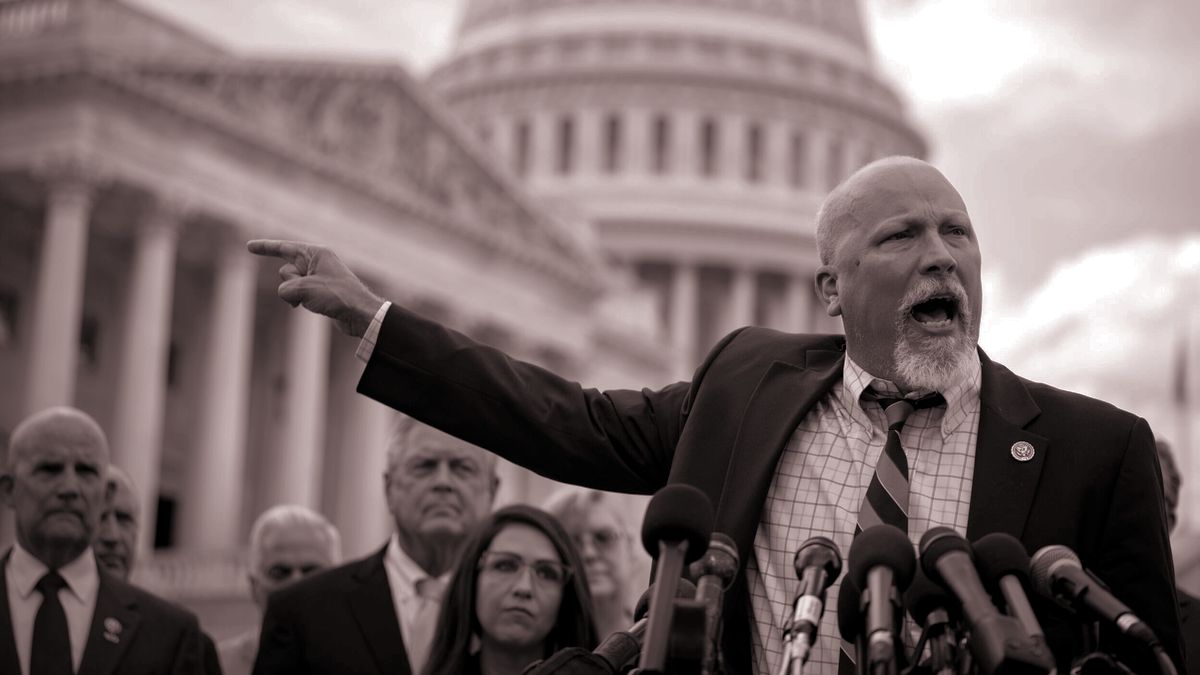
The most recent to abandon the hard-liners is Rep.
Chip Roy, the group’s latest intellectual and messaging guru, who announced this week that he’s running to succeed his former boss Ken Paxton as attorney general of Texas. “It would be nice to be part of a state, and be part of a group of people, who can get things done,” Roy said on Fox Business, leaving the implications clear: He’s sick of Congress. Plenty of House Republicans and staff say the feeling is mutual, and aren’t sad to see Roy go, according to
texts I’ve received. One Republican said they were “thrilled.”
Roy—a former chief of staff to Senator Ted Cruz—and his Freedom Caucus buddies have had minor successes in Congress, most recently pushing for steeper cuts to Medicaid and demanding that Republicans include at least $1.5 trillion in spending cuts in the One Big Beautiful Bill. (The final bill saved $1.1 trillion over a decade, but added $3.4 trillion to the deficit.) But on the whole, Roy has mostly failed to
bend the House toward his small-government vision, discouraging his supporters while frustrating non–Freedom Caucus colleagues with his uncompromising demands and delay tactics.
Roy, of course, is hardly the only H.F.C. member throwing in the towel. Three members are running for governor—Rep. Ralph Norman in South Carolina, Rep. Andy Biggs in Arizona, and Rep. Byron Donalds in Florida—while Rep. Tom Tiffany is considering
doing the same in Wisconsin. Rep. Andy Ogles is weighing a run for Senate in Tennessee, and Rep. Scott Perry is looking vulnerable in his Pennsylvania swing district. Altogether, the transformation represents an historic hollowing out of a caucus that was for years the most powerful—some would say destructive—force on the Hill.
Not surprisingly, rival Republicans aren’t exactly filled with grief. “It’s a huge step forward for the conference,” one
Republican strategist said. Even Rep. Marjorie Taylor Greene, who was kicked out of the caucus after her public feud with Rep. Lauren Boebert, rarely has nice things to say about the group. “I don’t think they’ve accomplished much lately,” Greene told me recently. “If you look, they put up a big fight, send around a bunch of fundraising emails on it, and then end up folding and getting nothing.” |
The prevailing dismissive attitude toward the group is a far cry from January 2015, when Reps. Jim
Jordan and Mark Meadows formed the House Freedom Caucus from the crucible of the Tea Party movement. At that time, caucus members were empowered by their constituents to go to war with their more moderate colleagues. Later that year, the Freedom Caucus pushed out Speaker John Boehner, and later played a role in Speaker Paul Ryan’s decision to step down. Some members likewise helped usher Kevin McCarthy out of a job,
too. In their heyday, Freedom Caucus–like candidates defeated top Republicans, such as when upstart Dave Brat beat Republican leader Eric Cantor in 2014. Meadows, one of the architects of the government shutdown over the Affordable Care Act in 2013, popularized the idea of tying government funding to partisan demands. (Jordan, for his part, is
hardly a public face of the group these days, siding more with leadership. Meadows left Congress to serve as White House chief of staff in the latter days of Trump I, and now works for a conservative advocacy group.)
The Freedom Caucus started this year with some clout—before it became clear just how tight of a grip Trump has on the party. Mike Johnson, worried about not having the votes to remain speaker, replaced the chairman of the Intelligence Committee, and added two
Freedom Caucus members, for example; more influence on the Intelligence Committee was something the group had been demanding. But as Trump has solidified his control of the House, the caucus’s internecine battles have started to feel like a relic of a forgotten war. Trump doesn’t really care about the deficit, or the size of the government. Indeed, if DOGE were truly about rightsizing the government, rather than purging it of programs Trump didn’t like, he never would have requested $2 billion
for a D.C. beautification fund—let alone signed legislation that will add trillions to the national debt.
These mounting contradictions have enervated the Freedom Caucus, too. While many H.F.C. members recoil from government spending, and aren’t natural Trump allies, it’s become untenable to push back against the president. And for the Freedom Caucus members who do back Trump above all else, like Rep. Boebert, legislating by principle easily falls by the wayside. Even as the federal
government demands stakes in major corporations, including U.S. Steel and Intel, under Trump—a move that the Freedom Caucus would normally decry as socialism—they’ve been silent.
Leadership still has to put in the work to address their concerns—their close relationship with whip Tom Emmer helps—but there’s a feeling these days that it’s all performative. As a Republican strategist told me, “They are desperate for attention and relevancy, and when you shower them with
attention and relevancy, they break.” All it usually takes is getting some phone time with Trump, such as when the president persuaded Reps. Ralph Norman and Keith Self to vote for Johnson’s speakership. Trump likewise got Rep. Victoria Spartz to drop her opposition to Republicans’ budget framework over the course of an animated phone call.
And while Freedom Caucus members have claimed to extract concessions during these standoffs, the results are unclear. After a group of Freedom Caucus members met with Trump in the Oval to voice their objections to the Senate’s version of the bill, they about-faced within 24 hours. They claim to have received eight concessions, but haven’t said what they were.
This isn’t the first sign of trouble for the Freedom Caucus, of course. Despite most of them representing safe districts, they are
not immune to electoral defeat. Last year, their leader, Rep. Bob Good, who’d supported Ron DeSantis in the presidential primary, was beaten in his primary by Trump-backed John McGuire. Caucus member Rep. Dan Bishop was gently persuaded by Republicans affiliated with leadership to run for attorney general in North Carolina. (He lost, and Trump recently appointed him as Russ Vought’s deputy at the
Office of Management and Budget.)
The caucus has also self-destructed all on their own—Rep. Anna Paulina Luna left after they wouldn’t support her effort to allow moms to vote by proxy during maternity leave. When Rep. Warren Davidson was kicked out after supporting McGuire over Good, Rep. Troy Nehls resigned in protest. Meanwhile, Jordan, who co-founded the Freedom Caucus, is rarely associated with the group anymore. And
the House member most opposed to government spending, Rep. Thomas Massie, never even bothered to join. |
|
|
Join Emmy Award-winning journalist Peter Hamby, along with the team of expert journalists at Puck, as they let you in on the
conversations insiders are having across the four corners of power in America: Wall Street, Washington, Silicon Valley, and Hollywood. Presented in partnership with Audacy, new episodes publish daily, Monday through Friday. |
|
|
Unique and privileged insight into the private conversations taking place inside boardrooms and corner offices up and down Wall
Street, relayed by best-selling author, journalist, and former M&A senior banker William D. Cohan. |
|
|
Need help? Review our FAQ page or contact us for assistance. For brand partnerships, email ads@puck.news. You received this email because you signed up to receive emails from Puck, or as part of your Puck account associated with {{customer.email}}. To stop receiving this newsletter and/or manage all your email preferences,
click here. |
Puck is published by Heat Media LLC. 107 Greenwich St, New York, NY 10006 |
|
|
|