|
Welcome to Dry Powder. I’m Bill Cohan.
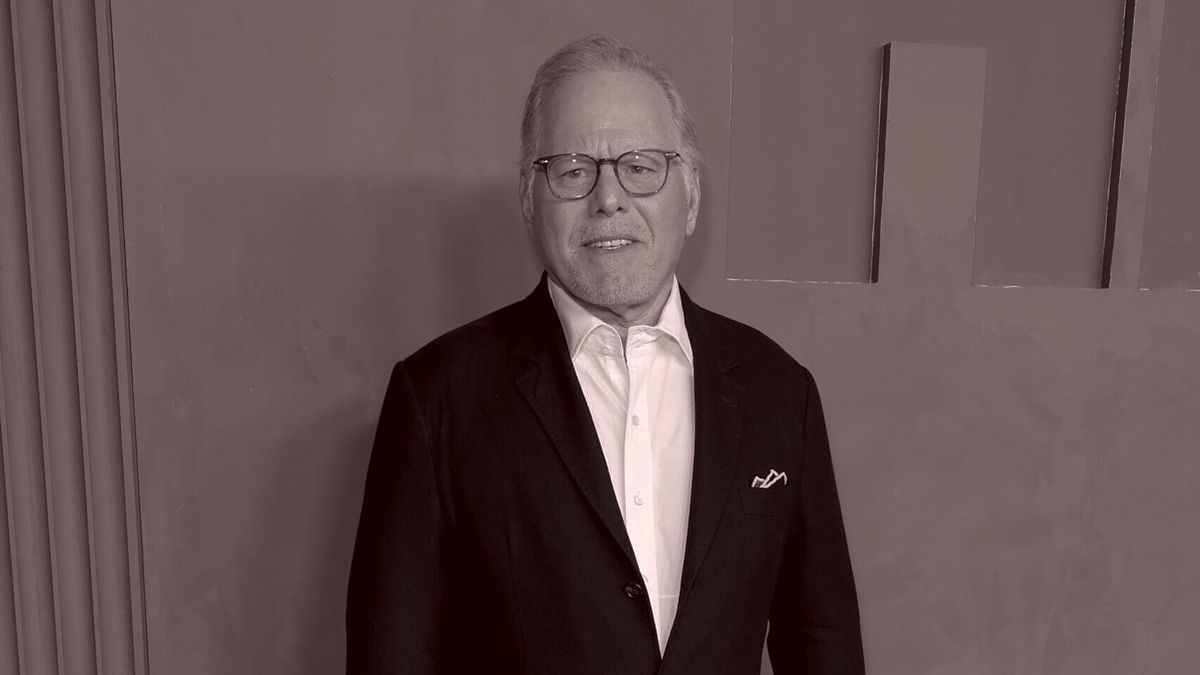
Like many of you, I was surprised (by the timing) but not shocked when the news broke first thing Monday about David Zaslav’s decision to split his WBD baby and abscond with the more glamorous, growth-oriented, less debt-laden assets. In tonight’s issue, a look at what this means for Zaz and his cost-cutting wingman Gunnar Wiedenfels, and what the deal (and the debt) tell us about the future of ZazCo and GunnarCo as separate companies.
But first…
|
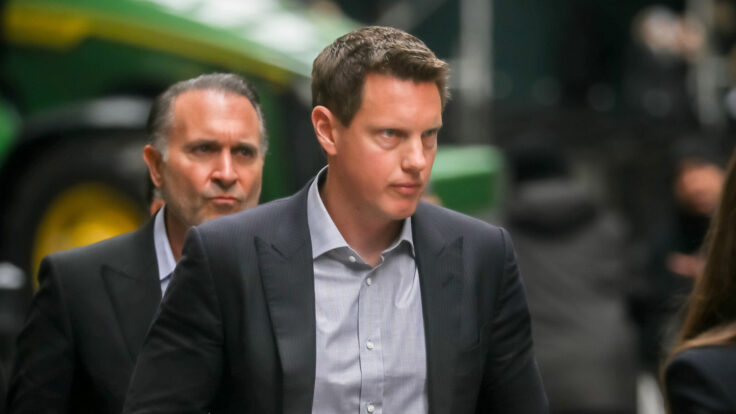
- Leon Black’s son joins the Trump show: Ben Black, the 40-year-old son of billionaire Wall Street financier Leon Black, has been nominated by Donald Trump to become C.E.O. of the United States International Development Finance Corporation, or D.F.C., which the Times describes as “a little-known agency that invests and lends billions each year to companies and projects overseas.” I’ve also heard it described as the closest U.S. equivalent to a sovereign wealth fund.A graduate of Penn, Harvard Business School (like his father), and Harvard Law, Ben also has a master’s degree in taxation from NYU. (Senator Tom Cotton joked, “as we say in Arkansas, Ben has more degrees than a thermometer.”) Ben did stints at Goldman Sachs, and, of course, Apollo, before launching his own investment firm, Fortinbras Enterprises, in 2020, which has some $122 million in assets under management. Ben himself reported assets of at least $219 million, including equity stakes in a slew of companies such as Apple, Berkshire Hathaway, Chevron, and JPMorgan Chase. (His disclosure report is 84 pages long.) Ben promised to resign from his position at Fortinbras, and from philanthropies associated with his family. He’ll keep his equity interests in a variety of Apollo private equity funds.At his nomination hearing before the Senate Foreign Relations Committee on Tuesday, Ben said he believed “the agency is positioned to achieve great things on behalf of the American people” and spoke about his eagerness to inject private capital into various projects around the world that the D.F.C., with a budget of around $60 billion, is considering. (China’s Belt and Road Initiative has more than $1 trillion at its disposal.)
Ben also praised his late grandfather, Ira Ressler, whom he called his lifelong hero. “He served as a technical sergeant and rear gunner in the Army Air Corps in the Aleutian Islands during World War II,” he said, “and afterward attended college and law school on the G.I. Bill. His service and patriotism inspired my lifelong dream to serve my country and pursue public service.” Ben’s parents, Leon and Debra, sat behind him, Leon beaming with pride.
- Disney’s Hulu scoop: The protracted battle between Disney and Comcast to reach a final valuation for the latter’s 33 percent stake in Hulu, the streaming business of which Disney already owned two-thirds, has concluded with a whimper. You’ll recall that the two sides agreed on a guaranteed floor price of $27.5 billion in 2019, after Comcast agreed to cede control of the entity to Disney but retain its one-third stake. Then in December 2023, Comcast agreed to sell the remaining third, for which Disney initially forked over $8.6 billion while a war of valuations kicked off between two investment banks—Morgan Stanley for Comcast, and JPMorgan Chase for Disney—to determine the final price.During the appraisal process, JPMorgan Chase arrived at a valuation below the guaranteed floor, while Morgan Stanley arrived at a valuation substantially in excess of it—no surprise there. Then a third appraiser, RBC Capital, was hired to serve as final arbitrator. On June 9, the verdict finally came down, with Disney agreeing to pay an additional $438.7 million—far less than the extra billions that Comcast C.E.O. Brian Roberts wanted. “We are pleased this is finally resolved,” said a presumably chuffed Bob Iger in a regulatory filing. I’m not sure what took so long, but I’m happy to hear about any details of the negotiation that led to the additional payment. If you know more, you know how to reach me.
|
|
|
|
Now that WBD is splitting in twain, a series of complex deals—a $17.5 billion bridge loan, a syndication, bond buybacks, etcetera—are about to commence… all likely in the name of future transactions. Let the games begin.
|
|
|
|
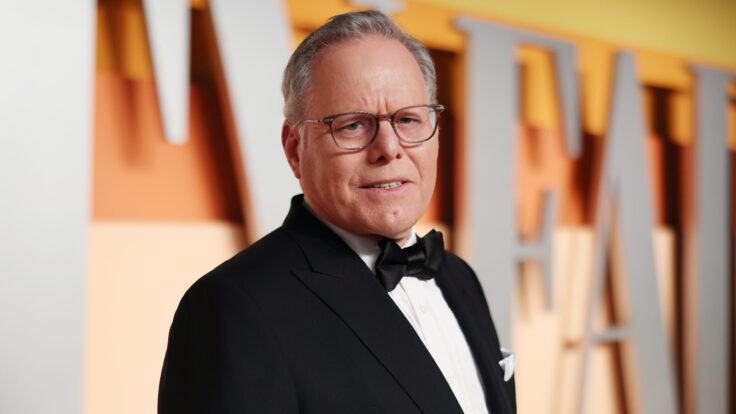
I’ve got to hand it to David Zaslav. His ability to keep news of the Warner Bros. Discovery split from leaking was an impressive feat of staying schtum, as my 90-year-old mother likes to say. There he was in Paris on Sunday, taking in the French Open men’s final between Jannik Sinner and Carlos Alcaraz (seated next to Dustin Hoffman and his wife, Lisa), betraying nothing about what was to come the next morning. Moments after Alcaraz pulled off his stunning five-set, tie-break comeback, Zaz texted me that he thought the match was “incredible” and took “forever.” Then he was off to New York for Monday’s big announcement.
Zaz even fooled S&P Global, the credit-rating agency. On May 20, as I wrote last week, S&P downgraded WBD’s debt rating to BB+, from BBB, on the fringe of junk territory. This was a big deal, and unexpected, since S&P had rated WBD as BBB when it had $55 billion of debt, but BB+ after it had paid down $21 billion of that debt. These kinds of downgrades don’t happen in a vacuum. They happen after hours of conversation between WBD management—probably Gunnar Wiedenfels, the WBD C.F.O.—and the folks at S&P Global. So it’s interesting that the impending divorce was barely mentioned in S&P’s downgrade report, and only then to note that the agency was “not aware that WBD has made a decision on a potential split of the company.” No kidding.
|
|
|
|
A MESSAGE FROM OUR SPONSOR
|
DESIRE MORE
Peerless refinement. Uncompromising capability. Range Rover is the natural choice for those who lead by example.
EXPLORE
|
|
|
|
WBD executives also had more than a few analysts confused about the timing of the split. Wolfe Research’s Peter Supino told me a few weeks ago, “If WBD splits into two stocks tomorrow, we’ll be sorry we missed it. But that restructuring may require a lot more patience with media M&A looking stuck, and there’s a reasonable case for waiting to act until the company’s strategic path is clearer.” It turns out, however, that CNBC’s Dave Faber pretty much had it right when he reported last month that the split was imminent. Bravo, Dave. (We’ll celebrate over some leafy greens at The Ranch.)
|
|
One of the big questions hanging over WBD since the beginning has been whether it would be able to pay down enough of its debt for the rating agencies to upgrade the company off the BBB cliff. I’ve said many times that WBD is essentially a publicly traded leveraged buyout, carrying around the weight of that original $55 billion in debt. But since Zaz and Gunnar’s ample compensation (some have said too ample) was directly tied to paying down said debt, I figured the rating agencies would give WBD credit for the roughly $21 billion of debt they did pay down, give them their upgrade, and the stock price would have no choice but to soar. As we all know, the opposite happened. Oh, well.
Now that WBD is finally, officially being split into Global Networks (a declining linear TV business, to be led by Gunnar as C.E.O.) and Streaming & Studios (a growing premium content company that Zaz will continue to helm), the new big question is: Which of the two will be saddled with the lion’s share of that remaining $34 billion in net debt? (As I suggested last week, Global Networks, albeit declining, could take on something like $27 billion, leaving $7 billion or so for S&S.)
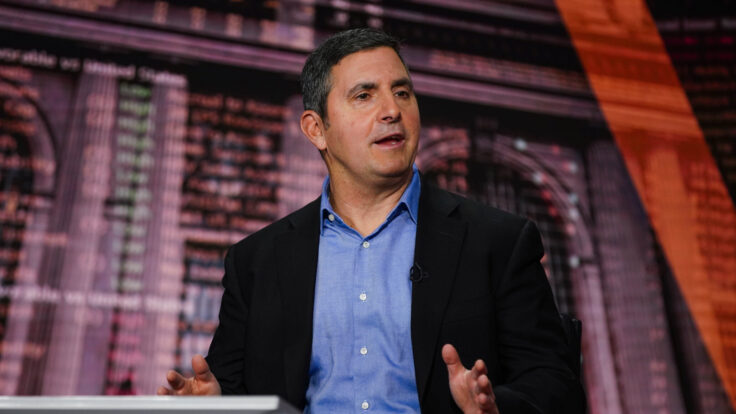
The question of the debt split was, of course, raised on Monday during Zaz and Gunnar’s call with media analysts. Michael Ng, the Goldman Sachs analyst covering WBD, asked about the capital structures of the two companies, and how much debt each would have. Gunnar demurred. “It’s too early to talk about a target capital structure,” he said, while allowing that “it’s safe to assume that the majority of the debt is going to live with Global Networks, and a smaller portion—but a not-insignificant portion—on Streaming & Studios.”
Gunnar said that WBD was announcing the split now partly because the Studios & Streaming half is in a better financial position than it was a year ago. “I definitely expect this to be a self-funding business and a fully funded business plan by the time this deal closes,” he said of S&S. “We have used a lot of that free cashflow from linear over the years to build a scaled streaming platform that’s now operating in 80 countries globally, and so even that side of the business will start from a self-funding position … [and] have a very strong and stable business balance sheet.”
|
|
One of the more interesting aspects of the proposed split was the unexpected announcement that WBD had arranged for a $17.5 billion committed bridge facility, courtesy of JPMorgan Chase, so it can immediately begin a tender offer for its outstanding $34 billion of debt. WBD’s debt stack is both long-dated and low-interest, since much of it was issued when the Fed was keeping rates near zero. Now that rates are much higher, the WBD debt trades at a significant discount. The idea behind this unusual tender offer—I can’t recall another tender as part of a spinoff transaction—is for WBD to try to capture that discount by buying in a bunch of the outstanding debt and retiring it for less than the face amount.
|
|
|
|
A MESSAGE FROM OUR SPONSOR
|
DESIRE MORE
Peerless refinement. Uncompromising capability. Range Rover is the natural choice for those who lead by example.
EXPLORE
|
|
|
On Monday, I spoke with Fraser Woodford, the WBD executive vice president and treasurer who is spearheading the tender offer, to get a better understanding of how this is going to work. Thanks to JPMorgan Chase’s $17.5 billion bridge loan, which the bank will syndicate to other Wall Street banks—but, interestingly, not to the private credit crowd—WBD planning to put at least $14.6 billion toward buying back its debt, broken into six separate pools depending on maturities, existing covenants, and interest rates. The idea, of course, is to get bondholders to tender by giving them a premium to where their debt is trading now, and offering them fees to tender quickly.
For instance, one long-dated WBD bond—a $3 billion issue, due March 2062, with a coupon of 5.4 percent—is trading at 65 cents on the dollar. WBD wants to get rid of as much of that bond as possible, for whatever reason, and so is offering those bondholders 70 cents on the dollar now, along with a pot of $30 million in consent fees, part of an overall pool of something like $200 million. (Both JPMorgan Chase and Evercore, WBD’s co-advisors on the spinoff, will get another whole pile of fees.) WBD bondholders who agree to tender their bonds by this Friday will receive more fees than those who wait until the following Friday, June 23. The idea is to clean up the capital structure and to capture as much of the existing discount in these bonds as possible.
Following the close of the tender offer, WBD will refinance the bridge loan with a combination of new loans and bonds—again using Wall Street banks, not the private-credit crowd—that will be divvied up between the two companies, with the “majority,” as Gunnar said on Monday, being piled onto Global Networks. Bondholders who don’t participate in the tender offer could find that their bonds have been structurally subordinated to the new debt and also stripped of various protective covenants. “There are certainly very strong incentives for people to participate,” Woodford said. “But, ultimately, it’s up to them to decide whether that’s a fair offer or not.”
According to Woodford, WBD expects that the tender offer will reduce WBD’s overall net debt by $3 billion, leaving $31 billion outstanding. That’s an impressive capture of the value in the trading of these bonds. (Nota bene, S&P Global…) Using its free cashflow, WBD will also pay down additional debt after the close of the tender offer, so the actual amount of debt on the company at the time of the spin will probably be materially less than $31 billion.
In another bit of creativity, Global Networks will retain a 20 percent stake in S&S that will get sold into the market relatively quickly—cash that it will use to further pay down its debt. But regardless of how all this plays out, it’s a testament to how much WBD’s prospects have improved from when it was created—with that $55 billion of debt—that JPMorgan Chase agreed to provide that $17.5 billion bridge loan. That doesn’t just happen.
|
Upon the announcement of the split, WBD shares popped as much as 12 percent. But as Monday progressed and the market absorbed the full extent of what would transpire at the company, the stock gave up those gains and then traded down more than 4 percent. Go figure. I can’t, since this all should be good news, and most Wall Street analysts noted that the split was inevitable. On Tuesday, WBD’s stock was up 4 percent, and up another 3 percent on Wednesday. (Are investors finally getting it?)
But this is probably just the beginning of another round of M&A activity for what’s left of the Time Warner assets. (I worked on the original Time Warner merger when I was at Lazard, 35 years ago. Since then, it’s been the apple of the eye of Steve Case, at AOL; John Stankey, at AT&T; and now Zaz. There must be something seductive about these assets that so many people want to own them, only to later be burned by them.) On Monday’s conference call with analysts, Steven Cahall at Wells Fargo asked what the split would mean for the two new companies’ ability to participate in the expected consolidation of the industry, and whether there could be a combination of Global Networks with, say, Versant, Comcast’s own linear spinco; or S&S with Paramount+, or maybe down the line with any of Apple, Amazon, NBCU, or Netflix.
Will the tax-free nature of the WBD divorce require a waiting period so as not to become a taxable event, in the same way that WBD had to wait two years to begin to contemplate deals because of the original Reverse Morris Trust structure? That’s not a concern, Gunnar said. “By the time this deal closes, they are going to be free and clear from a transaction perspective,” he told Cahall. “We do believe the transaction provides each business with greater agility to capitalize on potential options and opportunities that may arise. But I also want to stress that, you know, there is no such plan, and I love the asset perimeter of both companies.” At another point during the call, Zaz and Gunnar said that “both assets” are “free and clear to do whatever they want to do.” Let the games begin. Again.
|
|
|
|
Ace media reporter Dylan Byers brings readers into the C-suite as he chronicles the biggest stories in the industry: the future of cable news in the streaming era, the transformation of legacy publishers, the tech giants remaking the market, and all the egos involved.
|
|
|
|
Join Emmy Award-winning journalist Peter Hamby, along with the team of expert journalists at Puck, as they let you in on the conversations insiders are having across the four corners of power in America: Wall Street, Washington, Silicon Valley, and Hollywood. Presented in partnership with Audacy, new episodes publish daily, Monday through Friday.
|
|
|
Need help? Review our FAQ page or contact us for assistance. For brand partnerships, email ads@puck.news.
You received this email because you signed up to receive emails from Puck, or as part of your Puck account associated with . To stop receiving this newsletter and/or manage all your email preferences, click here.
|
|
Puck is published by Heat Media LLC. 107 Greenwich St, New York, NY 10006
|
|
|
|