|
Welcome to Dry Powder. I’m Bill Cohan.
It’s 2021 all over again, or so it seems. First up, I have the latest on Leon Black’s ongoing legal effort to get to the bottom of his defenestration from Apollo, and the role that Josh Harris may have played in the saga. Also: SPACs are back, and the resurgence is attracting a familiar breed of short-sighted profiteers—perhaps the latest non-surprise of the Trump era on Wall Street.
Let’s get started…
|
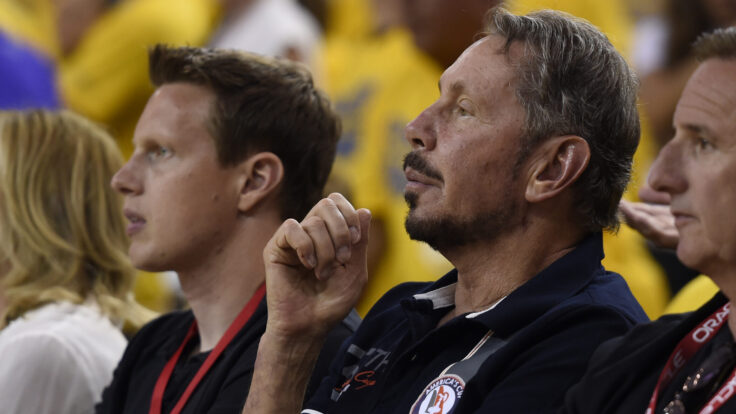
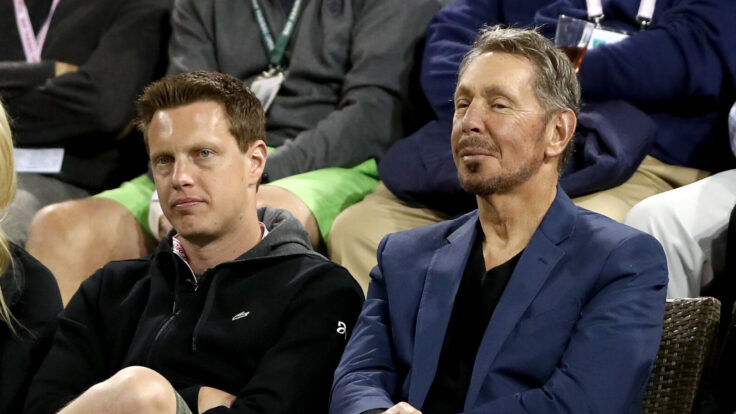
- Leon Black goes fishing: As readers will remember, former Apollo Global Management billionaire bigwigs Leon Black and Josh Harris are in the middle of an arbitration proceeding, brought by the former against the latter. Presumably, Leon believes that Josh violated the terms of their shareholder agreement some four or so years ago when Leon was in the midst of his Jeffrey Epstein troubles. The arbitration is still ongoing behind closed doors, administered by three JAMS arbiters.Leon, of course, founded Apollo in 1990, after his former firm Drexel Burnham Lambert blew up. Josh, who worked at Drexel, joined Apollo shortly thereafter.
Contemporaneously with Apollo going public in 2007 on a Goldman Sachs private exchange, Leon decided to bestow upon Josh and Marc Rowan, the current C.E.O., some 58 million shares of company stock, and named them “co-founders” of the firm, even though they were not technically his co-founders. In any event, all three men are now multibillionaires. Josh is also the principal owner of the Washington Commanders, Philadelphia 76ers, New Jersey Devils, Crystal Palace F.C., and he holds a minority stake in Joe Gibbs Racing.
Even though the arbitration proceedings are confidential, a small window has opened pertaining to Leon’s view that some of Josh’s advisors failed to address—at least to his satisfaction—a subpoena that had been issued to them as part of the arbitration in the months leading up to Leon’s March 2021 resignation. That dispute has seeped out into New York State court, which can compel the production of the discovery materials, if it ends up ruling in Leon’s favor.In any event, the subpoena has been made public, and it involves the public relations firm BerlinRosen, now known as Orchestra, which has represented Harris. Leon has asked Orchestra to share information regarding the firm’s interaction with prominent business journalists, including Matt Goldstein at The New York Times; Josh Kosman at the New York Post; Miriam Gottfried at The Wall Street Journal; Gillian Tan at Bloomberg; and Mark Vandevelde, Kaye Wiggins, and Sujeet Indap at the Financial Times, all of whom covered the controversies involving Leon and Epstein, as well as Leon and Guzel Ganieva, a woman with whom he had a years-long, consensual affair, and paid some $9 million of a $21 million agreement to keep quiet. (She breached the agreement in March 2021 on—where else?—Twitter.)
Leon is asking Orchestra to produce documents related to these reporters (plus a host of other people) between July 1, 2019, and August 1, 2021. Goldstein was part of the team—along with James B. Stewart, Jessica Silver-Greenberg, and Kate Kelly—who wrote a story in the Times in July 2019 about the then-incarcerated Epstein’s ties to Wall Street figures, including Leon, as well as Jes Staley, Glenn Dubin, and Les Wexner.
Leon has long disliked the media’s treatment of his relationship with Epstein, whom he paid $158 million for tax- and estate-planning advice. And I suspect this subpoena is part of his ongoing effort to figure out whether Josh purposely exploited the media coverage of that relationship to make a play, albeit unsuccessfully, to become C.E.O. of Apollo. Whether Leon’s legal ploy forces Orchestra to produce the discovery remains to be seen. Leon’s previous RICO lawsuit against Josh, Ganieva, and Steven Rubenstein at Rubenstein & Co., in which he made a similar argument, got thrown out in 2022. He also lost an appeal of that decision the following year. (Disclosure: Orchestra and Puck partner on a data-based editorial series.)
Josh’s side believes it is complying with the subpoena and that, in any event, the arbiters should be the ones to resolve the discovery dispute, not the courts. In Orchestra’s reply brief filed with the state court, Davis Polk wrote that the various legal maneuvers are “part of a broader campaign by disgraced billionaire Leon Black to use the court system to blame his former Apollo partner, Josh Harris, for Black’s own misdeeds” and that since his resignation from Apollo, Leon “has embarked on a series of ill-fated lawsuits that seek to blame others for his downfall.”
Paul Spagnoletti at Davis Polk, who is representing Orchestra, Harris, and Rubenstein, also offered a separate statement to me: “For more than four years, Leon Black has waged an incessant, false campaign to distract from his own legal and reputational challenges, which are entirely a result of his own actions, and that’s why his claims have been dismissed with prejudice by two federal courts.” What is “really motivating Black appears to be the fact that he has not obtained evidence supporting his meritless allegations,” Spagnoletti wrote in his legal brief. Stay tuned to see if the court forces Orchestra to comply more fully with Leon’s subpoena, and whether anything of substance gets produced. Meanwhile, on the good-news-for-Josh front, Crystal Palace defeated Manchester City 1-0 yesterday to win its first FA Cup in the 164-year history of the club.
|
|
And now, on to the main event…
|
|
|
|
The impish finance types who create ghost companies, then take them public through an I.P.O. with nothing more than a promise and a wink, have been busy this year—including the three geniuses behind what became the $5.6 billion Trump Media & Technology Group.
|
|
|
SPACs, one of the more odious products that Wall Street has ever devised, are making an unlikely comeback. SPAC Insider reports that there have been 44 SPAC I.P.O.s so far in 2025, compared to 57 in all of 2024, and 31 in 2023. (The FT commemorated the revival with their own ditty.) That’s peanuts compared to the 613 SPACs that raised more than $162 billion during the hallucinatory days of 2021. But such is the SPAC comeback that the three geniuses behind what’s now Trump Media & Technology Group have formed a new Special Purpose Acquisition Company with the mellifluous name Renatus Tactical Acquisition Corp I, and filed to raise around $180 million in an I.P.O.
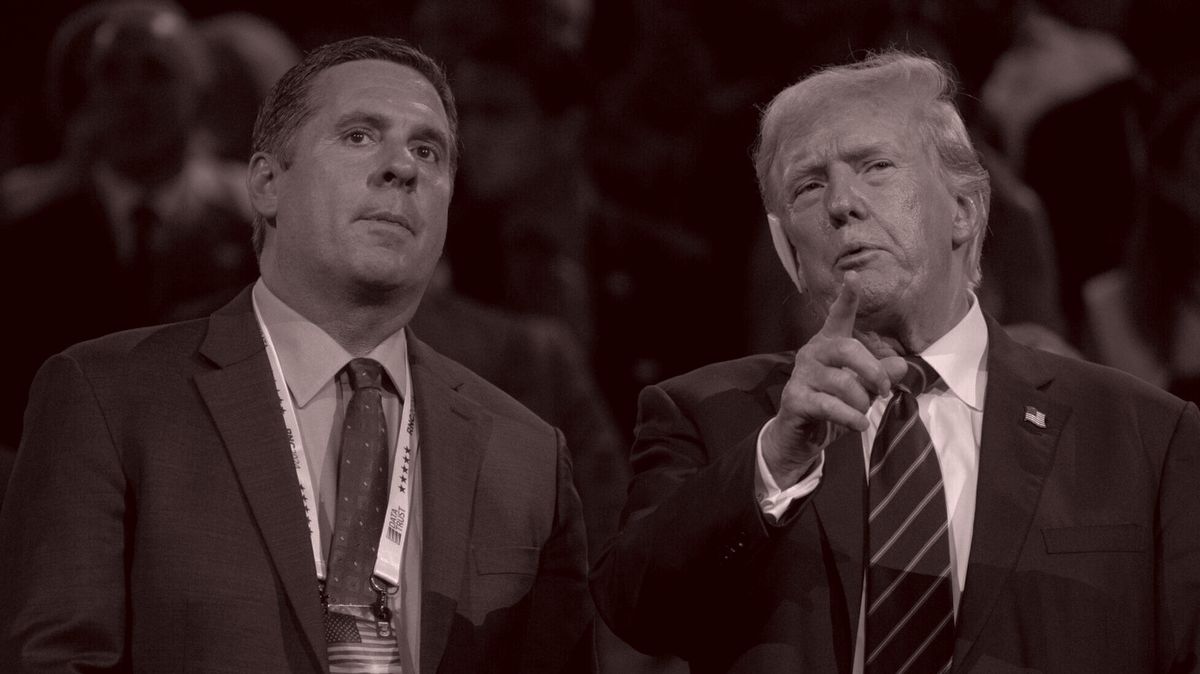
The sponsors of the Renatus SPAC include Devin Nunes, the former congressman turned C.E.O. of Trump Media, who is now chairman of the Renatus board of directors. Other sponsors include Eric Swider, the Renatus C.E.O. and TMTG board member; and Alexander Cano, the Renatus chief operating officer, and a former executive of the SPAC that merged with TMTG, Digital World Acquisition Corp. Renatus intends to buy a private company in one of three industries: cryptocurrency and blockchain; data security; or “dual use technologies.” (The latter refers to technologies developed in the defense sector that can be deployed for civilian purposes as well.) In any event, Renatus makes clear that it can buy any company in any business line that wants to be bought by the SPAC. Great country we’ve got here.
|
|
|
|
A MESSAGE FROM MCKINSEY & COMPANY
|
Today’s geopolitical landscape is more layered, faster-moving, and harder to ignore. McKinsey traces how American businesses have historically responded to global change—and what it takes to stay competitive now. From manufacturing to energy to tech, it’s a call for thoughtful action, not wait-and-see.
See what’s shaping strategy in the new era.
|
|
|
|
The SPAC renaissance, in many ways, reflects the vehicle’s promiscuous and quasi-lunatic origins. SPACs, of course, allow smart-aleck finance types (known in SPACworld as “sponsors”) to form an empty shell of a company, and then take that ghost company public on the sole promise that it will subsequently merge with a private company—thereby taking it public, too—within a two-year window. Investment banks love SPACs because they can collect fees for underwriting the I.P.O. of the empty shell, and then more fees for arranging the merger with the private company.
Sponsors, for their part, love SPACs because they basically get stock in the entity for free, and then get a big stake in the company that it takes public. If the stock of the SPAC appreciates, and they can get out, they get very rich—or, usually, just richer. If the stock of the SPAC depreciates—which is usually the case—they lose very little, since they paid close to nothing for their stock. A lovely asymmetrical bet for the sponsors. If there is no merger within the two-year limit, there is a modicum of justice: The investors in the original SPAC get their money back, and the sponsors end up eating the underwriting fees.
Some of the more infamous SPACs illustrate why they have become so discredited. Take the case of Virgin Galactic Holdings, Richard Branson’s space-travel company, which merged with the SPAC Social Capital Hedosophia Holdings. Hedosophia, you may recall, was the brainchild of Chamath Palihapitiya, the former Facebook executive and V.C. and current co-host of the All In podcast. In 2019, before the SPAC craze reached its apex, Hedosophia went public at $10 a share (like nearly every SPAC). After the merger with Virgin Galactic, the stock traded as high as $1,118 a share, in June 2021—pretty much the zenith of the pandemic mania—making the company worth tens of billions.
By then, Chamath was already long gone. He sold his entire personal stake in the company in March 2021 for around $213 million, which turned out to be more than than the current value of the entire company today. It now trades for $4.80 a share, and has a market value of less than $200 million. The investors who bought after Chamath sold got deep-fried.
The most infamous SPAC, of course, is Digital World Acquisition Corp., which went public in September 2021 and later merged with Trump Media & Technology Group, the company behind Trump’s Truth Social. TMTG, trading under the stock symbol DJT, has very little revenue and very big losses. But it still has a market value of $5.6 billion, and Trump’s stake in the company, which he basically got for free, is worth nearly $3 billion.
The DJT stock has been on a roller-coaster ride since it went public at $10 a share, in October 2021, depending mostly on Trump’s whims and behavior. The stock traded as high as nearly $100 a share in March 2022, but is down nearly 50 percent in the last year. Presumably, Trump couldn’t be happier about all this. He hasn’t been able to cash out yet, but it’s likely to happen one of these days. Meanwhile, he’s transferred his stake in TMTG to a revocable trust.
|
|
One interesting aspect of the SPAC revival is that it has been driven by a bunch of obscure Wall Street underwriters. The big guns that led the SPAC charge during the pandemic—Goldman Sachs, Morgan Stanley, JPMorgan Chase—seem to be largely sitting on the sidelines. The one major exception is Cantor Fitzgerald, the firm previously run by Trump’s Commerce secretary, Howard Lutnick. According to SPAC Research, Cantor has been the top underwriter so far in 2025, with a 31 percent market share. Indeed, Cantor is the lead underwriter on 11 SPACs this year, seeking to raise nearly $3 billion. (The firm is being run by Lutnick’s two Gen Z sons while Howard is busy in Washington trying to sell Trump’s bizarre economic policies.) Along with Cantor, the leading SPAC underwriters this time around are firms with names such as BTIG, Clear Street (the underwriter on Renatus Tactical), Santander, and Cohen Capital Markets.
|
|
|
|
A MESSAGE FROM MCKINSEY & COMPANY
|
Today’s geopolitical landscape is more layered, faster-moving, and harder to ignore. McKinsey traces how American businesses have historically responded to global change—and what it takes to stay competitive now. From manufacturing to energy to tech, it’s a call for thoughtful action, not wait-and-see.
See what’s shaping strategy in the new era.
|
|
|
One of the more unusual new SPAC filings I came across involves Cohen Capital Markets, an affiliate of Cohen & Company Inc., a firm I confess I had never heard of (its head of SPAC investment banking is Brandon Sun, who used to work on SPACs at Deutsche Bank). Cohen Capital Markets is the lead underwriter on a SPAC known as MSM Frontier Capital Acquisition Corp., which is hoping to raise $225 million with the aim of buying a company in Africa that is involved in the oil, gas, power, or cement industries.
The chief sponsors of the MSM Frontier SPAC are Muazzam Mairawani, who will be chairman of the board of the SPAC, and Babatope Adedara, who will be the C.E.O. They control 95 percent of the SPAC through their Quadriga Industries LLC. Coincidentally, about a month before registering with the S.E.C. for the MSM Frontier I.P.O. (but two months after the company incorporated in the Cayman Islands), one of Mairawani’s other companies, called MSM Group of Companies, signed an agreement with the Kebbi State government in northwest Nigeria to build a “state-of-the-art” cement plant that has promised to create some 45,000 direct and indirect jobs, “transforming the industrial landscape” of Kebbi. (A potential acquisition target for MSM Frontier? SPACs aren’t supposed to identify potential targets in advance of pulling off an I.P.O.) In any case, MSM Frontier filed to go public at the end of April, and might be ready to complete the I.P.O. sometime early this summer.
One name that rang a bell was Jide Zeitlin, one of the smaller shareholders of MSM Frontier, with 200,000 shares, who will serve as an “independent” director of the MSM Frontier board, chairman of its audit committee, and member of the board’s compensation committee. Zeitlin is a former Goldman Sachs pre-I.P.O. partner, and a former C.E.O. of Tapestry, the publicly traded parent company of Coach and Kate Spade. (In July 2020, when Zeitlin resigned as C.E.O. of Tapestry, I wrote about the events leading up to his resignation for ProPublica. Nearly a year later, he sued me for defamation in New York State court, losing three times before giving up the litigation in January 2025.)
Zeitlin tried his hand at the SPAC game once before, unsuccessfully, with an entity named Bleuacacia Ltd., where he teamed up with Lew Frankfort, a predecessor C.E.O. of Tapestry. That SPAC, which raised $240 million in November 2021—underwritten by the now-defunct Credit Suisse and Citigroup—was unable to find an acquisition target, and was liquidated in November 2024.
If you countenance SPAC Research’s May 2 newsletter, the new wave of SPAC filings represents an “I.P.O. resurgence” after a “years-long malaise,” and is an “encouraging” sign of life in the market. The $2.7 billion raised in the SPAC market this April, they write, was the most since February 2022, with the S-1 SPAC filings “coming at a pace not seen in years,” totaling 54 issuers seeking to raise some $10 billion, with more than half of the issuers coming from repeat sponsors.
One of those repeat sponsors is Michael Klein, the billionaire former Citigroup investment banker, who now has his own eponymous M&A advisory firm. On April 28, his Churchill Capital X filed an S-1 to raise $300 million to try to do what SPACs do, yet again. It’s his tenth SPAC. His ninth SPAC is still looking for an acquisition candidate, while SPACs five, six and seven have all been liquidated. You can’t make this stuff up. This is not investment advice, but caveat emptor, as ever.
|
|
|
|
Puck’s daily political newsletter from Washington on what’s really happening in this town, from the White House to the Pentagon to Capitol Hill, K Street, and the campaign trail.
|
|
|
|
Finally, a media podcast about what’s actually happening in the media—not the oversanitized, legal-and-standards-approved version you read online. Join Dylan Byers, Puck’s veteran media reporter, as he sits down with TV personalities, moguls, pundits, and industry executives for raw, honest, sometimes salacious conversations about the business of media and its biggest egos. New episodes publish every Tuesday and Friday.
|
|
|
Need help? Review our FAQ page or contact us for assistance. For brand partnerships, email ads@puck.news.
You received this email because you signed up to receive emails from Puck, or as part of your Puck account associated with . To stop receiving this newsletter and/or manage all your email preferences, click here.
|
|
Puck is published by Heat Media LLC. 107 Greenwich St, New York, NY 10006
|
|
|
|