 |
 |
|
Welcome to Dry Powder. I’m Bill Cohan.
|
|
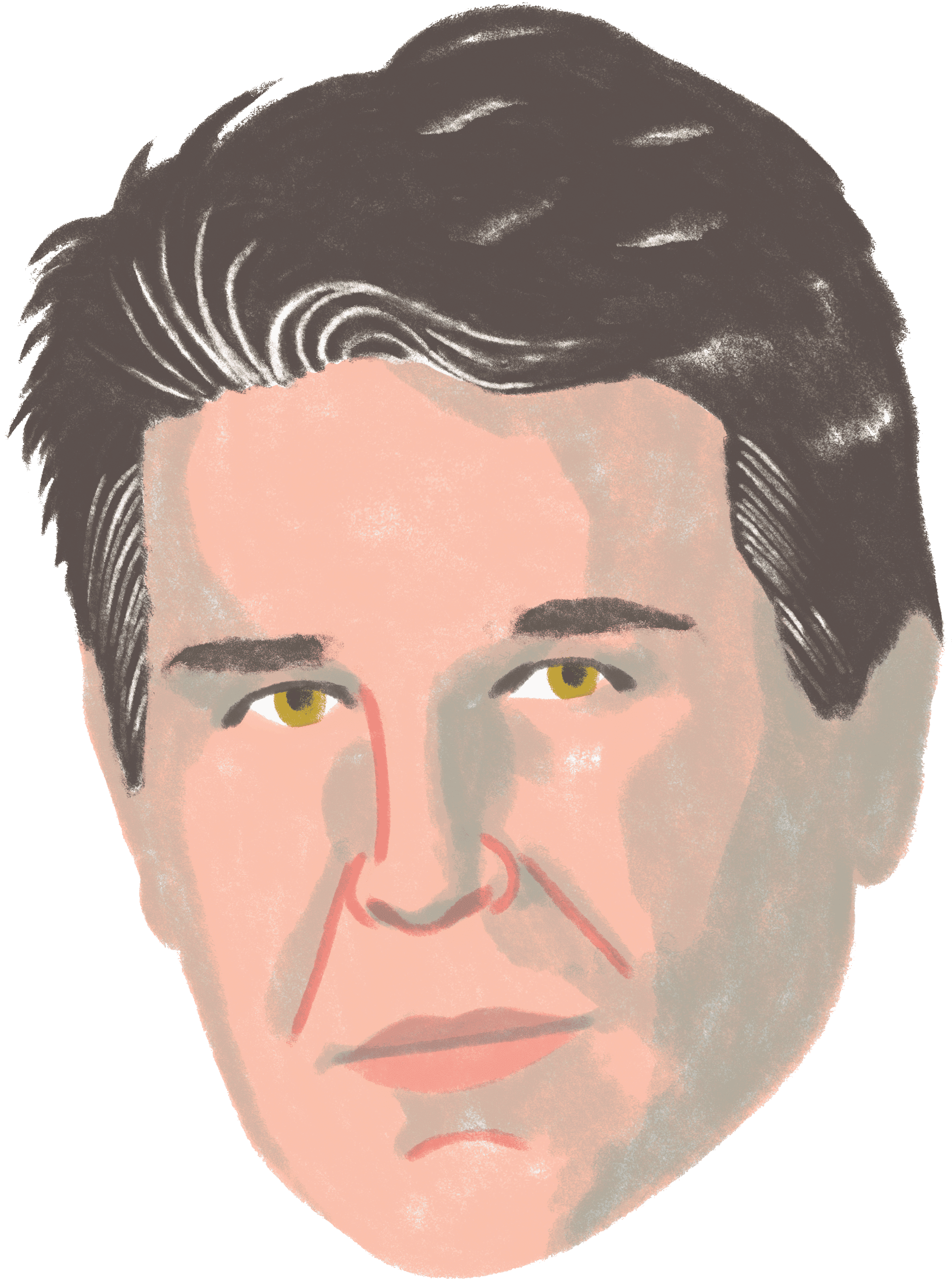
Today, I wanted to share my exclusive conversation with Leon Black, the co-founder of Apollo and one of the most formidable figures in the history of the private equity and debt industries. We talked candidly about his seemingly inexplicable relationship with Jeffrey Epstein, and the work that the deceased pedophile provided for his family office. It’s a fascinating and revealing discussion—the first of a two-part series.
But before we get into the incredible story below, a quick note on some other Apollo-related blockbuster news…
- Apollo’s Deal for Paramount: Last Sunday, I’m told, Apollo sent a letter to the Paramount Global special committee of the board of directors offering to buy all of Paramount Global—not just the Paramount studio—for a total enterprise value of $26 billion or more. That represents a 50 percent premium to where the stock is trading today, plus the assumption of Paramount’s $14 billion of net debt.
However, I’m told the special committee of the board has not responded to Apollo’s generous offer because Shari Redstone prefers to do a deal with David Ellison and Skydance for her family’s holding company, National Amusements Inc. (The Journal noted as much in a piece this afternoon.) Is Shari prioritizing Redstone family shareholders over Paramount shareholders? This one is going to get very interesting now, because it’s absurd for the special committee of the board not to seriously consider an all-cash offer for the whole company—with a 50 percent premium to boot—in favor of a deal just for NAI. I feel like shareholder lawsuits are a few minutes away if this dynamic continues. Stay tuned…
|
|
And now on to the main event…
|
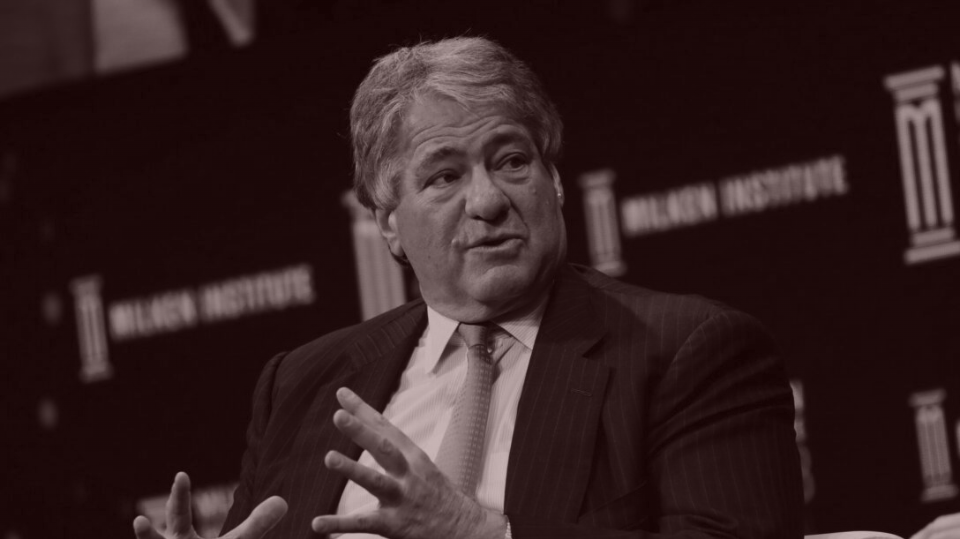 |
| Leon Black From the Ashes |
| For the first time since his controversial departure from Apollo, Black speaks about his relationship with Jeffrey Epstein, and his tumultuous final year at the firm he created. |
|
|
|
| On a recent afternoon, Leon Black and I were sitting at his family office, Elysium Partners, on the top floor of a nondescript building on Park Avenue, near 57th Street. He said he chose the space not for the building’s architecture, but rather because it had a big wrap-around balcony that was lovely in the warmer months. We were having a light lunch, along with his P.R. team, of deli sandwiches, making small talk before engaging in the matter at hand—discussing how Black’s extraordinary career had been upended by his seemingly inexplicable relationship with Jeffrey Epstein.
Prior to 2019, of course, Black had enjoyed one of the most charmed runs in the history of finance. The descendant of a long line of orthodox rabbis, he attended Fieldston, Dartmouth, and Harvard Business School; survived the harrowing suicide of his father, also a former orthodox rabbi, who became an immensely successful corporate C.E.O. before jumping out of the Pan Am building during Leon’s second year at Harvard; and then became head of M&A at Drexel Burnham Lambert, the hard-charging investment bank that was famously brought to ruin by the misdeeds of Michael Milken, the genius creator of the junk-bond market.
From the ashes of the Drexel implosion, in 1990, Leon started Apollo Global Management, along with several other Drexel alumni, and became one of the true pioneers of what we now call “alternative asset management,” a powerful combination of private equity and private credit that has spawned a multitrillion-dollar industry. Leon’s gone from Apollo, but he’s still its largest shareholder. Thanks in large part to his roughly 93 million Apollo shares—and a world-class art collection and other trophy assets—his net worth these days is around $14 billion.
Leon has a big physical presence, standing well over six feet, but his voice is somewhat squeaky and subdued, which I found surprising given his considerable stature on Wall Street and beyond. At one point during our lunch, Black got up and went over to a nearby chair to collect from his suit jacket a fragment of paper, upon which he had scribbled a bunch of names of people who had also hung out with Epstein at one time or another. He then rattled off the names, including Bill Clinton and Donald Trump, as well as Mort Zuckerman, Reid Hoffman, Tom Pritzker, Jes Staley, Noam Chomsky, and so on, all of them seemingly doing just fine.
He then paused. “I’m not in any way, shape, or form defending Jeffrey,” he said. “I’m defending me. I don’t believe any of these guys knew that Jeffrey was a pedophile. I certainly didn’t. I thought he was a fascinating guy. So yes, I spent time with him. I’d go up, have lunch or breakfast with him because I lived two blocks from him, and we would talk about tax and estate planning and financial things.” Or, Leon continued, he would go to Epstein’s house and have dinner with him and people he knew, such as Woody Allen and Dick Cavett, or even Steve Bannon. “Everybody looks at it through the lens of, This is Public Enemy Number One for being a pedophile,” he told me. “He was smart. And I thought he performed services for a bunch of [his associates], yes. And he was a bit offbeat and counterculture and eccentric, yes.”
He then reiterated the points that have since been examined, sometimes opaquely, in the media, in the Apollo boardroom, and in an external investigation by an independent law firm: that he never had anything to do with Epstein’s criminal or prurient activities; that he merely shared personal information with Epstein about his family, specifically his children, in order to obtain Epstein’s help in reconfiguring their trusts and their inheritances after clashing with his previous tax attorney, a partner at a major Wall Street firm. Epstein, he continued, redesigned the trusts to satisfy the needs and whims of each of Black’s four children—“Who was ambitious? Who cared about money? Who didn’t? If they had issues…” he explained. “So, how to deal with that in a will.” I have now seen two of Leon’s many trust and estates documents—one from September 2013, the other from January 2014—that reflect a Black family meeting with Epstein, his advice to them about how to handle the divvying up of Leon’s fortune in a tax-efficient manner, their reactions to his proposals, and the next steps for Epstein to pursue. (Needless to say, they are technical and complicated.)
Our recent conversation marked the first time that Leon has publicly discussed his affiliation with Epstein since leaving Apollo, in March 2021. Shortly after Epstein’s apparent suicide, in August 2019, a series of damaging articles—a Bloomberg Businessweek cover story, pieces in the Journal and Times and elsewhere—raised uncomfortable questions about Black’s association with the recently deceased pedophile. Black responded by urging a special committee of the Apollo board to hire a law firm to investigate his association with Epstein. It chose Andy Levander, at Dechert, for the job. And even though the law firm cleared him of any wrongdoing, it revealed that he did even more business than previously known with Epstein. Apollo’s large limited partners, such as CalPERS, expressed concerns, and at least some of Black’s younger general partners wanted to oust him and to begin planning for a new Apollo, without Leon. Their conclusion: Black had to go.
During our conversations, Leon pointed repeatedly to an article he detested in The Wall Street Journal, from October 2020, about his former partner Josh Harris, whom Leon had named a co-founder of Apollo, along with Marc Rowan, before the firm went public in 2011. The story suggested that Harris was the only man who could save Apollo’s reputation after the Epstein-Black scandal. Black told me, snarkily, that he believed “St. Josh” had orchestrated the coverage in conjunction with Steven Rubenstein, one of Apollo’s P.R. gurus. Leon later filed a RICO lawsuit, targeting both Harris and Rubenstein, among others, claiming they conspired against him. The RICO lawsuit was quickly thrown out. (Harris told me that while the lawsuit saddened him, it was decided by a court that “there was zero-point-zero truth to any of it.” Rubenstein declined to comment, but in a legal filing in the case, his attorneys wrote that he “never colluded with Harris to launch a coup against Black.”)
The location of our chat at his family office was fitting, given the work he and Epstein engaged in, and so I asked Leon what he was thinking when, in 2006, this guy he had known for a decade—who was once on the board of his family foundation, and with whom he had discussed the nuances of his children’s personalities—was suddenly being investigated by state and federal prosecutors for pedophilia, and ended up in jail. “I took it seriously,” he told me. “But I didn’t take it that seriously. I mean, he was with a 17-year-old prostitute, got prosecuted for it, and got put away for a year,” he said, referring to Epstein’s extraordinarily controversial plea deal in 2008. “And, you know, according to him, even that person had shown an I.D. that she wasn’t underage. My feeling is, there are serious things and there are things that are less serious. I didn’t think this was the end of the world, frankly.”
He continued: “I mean, I’ve stayed incredibly close with Mike Milken. Mike Milken went to jail for two years. I stayed close with Alfred Taubman [the Sotheby’s owner who was convicted of price-fixing]. I stayed close with Martha Stewart. We’re still friends. They all went to jail. I didn’t think being with a 17-year-old prostitute who said that she had proof she was over 17 was that big a deal. And this is where it gets complicated.” |
|
A MESSAGE FROM OUR SPONSOR
|

|
|
The rise of AI has dominated headlines—and in doing so, captured the imagination of investors. But competition in the space is fierce, making it hard to know which innovators will have staying power. To harness AI in your portfolio, consider the Global X Artificial Intelligence & Technology ETF (AIQ), which invests in dozens of companies at the forefront of this disruption.
Explore AIQ
|
|
|
|
|
| How did the brilliant Leon Black concede such vital, complex, and personal estate planning matters to a college drop-out, former Dalton math teacher who would go on to be exposed as one of the most despicable scumbags in modern memory? Leon told me that he ended up in Epstein’s orbit through a circuitous path of attempting to solve a typical billionaire’s problem: How to give away half of his then-$5 billion fortune to his kids in a tax-advantaged way. Leon told me he first went to Carlyn McCaffrey, a highly regarded tax and estates partner at Weil Gotshal. (She moved to McDermott Will & Emery 13 years ago.) But, Leon said, he later developed concerns with the structure of the trusts. (McCaffrey did not respond to a request for comment.) Looking for a second opinion, he contacted Alan Halperin, at Paul Weiss, Apollo’s longtime law firm, and also attorneys at Sullivan & Cromwell, where his sister-in-law Alison Ressler is a partner. But they didn’t have the answers he was looking for, Leon explained, though he was evasive about the specifics.
That’s when he approached Epstein. “It’s gonna cost you,” Epstein apparently told Leon. That was fine, Leon responded, but whatever solution Epstein was offering would have to be “vetted” by the other name-brand law firms. Leon declined to share with me the precise details, but he said he came away a very satisfied customer.
The problem Leon faced, according to my reporting, was that when the grantor trusts he set up in 2006 for his four children expired, and then went into a “pour-over trust,” some income streams (such as the big dividends on his Apollo stock) were still coming to him. “The fact that Leon retained income rights in the ‘pour-over’ trust was a problem,” explained someone familiar with Leon’s trust and estate documents. “It was just a mess.” By continuing to get this income after the dissolution of the grantor trust, Black apparently risked negating the tax benefit he set up his children to achieve in the first place. And he couldn’t be removed as a beneficiary of these income streams, willy-nilly, without “consideration,” lest he create a potential tax liability of as much as $2 billion. All the high-priced Wall Street lawyers were apparently scratching their heads about how to solve this problem, and Leon thought maybe Epstein could help.
Soon after the issue was discovered, in 2013, “there was a big powwow involving Leon and his lawyers—and Jeffrey,” explained the person familiar with what happened. The lawyers shipped all of Leon’s tax and estate documents to Epstein. He supposedly read them carefully, cover to cover, and “caught something in one of the documents that nobody else had caught,” the source continued. In sum, Epstein had discovered another factor: Leon was going to get another $300 million to $400 million in income to which he wasn’t entitled. Long story short, Epstein proposed that if Leon agreed to not receive this additional $300 million to $400 million of future income, that sacrifice would be the missing “consideration” needed to remove him from the ‘pour-over’ trust without a big tax penalty. It wasn’t that Epstein was some tax and estates wizard but rather that he apparently had conceptualized a solution that others had missed.
According to Leon’s recollection, Epstein urged him to take his ideas to Leon’s other law firms to see not only if they agreed with his assessments, but also if they would work more cheaply than Epstein. Leon did that, he told me, and his various lawyers agreed that Epstein’s proposed solution would work, and that his fee was reasonable, all things considered. There was “a meeting and [Epstein] raised it as a solution,” according to the person familiar with the situation. Epstein’s proposal “was vetted by lawyers and discussed with Leon. And that was the decision that was made in consultation with others at the family office, and then it was documented” in an agreement drafted by Paul Weiss. (I’m told no one has questioned the legality of Epstein’s solution for Leon, including Ron Wyden, the U.S. Senator from Oregon and chairman of the Senate Committee on Finance, who has made a passion project in recent years out of publicly highlighting and questioning the tax-avoidance schemes of billionaires, including Leon.)
After solving Leon’s tax and estate problems and having gained Leon’s trust and confidence—“He was clever,” he said, “all legal, very clever”—Epstein started advising Leon on how he could improve the operation of Elysium, his family office; how to buy his artworks, jets, and yachts, in more tax-advantaged ways; and how to “make transfers” between financial entities. “It was complicated,” Leon said. “Threading needles.” Epstein was ubiquitous.
All of it, between 2012 and April 2017, came at a high price. Leon told me that Epstein wanted to get paid a commission on money he saved Leon—the old M&A trick of getting a percentage of the deal so that the fees can increase as the deals get bigger, even if the work, itself, does not. But Leon rejected that approach and agreed to pay Epstein $27 million for his first assignment of the tax and estate advice; they signed a contract, as part of their negotiated agreement. Incredibly, Leon told me, his subsequent payments to Epstein were made solely by a handshake agreement between the two men, after a robust negotiation but without a written contract. “We argued it out and had an agreement,” he said.
Of course, I was incredulous that he would have such a loosey-goosey fee arrangement with Epstein, especially since Leon was one of the world’s toughest negotiators, and because he had founded Apollo, one of the biggest payers of fees to Wall Street law firms, and especially to Brad Karp and his partners at Paul Weiss. In response, he quoted Emerson to me: “A foolish consistency is the hobgoblin of little minds.” |
|
|
| Leon says he first met Epstein in 1996 at the suggestion of Elliot “Skip” Stein Jr., an old friend and Wall Street polymath. Leon, Stein, and Epstein had lunch together at China Grill, which used to be at the corner of 53rd Street and Sixth Avenue, on the ground floor of Black Rock, the old headquarters of CBS. He said there was no purpose to the get-together. “Skip just said [Epstein] had a circle of very interesting friends and he was very engaging,” Leon told me. (Stein did not respond to repeated requests for comment.) At the time, Epstein was a trustee of Rockefeller University, appointed by no less than David Rockefeller, himself, and was a member of the Council on Foreign Relations and the Trilateral Commission. Epstein was hanging out with heads of state, such as Israeli leader Ehud Barak, and Nobel laureates, as well as “acclaimed academicians” and “noted philanthropists,” Leon said.
A year after the China Grill lunch, Leon appointed Epstein to be a trustee of his family foundation, which struck me as a rather intimate act for someone he barely knew. Why had he done that, I wondered? First, Leon wanted me to know that his foundation board “didn’t do anything. I don’t think we ever had one meeting.” Having said that, he continued, Epstein “really understood tax very well” and had told Leon he worked with many other prominent families on tax and estate matters, although that was a boast Leon told me he couldn’t confirm directly because of “privacy and confidentiality” issues.
He did know that Epstein had worked at Bear Stearns for a few years and remained friendly with Jimmy Cayne and Ace Greenberg, the two top Bear executives, who apparently vouched for Epstein’s intelligence. (This rang true to me. Greenberg recruited Epstein to Bear Stearns after he met him at Dalton, where he taught one of Ace’s children; Jimmy occasionally talked to me about Epstein when I was interviewing him for my 2009 book, House of Cards.) Epstein “was always an intriguing figure,” Leon recalled. “He was almost like a James Bond villain because all his staff were good-looking women. Not underage, but good-looking.” The one time he flew on Epstein’s jet—up to Boston, along with two of his four children, to visit Harvard and M.I.T. as part of the requisite college admissions circuit—“his pilot was a beautiful girl with blond hair down to her waist, in a black turtleneck,” Leon said. “That’s why I say ‘like a James Bond villain.’” He told me he assumed Epstein’s money came from trading, and advising other wealthy individuals.
But Black’s loose understanding about the reality of Epstein started to create real headaches for him by the summer of 2019, shortly after Epstein had been arrested, on July 6, and charged in federal court with sex trafficking of minors and conspiracy to commit sex trafficking of minors. Epstein’s indictment alleged that between 2002 and 2005, Epstein “sexually exploited and abused dozens of underage girls by enticing them to engage in sex acts with him in exchange for money,” according to a contemporaneous press release from the U.S. Attorney’s Office for the Southern District of New York. A little more than a month later, on August 10, Epstein was found dead in his Manhattan jail cell, ruled a suicide. There have been a multitude of unanswered questions about him, and the people who hung around him, ever since, and any glimpses into what Epstein was up to with Wall Street royalty have been few and far between.
During Apollo’s second-quarter 2019 earnings call with Wall Street analysts—less than two weeks before Epstein’s alleged suicide—Kenneth Worthington, at JPMorgan Chase, asked Leon about his involvement with Epstein and noted that media reports were emerging that Apollo’s biggest investors, particularly CalPERS, the enormous California public employee retirement fund, were beginning to worry that Leon’s association with Epstein “could be a distraction for management.” The Businessweek story, a few months later exacerbated matters. The story mentioned that Leon had given $10 million to Epstein’s charity.
In October 2020, the Times reported that the relationship between the two men “was deeper” than Leon had claimed it was during the July 2019 earnings call. They “socialized and dined together,” the Times reported, and Leon was a “lucrative client” for Epstein during the last decade of his life. The Times also reported, for the first time, that Leon had paid Epstein between $50 million and $75 million over the years without being able to specify the services rendered. That news had jaws dropping all over Wall Street. (A spokesman for Leon told the Times the money was for tax and estate structuring advice.) “There was a tsunami of press,” Leon told me, following the Times article, “much more coverage… than I ever imagined.”
On October 20, 2020, at a regularly scheduled Apollo board meeting and in the midst of the media barrage, Leon requested that the board’s Conflicts Committee hire outside counsel to conduct an independent review of his relationship with Epstein. The committee interviewed three law firms, Leon told me, and then selected Dechert to do the investigation. “I’m the only one who asked for the investigation to be done—what a schmuck!—of my relationship with Epstein,” he said. “I asked for it because I knew I had done nothing wrong.”
Nine days later, on October 29, Leon again discussed his relationship with Epstein on Apollo’s third-quarter earnings call. Gary Stein, Apollo’s head of investor relations, affirmed that Apollo never did “any business” with Epstein and that the firm was “appalled” by his “horrific acts and despicable conduct.” Leon said he was a “private person,” and speaking about “personal” matters “runs counter to my nature” ever since “living through the press coverage of my father’s suicide 45 years ago.” He said the coverage of his involvement with Epstein was “causing deep pain” for his family and that he found Epstein’s conduct to be “reprehensible and despicable,” and not only was having any involvement with the man deeply regrettable, but “working with him was a horrible mistake on my part.”
Leon reiterated that Apollo never worked with Epstein, nor did he or any company he controlled invest in any Apollo funds. And then he tried to stanch the rumors careening through Wall Street about what he was really doing with Epstein. “Let me be clear: There has never been an allegation by anyone that I engaged in any wrongdoing, because I did not,” he said. “And any suggestion of blackmail or any other connection to Epstein's reprehensible conduct is categorically untrue.” |
|
|
|
|
| The 22-page Dechert report detailing Leon’s relationship with Epstein came out January 22, 2021. Leon likes to say that the Dechert report was “totally exonerating.” After reviewing some 60,000 documents from a variety of sources, including from Leon, his partners at Apollo, and from his lawyers at Paul Weiss, as well as text messages from Leon’s phone, the investigation concluded in its first finding: “Dechert has seen no evidence that Black or any employee of the Family Office or Apollo was involved in any way with Epstein’s criminal activities at any time. There is no evidence that Epstein ever introduced Black, or offered to introduce Black, to any underage woman.”
“The bad news,” Leon told me, “is they also said ‘Hey, what he paid him was a lot more than $50 to $75 [million].’ And then social media takes over and says, ‘Well, when there’s smoke like that, there has to be fire.’”
In fact, Dechert concluded that Leon had paid Epstein $158 million for his advice over the years. The Dechert report attempted to address the innuendoes. “Black viewed Epstein as a confirmed bachelor with eclectic tastes, who often employed attractive women,” the report affirmed. “However, Black did not believe that any of the women in Epstein’s employ were underage. Black has no recollection of ever seeing Epstein with an underage woman at any time.”
Like nearly everyone else who read the report, I was incredulous, too. After the report came out, I wrote in Vanity Fair, “Nice try, Leon. You must think we are pretty stupid, gullible, or insane to believe the tale you spun to Dechert.” In our conversations, Leon said he understood my reaction. Incredibly, he told me that he had never added up how much he had paid Epstein until Dechert’s investigation. “He had credibility in my eyes and we did a bunch of things,” he said. “But the paying [of Epstein] was seriatim. I never had tallied it. And frankly, that number that came out was much bigger than I had thought. Because I don't follow, in my family office, everything. But I agree with you.” He went on: “And you can say that’s implausible. … How is this possible that this financial genius could throw away these amounts of money? There must be something more there. Yeah, I get it. But there isn’t.”
Leon also claimed that Epstein had mistakenly told him that his fees would be tax-deductible and he failed to verify that assertion. “It didn’t matter to me,” he continued, “and I thought I was dealing with 60-cent dollars. So I know it sounds”—implausible, I interjected—“whatever, but I thought I was paying $90 million, not $150 million, so that’s $30 million a year, roughly over those [first] three years [when most of the payments occurred]. To me, that was the stock moving 30 cents. It just didn’t matter.”
He still wasn’t finished trying to explain this odd series of events and apparent irony. “I’m going to tell you something,” he said, “because it is complicated, and it does get into people and personalities. So, I’m known to be a ruthless negotiator. A penny-pincher. Sharp elbows. All of the above. I’m also known to pay $50 million for a Raphael twice—not once, twice, two Raphaels, $50 [million] each, this big”—and here, he made a small square with his fingers, indicating an 11-inch drawing—“on paper.” He added, “Why is it implausible? Is it implausible that I would buy two works on paper for $50 million and be the high bidder in an auction, [when] I’m a value investor and never paid the high bid? That wasn’t the way I did things at Apollo.”
In fact, his extraordinary art collection—likely worth more than $2 billion at this point—is one of the key assets of his estate, and he and his children have been discussing how to divvy it up, if at all, and who would take which artwork, for at least a decade. (At one point, Leon asked each of his children to make a list of 10 artworks, five they would like to keep themselves and five they wouldn’t mind being sold, potentially to pay taxes on the estate.)
The man who once paid some $130 million for Edvard Munch’s The Scream then tried to put the Epstein fees into perspective. “My family and I now own 93 million shares of Apollo,” he continued. “So every time, which is every day, going back 15 years, the stock moves up or down by $1, that’s either plus or minus $93 million.” In other words, $158 million over a number of years wasn’t material, especially since the Dechert report revealed that Epstein’s advice “conferred” between $1 billion and $2 billion “in value” to Leon.
The Dechert report also revealed that Leon made two loans to Epstein, in early 2017, for $30.5 million, related to art transactions. The loans were fully documented. Leon demanded their repayment in early 2018. Epstein paid $10 million back but not the balance of $20 million. Leon kept trying to get him to repay the balance but he wouldn’t. Then he was arrested, and then he died. Leon never made a claim against the Epstein estate for the $20 million. It wasn’t worth it, he told me. “That’s 20 cents a share in a day,” he said. “I know most people don’t understand, and I don’t expect you to understand. But it’s true.” In January 2023, he also paid a fine of $62.5 million—67 cents a share in Leon-speak—to the U.S. Virgin Islands to be released from any potential claims from its three-year investigation into Epstein’s sex-trafficking operations in the territory. |
|
|
| Three days after the release of the Dechert report, Leon announced that he would retire as C.E.O. of Apollo on or before July 31, 2021, his 70th birthday, and that Rowan, who had been by Leon’s side since his days at Drexel, would succeed him. The succession process at Apollo had been in the works for months, Leon told me, and had nothing to do with his relationship with Epstein or with his request for an independent investigation of it, and everything to do with his desire to have Rowan lead the firm into the future.
In fact, Leon explained, he had made Rowan’s ascension as Apollo’s C.E.O. the condition of the Apollo merger with Athene, the large annuity insurance company that Rowan, and Apollo, had financed and nurtured for years under the leadership of insurance executive Jim Belardi, and then quickly acquired in an $11 billion all-stock deal after Rowan took over as C.E.O. of Apollo. “I had come to the conclusion that neither Josh nor I were the right C.E.O. for where this firm was going,” Leon told me.
As part of his resignation as C.E.O., Apollo announced that Leon would remain chairman of the Apollo board of directors, as he remained the firm’s largest shareholder. That arrangement lasted for about two more months. On March 22, 2021, Rowan succeeded Leon as C.E.O. and Leon stepped down as chairman of the board, replaced by Jay Clayton, the former chairman of the Securities and Exchange Commission and Sullivan & Cromwell attorney, who was named non-executive chairman of the Apollo board of directors. Leon was right about Rowan being the right man at the right time for the C.E.O. job. Since Rowan became the C.E.O. of Apollo three years ago, the stock is up some 140 percent. (Recently, Black sold about $225 million worth of his stock—the first time he’d done so in years.)
Interestingly, the fallout from Leon’s long-standing association with Epstein, as documented in the Dechert report, was not enough reputational damage to end his association with Apollo, the firm he started and that had made him a multibillionaire. What ultimately did Leon in at Apollo was the revelation of his longtime relationship with a Russian woman named Guzel Ganieva. (Their affair, and its denouement, is the subject of the second installment in this series, to be published next week.)
When I asked Leon about the unexpected end of his Apollo tenure, he waxed philosophical, in keeping with his Dartmouth major and his undergraduate thesis, The Mask: An Approach to Modernism, which he completed in May 1973. “The world is an ugly place,” he told me. “And it’s a beautiful place, okay? It’s both.” He continued, “This has been a terrible experience for the last two and a half years. I mean, to have spent 40 years building up a stellar reputation and believing in excellence—and everything I’ve done is about excellence—and then to have it torn apart based on lies, fabrications, MeToo, woke—and I’m a huge believer in women’s causes—it’s surreal.”
Does it take its toll on him and his family, I wondered, knowing that he still has both his freedom and his fortune? “Of course, it takes its toll,” he said. “It takes its toll on me. It takes its toll on my family. Having said that, I have a lot to be thankful for too. It is what it is. These should have been, in business, my Steve Schwarzman years. You know, I’ve built something great.” |
|
|
|
| FOUR STORIES WE’RE TALKING ABOUT |
 |
|
 |
| Gates Donor Murmurs |
| Chronicling the arrival of 24-year-old billionaire Rory Gates. |
| TEDDY SCHLEIFER |
|
 |
| McCaul to Action |
| Chatting with Rep. McCaul about his push for aid to Ukraine. |
| JULIA IOFFE |
|
 |
|
|
|
|
|
 |
|
|
|
Need help? Review our FAQs
page or contact
us for assistance. For brand partnerships, email ads@puck.news.
|
|
You received this email because you signed up to receive emails from Puck, or as part of your Puck account associated with . To stop receiving this newsletter and/or manage all your email preferences, click here.
|
|
Puck is published by Heat Media LLC. 227 W 17th St New York, NY 10011.
|
|
|
|