 |
|
Happy Sunday, and welcome back to Dry Powder.
|
|
Why Lazard hasn’t yet made official the news that Ken Jacobs is out as C.E.O. and Peter Orszag is in is beyond me. But I’m not buying the spin that the transition was drama free. Today, my thoughts on the succession, ESPN’s D.T.C. future, Netflix’s special sauce—and a hat tip to Senator John Neely Kennedy, for his splendid public evisceration of the former Silicon Valley Bank C.E.O.
|
 |
| Happy Sunday, and welcome back to Dry Powder. |
| News and notes on the latest intrigue swirling around the Sconset set and Gin Lane weekend crowd: what’s next for Lazard, my old stomping grounds; Iger’s ESPN calculation; and late-breaking SVB lessons. |
|
|
|
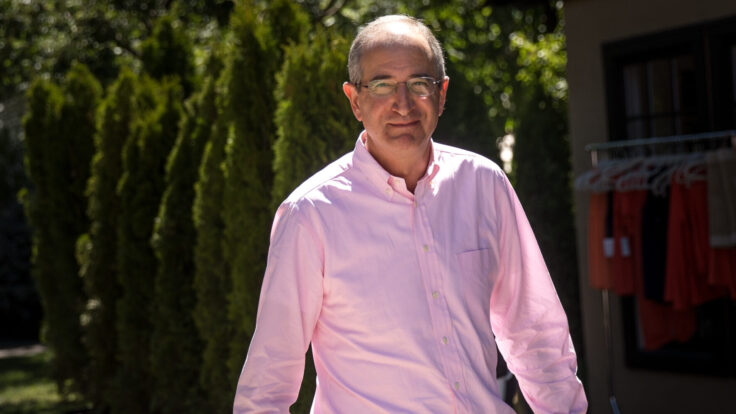
| It’s hard to know sometimes where the tipping point lies. Or what causes one event to happen rather than another. But, there’s no question les jeux sont fait, as Jean-Paul Sartre might have said, for my old colleague, Ken Jacobs, at the top of Lazard at the time of my May 11 column about the firm and Jacobs’ tenure as its chief executive. It was obvious to anyone watching that his time as the C.E.O. of the firm had to be nearing its end: He’d been there 14 years, during which time the stock had done nothing except go down 27 percent; he had just made the decision to lay off 10 percent of the workforce, something Lazard had never done before in its majestic 175-year history; and, to put it mildly, the troops were getting restless.
Eight days later, the Wall Street Journal broke the story that Jacobs was out, and that Peter Orszag, the former Obama-era budget czar and a Lazard executive since February 2016, was in. Oddly, though, Lazard has not made the news official. The articles about the move still use the subjunctive tense, as in that the succession is something Jacobs and Lazard intend to do but haven’t yet gotten around to actually doing it. (No 8-K, for instance, has been filed with the Securities and Exchange Commission.) And, I’m told, before it ran, Lazard did everything it could to try to kill the Journal story about Jacobs giving up the C.E.O. role and Orszag assuming it. Jacobs then went out of his way, in an interview with The Sunday Times of London, to make it seem like the succession process at Lazard had been seamless. “I’m taking the drama out of succession,” he reportedly told the newspaper.
But anyone who knows anything about Lazard knows that nothing at Lazard happens without drama. It’s always been thus. As for instance when Andre Meyer came to New York during World War II and then put the spliff into the back of Frank Althschul, who was then running the New York City partnership and had just gone out of his way to get Andre into the country by tapping his connections with Herbert Lehman, the governor of New York and friend of F.D.R., the man who controlled immigration. There had also been any number of attempted coups along the way to Bruce Wasserstein’s arrival at Lazard, after September 11. Michel David-Weill, the firm’s patriarch at the time, succeeded in getting Bruce to come to Lazard, yes. But the crafty Wasserstein drove a hard bargain: he got control of the firm for chump change and then succeeded in pushing Michel out the door four years later, when Lazard joined the Wall Street stampede and took the firm public, in May 2005.
So, I’m more than just a bit skeptical of the Jacobs spinning. It’s time for the Lazard board of directors, which has long been in Jacobs’ pocket, to do its job. Unless the Lazard board is prepared to bring back Antonio Weiss, the former head of banking at the firm who left to become a Treasury official, also in the Obama administration, Orszag is the right guy to succeed Jacobs. He’s smart. He’s calm. He’s authoritative. He seems like a good enough herder of the Lazard cats (never an easy task). He may not be the second coming of Felix Rohatyn as a dealmaker, but he’s worked on some pretty important deals, too. And he seems to appreciate and understand Lazard’s quirky history. In any event, enough with the pussyfooting around, Lazard. Make the announcement already. Make it official. File Orszag’s new contract and the press release with the S.E.C. and let’s get on to the next, great era in Lazard’s history. |
|
|
| Wall Street and Hollywood were stirred this week by the not-so-stunning news that Disney was preparing to sell ESPN, the culture’s flagship cable property, direct to consumers in the years ahead. The move, of course, reflects the changing dynamics and models of the industry. For Bob Iger, what used to be a relatively simple and highly profitable basic cable business is now infinitely more complex. The economics of the transition from pay TV to streaming was always going to be difficult, of course. But the decline of linear is occurring faster than anticipated. And so, as the Journal reports this week, Disney has seemingly accelerated the timeline for putting into market a direct-to-consumer, over-the-top streaming-only version of ESPN, to complement (but not yet replace) the basic cable channel.
How media companies grapple with the steady decline of linear TV, while concurrently dealing with cord-cutters and the high and largely unprofitable cost of the replacement streaming business, is one of the most significant challenges facing bigtime media-company C.E.O.s today. And it’s not the only challenge: there is also the small matter of billions of dollars of debt, a prolonged writers’ strike and, now, the prospect of an actors’ strike. As Tom Rogers, one of the founders of NBC’s cable business, said on CNBC the other day, “Is the growth of streaming, as it moves toward profitability, ever going to make up for the decline in the traditional television business? No one has really demonstrated yet how they believe the hole left by the decline of legacy media is going to be made up by streaming. And until that happens, it’s really hard to get too excited about anything on the streaming side, because that’s the essential question.”
I’m not sure why Iger wanted to retake the reins at Disney last November. I presume he wanted to feel relevant again and that he thought his chosen successor, Bob Chapek, wasn’t cutting the mustard. And his prospects for either owning a sports franchise (as my partner Matt Belloni has reported he would like to do) or becoming President of the United States (another Iger ambition) were not great. But it sure seems like it’s been one headache after another since he returned to the playing field: the ongoing—and quite pointless—fight with Ron DeSantis; a struggling stock price; the seeing off of the proxy fight with hedge fund manager Nelson Peltz; the firing of some 7,000 employees (never fun); the squabbling at ABC; the decline of its linear TV business; the huge losses on the streaming side; and now, how to entice cord-cutters to start paying separately for ESPN in order to get the live sports programming that Iger hopes they still want.
I suspect it will prove harder than Bob thinks to get these people to start paying for ESPN. After all, if you are a cord-cutter, you’re doing that so you don’t have to pay a monthly cable bill on top of a monthly internet bill. And it may take a while to reorient customers back to the idea that a comprehensive entertainment bundle will be expensive. Dylan Byers, another of my fabulous Puck partners, recently reported how, back in 2014, John Skipper, then the head of ESPN, was tasked with testing pricing models for just such a hypothetical streaming service. The trouble, he quickly discovered, was that a premiere D.T.C. sports channel would need to charge much more to compensate for the smaller number of subscribers. At the time, ESPN was making billions of dollars just in cable fees, equivalent to $5 or $6 per subscriber per month across some 100 million households. Skipper couldn’t get the math to work. He reached the same conclusion that Warren Buffett reached at his annual meeting last month about the streaming business: unless consumers are willing to pay more for it on a monthly basis, its economic prospects inside the big media companies are dim.
But times have changed and I’m sure the Disney number-crunchers have redone the analysis and must see something in the numbers that now gives them a reason to believe. Or maybe the analysis simply indicates there is no better option. I’m still in the Rogers camp, though: I’m not hearing anyone articulate yet how the black hole left by the decline of legacy media is going to be filled by a streaming business that has yet to be profitable, unless you are the aforementioned Netflix. I suppose Disney might be able to recoup some of the money lost by cord-cutters by trying—and hoping—to get some of them to sign up for ESPN streaming. It’s probably worth a try, but again, I don’t see it making up for the lost revenue. And that will probably be just one of the streaming services that Disney will offer—the other being some form of Disney+, either with or without Hulu when, and if, Disney buys the third of Hulu that it doesn’t already own from Comcast, for at least $9 billion in cash, potential raising its debt burden.
What’s Iger to do? Since he’s said repeatedly that everything is on the table, I think I would begin to think about things that can make streaming profitable—spending less on content? charging more for Disney+? (both of these are tough ones, for sure)—while at the same time revisiting some of the ways to reduce Disney’s $40 billion or so of net debt. Is it worth seeing if Brian Roberts would take Disney stock for Comcast’s Hulu stake? (Seems unlikely I know, unless Disney is actually undervalued at the moment and then taking Disney stock might prove to be a bonanza for Comcast.) Or maybe the time has come to try to jettison ABC by spinning it off into a separate company, loaded up with some of that $40 billion in debt? Or maybe ABC could be sold to a buyout firm that would enjoy having its substantial cash flow and wouldn’t care as much as Disney that its cash flow is slowly but surely disappearing. It’s such a conundrum that maybe Iger’s best move, at this point, is to find his successor already and pass the whole damn problem off to him or her. |
|
|
| In the last year or so since hedge manager Bill Ackman dumped his stake in Netflix, perfecting a loss of around $400 million, the company’s stock has been up more than 100 percent and is now back to having a market value of $165 billion. I have a lot of respect for Bill, despite his occasional blunders—the $1 billion or so he lost shorting Herbalife and the $4 billion he lost buying the stock of Valeant Pharmaceuticals—in large part because he was able to pick himself off the ground after those back-to-back losses and pull off one of the most stunning trades of all time at the start of the pandemic in 2020, when he turned a $27 million investment in credit-default swaps into a $3.6 billion profit in about three weeks. If that doesn’t count as one of the greatest trades of all time—at least on an IRR basis—I don’t know what would. And yet, I still don’t get why he dumped his Netflix stake, as I’ve written before. (This is not investment advice.)
I guess I understand why he got spooked by the first quarter 2022 subscriber losses, but I saw that as a periodic blip rather than something fundamental going astray at the company. With an army of some 232 million subscribers, as of April 2023, who are theoretically paying the company every month to get access to its content, I just didn’t see what the loss of a few million of those subscribers was worth getting all exercised about. Netflix’s economic moat isn’t growing as quickly as before, but it still looks pretty impenetrable.
And then there is Netflix’s unique ability to make money from its streaming business, one of the few companies in the streaming business to figure out a way to find profits in the business. If I read the latest 10K correctly, Netflix had nearly $4.5 billion in net income in 2022 and had $4.2 billion in net income for the 12 months ending March 31 of this year. In other words, Hastings, Peters, Sarandos et al. are finding ways to make money in the streaming business when no one else seems to have been able to do that yet. (See Iger, Bob and Disney, above.)
Part of the Netflix secret, I think, is to be relatively asset light and content rich. Netflix doesn’t own a major studio in Los Angeles—it owns a small studio in Albuquerque, where Breaking Bad was often filmed—and so it doesn’t have a bunch of capital tied up in producing its own movies and TV shows. Instead, it largely buys shows, movies, documentaries that other people have made and offers up to Netflix at a price. According to the Netflix 10K, it spent nearly $17 billion in 2022 on its “additions to content assets,” a tidy sum indeed. (I’ve become a bit wary of quoting from Netflix’s financial statements since things aren’t always as they are reported to be on them. But let’s give the company the benefit of the doubt this time.)
And now, it seems, there is proof that Netflix’s efforts to create a lower-priced advertising tier for the customers who want such a thing is starting to pay off, and that some 5 million customers have signed up for it. It just goes to show that, as Heraclitus supposedly said, “all is flux.” Follow my logic here…
A year ago, Ackman thought Netflix was in trouble to such an extent that he was willing to perfect a $400 million loss. It turned out, that was the start of a rip-roaring year for the company, at least in the stock market. A year ago, few would have predicted that Bob Iger would return to Disney and that he would be facing all of the aforementioned problems. Ditto David Zazlav at Warner Bros. Discovery, who has to contend with $48 billion of net debt and EBITDA that is not exactly roaring. And then there is Paramount Global, about which the less is said the better.
As a reminder, though, for those who may have forgotten: Nearly 30 years ago, Shari Redstone’s father, Sumner Redstone, paid about $10 billion for the old Paramount, without Viacom and without CBS. Today, PARA, which includes all those assets plus the Viacom orphanage, trades for less than $10 billion. So, you know, a lot has changed in the past 30 years. And it’s not at all clear who is going to survive the current shake-out and in what form. |
|
|
| When it comes to U.S. senators named John Kennedy, I prefer mine to be of the liberal Massachusetts variety, befitting my place of origin. But I have to hand it to the other Senator John Kennedy—John Neely Kennedy—the one who has been representing Louisiana (even though he was born in Mississippi) for the past seven years and who is a conservative Republican. He is also one smart son-of-a-bitch. A former Louisiana state treasurer, Kennedy is a graduate of Vanderbilt, the University of Virginia Law School and Oxford, where he earned a Bachelor of Civil Law degree.
I don’t often do this but I wanted to applaud him for his brilliant, no-holds-barred vivisection of Gregory Becker, the former C.E.O. of Silicon Valley Bank and the person who drove the bank off the cliff in March and cost the FDIC, as well as the bank’s shareholders and bondholders, billions.
It was at the hearing on Tuesday, before the Senate Banking Committee, where Senator J.N. Kennedy masterfully pinned down Becker, who until then had been bobbing and weaving in his best Muhammed Ali imitation. As soon as committee chairman Sherrod Brown, the Democrat from Ohio, turned the microphone over to Kennedy, he went to town on Becker. I doubt many people were watching the hearing, or heard about Kennedy’s performance. (The room itself looked pretty empty and there were few senators actually in their seats while Kennedy spoke.) In any event, I’m just going to leave the colloquy here for your enjoyment:
Kennedy: Mr. Becker, when interest rates go up, the price of government bonds—especially long term, long maturity, government bonds—goes down doesn’t it?
Becker: Yes.
Kennedy: And you don't have to be Einstein’s cousin to know that, do you?
Becker: No, you don’t.
Kennedy: OK, now, your bank had 55 percent of its assets invested in government bonds didn't it?
Becker: Roughly, yes.
Kennedy: And the Federal Reserve raised interest rates, didn't it?
Becker: Yes, it did.
Kennedy: And the value of your assets went down dramatically, didn't it?
Becker: Yes, it did.
Kennedy: And you didn't have hedges, did you?
Becker: Senator, as previously mentioned, the decision around hedges was made by our asset liability committee…
Kennedy: Mr. Becker, you were the C.E.O. of the bank. You didn't have hedges, did you?
Becker: Senator, there were hedges that were put in place, but I don't recall the details around when they were put in place.
Kennedy: You’re the C.E.O. and you had 55 percent of your assets in government bonds and you don't know whether you were hedged or not?
Becker: Senator, as previously mentioned, I don’t have access to my SVB documents, so…
Kennedy: Well, I know that and I wasn’t C.E.O., you weren’t hedged. Now, if you’d bought those hedges, that would have cut into your profits, wouldn’t it?
Becker: Senator, I don’t know the details of the decisions that the team were evaluating.
Kennedy: But if you bought a hedge, the hedge costs money, and it would have decreased your profits, wouldn’t it? Do hedges cost money?
Becker: Yes, they do.
Kennedy: And so if you bought hedges, you’d have less money, right?
Becker: Senator, yes, that would cost money, but it depends upon how the…
Kennedy: And if you’d made less money that would have affected your bonus, wouldn’t it?
Becker: Senator, our compensation was predominantly long term in nature and so I know there’s been lots of discussions about compensation being short term…
Kennedy: Mr. Becker, you made a really stupid bet that went bad, didn’t you? And the taxpayers of America had to pick up the tab for your stupidity didn’t they?
Becker: Senator, there were a series of events, unprecedented events that occurred, that led us to where we are today.
Kennedy: Nah, this wasn’t unprecedented. This was bone deep down to the marrow, stupid. You put all your eggs in one basket. You put all your eggs in one basket. And unless you were living on the International Space Station, you could see that interest rates were rising and you weren’t hedged.
I know we like to often proclaim from the highest mountains that our elected representatives don’t understand finance and are clueless about the way Wall Street really works. That’s one of Wall Street’s favorite cliches about Washington. And, of course, there may be some truth to that, as we’ve all seen in hearing after hearing in the wake of the latest financial disaster. But, in this instance, John Neely Kennedy, the Republican Senator from Louisiana, got it exactly correct and he did it without mincing words and with piercing accuracy. I’ve got to say that was quite a performance. Bravo, Senator! |
|
|
|
| FOUR STORIES WE’RE TALKING ABOUT |
 |
|
 |
|
 |
|
 |
| Iger’s Huluology |
| Will the forthcoming mega-platform affect Iger’s legacy? |
| JULIA ALEXANDER |
|
|
|
|
|
 |
|
|
|
Need help? Review our FAQs
page or contact
us for assistance. For brand partnerships, email ads@puck.news.
|
|
|
|
Puck is published by Heat Media LLC. 227 W 17th St New York, NY 10011.
|
|
|
|