 |
| Happy Sunday, and welcome back to Dry Powder. |
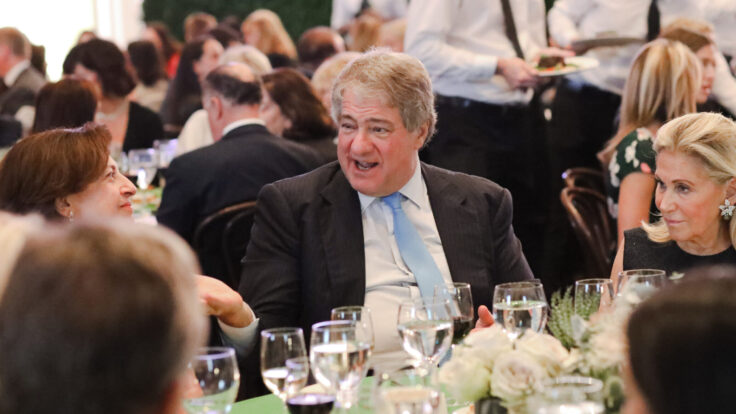
| Is it time for some new blood at the top of my old firm, Lazard? If the first quarter results are the new normal, then I think something will have to give, and soon. In today’s dispatch, a close look at the recent turbulence under C.E.O. Ken Jacobs, thoughts on Mike Cavanagh’s new gig at NBCU, and reflections on the latest SVB postmortems. |
|
|
| Once upon a time, when Lazard was a private partnership, as it was for the first 157 years of its nearly 175-year existence, and when the late Michel David-Weill, the last scion of the founding family, was still running the bank, it was not uncommon for a partner to have a bad year. Maybe his or her clients weren’t doing deals; maybe the M&A market was in the doldrums. Maybe he or she had momentarily lost their touch. Whatever the reason for the production hiccup, Michel, in his paternalistic, Parisian way, would decide to carry that partner from one year to the next, with the expectation that at some point his or her fecundity would pick up again.In other words, Michel would still pay the guy, even though he probably didn’t deserve a bonus, or worse, should probably have been fired outright. But Michel didn’t do that. He paid them pretty darn well during a bad year, figuring at some point the person would return to the production levels of another time. He rarely fired a partner from the firm, which explains in large part why, during my six years at Lazard, from 1989 to 1995, there were something like 72 partners in banking and 72 non-partners in banking doing their work.
It was the opposite, or contrapositive, of a traditional inverted pyramid structure that you would find at most banks, with one or two senior bankers in an industry and then, underneath, a large supporting cast to do their work. Instead, at Lazard, it was an often punishing, often rewarding, firehose amount of work. But it also felt like a Florentine guild, where you were apprenticing with the very best M&A craftsmen, learning their art and science by working on the most important deals at any given moment.
Michel loved to refer to Lazard as the “haute banque d’affaires vis-à-vis the world.” He once described what he meant by this: “To me it is a state of mind, not an activity. It is a firm which puts itself at a level parallel with the level at which decisions are made in enterprises. It means that you remain at the decision-making level, that you give advice at that level, that you think at
that level and that you remain exclusively at that level.”
Alas, that Lazard is long gone. After 9/11, Michel recruited the wily American Bruce Wasserstein, who effectively swiped Lazard from Michel and took it public in May 2005, sending Michel packing along with about $2 billion of proceeds from the I.P.O. Bruce ran the public Lazard as C.E.O. until his sudden death in October 2009. Since then, Ken Jacobs has been the Lazard C.E.O. That’s nearly 14 years by my count, almost as long at the top as Jamie Dimon, at JPMorgan Chase, and Bryan Moynihan, at Bank of America. During that time, Lazard stock has declined 22.5 percent overall, from around $40 a share on November 16, 2009, when Jacobs took over, to around $31 a share today.
I don’t know whether it might be time for some new blood at the top of my old firm—the possible successors to Jacobs are in the wings, either in the form of my old boss at Merrill Lynch, Ray McGuire, who just joined Lazard as its president after a failed run for New York City mayor, or Peter Orzag, the former Obama budget director who is head of investment banking at the firm—but if the first quarter results at the firm are the new normal, something will have to give, and soon. “Candidly, things are not feeling as good as they were in December or January,” Jacobs told Bloomberg on Friday after the firm posted a surprise loss. “It’s time to act. That’s basically it.” The action Jacobs is taking is to cut Lazard’s roughly 3,400 workforce by 340 people, or by around 10 percent.
It’s been a rough start to the M&A year, as I predicted it would a few months ago. Jacobs said on the earnings call that M&A activity was at its lowest level since 2012. And Lazard, which is about half an M&A advisory firm and about half an asset management firm with about $232 billion in assets under management, is feeling the pain. (And thank goodness for the steady asset management business, or Lazard might well be reeling.) Its financial advisory revenue of $274 million was 32 percent below Q4-22’s $404 million and 29 percent below Q1-22 revenue of $388 million. (M&A revenue often is lumpy, with most of it usually coming in the last half of the year.) For the first time that I can remember—and I wrote a book about the history of the firm—the bank had negative operating income in the first quarter of 2023: it lost $37 million on $542 million in revenue. “Things have really deteriorated,” Jacobs said on the earnings call.
The operating loss and the percentage revenue declines are big numbers. Something seems amiss, to be honest. “The first quarter was marked by economic uncertainty and market turmoil, particularly in the financial sector,” Jacobs said in a press release announcing the earnings. “Asset Management is off to a solid start for the year. However, slower M&A activity resulted in significantly lower revenues in the quarter and the outlook for the year remains uncertain. We are implementing cost-saving initiatives to right-size for the current environment and provide flexibility to strategically invest in our business.”
I note, with interest, that while the first quarter was a rough one—resulting in part in the announcement of the 10 percent reduction-in-force, as the British would say, Lazard managed to keep its compensation dollars near the levels of the previous year, when M&A advisory was far more robust. (Shades of Michel?) Compensation and benefits expense was $409 million in the first quarter of 2022, or 58.5 percent of revenue in that quarter; it was $399 million in the first quarter of 2023, or a whopping 76 percent of first quarter revenue. Bankers have still got to get paid, I guess. (The firm wrote in its press release that it expects compensation as a percent of revenue to settle into the mid-60 percent range for the full year—still high by the standards for the rest of Wall Street, although in fairness Lazard has a very different business model.)
Jacobs himself has also been well paid, you’d have to say. In the last three years, he has received a total of $32.7 million in cash, stock and other compensation, according to the 2023 proxy statement. But, like other shareholders, he’s also received dividends of nearly $2 a share on the 2.56 million Lazard shares he owns, or another $5 million in cash in 2022. He also received another $1.3 million in cash in the first quarter of 2023 on his dividends. Jacobs’ stock in Lazard is worth around $80 million these days. According to footnote 1 on page 57 of Lazard’s 2023 proxy, in 2022, Jacobs also received $23.4 million in the value of what Lazard calls “performance-based restricted participation units,” or PRPUs. Lazard declined to comment about Jacobs’ compensation or its structure or these PRPUs. As best as I can figure from the footnotes in the proxy—and this is dense, opaque stuff, probably by design—is that his potential payout on the deferred award, which won’t happen until February 2025, depends on the firm’s performance during 2022, 2023 and 2024 in aggregate, based on a number of tough to discern factors, plus some multiplier. As I said, opaque. But if Jacobs gets the maximum share grant of 660,338 shares, that would be worth $23.4 million to him, based on today’s stock price, putting him, compensation-wise anyway, in a similar league to the Wall Street big boys.
Back in my day, Lazard was always a firm that paid very well. It was a true “star” system, rewarding the top performers with riches, year in and year out—most notably Felix Rohatyn, who was the firm’s longtime rainmaker. And then Michel would circulate to the partners a list displaying what percentage of the firm’s profits had been disbursed to each. The message was clear: top pay for top performance. And there still seems to be a vestige of that old system around Lazard these days, if Jacobs’ compensation and the overall 76 percent compensation ratio in the first quarter is any indication.
But Lazard is a public company now, and has been for 18 years. Its market value is $3.5 billion. During that time, competitors such as Evercore (market value $4.7 billion), Moelis ($2.6 billion,) and PJT ($2.8 billion) have sprung up and slowly started eating Lazard’s lunch. And that’s not including the extraordinary success of firms that are still private, such as LionTree and Centerview Partners. Lazard is in the process of starting to celebrate its 175th year in business; if it wants to be around another 175 years, it’s going to have to start changing and fast. |
| Cavanagh’s NBCU Timetable |
|
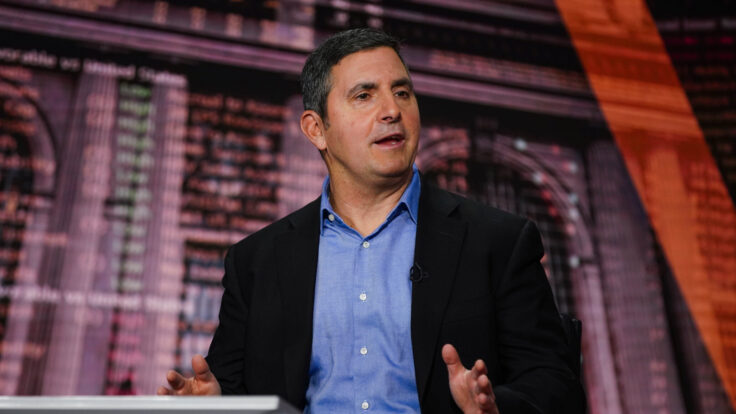
| Good for Mike Cavanagh, the Comcast president whom Brian Roberts has appointed to replace Jeff Shell as C.E.O. of NBCU after the latter’s affair with a subordinate. Cavanagh, after all, is really a finance guy (and a damn good one), not a traditional media hand, and what longtime banker wouldn’t dream of having the chance to run one of the world’s premier media companies?How long will he stick around? On the company’s earnings call this week, Cavanagh said there was “no timetable” for his appointment. “I’m gonna be here a long time,” he told Bank of America analyst Jessica Reif Ehrlich, when she asked about his dual role as Comcast president and NBCU chief executive. “I actually think that’s good for me and good for the company over the long term.”
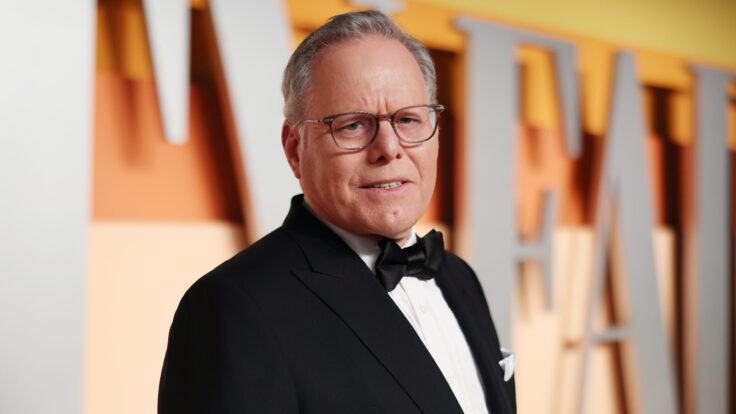
But, to me, Cavanagh’s appointment is really a placeholder for Comcast until—you guessed it—a deal can get done between NBCU and Warner Bros. Discovery a year from now. That’s probably when Cavanagh—the former C.F.O. of JPMorgan Chase, the co-head of investment banking at the firm and a former Carlyle Group executive—will probably take over from Brian Roberts, as he approaches his 65th birthday, in the day-to-day running of Comcast. Cavanagh’s elevation to running all of Comcast would then pave the way for David Zazlav to take over as C.E.O. of the combined NBCU-WBD, as I have been predicting for some time.
Look, I know it’s still a longshot. But sometimes you have to read the tea leaves. And, to my way of thinking (as loyal readers know), the combination of NBCU and WBD is inevitable. The fact that Cavanagh, a Wall Street finance guy with close to zero operating experience, will be the C.E.O. of NBCU fairly screams “interim appointment,” even though it’s not being fully portrayed that way. But if a combination with WBD is in the future—and it can’t be explored “officially” for another year, given the rules governing Reverse Morris Trust transactions—then the appointment of Cavanagh makes perfect sense. Why go out and find a full-fledged operating executive, or promote someone from within, if a year later Zaz is going to ride in to run the combined NBCU-WBD entity? The answer is, you wouldn’t do that. You’d do exactly what Brian Roberts has done, and appoint his wingman Cavanagh to the job, on an interim basis.
Sure, I could be wrong about all this: funny things happen on the way to the forum all the time, which is what makes finance and media, and writing about them, so captivating. But many smart people I talk to on Wall Street continue to think that the combination is inevitable, with Zaz as C.E.O. and Comcast as the controlling shareholder. I also have to believe that WBD’s two largest shareholders—John Malone and the Newhouse family—would love the combined deal, too. For Malone and the Newhouses, the formation of WBD may have been personal and profound, but now it is likely more of an economic play than anything else. And that means doing what needs to be done to get the WBD stock out of the doldrums; it’s down 44 percent since it went public, although up 43 percent so far in 2023. If the long-term plan for Comcast and WBD is the combination of WBD with NBCU, then of course it’s logical to appoint Cavanagh as the NBCU C.E.O. in the wake of the Shell firing until that can happen. As usual, the move makes Comcast and Brian Roberts look pretty darn smart. |
|
|
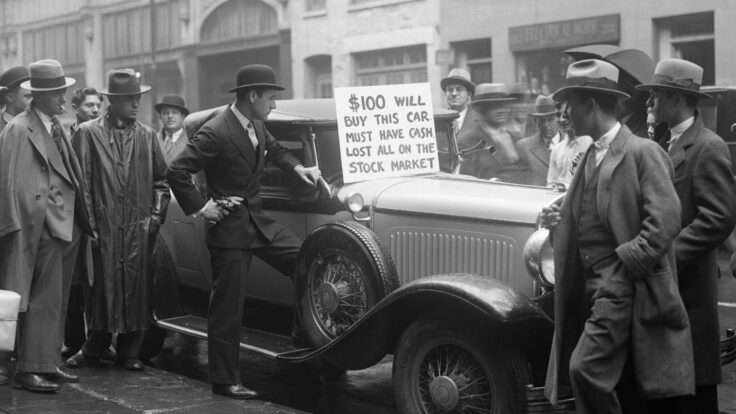
| It’s been a month and change since Silicon Valley Bank and Signature Bank went down the tubes, and the Feds are beginning to release their postmortems, blaming the banks, for failing to hedge their risks, and also blaming their regulators, for failing to take action. Indeed a new PowerPoint from February, making the rounds on Twitter, reveals that Federal Reserve regulators were well aware that SVB had loaded up on mortgage-backed securities and Treasuries at the top of the market and that the value of those securities had fallen precipitously after a year of the Fed raising interest rates. It makes you wonder why no action was taken, doesn’t it? In any event, it’s all pointing toward a government-wide push under the Biden administration to tighten rules on the industry, or at least to return them to how they were under Obama, before his successor loosened them.Frankly, it’s incredible that regulators should have to learn this lesson again. Yes, banking seems like it should be an easy, relatively safe business. You take in people’s money, pay them tiny amounts of interest, lend it out at a higher rate of interest, and harvest the spread. If done prudently, with proper risk management, banking is like alchemy, spinning the arbitrage into vast profits. But it can also be like nitroglycerin, especially in our system of “fractional banking,” which is economist lingo for the idea that your hard-earned money isn’t actually in a vault somewhere. If it were, then the bank could not make any money, itself. Of course, a “fractional banking” system also requires peoples’ confidence. They have to believe they can get their money when they want it and that it will be there for them. (The root of the Latin word for credit means “to believe.”) That works fine unless lots of people want their money at the same time. That’s when the whole thing breaks down, and quickly.
Fortunately, the system breakdown doesn’t occur that often. Maybe once every ten to 15 years. And we have collectively decided we can live with that, despite having nearly paid the iron price for that compact back in 2008 when the big Wall Street banks at the heart of the financial system started going down the tubes, almost causing a meltdown of all the kit-and-caboodle.
The demise of SVB and Signature Bank—First Republic Bank is probably next—is unlikely to cause a panic and financial crisis similar to what happened in 2008. No offense, but they are, or were, pretty niche banks, with quirky practices—lending to startups without much revenue, or to crypto companies or making jumbo, low-interest mortgages—and just about the worst understanding of risk imaginable. Nevertheless, they were once as heavily regulated, or almost so, as the big Wall Street banks, until Donald Trump rolled back regulations on mid-sized banks back in 2018. Of course, the Federal Reserve’s postmortem on Friday, along with reports from the FDIC and the Government Accountability Office, focuses on the need to restore oversight and regulation of banks that have more than $100 billion of assets. And around and around we go.
The story is always the same when it comes to the dangers of banking. Borrowing short and lending long is a recipe for disaster and has been since the beginning of time, or at least since the beginning of banking. When you have short-term liabilities (deposits) and long-term assets (loans, mortgage-backed securities, Treasury securities, etc.), you are asking for trouble when the liabilities start coming to roost, or if the providers of the short-term capital are no longer willing to keep the merry-go-rounding. That’s what happened to both Bear Stearns and GE Capital during the 2008 financial crisis (as well as to Merrill Lynch and Lehman Brothers and what would have probably happend to Morgan Stanley too but for a heroic save by the Japanese).
What has compounded the risk in this most recent banking crisis, at least in the cases of both SVB and First Republic, was horrific risk management. In SVB’s case, that took the form of taking deposits and investing that money in what SVB management thought were safe mortgage-backed securities and Treasuries at the top of the market, and then failing to hedge that interest-rate exposure. When the Fed raised interest rates dramatically during the past year, the value of SVB’s assets plunged, and the confidence spell was broken—as the Fed supervisors noted in February. Instant triple whammy: depositors fleeing, perfecting a loss on a stupid portfolio of bonds, and an inability to raise new capital when they needed it most. Confidence loss was immediate. The bank was kaput.
The same thing is now happening at First Republic, although the stupid assets are below-market jumbo mortgages. How could any bank management team worth its salt buy bonds or issue mortgages at interest rates that have been manipulated by the Federal Reserve to the lowest levels in recorded history? The answer is they should never have done it and it was exceedingly obvious that they shouldn’t have done it. But they did, and now we have a semi-regional, mini-banking crisis on our hands.
In the end, most likely, the remaining mid-sized banks will get what they deserve: tougher regulation, or at least a return to the standard upon which they were held before The Donald ran amok. The good news in all this is that the big systemic banks—the SIFIs—are still heavily regulated and as a result are much more closely examined and are better risk managers. For once, Wall Street isn’t causing this problem. And for that, I guess we can be thankful. |
|
|
|
| FOUR STORIES WE’RE TALKING ABOUT |
 |
| Tucker’s Next Act |
| What’s the next stop in Carlson’s evolving rage campaign? |
| TINA NGUYEN |
|
 |
| Fox News Sweepstakes |
| News and notes on Tucker’s future, his succession, and a new CNN threat. |
| DYLAN BYERS |
|
 |
| The Milley Doctrine |
| A chronicle of a transatlantic voyage with General Mark Milley. |
| JULIA IOFFE |
|
 |
| The RealReal Wars |
| P.E. vultures are circling the troubled consignment juggernaut. |
| LAUREN SHERMAN |
|
|
|
|
|
 |
|
|
| Need help? Review our FAQs
page or contact
us for assistance. For brand partnerships, email ads@puck.news. |
|
| Puck is published by Heat Media LLC. 227 W 17th St New York, NY 10011. |
|
|
|