{{ 'now' | timezone: 'America/New_York' | date: '%b %d, %Y' }} |
|
|
|
Hi, and welcome back to Line Sheet. I’m sorry I didn’t write about Harry Styles and his
Chanel bag, but I promise we still have time. I much prefer to write about celebrities who dress badly, which explains why I have also chosen not to mention Sofia Coppola’s Elle magazine cover and editorial, where she’s wearing the perfect Chanel sweater.
You know who probably would have never put Coppola on a cover because it’s too obvious? Hanya Yanagihara, the editor of T, The New York Times’s style magazine, who
resigned today. For this oh-so-special Inner Circle issue (trade up here, why don’t you), I’ve got some insight on how her exit is being viewed inside the Times.
Meanwhile, Sarah Shapiro looks at what people are hunting for on The RealReal right now. (Guess what? Chanel! But the actual search terms will surprise you.) I’ve also got intel on Zimmermann’s new C.E.O. And
for the main event, a look at what’s really going on at the Lanvin Group, where revenue is down 30 percent year over year at the namesake brand.
Tomorrow on Fashion People, my guest is one of my fashion obsessions (and former T magazine assistant), the costume designer Miyako Bellizzi. Like the rest of the Marty Supreme cast and crew, Miyako was robbed on Oscars night, but she is a winner in our hearts and on the red carpet, where she
never misses. We chatted about her career, her process as a costume designer, and her personal style, too. Listen here and here.
And for those of you with The Shoppies: Uniqlo U, designed by Christophe Lemaire and Sarah‑Linh
Tran, still exists, and it’s still a decent place to buy foundational wardrobe pieces that you can mix in with vintage and a few designer items—probably from Phoebe Philo Collection E, which arrives in June and looks incredible. (As one stylist said to me earlier today, “God bless her.”) From Uniqlo U, I’m considering the
grommet belt (I can’t get enough belts), and would guide you toward this sheer parka and the tailored jacket.
Also mentioned in this issue: Andy Lew, Peter Copping,
Siddhartha Shukla, John Idol, Love Story, Simone and Nicky Zimmermann, Roberto Eggs, Remo Ruffini, Jean Arnault, Noelle Sciacca, Bruno Sialelli, Bartolomeo Rongone, Bernard Arnault, Joann Cheng, Matthieu Blazy, Stefano Martinetto, Antoine
Arnault, and more… |
|
|
|
A MESSAGE FROM OUR SPONSOR |
For over 90 years, we have defined Italian elegance. As a family-owned brand across three generations, we celebrate
heritage, craftsmanship, and timeless style. Made in Italy is more than a label— it’s our promise of quality, responsibility, and enduring design. Blending tradition with modern sensibility, we shape men’s style worldwide with understated luxury that transcends trends, generations, and borders. Discover our collection at Canali.com |
|
|
|
Three Things You
Should Know…
|
- There
will never be a magazine supplement as self-indulgent and fabulous as Hanya Yanagihara’s T: A few months ago, while scanning the holiday issue of T magazine stamped with the cover line, “The Greatest Generation: How Gen X Changed the Culture Forever,” I couldn’t help but wonder, Carrie Bradshaw–style: How does she get away with this? Yanagihara, who rather unexpectedly announced her resignation from the magazine today after nearly a decade on the job, is one of the last editors who
could do just about anything she wanted. She made a magazine that was eccentric and often nonsensical, entirely reflecting her own tastes and interests. Times people may not have known what to do with it, but fashion people loved it.
At the Times, the newsroom is the center of the galaxy, surrounded by other, lesser planets. Yanagihara’s department just happened to make the company money; it’s a commercial endeavor, and she was essentially left to her own devices, even
more so than Jake Silverstein, the editor of The New York Times Magazine. “They never bother Hanya,” one person said.
The question now is whether Joe Kahn and Sam Dolnick, the deputy managing editor who was also tagged on Yanagihara’s exit announcement, will start bothering with the title. There is a scenario, albeit unlikely, in which they move all style coverage under one entity, which would presumably be
overseen by Stella Bugbee, the Styles editor once considered for the magazine job. (I’ve long argued that all style content should live in one section on the Times website.) The Wall Street Journal just underwent a similar reorganization, with WSJ. editor Sarah Ball put in charge of all features. But the Times is not the Journal.
Whoever is next in line to edit T needs to be able to make a
photograph, and bring in the right art director to reimagine the magazine. (Right now, it’s dripping with Hanya, as one person put it.) The problem is that there aren’t many people with that sort of experience anymore. There’s speculation Yanagihara’s current right hand, Jared Hohlt, could take it, but this is a chance to totally reimagine it with a different sensibility. Another staffer, Nick Haramis, whose name was floated in the Vanity Fair and
GQ conversation, is a more inspired internal choice. He’s also well-liked by advertisers. Otherwise, it has to be someone with taste. Rachel Tashjian should apply. I’m happy to continue speculating, if only because advertisers love T and are now wondering what’s going to happen to the Salone party. - Zimmermann’s undeniable ascent: I am blown away by the success of Zimmermann. Over the course of three decades,
Simone and Nicky Zimmermann have managed to transform a resortwear brand, started in Australia, into a global ready-to-wear business that convincingly shows at Paris Fashion Week and is bought by women who almost exclusively shop European designer labels. They hit sales records in 2025, with revenue nearing $500 million.
Now, the private equity–backed brand is leveling up once again by hiring a seasoned C.E.O. with a stellar reputation with
insiders: Roberto Eggs, who is arriving from Moncler, where he was most recently the group’s chief business officer. I’m sure Eggs was under consideration when former Moncler C.E.O. Remo Ruffini was looking to replace himself, but the siren call of an outside candidate—especially one like Bottega Veneta’s Bartolomeo Rongone—is often too strong in these situations.
Anyway, Eggs is well-regarded within the group, and he has the retail
knowhow and operational excellence to position Zimmermann for an exit in a couple of years. (Of course, there are fewer and fewer buyers for these things, but that could always change in a couple of cycles.)
|
|
|
|
A MESSAGE FROM OUR SPONSOR |
For over 90 years, we have defined Italian elegance. As a family-owned brand across three generations, we celebrate
heritage, craftsmanship, and timeless style. Made in Italy is more than a label— it’s our promise of quality, responsibility, and enduring design. Blending tradition with modern sensibility, we shape men’s style worldwide with understated luxury that transcends trends, generations, and borders. Discover our collection at Canali.com |
|
|
|

| Sarah Shapiro
|
|
- The RealReal’s Chanel
fixation: One way to track the impact of Paris Fashion Week is through queries on resale sites like The RealReal—and these days, the data reveals that shoppers are very interested in creative directors and not just their brands. For example, stand-alone searches for “Matthieu Blazy” jumped 33 percent month over month following his Chanel Fall/Winter 2026 show. Meanwhile, searches for Chanel heels also jumped 18 percent; Chanel skirts rose 10 percent; and searches
for “drop waist” (the 1920s flapper silhouette that Coco Chanel originally codified) increased 26 percent. Noelle Sciacca, The RealReal’s head of fashion and strategic partnerships, called these results “immediate and highly specific.”
At the same time, FX’s Love Story, and the attendant cultural re-obsession with the Carolyn Bessette Kennedy silhouette, is also continuing to drive interest. Calvin Klein searches
are up 43 percent year over year on The RealReal, and queries for C.B.K.’s simple pencil skirt are up 56 percent.
|
|
|
|
And now, on to the main event… |
|
|
|
With an executive shake-up at its marquee brand and tremors across the group’s portfolio,
the parentco of St. John, Wolford, and Sergio Rossi is once again at an inflection point. Is bankruptcy on the near horizon, or can C.E.O. Andy Lew and his China-based owners right the ship? |
|
|
|
A few weeks back, a source in the real estate world asked me what was going on with the Lanvin Group. Were
they headed for bankruptcy? The company, which trades on the New York Stock Exchange but is controlled by Fosun, the Chinese multinational conglomerate, had considered trying to sell some of its retail leases. This person had heard reports of some stores facing rent troubles, with the company blaming the Chapter 11 bankruptcy of Saks Global for its woes. None of that was surprising: Lanvin Group’s brands—Lanvin, Wolford, St. John, and Sergio Rossi—had been in the tricky position of having to
continue shipping to Saks Global while not being paid. As a public company, after all, they had a fiduciary duty to increase revenue, and their small-to-midsize luxury brands needed department stores for scale.
And yet, over the past few months, a narrative had proliferated among Lanvin Group’s various vendors that they were not getting paid. Last week, the exit of American luxury executive Siddhartha Shukla—the Lanvin brand deputy C.E.O. for more than four years—lent
credence to the chatter, with speculation that Shukla felt compelled to leave given the current strategy. Shukla, whose replacement has not yet been named, was originally hired by Joann Cheng, the group’s first boss, who led its public offering via SPAC at the end of 2022. The group is currently trading at $1.69 per share, down 12 percent, after releasing preliminary 2025 revenue numbers on Tuesday.
The challenges at the Lanvin brand in particular, where sales were down
30 percent in 2025, are both universal and specific. When Shukla joined the business in 2021, he faced the same problems as many of its underfunded (and poorly managed) peers. Lanvin may be one of the most pristine fashion brands in the world, with one of the richest histories, but it hasn’t been carefully nurtured for decades like Chanel, Dior, or Louis Vuitton. Even before it was owned by Fosun, when the late Alber Elbaz was creative director, it was in wobbly shape. While
many of the great early 20th century houses were being fortified amid globalization and consolidation, Lanvin was being starved. There wasn’t a ton Fosun could do to right the ship.
By 2021, competing against the megabrands had become increasingly difficult; there were fewer distribution options, and marketing was more expensive. What’s more, Lanvin had become too reliant on hero products: first a ballet flat, then a sneaker. Plus, the creative director at the time, Bruno
Sialelli, was not gelling. (Sialelli is now head of women’s ready-to-wear at Phoebe Philo.) Theoretically, these are all things that can be fixed with money and time—and after the I.P.O., Shukla was able to make some changes, reimagining the brand with creative agency M/M (Paris), repositioning the business to be less focused on the sneaker, and eventually bringing in well-regarded designer Peter Copping as creative director. |
|
|
|
But Lanvin’s problems also run deeper than the obvious macro issues. The more intractable problem seems to be
Fosun itself, and its motivation to own and operate Western heritage brands. Chinese investors have been inching into luxury for decades as the country’s consumers fueled the growth of these businesses. (Along with Fosun, there’s the Icicle Fashion Group, which owns Carven, among other examples.) But there’s no denying that most of these ventures have been unsuccessful, at least in part, because of a cultural disconnect. American investors have also struggled mightily to revive European luxury
brands; just look at Capri and John Idol’s attempt with Versace. These projects take time and continuous capital. After all, LVMH and Kering’s brands were developed over the course of 30 years. |
Since going public in 2022, the Lanvin Group has cycled through three C.E.O.s:
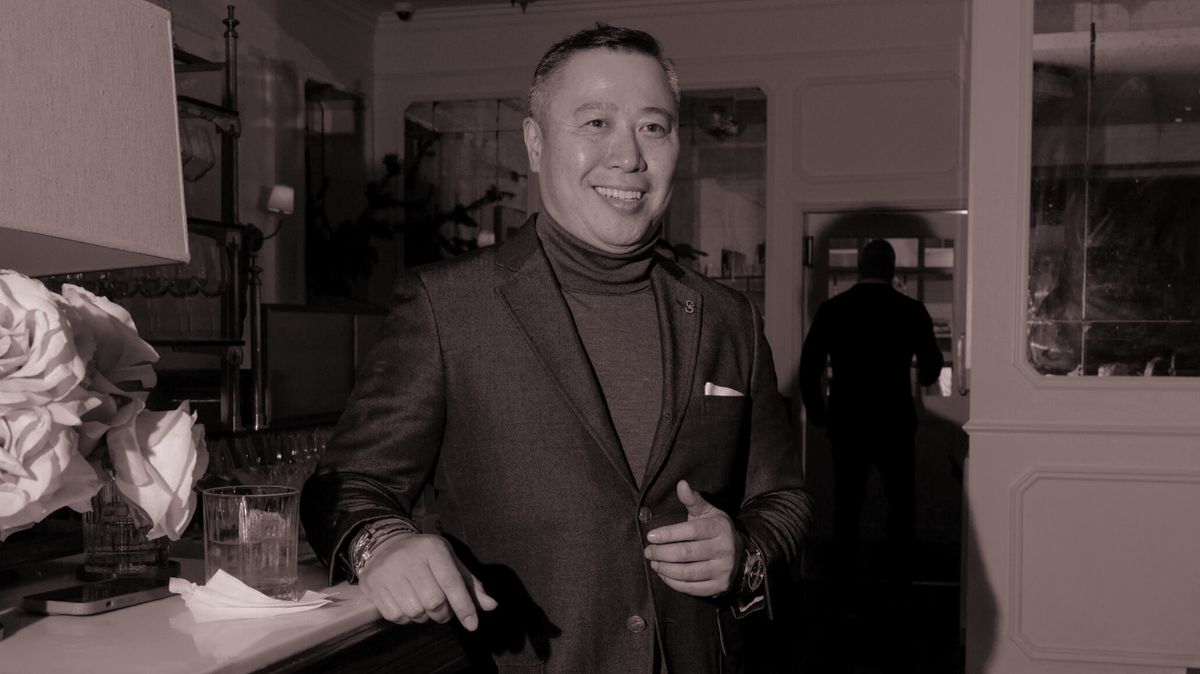
Cheng, the mastermind behind the formation of the group and its SPAC merger; Eric Chan, a longtime Fosun deputy; and finally Andy Lew, an American retail executive who spent 11 years running Brooks Brothers before joining Authentic Brands Group. Lew had impressed the Fosun powers that be while running St. John, the Orange County knitwear brand beloved by Nancy Reagan acolytes. He was able to stop the bleeding and bring St. John to near-breakeven
by ramping up distribution at department stores (Nordstrom, in particular) and expanding the off-price business.
The success earned him the top position at a group in freefall. In some ways, Lew, an American who has worked in China but does not speak Chinese, is a more traditional choice to run Lanvin Group. Unlike Chan, he is based in Europe, and has plenty of experience managing Western fashion operations. More than anything, though, he knows how to responsibly cut costs.
Can he
do enough to save the group? The bankruptcy speculation is not unfounded. However, there’s plenty Fosun can do to avoid that fate. The brands within the Lanvin portfolio remain incredibly valuable, and would be well-positioned to be sold. According to sources with direct knowledge of the strategy, Fosun is committed to at least keeping Lanvin and Wolford, the two most-prized brands in the portfolio, despite the challenges. Lew is also committed to Copping, whose most recent runway collection was
well-received by critics and retailers alike.
But in order to keep things moving, Fosun will need to invest, at least a little bit, and Lew will need to find new ways to cut costs. He already offloaded some of the group’s most culturally valuable assets, including Caruso, the revered suitmaker that was a main supplier of Céline during the Phoebe Philo years, as well as the Sergio Rossi factory, and the Wolford factory. Many of the brands in the Lanvin Group were vertically
integrated; typical at the conglomerates, which have been buying businesses upstream for years, but rare for brands of this size. Lew and Fosun are also taking the unorthodox approach of licensing the brands in Asia, an increasingly rare strategy that was popular in the 1970s and 1980s, but fell out of fashion when the luxury industry globalized with the formation of LVMH and the Gucci Group in the 1990s. I suspect
Lew will continue reducing spending while focusing on sales in local markets and increasing distribution. Stores will close, too. He may very well rescue the balance sheet, but these brands could lose value in the long term. And all at a time when Chinese companies are starting to successfully create their own fashion brands. The big story in China now is that the country is consuming its own culture, from film to fashion, rather than simply importing from the West. Maybe Fosun should have
focused on that trend rather than trying to revive European heritage businesses that it didn’t really understand. |
Kyle Chayka on why it’s weird that tech bros now talk about “taste” all the time, mostly
because they have none. [The New Yorker]
Jean Arnault, the youngest and most anonymous of Bernard Arnault’s children, is deepening his responsibilities within LVMH. Soon, Antoine will once again be the least-discussed child! (No offense.)
[La Lettre]
People are being real petty about the lighting at the Vanity Fair party. It’s so funny! [Page
Six]
The entryways of Milan. [Instagram]
J.Crew hosted a fun party in Los Angeles to celebrate its collaboration with Lee Jeans. Only hot people were invited. [Instagram]
Issue No. 33 of The Gentlewoman looks fab.
[Instagram]
Tomorrow, the showroom and “brand acceleration platform,” has been acquired. Stefano Martinetto & Co. are out. I can do a postmortem on this if there is interest. [WWD]
|
Until tomorrow,
Lauren
P.S.: We use affiliate links because we are a business. We may make
a couple bucks off them. |
|
|
|
The industry’s go-to source for unflinching reporting on the trillion-dollar business of artificial intelligence - perhaps the
single most important technology of our time. Ian Krietzberg, the powerhouse journalist behind The Deep View, delivers twice-weekly insights into the latest dealmaking and breakthroughs in A.I., and how the intersecting worlds of finance, entertainment, media, and politics are being transformed in its wake. |
|
|
|
Puck founding partner Matt Belloni takes you inside the business of Hollywood, using exclusive reporting and insight to explain
the backstories on everything from Marvel movies to the streaming wars. |
|
|
|
Need help? Review our FAQ page or contact us for assistance. For brand partnerships, email ads@puck.news. You received this email because you
signed up to receive emails from Puck, or as part of your Puck account associated with {{customer.email}}. To stop receiving this newsletter and/or manage all your email preferences, click here. |
Puck is published by Heat Media LLC. 107 Greenwich St., New York, NY 10006 |
|
|
|
|