 |
 |
|
Greetings to all the new subscribers who have come this way over the last few weeks as we have been reporting out all angles of the Sam Bankman-Fried collapse.
For years, I have been fascinated by the parents of S.B.F., Joe Bankman and Barbara Fried, even before Sam’s meteoric rise. But now facing his indictment in the Southern District of New York and a civil suit from the S.E.C., understanding the family seems essential to understanding what happened at FTX. So this morning, we’re taking a look at the Petri dish that was his strange, very intentional, philosophy-steeped upbringing.
Teddy
|
 |
| Keeping Up with the Bankman-Frieds |
|
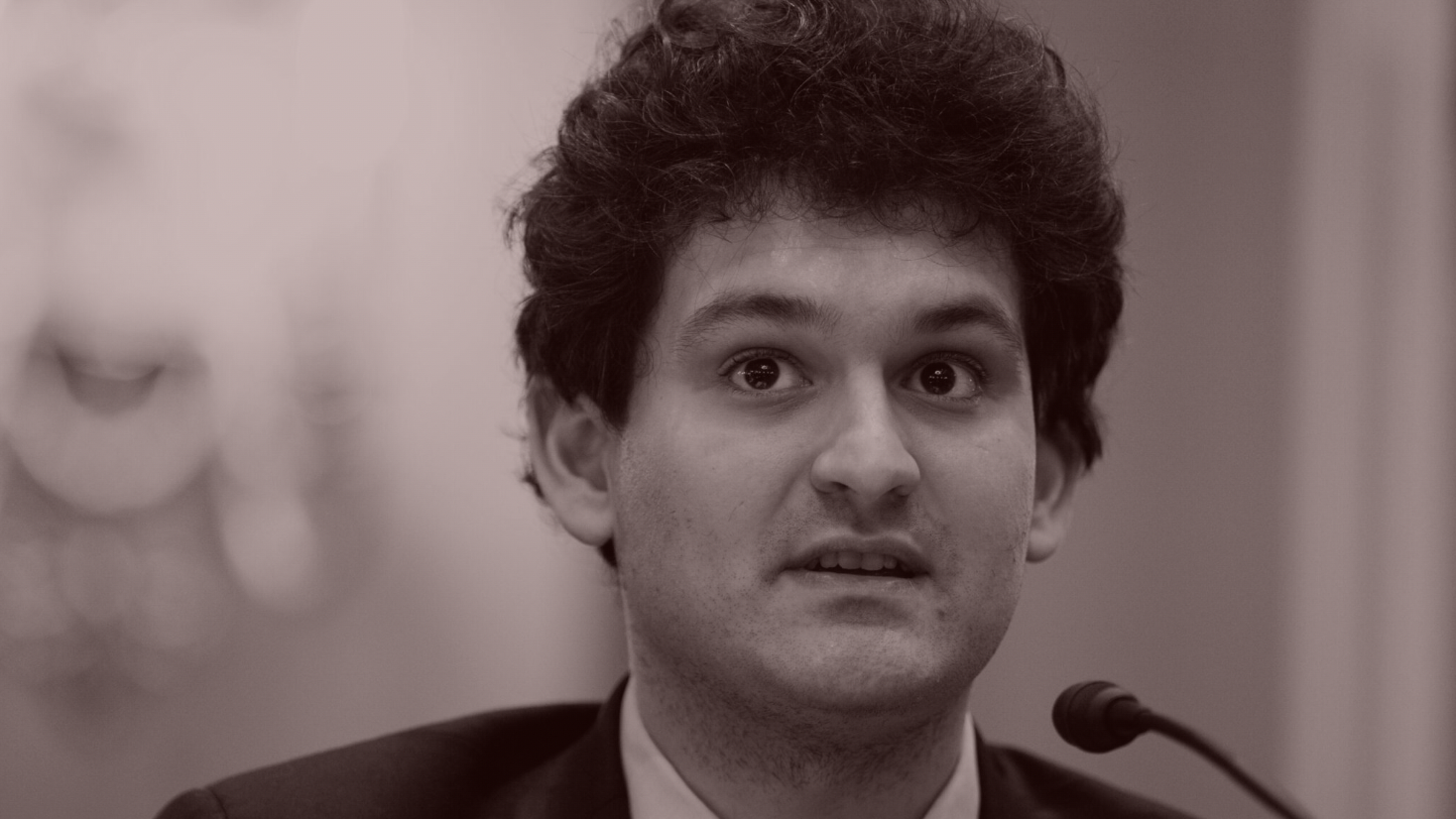
At the core of the S.B.F. dilemma is the brainy academic milieu in which he came of age: a place where effective altruism was discussed at the dinner table, shape-shifting was au naturel, and the pursuit of an ethical life undergirded it all.
|
|
|
|
Of all the potentially unanswerable riddles underpinning the Sam Bankman-Fried saga—why did Sequoia invest in a mop-topped kid who played video games during a diligence call; were Alameda and FTX ever really separate?—perhaps the most vexing is how the mastermind of this whole legal and ethical imbroglio was the offspring of two beloved legal scholars who were obsessed with ethics, in an effective-altruist Petri dish focused on analytical rigor, civic-mindedness and, crucially, consequences. How could a family so committed to doing the greatest good for the greatest number end up depriving so many people of so much happiness—and then see their son get arrested?
Barbara Fried, raised in New York, and Joe Bankman, from Iowa, had a sort of library stacks romance that is not uncommon in academia. Within months of being recruited, separately, to join the prestigious faculty of Stanford Law in the late 1980s, colleagues say, the two were an item. Sam and his younger brother, Gabe, were born a few years afterward into an upper-middle-class Jewish academic milieu that revolved around the sort of high-minded philosophical conversations normally sequestered to the core curriculum and Saul Bellow novels. Incredibly, a family where the dad paid income tax on poker table winnings and the mom dissected the ethics of the famous “Trolley problem” is now associated with what appears to be one of the greatest alleged frauds in modern corporate history.
At their ranch-style home, in the middle of the Stanford campus, the foursome’s evening conversations would often be debates about ethics and philosophy, and particularly about utilitarianism. In 2002, for instance, when Major League Baseball was hoping to avoid a possible strike, Joe Bankman devised a lighthearted idea for taxes to be levied on teams and players that chose to strike—and for players to only be able to get out of the penalty by donating money to charity while teams could avoid remuneration by making nickel hot-dogs available to Giants fans. “I’ve spent my lifetime writing obscure tax articles. This is my one chance to be a hero to my kids,” he wrote in The San Jose Mercury News. |
| A MESSAGE FROM OUR SPONSOR |
| |
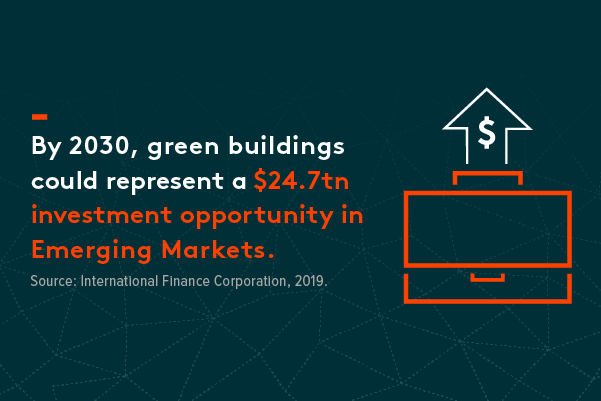 |
Build a greener investment portfolio
Government policies and private sector commitments to combat climate change are driving demand for more sustainable buildings.
We recently explored the long-term investment case for companies involved in the development, management and technology powering green buildings.
Learn more.
|
|
|
By the time Sam was graduating from middle school, he was precociously engaging with concepts in fields like population ethics, startling and delighting his parents. “When Sam was about fourteen, he emerged from his bedroom one evening and said to me, seemingly out of the blue, “What kind of person dismisses an argument they disagree with by labeling it ‘the Repugnant Conclusion’?” Clearly, things were not as I, in my impoverished imagination, had assumed them to be in our household,” Barbara wrote in the acknowledgments of her most recent book, crediting her children with a “significant intellectual debt.” “In the years since, both Sam and Gabe have become take-no-prisoners utilitarians, joining their father in that hardy band.”
Sam was well-known at Crystal Spring Uplands, the Hillsborough prep school once home to Patty Hearst, according to a contemporary, for being one of the school’s top math students and leader of the Puzzle Hunt club, a particularly nerdy group at an already nerdy high school. His senior class’s prank included making $100 bills with his face on them, called “Bankmans.” His brother, Gabe, was the more socially adept and extraverted of the two.
Neither of the brothers, unlike many fac-brats, chose to go to Stanford. But they grew up immersed in a rotating circus of Stanford faculty members. On Sunday evenings, the parents hosted dinners nearly every week featuring about a dozen or so colleagues from across the university, with the kids running in and out before charades or the like. Sometimes it was a potluck, other times Barbara prepared family-style pasta dishes while Joe baked pies. Several attendees referred to these get-togethers, which date back at least 15 years or so, as Viennese-style “salons,” where the conversation would revolve around various ethical issues, politics, medicine or literature. Multiple friends of the Bankman-Fried family called the kids’ upbringing “very adult,” in what feels like a dramatic understatement. |
|
|
Meanwhile, both Bankman and Fried were earning reputations for their teaching on campus. Fried, a legal ethicist and philosopher on taxation and other issues, won the law school’s award for top faculty member three times, more than any other member of the faculty. Bankman, who once boasted to a friend that his father had dutifully recorded every cash receipt, wrote three casebooks on tax shelters and tax evasion, becoming one of the country’s leading experts on the subject. One of Bankman’s law students in those early years was Peter Thiel, who later told Bankman that his tax law class was “his most valuable because he was able to put a lot of his Facebook stock in an IRA,” as Bankman would later recall on a podcast. (This modest feat of financial engineering would later save Thiel more than $1 billion.)
But both Bankman and Fried would become more famous for their very practical, political pursuits beyond the Ivory Tower. In 2004, Bankman embarked on a quixotic, partially-successful campaign against the nation’s largest tax-preparation company, Intuit, to try to make it easier for Californians to file tax returns. “I had spent my first ten years as an academic happily writing the kind of scholarship that no one reads except other academics,” Bankman wrote in a nearly 60-page, yet-unpublished manuscript, which charts his fight in entertaining and tick-tock detail. For about a year of his life, Bankman, a tenured professor, drove back and forth between Palo Alto and Sacramento in an effort to convince the state legislature to expand his pilot program, ReadyReturn, that would make tax filing less painful. He would even hire his own lobbyist in what was ultimately a losing battle with Intuit.
Several friends recall that Bankman spent some $30,000 to $35,000 of his own money on the Intuit fight, delaying a needed kitchen renovation in order to finance the lobbying effort. “Where are you going to find a more socially-minded tax law professor?” said Joe Grundfest, a former S.E.C. commissioner now at the law school who is close with the couple. “These people are delicious.” Lobbyists and legislators in Washington, like Elizabeth Warren and Bernie Sanders, were connected to Bankman to get his advice on various proposals. After Obama was elected president, Bankman went to work on a similar national tax-simplification proposal but that, too, stalled out.
In 2009, Joe Bankman, then in his early 50s, decided to go back to school for a doctorate in clinical psychology. He later opened a psychology practice specifically designed for law students who were struggling with mental health issues—a “rather startling mid-life decision,” as one of his friends, Bob Gordon, put it. “It was really just unbelievably hard work for Joe trying to pursue both of those careers simultaneously,” Gordon recalled. “I remember a period of a couple years he would be gray with fatigue and exhaustion at the end of the day.” Joe and Barbara even together created a two-hour program for first-year students, using cognitive-behavioral therapy to help patients manage anxiety.
Barabara Fried’s own mid-life crisis wouldn’t manifest until a few years later. Fried had been politically literate—she authored a series of philosophical criticisms of libertarianism—but her passions outside of law school had otherwise been limited to the cello and a burgeoning side-hustle as a fiction writer, with short stories published in literary reviews like Subtropics, Guernica, and Word Riot. Then, in November 2016, everything changed for her. The couple hosted an Election Night party at their home, with 50 or so people milling about the house, tables laden high with food and televisions blaring from multiple rooms in anticipation of Hillary Clinton’s victory. Of course, the evening would turn from festive to somber, and people began to leave. Fried, determined in the aftermath to get more politically engaged, soon devised the idea for a new donor network, Mind the Gap, powered by Stanford intellectuals like herself. “It occupied all of her spare time,” one friend of hers told me.
Mind the Gap, as I’ve chronicled over the years, grew to become fantastically successful, an extraordinary and frankly still-mysterious feat given that Fried had zero prior experience in political fundraising. How much the kids were involved in Mind the Gap, financially or otherwise, is a subject of great speculation among their peer set—Sam once told me he was a “consultant,” something the organization now denies—but Barbara nevertheless managed to study up and use the Stanford name to build a network of 2,200 donors. “I have been in Barbara’s presence for Mind the Gap things a couple of times and she was more engaged and interested and sharper than almost any donor principal I’ve ever engaged with,” gushed one Democratic strategist.
Mind the Gap has its critics, some of whom have grumbled about its tactics and last-minute ad cancellations during the 2022 cycle, two sources told me. Regardless, the Bankman-Fried name became a liability last month, practically overnight, as the extent of Sam’s misdeeds at FTX emerged in the press. In early November, a few days before the midterms, it was reported that S.B.F.’s companies, FTX and its associated hedge fund, Alameda Research, had absconded with and subsequently lost billions of dollars of customer deposits—even as Sam, a budding mega-philanthropist and Democratic heavyweight himself, had taken out a $1 billion loan. On November 11, Sam stepped down as C.E.O. and FTX filed for bankruptcy. The next week, I’m told, Barbara addressed her staff and broke the news—just as Gabe had to step down from his lobbying group because of his surname and didn’t want to be a distraction, she had to step down from her passion project, too. |
|
|
|
Little Kids, Little Problems…
|
|
The optics are complicated for Joe Bankman and Barbara Fried, who flew to The Bahamas amid the collapse of FTX and have remained there to counsel their son, almost as if he were a therapy patient or a legal client. Meanwhile, people on The Farm have been gossiping about how neither parent has any courses at Stanford next year: Joe canceled the one class he was slated to teach over the winter semester, and Barbara is listed as an emerita professor. (She has written that she “hopes” to make a return to teaching in the future.)
Sam has gone out of way to absolve his parents of any culpability in his financial misdeeds, telling Andrew Ross Sorkin at last month’s Dealbook conference that they “bore no responsibility” for the collapse of FTX. “Anyone close to me, including my parents and employees and co-workers who fought with the company to push forward, they were hurt by this,” he said. “I feel really grateful for the support my parents are still giving me throughout all of this.”
And yet the truth is that both parents, whether they bear responsibility or not, are deep in the barrel with Sam. As Reuters has reported, official property records show that Joe Bankman and Barbara Fried were the named owners of a $16.4 million beachside “vacation home” in Old Fort Bay, part of a broader real estate portfolio owned by FTX and senior executives totalling hundreds of millions of dollars. “They may have stayed there while working with the company sometime over the last year,” Sam told Sorkin, though he denied knowing any details about the $300 million worth of real estate that FTX and his parents bought in the Bahamas. (Joe and Barbara have said they’ve been working to return the property to the company for some time.)
Joe Bankman, in particular, has hardly been a passive observer in his son’s scandal, and may now be exposed to some legal risk, himself. Bankman interviewed and hired the first lawyers for Alameda Research, back in 2017, and effectively served as FTX’s first attorney. He handled the inbound that came and made the resulting introduction that helped FTX raise $130 million from his former law student, private equity mogul Orlando Bravo; spent his free time on FTX’s charitable and regulatory efforts; and was ultimately in the room before Sam made the fateful decision, at 4:30 a.m., to sign the documents that declared Chapter 11, according to the bankruptcy filing. “We’ve always enjoyed working together and thinking together,” Bankman said in a podcast interview explaining how he ended up working for his son. Sam had begged him for “a number of years” to work together, he said. “Any parent would love to hear that.”
Longtime friends, of course, are slack-jawed at what has happened to their favorite ethical couple. “He’s taken on this aura of being the moral fiber of the tax community,” said Jay Soled, a fellow academic and a friend. “The tax academic community is universal in ‘How could our leader even be tangentially—not involved, but why is his name appearing in the same newspaper columns as FTX?’ I understand why, but we don’t understand.” When I told Gordon, another friend, that I was struggling to reconcile the Bankman-Frieds’ preoccupation with ethics and their involvement in their son’s scandal, he agreed. “You’re not the only one. Because those of us who know Barbara and Joe just know that they wouldn’t go anywhere near anything that is dubiously legal or ethically shady. It’s just inconceivable. So the question you’re asking is one that we’re all asking. How could this happen?” A spokesperson declined to make the couple available for interviews. “They are parents who love their son,” a source close to them countered.
Another, more interesting question circling the Bankman-Frieds is whether there was something in Sam’s upbringing, among self-professed utilitarians, that somehow warped his moral compass. A strain of Effective Altruism, the philosophical movement to which Sam later subscribed, encourages adherents to first maximize their wealth in order to do as much good as possible. At what point in the accumulation of his fortune, almost all of which he pledged to spend solving the world’s biggest problems, did he stop caring about the little people in his way? “To what extent is consequentialism or effective altruism looming in the background here because the ends justify the means?” said one person who knows the parents personally. “All one can speculate is that S.B.F. had first-class brains at home thinking about moral philosophy.”
Sam’s parents, meanwhile, are simply trying to keep their heads down, counseling their son and preparing for a costly legal battle. Many of their friends say they have reached out in recent weeks to offer generalized, “Let me know if I can do anything to help” type comments, but neither Barbara nor Joe have displayed any interest in discussing the situation with them. At one of their Sunday evening dinners last month, just as the FTX scandal was breaking, attendees barely brought up the matter, not wanting to upset the couple. “I know they were happy to get relief from the stress by talking about other things,” said an attendee, law professor John Donohue.
They’re expected to move back to Silicon Valley full-time in the near future, friends say, to try to move forward. But plans can change quickly in academe, when the life of the mind suddenly intersects with real world consequences. In mid-November, for instance, Joe Bankman had been scheduled to moderate a panel on crypto tax policy at Stanford, but he abruptly withdrew after his son’s troubles spilled out into public. At no point during the conference, an attendee said, would anyone even whisper the words “FTX” or Sam Bankman-Fried. |
|
|
|
|
|
|
|
 |
|
|
|
Need help? Review our FAQs page or contact us for assistance. For brand partnerships, email ads@puck.news.
|
|
|
|
Puck is published by Heat Media LLC. 227 W 17th St New York, NY 10011.
|
|
|
|