{{ 'now' | timezone: 'America/New_York' | date: '%b %d, %Y' }} |
|
|
|
Hello and welcome back to The Best & The Brightest. I’m Leigh Ann Caldwell. I
hope you all had a lovely weekend. Sen. Lindsey Graham said on Meet the Press today what everyone knows about the situation in Iran, but few Republicans have been willing to say out loud: “I think we hit a wall on dealmaking.” Not great news for the Strait of Hormuz or the global economy.
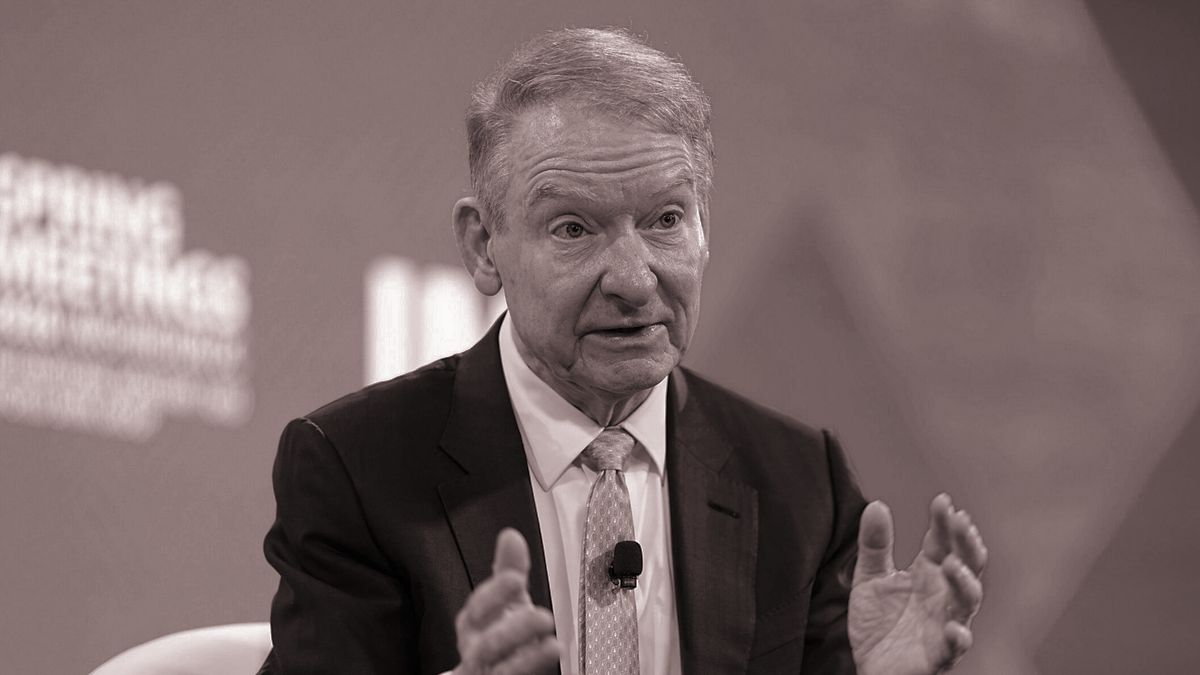
Today, Bill Cohan, Puck’s veteran Wall Street chronicler, takes the mic with a must-read dispatch from the front lines of Trump’s puzzling
campaign to do away with a beloved Wall Street institution: the quarterly report. (Sign up for his brilliant biweekly email, Dry Powder, if it’s not already part of your inbox.) Plus, news and notes on Sen. Bill Cassidy’s primary loss, the fate of the president’s ballroom, and why K Street is enjoying a major business boom.
Also mentioned in this issue:
Thomas Massie, Ryan Wrasse, John Thune, Chris LaCivita, Epstein, Ed Gallrein, Anna Pinedo, Indra Nooyi, Carlos Watson, Paul Atkins, Mark Uyeda, Caroline Crenshaw, Dennis Kelleher, and more… |
|
|
|
Claude, the AI without ads A space to think. Anthropic keeps conversations with Claude ad-free: no sponsored links, no advertisers shaping answers, no paid product placements you didn't ask for. When you bring your hardest problem to an AI, you shouldn't have to wonder who it's working for. Learn more |
|
|
|
When Sen. Bill Cassidy voted to impeach Donald Trump after the
January 6 attack at the Capitol, the outgoing president faced the lowest approval ratings of his political career—around 38 percent, according to the Real Clear Politics polling average. Though Trump’s average now stands at a similar 40 percent, the figure doesn’t capture the mood of G.O.P. primary voters. That’s one reason Cassidy lost his primary battle in
Louisiana on Saturday—and why many swing-district or swing-state Republicans face a tenuous situation in the general election. Standing in solidarity with Trump is good for the base, but might not be so great when facing the broader electorate.
Cassidy had tried for some time to placate Trump and weasel his way back into his good graces. (To wit: He ignored his medical training and rubber stamped Robert F. Kennedy Jr.’s H.H.S. confirmation.) But, as multiple Republicans
have told me, Cassidy didn’t go far enough. He never asked the president for his endorsement or tried to build a relationship with him. (It will be interesting to see if the untethered senator now starts to act on his political freedom.)
So who’s next? Rep. Thomas Massie, the Kentucky libertarian who forced the release of the Epstein files and voted against the One Big Beautiful Bill, could face a similar fate on Tuesday. Trump’s hand-picked
candidate, Ed Gallrein, has the support of both MAGA KY, a super PAC run by Chris LaCivita, the president’s former campaign manager, as well as the Republican Jewish Coalition and United Democracy Project, an AIPAC group.
So far, more than $25 million has been spent on ads, making Massie–Gallrein the most expensive House primary in history. And then there are the in-kind donations coming from Trump. “Tom Massie of Kentucky, the worst and most unreliable
Republican Congressman in the history of our Country, is an even bigger insult to our Nation than Senator Bill Cassidy of Louisiana,” the president posted this weekend. |
Trump’s ballroom gets a Byrd bath: The Senate parliamentarian ruled over the weekend that the $1
billion funding request for the president’s ballroom doesn’t meet the requirements for the reconciliation process, whereby the Senate can pass legislation with a simple majority. Some Republicans, dreading being forced to vote on such an unpopular issue, had been privately hoping for just such an outcome. But Senate Majority Leader John Thune’s spokesperson, Ryan Wrasse, said Senate Republicans will try again. “Redraft. Refine. Resubmit. None of this is abnormal
during a Byrd process,” he wrote on X. |
Lobbying spending hit a first-quarter record of
$1.4 billion this year. I asked an insider at one of the top-grossing firms to explain the surge. “Every company has their own crisis, from the penny shortage to assets being seized by the Russian government to funding the war in Ukraine,” the lobbyist said. In other words: Washington has become totally chaotic and companies are
desperate for help navigating it. If lobbying spending continues at the current pace for the remainder of the year, this year will surpass 2025, which beat the previous record of lobbying spend by nearly $1 billion.
And now on to the main event… |
|
|
|
Trump’s S.E.C. is pushing to eradicate Wall Street’s quarterly reporting requirement—an
idiotic proposal that his administration believes will “make I.P.O.s great again.” Let’s count all the ways this could backfire… |
|
|
|
In the second Trump administration, you rarely hear the words “S.E.C.” and “enforcement
action” in the same sentence. For the most part, the president and his cronies have made it standard practice to allow white-collar criminals off the hook. Look no further than the pardons of Changpeng Zhao, the Binance C.E.O., or Carlos Watson, the former Ozy Media C.E.O., who was about to head off to prison for 10 years. (Not to mention Joe Lewis, Charles Kushner, Devon
Archer, Trevor Milton… the list goes on, as yet without Sam Bankman-Fried.) When we do hear about the S.E.C., it’s usually in regard to the ridiculous suggestion—no doubt initiated by Trump and executed by Paul Atkins, his feckless S.E.C. chairman—that companies be required to report earnings every six months, instead of every quarter.
Supposedly, this inane idea found purchase in the president’s mind after a
conversation with Indra Nooyi, then the C.E.O. of PepsiCo, during his first term. But we heard hide nor hair of it until last September, when Trump took to Truth Social to push for the policy change. “This will save money, and allow managers to focus on properly running their companies,” he wrote, before alluding to China’s longer-term view of things. “China has a 50 to 100 year view on management of a company, whereas we run our companies on a quarterly
basis??? Not good!!!” The long-brewing idea found its way into a formal S.E.C. proposal on May 5. |
|
|
|
Claude, the AI without ads A space to think. Anthropic keeps conversations with Claude ad-free: no sponsored links, no advertisers shaping answers, no paid product placements you didn't ask for. When you bring your hardest problem to an AI, you shouldn't have to wonder who it's working for. Learn more |
|
|
|
According to the document, which somehow runs to 279 laborious pages, public companies would be permitted to
replace three 10-Qs with a single semiannual report—dubbed a 10-S—in addition to the usual 10-K. In other words, the end of quarterly reporting—if you want. It would bring American disclosure requirements in line with the U.K., where companies only have to report financials twice a year. But when was the last time a company was excited about filing to go public in the U.K.? Our capital markets are the envy of the world. Why the White House is so eager to fix something that isn’t broken is beyond
me. (A favor for another one of Trump’s billionaire friends, perhaps?)
So what is Atkins’s idiotic logic? “This proposal is part of my Make IPOs Great Again agenda that is aimed at incentivizing companies to go and stay public,” he wrote on May 5, adding that the “rigidity” of the existing S.E.C. rules “has prevented companies and their investors from determining for themselves the interim reporting frequency that best serves their business needs and investors.” Giving companies the
ability to report their financial performance half as often, Atkins argued, would provide them “increased regulatory flexibility,” which “might reduce some of the burdens of being a public company and potentially influence a company’s decision to become or remain public.”
Mark Uyeda, another Trump appointee to the S.E.C., joined Atkins in his advocacy for the rule change. His logic is equally convoluted. “Modern technology makes faster and more frequent
reporting possible, but that does not necessarily mean it is better,” he wrote in a statement of support. “If investors are unsatisfied with the cycle of corporate financial reporting, they will attach higher risk to that company and raise the cost of capital.”
Well, yes, that’s the problem right there: Having less information about a company would likely increase the perceived risk and thus increase its cost of capital. And I’ve got news for Atkins: The vast majority of companies do not
decide whether to go public or not because of the burdens of quarterly reporting requirements. They go public to access capital, enrich their shareholders, and engage in a lucrative branding and marketing bonanza (as we are seeing yet again with the SpaceX I.P.O. process) that convinces retail investors to line up to buy the stock—even if they often get hosed. Filing financial reports on a quarterly basis is the least a company can do in exchange for all that upside. |
“Out of the Light and Into Darkness”
|
Alas, as usual, there’s nobody really standing in Trump’s way. Caroline
Crenshaw, the lone Democratic appointee on the S.E.C., left in early January. There are now two seats vacant on the five-member commission, with the remaining three seats held by Trump appointees. In a non-farewell farewell speech at the Brookings Institution last December, Crenshaw said that “a pervasive trend” at Atkins’s S.E.C. was “moving markets out of the light and into darkness.” The plan to change the quarterly filing requirement, she predicted, “means investors will
have less access to timely financial information, including audited financial statements, less analysis from management, fewer disclosures about evolving risks, less analyst coverage, and it will be easier to smooth earnings shortfalls, among many other potential effects.”
Even more ominously, Crenshaw likened “the trend toward deregulation in the current environment to the period prior to the stock market crash in 1929. … Instead of safeguarding our markets for investors to fund their
retirements in safe and sustainable ways, we are moving in a direction where markets start to look like casinos. The problem with casinos, of course, is that in the long run, the house always wins.” But with Crenshaw gone from the S.E.C., there might be no stopping the three remaining Trump appointees from implementing this change. All that is left are the formalities of a public comment period.
Mayer Brown, the big Wall Street law firm, has weighed in with a public memo about the
suggested reporting change. While the firm noted that it might result in slightly lower costs—$110,000 for filing a 10-Q three times a year versus $132,000 for filing a 10-S once a year—there would likely be additional, unaccounted-for costs as a result of lower transparency. For instance, fewer financial reports could lead to a loss of Wall Street analysts’ coverage about a company, “which could, in turn, reduce liquidity and increase the cost of capital.” Obviously, that’s not a desirable
outcome.
Anna Pinedo, a partner at Mayer Brown and one of the authors of the memo, said she thought some smaller, research-and-development–oriented public companies might take advantage of the semiannual reporting requirements should they become official policy, but that larger, better-known public companies such as those comprising the Magnificent Seven—or however many magnificent companies there are these days—would continue reporting on a
quarterly basis. “I don’t think that it is likely to be attractive to larger companies that have a significant equity research following [or] a significant investor relations effort, and that depend on accessing the public markets to fund with regularity,” she told me. “Realistically, institutional investors expect a high degree of transparency. Equity investors and equity research analysts expect the information that’s provided in quarterly reports, and I don’t think that the information that
companies provide in earnings releases is as detailed as what they provide currently in quarterly reports.” |
|
|
|
There is also the potential problem that less-frequent reporting means more material nonpublic information
being held, intentionally or not, by corporate executives—which could have repercussions for everything from trading blackouts to stock-repurchase programs and equity grants. Semiannual reporting could also affect Regulation Fair Disclosure requirements as well as interactions with corporate auditors and the ability to issue securities from shelf registrations. “If you were to move to semiannual reporting, I think as a management team, as a board, you’d be left with some very difficult
decisions,” Pinedo told me.
Pinedo also noted that the S.E.C. is considering other proposals that might be even more material, including changes to Regulation S-K, which determines disclosure requirements for things like executive compensation, proxy materials, and shelf registration. The totality of these proposals, if adopted, could be “incredibly meaningful,” she said, “and could result in significant cost savings from a disclosure perspective. Streamlining Regulation S-K,
Pinedo continued, “would be far more important than this move from quarterly to semiannual reporting, and I would think that a very experienced chair like Paul Atkins would take that all into account before moving forward on this proposal.” |
The
Shareholder Exploitation Commission
|
In the meantime, public comments have been trickling into the S.E.C., and most of them have been against the
semiannual reporting change. “No, no, a thousand times NO,” wrote Susan Davis, a self-described investor. “The Securities and Exchange Commission is primarily tasked with protecting investors, maintaining fair and efficient markets, and facilitating capital formation. It enforces laws against market manipulation and ensures that companies provide truthful information about their business and securities. The stated purpose of the S.E.C. is NOT to make life easier
for corporations.” Another comment, from one Dennis Newell: “Quarterly is barely frequent enough. Please don’t move it to semi-annually.” Added Rebecca Weiser, “Companies should not go dark for half a year, that is very dishonest.”
Dennis Kelleher, the founder of Better Markets, a longtime nonprofit advocate for a safer financial system, has also been an outspoken opponent. In a statement he emailed to me on Thursday, he
wrote that the proposal “is only the latest indefensible pro-management, anti-shareholder proposal to come out of Trump’s S.E.C. … The stated reason—to make I.P.O.s great again—has no basis in fact. I.P.O.s and public companies aren’t down due to unstated costs; they are mostly down due to the S.E.C. (on a bipartisan basis) improperly expanding the private markets beyond all recognition when they were intended to be very limited and narrow exceptions to the rule of vibrant public markets based
on full disclosure.”
Kelleher went on: “Depriving shareholders of timely quarterly material information will only leave the so-called owners of public companies in the dark, result in market prices being stale if not wrong, and give corporate executives more time to allow problems to fester unseen until greater losses are suffered by shareholders (particularly because there’s no duty to update given the safe harbor for forward looking statements). That’s why we say that the S.E.C. under
Chair Atkins stands for Shareholder Exploitation Commission.”
It’s still not clear where this proposal goes. The public comment period is open for another 50 or so days, after which the commission will vote. If it passes, implementation would start in 2027 and allow the change to be voluntary, not a requirement. Pinedo told me that it’s very much an open question whether the S.E.C. will adopt the change, especially if the public remarks continue to run as negatively as they have been for
the past two weeks. She thinks Atkins will act based on the public and expert feedback on the proposal. I admire her optimism. But I have my doubts that the three Trump-appointed commissioners on the S.E.C., without any dissenting voices remaining, will side with the public over their very demanding boss. |
|
|
|
Join Emmy Award-winning journalist Peter Hamby, along with the team of expert journalists at Puck, as they let you in on the
conversations insiders are having across the four corners of power in America: Wall Street, Washington, Silicon Valley, and Hollywood. Presented in partnership with Audacy, new episodes publish daily, Monday through Friday. |
|
|
|
Unique and privileged insight into the private conversations taking place inside boardrooms and corner offices up and down Wall
Street, relayed by best-selling author, journalist, and former M&A senior banker William D. Cohan. |
|
|
|
Need help? Review our
FAQ page or contact us for assistance. For brand partnerships, email ads@puck.news.
You received this email because you signed up to receive emails from Puck, or as part of your Puck account associated with {{customer.email}}. To stop receiving this newsletter and/or manage all your email preferences, click here.
|
Puck is published by Heat Media LLC. 107 Greenwich St., New York, NY 10006 |
|
|
|
|