Hello and welcome back to The Best & The Brightest. I’m Leigh Ann
Caldwell. I hope everyone had a wonderful holiday weekend. I spent the rare Fourth of July in Washington, hosting family. We did all the American things: swam, grilled, watched Brad Pitt on IMAX, etcetera. For today’s issue, I wanted to get a full picture of K Street’s influence on Trump’s One Big Beautiful Bill. So I called Targeted Victory’s
Liam Donovan, a longtime G.O.P. political strategist turned lobbyist turned corporate strategist (the old model of lobbying no longer works, he says) who works with both political and business clients. In a very candid chat, Donovan broke down how lobbyists were ignored in some respects, and completely shut out of the process in others. But first… |
-
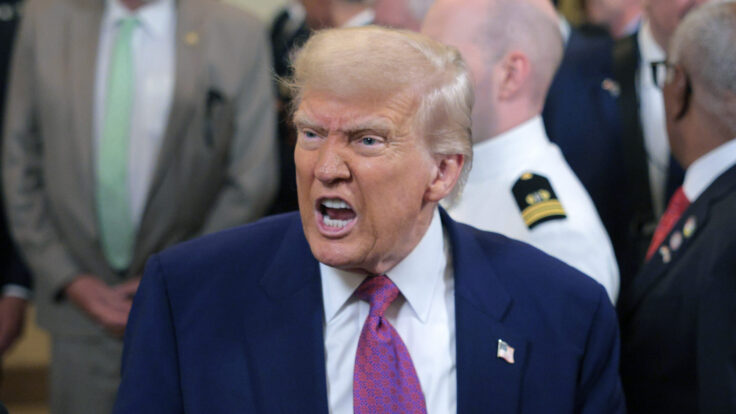
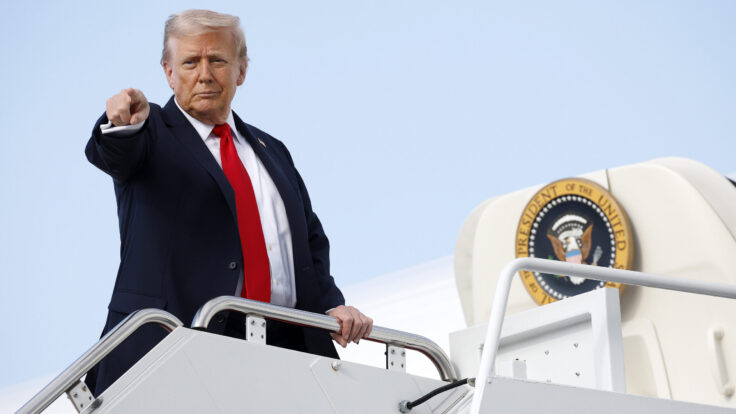
Tariff Monday: Let the madness begin. President Trump announced on Friday that his administration will begin sending letters tomorrow to emissaries of as many as a dozen countries notifying them of new, higher tariffs ranging from 10 percent to 70 percent. “It’s basically going to explain what the countries are going to be paying in tariffs,” he said, declining to provide additional details.
After the president paused his global “reciprocal” tariffs to calm the markets, back in
April, his officials promised “90 deals in 90 days.” But the administration has negotiated far fewer trade pacts than promised. To wit: Trump has announced frameworks for deals with only China and the United Kingdom, plus an unfinalized agreement with Vietnam. Nevertheless, this lack of progress hasn’t deterred the administration from once again playing chicken with the global economy and the bond market—Trump indicated that he wouldn’t extend the 90-day pause, and that
Americans would start to pay higher taxes on imports beginning August 1. Let’s see how this goes… - The Party of Elon: Elon Musk announced on Saturday that he’s forming a new third party—the American Party. “When it comes to bankrupting our country with waste & graft, we live in a one-party system, not a democracy,” he wrote
on X. Third parties have always struggled to gain relevance, broad support, and ballot access, but none have ever been funded by a centibillionaire with his own social network, cult following, and—it must be admitted—a track record of success across various industries.
And yet money can’t buy everything. Musk’s rare mix of vanity and insecurity—so brilliantly evoked in Walter Isaacson’s biography, and manifested in all the marriages and children and
antics—doesn’t quite cohere with traditional politics. Musk managed to alienate both MAGA Republicans and Democrats in his brief foray into the dark arts of public persuasion. But perhaps Rep. Thomas Massie, a Musk favorite and current Trump antagonist, will join the American Party. Massie didn’t respond to requests for comment.
|
Now, on to the main event… |
|
|
A blunt conversation with a Republican and corporate influence insider about why businesses
were blindsided by the Big Beautiful Bill, and how “America First” renewables beat wind and solar in the energy tax wars. |
|
|
In the end, Donald Trump got his Fourth of July signing ceremony, as House
and Senate Republicans—despite all their protestations and objections—nearly unanimously fell in line to pass the president’s One Big Beautiful Bill. Yet Washington is still sorting through the details of what Congress actually legislated in this 900-plus-page tax and spending package, and the downstream ramifications for literally scores of industries. One lobbyist told me that the process was so opaque that K Street was largely unable to grasp what was happening.
Nevertheless, as with any big piece of legislation, the fingerprints of special interest groups are all over the Big Beautiful Bill—there are special tax breaks for everything from spaceports and rum-makers to Alaskan whaling captains, Politico notes. In order to better understand
the winners, losers, and overall contents of this multitrillion-dollar sausage, I called up Liam Donovan, a former Republican political strategist, who recently left the lobbying world because he thinks the model is outdated and ineffective. Now, he can be vaguely described as a corporate strategist who helps companies navigate the new world order at the Republican firm Targeted Victory.
Below, Donovan speaks candidly about how some industries fared
better than others—and the pressures and cross-pressures that shaped the outcome. He also explains how many businesses missed their chance to influence the bill due to a lack of imagination: Indeed, much of the preparatory work for the BBB was done by Republicans last year, before the election, when it wasn’t yet clear that Trump would win a power trifecta in Washington. The following conversation has been lightly edited for length and clarity.
|
Leigh Ann Caldwell: How influential was
K Street in crafting the BBB compared to eight years ago, when the first Trump administration passed the Tax Cuts and Jobs Act? Liam Donovan: It’s been very, very different in terms of the level of open collaboration. Back then, you had a blank canvas. And the idea was, Okay, we can kind of do whatever we want in tax reform. It was very hand in glove—Republicans on Capitol Hill
working with friendly industries to shape policies, take stakeholder input, and ultimately support the product. That’s really not been this experience. People have successfully fought to keep certain things out, but I wouldn’t say there are a lot of success stories of people that got anything out of this beyond the extension of the underlying tax policies. Why was it so different this time—because
it was largely an extension of the 2017 tax rates? Or was the process different? There are sort of two answers to that. For one, there was a wide-open process that the House embarked on last year, before the election, and so there was ample opportunity for stakeholders to weigh in there. I don’t think people took that as seriously as they should have. This is a kind of Kabuki theater. People
figured, Republicans aren’t going to have the power. They’re going to have to work with Democrats. The Senate’s going to write this anyway. I think there are probably people who wish they’d gotten involved earlier, because when it was time to go, the collaboration and interplay with the lobbying community was much tougher. Once they’re in the trenches, the process is hard to alter. What is
an industry or a company that might have wanted more say? I find the energy fight so interesting, because there was an attitude—not a completely historically erroneous one—that, well, okay, all these energy credits related to the Inflation Reduction Act are flowing into red states and red districts, and all we have to do is sort of repeat that mantra, and they’ll be safe. And to the industry’s
credit, they did a lot of trying to boost moderate voices that were willing to indulge them and say the right things. If you remember, last year and in the months leading up to this process, the moderates were saying, “Don’t repeal these things.” But if you scratched the surface, there were different levels of commitment. There were different angles of interest in terms of which credits they were talking
about, which stakeholders they were speaking out on behalf of. And when push came to shove, these members also had Medicaid concerns, SALT concerns. The same members that you might have expected to be your champions on energy issues were cross-pressured. So because you had basically the same people fighting on like, three different issues, I think energy was sacrificed. It wasn’t the top
priority. Right. They played the playbook well, to the extent it exists, and they made bets based on the idea that the House will do its thing, but the Senate will save it. The renewables industry invested as much as they did, in terms of time and effort, building a champion in Sens. Lisa Murkowski and John Curtis, but basically, all they got was a stay of
execution. They got an extra year to push shovels in the ground in a way that takes some of the sting away, but it was not an outcome they were looking for. This is a huge disappointment for renewables. But not necessarily across the board. Yeah, on the flip side, it’s been a fascinating turnabout,
even within the broader renewable energy community, where some energy sources were able to avoid the wrath that hit wind and solar. Nuclear, geothermal, hydropower—those guys actually got a really good deal out of this. And I think it’s a testament to some maneuvering, at a critical time, to circumscribe certain technologies as the “good” renewable technologies that fit the rhetoric and vision of the America First energy dominance mindset. They captured the zeitgeist in a way. I
wouldn’t call them huge winners. They just held themselves harmless. The Senate put some of the more generous phase-outs of credits back in. One pro-renewable Republican told me recently that the industry had been relatively quiet. Too quiet. It was very quiet out there. And this goes to the
strategy, right? There was a strategy all along that if you vaguely and generally tried to hold the line and build a broad coalition that was in support of all the above, maybe that’s enough. And it turned out that, actually, there was a ton of residual bitterness among Republicans over the Inflation Reduction Act. And maybe, more importantly, there was such a thirst for revenue, wherever it might come from, that there was a willingness to do things that might otherwise be politically or
parochially not great. We need $500 billion, $600 billion out of this law. So it’s just a question of whose pocket that comes out of. It was a very interesting dynamic, where you had people willing to exploit this moment—to kind of differentiate, whereas originally, it was just kind of, everybody gets bad treatment. But in the Senate version, it’s like, We’re gonna protect some, and we’re gonna
hit some harder than others. The imbalance made it so it felt unfair—particularly unfair to wind and solar—and it felt like a win to nuclear, geothermal, hydropower. Is it because geothermal, hydropower, and nuclear tend to have more Republican roots?
There was hope that, maybe, the Senate will save us. That was kind of the attitude until, again, the Senate
bill came down and everybody realized, Oh wait, no, the Senate’s not going to save us. In the end, Lisa Murkowski and a couple other people definitely had a hand in softening that blow. There was a ton of money spent and logical, tactical moves that, in another timeline, might have worked. But the circumstances here were: Republicans needed money, and were less receptive than ever to downtown influence.
|
Generally, does the business community like this bill? The business community loves it, because you get permanent bonus appreciation, permanent R&D expensing, permanent low rates, etcetera. But that’s because this is just a continuation of the 2017 bill. They were not the driving force behind it, if you think about what they’re going to sell in this bill. What are Republicans
going to be running on? They’re going to be running on no tax on tips. They’re going to be running on the senior super-deduction. They’re going to run on no tax on domestic auto interest. And that’s the funny one—that’s the one thing that sounds like a corporate provision. Like, that’s a big boon to some lobbyists. No, no one lobbied on the auto interest deductibility. This is all Trump in Michigan and thinking, What sounds good? What polls well?
You were a political strategist. How will this play on the campaign trail? It’s ugly for Republicans, and, I think, a huge gift to Democrats—if they message it right. I think the challenge is getting people to care. In 2017, people cared a lot. Democrats were fired up. It was a political moment
where people were consuming this information, investing in it, and mobilizing in a way that was almost a peak, right? Most people are tuning it out as we sit here. It’s ironic, the president having this July Fourth signing statement in his head—that’s a nice backdrop, but it also means it’s completely buried. Like, we all have better things to be doing right now. If we didn’t get paid to care about this stuff, we would not
be. We’d be at the beach, or we’d be focused on the swim meet in a couple hours. This is white noise to most people. |
|
|
Join Emmy Award-winning journalist Peter Hamby, along with the team of expert journalists at Puck, as they let you in on the
conversations insiders are having across the four corners of power in America: Wall Street, Washington, Silicon Valley, and Hollywood. Presented in partnership with Audacy, new episodes publish daily, Monday through Friday. |
|
|
Unique and privileged insight into the private conversations taking place inside boardrooms and corner offices up and down Wall
Street, relayed by best-selling author, journalist, and former M&A senior banker William D. Cohan. |
|
|
|
|
MATTHEW BELLONI, IAN KRIETZBERG & ERIQ GARDNER |
|
|
Need help? Review our FAQ page or contact us for assistance. For brand partnerships, email ads@puck.news. You received this email because you signed up to receive emails from Puck, or as part of your Puck account associated with {{customer.email}}. To stop receiving this newsletter and/or manage all your email preferences,
click here. |
Puck is published by Heat Media LLC. 107 Greenwich St, New York, NY 10006 |
|
|
|