 |
 |
|
Hello, and welcome back to The Best & The Brightest as Kim Jong Un arrives in Russia for talks with Vladimir Putin. Of course, the talks won’t take place in Moscow but in the Russian Far East, because Kim only travels on his special, bullet-proof train, Stalin-style (and, increasingly, Putin-style).
Everyone is talking about the purpose of Kim’s visit—namely, an arms deal—but I was struck by the fact that one of the two officials greeting Kim on the train platform was Aleksandr Kozlov, Russia’s natural resources minister. The other Russian official, the local governor, said later that they spoke with Kim about joint projects, including tourism (?!), but I’m still wondering about the resources minister. He was Kim’s main interlocutor during the meeting later. What kinds of projects, exactly, are North Korea and Russia cooking up?
Anyway, as promised, we have a special guest today at TBTB. But first, here’s Abby Livingston with the latest drama on Capitol Hill…
|
| McCarthy’s Impeachment Olive Branch & Senate Sinemaphiles
By Abby Livingston |
|
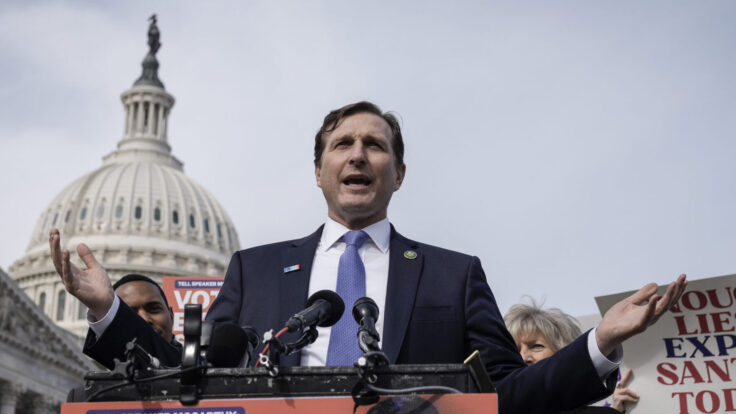
- Impeachment Scramble: As late as yesterday afternoon, some of my Capitol Hill sources were still skeptical that Kevin McCarthy would actually pull the trigger on a Biden impeachment. But then, this morning, that appears to be what he did… sort of.
By delegating an impeachment inquiry to several committees, McCarthy sidestepped putting an inquiry on the floor for a vote (even though he recently promised Breitbart that was exactly what he planned to do). Of course, it’s unclear if he had the support for a full House vote, or if there will ever be a floor vote on impeachment.
The timing of McCarthy’s call for an impeachment inquiry—which came hours before planes full of House members began landing at DCA ahead of the first votes of the fall—is widely interpreted within the House Republican ecosystem as a means to placate Matt Gaetz. In return, Gaetz called McCarthy’s move “baby steps” in a floor speech and described his party’s leader as “rattled” at the public launch of the inquiry earlier today.
In the hours after the announcement, I fielded calls from alarmed sources within the normie wing of the House G.O.P. conference, McCarthy’s base of power. Of the handful of Republican consultants I spoke with, all expressed (some unsolicited) agitation that the impeachment will kick off retirements from their cohort. So far this term, retirements have been quite contained compared to past cycles. But a G.O.P. consultant with a slate of House clients told me: “Mine will all run again, but I would not be surprised to see the retirements or ‘running for other offices’ numbers to shoot up at the end of the year or early next year, especially as they realize the most likely outcome is ending up in the minority.”
- The Sinema Lovefest: One of the more counterintuitive themes to emerge from my recent conversations with Senate Democratic sources is that Kyrsten Sinema, who officially left the party late last year, is surprisingly now being seen by many inside the party as an asset. Beyond functioning as a warm body who supports the Democrats’ hold on the majority, while also holding Democratic slots on four different committees, several Senate sources tell me that her habit of hanging out with Republicans actually works in Democrats’ favor when counting votes.
In this worldview, Sinema is an aisle-hopping ambassador, effective at pulling Republican senators over to join Democrats on some legislation. A source pointed to her usefulness in helping the Senate consolidate behind a recent short-term spending measure. “As a creature of private equity interests, there is one thing she’s good at: making a case to prevent economic turbulence with certain G.O.P. leaders,” a Democratic Hill source tells me.
Sinema has yet to announce whether she will seek a second term, and plenty of sources on the Hill speculate that she will retire. But she is raising money as if she is serious about reelection. Should she run again, she risks playing a spoiler role in a battle royale that will likely feature Democrat Ruben Gallego and possibly Republican Kari Lake, who’s expected to launch her own Senate campaign in October.
Despite this bit of Senate floor goodwill, the Arizona Senate race remains a complicated dance for the D.S.C.C. For now, the Senate Democratic campaign arm is in wait-and-see mode until she makes a decision, which could be a while from now—Arizona Senate filing is in April.
|
| And now, on to the main event… |
 |
| Just Spoke to Blinken… |
| A candid conversation with the Secretary of State about the war in Ukraine, the U.S.’s commitment, oligarch asset seizure, the G20, China, and more. |
|
|
|
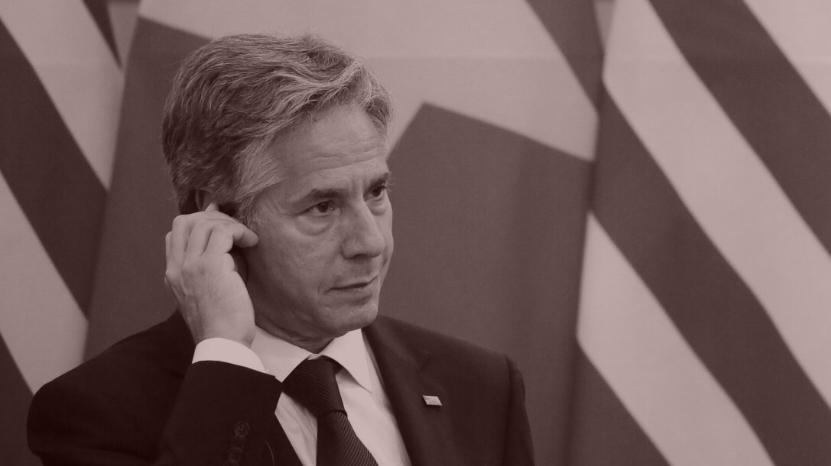
| Last Thursday, Secretary of State Antony Blinken called me from the train on his way out of Kyiv, where he had made an unannounced visit to declare a new U.S. aid package. Blinken was 15 minutes outside the city where his grandfather, Maurice, had been born. The Secretary was on his way to Poland (pretty much the only way in and out of Ukraine these days) and then on to New Delhi for the annual G20 Conference. That meeting would result in a joint statement that infuriated Ukraine: last year’s communication condemned Russia’s invasion of Ukraine; this year, the language simply referred to “the war in Ukraine.” The G20 called for a “just peace” in Ukraine and condemned the “adverse impact of wars and conflicts around the world.” The Biden administration and E.U. tried to spin it as a win—they got Russia and China to sign on to the same statement!—but the Ukrainian delegation was furious. The statement, they said, was “nothing to be proud of.”
When we spoke, Blinken was his usual highly polished, extremely disciplined self. He rarely veers off script in public, or with the press, and sticks religiously to his office’s talking points. It can be a little frustrating for journalists, especially those of us who have been able to speak with him in private. It’s not that Blinken is a different person on the record; it’s more that he is utterly committed to saying nothing controversial.
Still, when we spoke, the train wheels thumping rhythmically in the background, I was struck by the fact that there was clearly one thing that Blinken wanted to get across to me, even if I didn’t ask him about it: He wanted to speak about the suffering and the trauma that he saw in Ukraine, specifically in a school in the small town of Yahidne, which he felt encapsulated the war far more than the aid package and security agreements he had discussed with President Zelensky. That was the talking point he was most interested in hammering. And he was quite emotional about it.
It made sense. Blinken, who is known for being far more forward-leaning and aggressive in pushing for Ukraine aid than, say, Jake Sullivan, the national security advisor, comes from the human rights-focused, humanitarian interventionist wing of the foreign policy establishment. He is friends with people like Samantha Power, Leon Wieseltier, and Tom Malinowski, and he, like they, are incredibly passionate about this. Blinken, like the others in that camp, believes the United States has a duty to help stop genocide, atrocities, and other crimes against humanity around the world.
People often cite the influence of his French stepfather Samuel Pisar, who survived the Holocaust and was Blinken’s primary source on the event. Pisar, who was prominent in French politics, told the Washington Post that, “When [Blinken] has to worry today about poison gas in Syria, he almost inevitably thinks about the gas with which my entire family was eliminated.” One of Blinken’s friends, fellow Obama administration foreign policy alum and Kamala Harris’s national security advisor, Phil Gordon, told Politico’s Nahal Toosi that, “Looking at his stepfather’s life, saved by the United States, attributing that salvation to the United States and, frankly, U.S. military intervention, has reinforced Tony’s belief that the United States and U.S. power can do big, important and moral things in the world.”
Yet Blinken, the consummate D.C. staffer, became the public face of Obama’s 2013 decision to not back up his red line on chemical weapons with force, a loyal team player even when he had wanted a different outcome. (He later praised Trump’s air strike against Syria for using chemical weapons.)
This was the Blinken that I spoke to on Thursday: feeling the urgent need for U.S. assistance to Ukraine in his bones, all while faithfully representing the position of President Biden, with whom he’s worked, on and off, since 2002.
This conversation has been lightly edited for length and clarity. |
|
A MESSAGE FROM META
|
| |
 |
| The future of training is happening today, in the metaverse.
Thanks to a VR training tool created by ForgeFX, students across the country can gain virtual hands-on experience from the Tulsa Welding School—which means more aspiring welders can access quality training and more jobs can be filled by skilled workers.
Explore the impact. |
|
|
|
|
| Julia Ioffe: There was a missile attack in the east while you were visiting Kyiv, and another missile attack just outside Kyiv shortly before you arrived. This also happened when President Biden visited back in February, and when Jens Stoltenberg visited. Why do you think the Russians make it a point to bomb Ukraine and Kyiv while top Western leaders are visiting?
Antony Blinken: If you look at what the Russians are doing on a nearly daily basis, whether we’re here or not, it’s pretty much the same thing: the depravity of the ongoing attacks against civilians. With the attack yesterday, a missile hit a market, at least 17 people were killed just going about their daily chores. This is the normal in Ukraine. It’s not, I don’t think, on account of anyone’s visit. So I’m not sure I see any connection. But being here in the midst of one of these attacks just further brings home what it is to live in Ukraine right now.
I just mean that it really seems like the Russians are sending a message that they won’t stop just because you’re there or the president is there. They don’t care if it puts you all at risk. It seems to be quite deliberate.
I don’t have anything that specifically backs that up. Who knows? Maybe they’re putting an exclamation point on what they’re doing. But regardless, the point that I was making and that the president has made abundantly clear is that we’re here and we’re not going anywhere. And more importantly, Ukraine is not going anywhere.
Speaking of which, I understand that while you were in Kyiv, you and President Zelensky talked about future security guarantees and security arrangements—I saw something that suggested that it would be something similar to what Israel has with the U.S. What are the contours of that?
So this is important because we’re really doing a multiplicity of things at the same time, all with the end goal of having Ukraine be able to stand on its own feet militarily, economically, and democratically. And we’re on track to do that—to help the Ukrainians do that.
On the military side, two things. There’s obviously what we’re doing now and what we’ve been doing over the last almost two years with this massive effort, along with about 50 other countries, to help them in their efforts to take back the territory that Russia has seized from them. But equally important is the longer term project of helping Ukraine develop a world-class military force for the future that can deter and, if necessary, defend against future aggression, to make it less likely that Russia repeats this exercise in two years or five years or ten years. And that’s also a way to get to a sustainable partnership for us and for many other countries that are supporting Ukraine as it really develops that military challenge and the capacity. We’re in the early stages of talking about this with them, but we are very much engaged on that. And I had a good conversation with President Zelensky about it.
It’s also important to note that this came out at the end of the NATO summit. There was a side meeting of the G7, and the G7 issued a declaration about doing this. We now have 29 countries that have signed on to that declaration. In other words, 29 countries that will work bilaterally with Ukraine to help them develop this force for the future. But all of that will be coordinated and there’ll be burden sharing so that all the countries that support Ukraine will have manageable programs that will make a big difference in developing their military.
Do you think it will involve, like it does with Israel, a memorandum of understanding with Ukraine: a fixed amount of aid over a fixed amount of time that then periodically gets renewed by Congress?
We haven’t gotten to that point yet. The Israel analogy, the M.O.U. analogy, is certainly one that’s been used, but there are many variations on this theme. The key part is this: What is necessary for Ukraine to have this force for the future? What are the different components? What do they need? What can we help provide? Ultimately, what can others help provide? And then, once we have that in place and we have a clear understanding with the Ukrainians about this, then we can figure out exactly how it’s put together. I think realistically, there has to be sustained support from the now almost 30 countries that have committed to do this. But exactly what form that takes, that remains to be seen. |
|
|
| The aid package that you announced while you were in Kyiv includes some money seized from Russian oligarchs. As far as I understand, this hasn’t been done before, in part because of the various legal restrictions about disbursing seized assets. How were you able to get around them?
There are about $300 billion or so in frozen oligarch assets. And in order to then actually use those assets and make them available, as we just did, there has to be a very specific determination, legally, based upon the specific assets that were frozen and the actions of the oligarch in question. If the person, for example, violated sanctions. There’s got to be a legal basis, not just for freezing or seizing assets, but actually then using them. And we found that basis for about $5.5 million dollars that we are turning over to the Ukrainians to support veterans.
Which oligarch were these $5.5 million dollars taken from?
That’s not information that we share. All I can say is, there has to be a specific legal determination that the person in question is in violation of the law.
So is this a new precedent? Will we be seeing more of this kind of Ukraine funding, using seized Russian assets?
Yes. We’re looking very hard at this, the Justice Department is looking very hard at this. As I said, those who enabled this war should pay for it.
There are certain oligarchs, who are on various sanctions lists, that are trying to get off the sanctions lists. Are there any discussions about allowing them off the sanctions list if they turn over some of their assets for Ukraine?
Not to my knowledge, no. And of course, for anyone seeking to get off any list—Russian oligarch or anyone on the sanctions list—it has to be very fact-specific. The sanctions are there for a very clear reason, with a clear basis. If that no longer applies, then people can petition to get off the list. And again, this is across the board, not just with regard to a Russian oligarch, but there’s a pretty high burden of proof. |
|
|
|
|
| I wanted to ask you about all the drone strikes we’re seeing inside Russia. The Ukrainians have clearly taken the war to the Russian people. Are you worried at all that this could escalate and, specifically, push Putin closer to the nuclear option?
Look, these are things that we have not encouraged or enabled outside of Ukrainian territory. But it’s their decision. And, of course, the only reason we’re talking about it is because Russia attacked Ukraine—and, as we said a few minutes ago, is on a daily basis indiscriminately attacking every part of the country. They’re targeting civilians, grain depositories, the electric grid, et cetera. So the most important thing is to put this in perspective. But the decisions about how to prosecute their defense of their territory against Russian aggression are Ukrainian decisions.
I want to talk to you about the G20. I know you’re on your way there next. Why isn’t Xi Jinping going to be present at this G20? Do you know?
I’m not his spokesperson and I would urge you to submit that question to the Chinese foreign ministry. But can I just say one other thing about Ukraine before we talk about the G20?
Of course.
There was something else that I think is really important about this particular trip. One of the challenges, especially when you’re an ocean away and dealing with the sort of policies regarding Russian aggression and our support for Ukraine, is that it’s easy to get lost in abstractions and numbers and the human element of what’s happening is not quite as evident as it should be. And for me, one of the benefits of this trip was having some very stark reminders of that human element—that this is not about numbers, this is not about abstractions, how many killed, how many wounded. It is literally about mothers and fathers and sons and daughters, children, who as a result of this Russian aggression, have their lives literally and figuratively torn apart.
We visited a very small school in a very small town called Yahidne. When the Russians attacked and took over the town, they herded people up and put men, women and children—children as young as a month and a half—all into the basement of the schoolhouse, a basement that was not fit for human habitation, and crammed 120, 130 people into a room and kept them locked down there for nearly a month before they were liberated. Ten or 11 of them died in this room, particularly the elderly, virtually suffocated to death because of the lack of air. And the Russians would not allow the bodies to be removed if the person in question died after noon. So little children—little children, boys and girls, three, four, five years old—were living with this for nearly a month. This is the human face of what’s happening.
Happily, they were ultimately liberated when the Ukrainian forces pushed the Russians out of this town. And that’s the good news. They’re rebuilding the building because much of what was around the schoolhouse was destroyed. But I can only imagine the unseen wounds that especially these children will take with them for years, if not for their entire lives. And for me, it’s very important for them to be reminded of that, to make sure that we’re always connecting what we’re doing from a policy perspective to what it really means for people on the ground and in their lives. |
|
|
| Which is, of course, very important when you talk about compassion fatigue in the U.S., because we’re so far away, there are so many other things happening. So, as someone from the region, I appreciate your doing that. I feel weird pivoting back to the G20 after talking about that, but it’s an especially important meeting given the war and given China’s support of Russia. What message do you think it sends that both China and Russia are going to be absent from the meeting?
Look, it’s hard for me to speak to that and I can’t get to their reasons or motivations for doing it. But here’s what I can say. There’s an important agenda at the G20 that matters to countries around the world and to people around the world, particularly in what some refer to as the global South. And we’re very intent on helping to strengthen food security for people who so desperately need it, helping to build the infrastructure that the people need, working to deal effectively with climate change, especially for those who are most directly affected by it. Making sure that we remain faithful to the development goals that have been established at the U.N. but are also on the G20 agenda. And of course we have to be dealing with Russian aggression. We have to be dealing with the competition we have with China. And we are. But we also want to be focused on these issues because they matter to hundreds of millions of people around the world. And it’s important that the G20 be seen as not only engaged on those issues, but taking effective action as the wealthiest countries in the world.
Speaking of the Global South. In the Republican presidential primary, the idea that we should send troops to Mexico is becoming increasingly popular, including among all Americans. As secretary of state, what do you think of that? And have you heard anything from our Latin American partners about all of this rhetoric?
First of all, happily, in this job, I don’t do politics. But what I can say is that I’m not exactly hearing a chorus of support for this idea from our fellow citizens. But we have an absolutely vital partnership with Mexico every single day. It’s the largest trading relationship we have and it benefits tens of millions of Americans. All of that we are doing together and that we need to do together on dealing with drugs, on dealing with transnational crime, on dealing with migration, and the idea that we are somehow going to unilaterally go into another sovereign country to solve those problems is profoundly misguided.
To be fair, it is polling pretty well among Americans. Something like 55 percent of Americans across all parties approve of this and think it’s a good idea.
I’m happy to take a look at those polls. I’ll be curious to see exactly what the questions are. And I suspect when you have an opportunity to talk about this with people, they have a very different view. And, look, I have to say, too, that these are big challenges and they obviously affect Americans—which is my number one priority in this job, to make sure that everything that we’re doing is advancing the interests of the needs of the American people. But what I found is that most of the challenges that we face that are affecting people’s lives require, more than ever, the cooperation and coordination with other countries. Because as strong and powerful as we are, most of these problems don’t lend themselves to unilateral solutions. And when it comes to Mexico, while these are big, hard problems, we have more cooperation now across all of these issues, whether it’s narcotics, whether it’s crime, whether it’s migration, than we’ve had in recent years. And that is the way you get effective, lasting, sustainable results. |
|
|
| That’s all for this week, friends. I’ll see you back here next Tuesday. Until then, good night, tomorrow will be worse.
Julia |
|
|
|
| FOUR STORIES WE’RE TALKING ABOUT |
|
|
|

|
 |
|
|
|
Need help? Review our FAQs
page or contact
us for assistance. For brand partnerships, email ads@puck.news.
|
|
You received this email because you signed up to receive emails from Puck, or as part of your Puck account associated with . To stop receiving this newsletter and/or manage all your email preferences, click here.
|
|
Puck is published by Heat Media LLC. 227 W 17th St New York, NY 10011.
|
|
|
|