|
Welcome back to The Best & The Brightest. I’m Abby Livingston.
Congress appears on track to avert a shutdown—despite its newest chaos agent, Elon Musk. In tonight’s issue, fresh reporting on his feud with everyone’s favorite congressional hipster, Rosa DeLauro, and the potentially material consequences for his ability to secure the cooperation of Democrats on his DOGE agenda. Afterward, stick around for my colleague Baratunde Thurston’s latest conversation about A.I., presented by Meta, in which Puck’s resident legal expert Eriq Gardner discusses how the technology is disrupting Hollywood.
|
|
|
Instagram Teen Accounts: automatic protections for teens
Parents want safer online
experiences for their teens. That's why Instagram is introducing Teen Accounts, with automatic protections for who can contact teens and the content they can see.
A key factor: Only parents can approve safety setting changes for teens under 16.
Learn more
|
|
|
|
But first, Dylan Byers has an update on the WaPo top editor sitch…
|
|
|
 |
Dylan Byers |
|
Next year, presumably on the earlier side of the first quarter, Washington Post publisher and C.E.O. Will Lewis intends to announce that he has appointed acting executive editor Matt Murray as the newsroom’s permanent chief, according to sources familiar with his plans. The news, which Will has been delaying for unspecified reasons, will bring an anticlimactic end to a long and tortured recruitment effort at a storied paper that—as you know, dear reader—has endured a rather miserable and ignominious few years of financial irresponsibility, soul-searching, and chaos.
Murray, after all, was not Will’s first choice. In June, he had tried, quite inelegantly, to appoint his fellow Brit Rob Winnett to the post while transitioning the lackluster incumbent Sally Buzbee out of the role—only to be all but mutinied by veterans who chafed at the incursion of a Fleet Street sensibility at their august institution. Instead, Will enlisted Murray, his former Wall Street Journal top editor, to man the rudder until he could appoint someone else, at which point Murray was slated to become head of a “third newsroom” focused on new digital projects and innovations.
It was an open secret that Murray, who had sort of been pottering around since his Journal exit, coveted the job and thought he had an outside shot. Lewis nevertheless cast about for alternatives, presumably a swashbuckling innovator prepared to become his wingman to truly reinvent the institution. But he and executive search firm Egon Zehnder engaged a now familiar rolodex of obvious (too obvious, really) candidates from across the Post’s competitive landscape—including New York Times masthead fixtures Carolyn Ryan and Cliff Levy, and former Post editors Anne Kornblut and Steven Ginsberg—while also giving consideration to internal candidates like Matea Gold and Murray, himself. As I’ve noted, it seemed that the folks he might have been able to recruit weren’t the ones he really wanted, and the ones he wanted weren’t really interested. The whole process felt rather depressing.
This may have been inevitable, given the heavy pall of negativity and ennui that had set in on the newsroom since the latter Fred Ryan era, and which Will only exacerbated with his irreverent disregard for traditional Postian decorum, beyond just the paper’s decision to pull their presidential endorsement. Of course, he was indisputably correct when he told the proud Post newsroom that no one was reading their stuff—well, it was a slight exaggeration—but the affront only made them more dubious about his ability to lead the paper. At the same time, he didn’t exactly articulate a vision or announce what the Post should be doing differently, nor how he intended to reverse its nearly $100 million annual revenue losses. Could you blame Carolyn Ryan for preferring to stick around at the Times and play the long Joe Kahn waiting game?
Continue reading online.
|
|
|
|
And now, back to the Hill…
|
|
|
|
News and notes from Capitol Hill on the verge of a nervous breakdown.
|
|
|
|
A last-minute scramble to keep the government open through the holidays is as much a D.C. yuletide tradition as twinkling lights and Embassy parties. After all, nothing motivates members to do their jobs quite so much as the threat of being stuck in Washington well into Christmas recess. And so they usually manage, at the eleventh hour, to pull a continuing resolution out of Santa’s sack, declare victory, and fly home.
In that sense at least, this week was typical. Yes, a bill finally passed in a bipartisan vote on Friday night, but this year’s fire drill felt different. Over the past three days, we’ve seen unelected bureaucrat slash bureaucrat slash billionaire Elon Musk blow up a bipartisan compromise bill, a veritable conservative mutiny over Speaker Mike Johnson’s replacement bill, and the emergence of a bizarre side plot involving Donald Trump’s demand to delay or even eliminate the debt ceiling. With each passing hour, Johnson’s chances of holding on to the speaker’s gavel seemed to slip, until—suddenly—a funding bill sailed through the House with overwhelming bipartisan support. Stay tuned in the weeks ahead to find out Johnson’s fate. But this round of chaos has been on a scale even Democrats didn’t see coming.
So, is the G.O.P. honeymoon already over, less than two months after they secured the Washington power trifecta? I put this question to a plugged-in Capitol Hill Republican operative, who quipped: “They walked into the honeymoon pregnant” with the burdens of Trump, Musk, and the tight House margin. Another Hill Republican compared the House G.O.P.’s lame duck to a rodeo: “Eight seconds is not enough to ride the bull.”
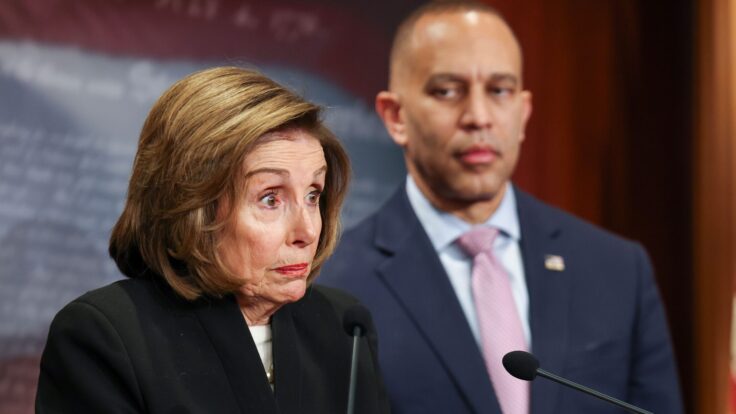
Johnson spent the past few days navigating a noxious morass of egos, ideology, and confusion. Everyone on the Hill was, for much of the week, either angry with Johnson, actively making his life hell, or some combination thereof. Obviously, his tormentors-in-chief were Musk and Trump, who tanked his original bipartisan bill via separate social media tantrums. Meanwhile, House Democratic leader Hakeem Jeffries, who has had a good working relationship with Johnson, was furious after Johnson backed out of the initial funding deal they’d struck. Members of Johnson’s own conference spent the latter half of the week getting in front of any camera they could find to criticize his every decision and lack of communication.
|
|
|
Instagram Teen Accounts: automatic protections for teens, guided by parents
Instagram Teen
Accounts are designed to address parents' biggest concerns, providing automatic protections for who can contact their teens and the content they can see.
The impact: Built-in limits give parents more peace of mind when it comes to protecting their teens.
Learn more
|
|
|
|
It was, in other words, an inauspicious start to the new year. If anything, Johnson’s position is now as precarious as that of his three predecessors—John Boehner, Paul Ryan, and Kevin McCarthy—each of whom endured similar spending bill struggles and were ultimately chased out of office. And Johnson is working with an even smaller majority, one that will shrink further when the new Congress is sworn in two weeks hence. He can only afford to lose a handful of votes to pass party-line bills (on Thursday night, he lost 38 of them), and now he’s got “Uncle Elon” to deal with as well.
Alas, it’s not just Trump and Musk who prioritize social media shock and awe over legislative success. “None of this would have gone on if Congress had a working appropriations process,” said Doug Heye, a fixture in the Republican establishment and a former House leadership staffer. Indeed, Heye continued, Trump and Musk are only the most overt symptoms of what he calls the “systemic problem” of the attention economy, which incentivizes members to spend more time on TV bookings and fundraising while voting “no” on everything, rather than participating in the dull, in-the-weeds work of negotiating a budget—the domain of lower-profile appropriations subcommittee chairs known as cardinals. “I haven’t seen a House appropriations cardinal on TV in months,” Heye said.
|
Any serious congressional negotiator keeps a handful of maxims top of mind: don’t make it personal; remember that your adversary today could be your ally tomorrow; keep your word; and never, ever cut off your nose to spite your face. Over the past eight years, Trump has flagrantly ignored these principles. It’s unclear whether Elon has the same latitude as Trump, but this past week, he proved himself another species of political amateur altogether.
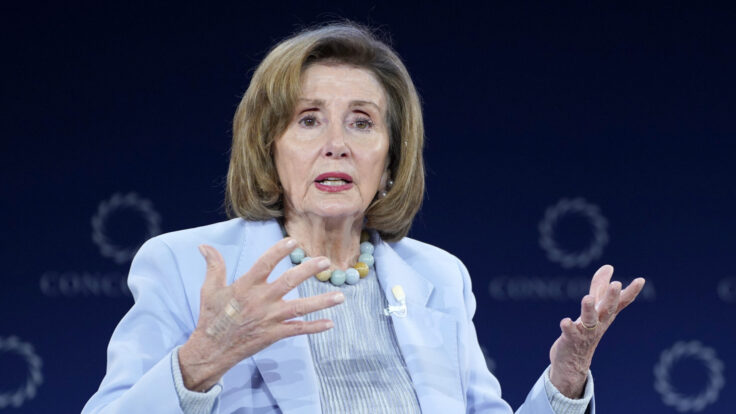
Already, his ignorance of how political negotiations work, as opposed to business deals, has made it harder to bring Democrats into the fold—and funding bills usually pass with bipartisan backing. This time, House Democrats eventually came around, despite him spending Friday personally attacking the widely beloved Rosa DeLauro, the ranking Dem on House Appropriations, based on her physical appearance and eclectic personal style— repeatedly comparing her to a Jim Henson puppet, referencing “her broomstick,” calling her a “swamp creature,” etcetera. DeLauro’s fashion choices have been a subject of fascination and bemusement on the Hill for decades, and these attacks are akin to showing up to a Fleetwood Mac concert and congratulating yourself for mocking Stevie Nicks’s witchy outfit: It only shows you have never been to a Fleetwood concert, and even worse, know nothing about the band.
Then there’s the dubious wisdom of trying to influence spending negotiations while attacking the top Democratic appropriator. Indeed, DeLauro’s supposed sin against Elon was a floor speech in which she questioned whether he understood the implications of a shutdown for federal employees, including military service members. “[Republican members] got scared because… President Musk said, ‘Don’t do it. Don’t do it. Shut the government down,’” she said. “Imagine, what does he know about what people go through when the government shuts down? Are his employees furloughed? Hell no. Is he furloughed? No. And when you shut the government down, people don’t get paid and maybe if none of us got paid, some people on the other side of the aisle would feel differently.” (DeLauro also sent a letter to congressional leaders accusing Musk of getting involved in the spending debate in order to protect his Chinese investments.)
Sure, calmly pointing out the actual consequences of a government shutdown may irritate Elon. But this frustration will be nothing compared to the vexation he feels during the next Congress, when he may realize he burned the bridges he needs to get legislative buy-in for the DOGE agenda. As one senior House Democrat put it to me: “He’s doing far more than [insult DeLauro] to alienate our members: the massive disinformation and lies he’s putting out, [and] the obvious fact that an unelected billionaire is calling the shots, for starters.”
|
So while disaster has been temporarily averted, Capitol Hill
Republicans are now bracing for a miserable future. As my partner Tara Palmeri reported last night, this week’s theatrics stoked questions all over the Hill about Republicans’ ability to execute on their top priority next term: renewing and expanding the 2017 tax cuts. “If we can’t get a C.R. done, how are going to pass tax reform?” a Senate source told Tara.
And the C.R., of course, is only the first in a succession of spending bills over the next year, and this process has revealed alarming rifts in the Republican caucus and new vulnerabilities for members. With Musk embarking on his DOGE experiment, some other big-ticket expenditure will inevitably catch his cost-cutting eye—and potentially make things harder for Republican members in their home districts. Musk has already, for example, ripped the F-35, the super-stealthy, trillion-dollar implied jet responsible for jobs across numerous congressional districts.
|
|
|
Musk could put the screws to any rank-and-filer, who would then have to decide whether to stand up to the planet’s richest man (and all the primary-backing largesse that entails….) or risk killing jobs back home. The threat of Elon is likely strongest against an appropriator or an obscure institutionalist, whose sole reason for serving in Congress is to protect a local subsidy—a dynamic that once again favors the “no” voters and attention-getters over the substantive legislators.
But it was one of the conservative hardliners who voted against last night’s bill that said the quiet part out loud. “Last time I checked, Elon Musk doesn’t have a vote in Congress,” Georgia Republican Rep. Rich McCormick said on CNN. “Now, he has influence, and he’ll put pressure on us to do whatever is the right thing for him, but
I have 760,000 people who voted for me to do the right thing for them. And that’s what matters to me.”
Finally, something a little different…
|
In the third installment of Puck’s conversation series about A.I., presented by Meta, Baratunde Thurston chatted with our resident legal expert, Eriq Gardner, about the myriad ways that A.I. is impacting the entertainment industry, generating a palpable mixture of fear, curiosity, and genuine excitement…
Baratunde Thurston: What’s jumping out to you right now regarding how A.I. is impacting the entertainment industry?
Eriq Gardner: I feel like we’re still in the phase where we’re just dipping our toes in. I think everyone is curious, a little scared, and excited—as many adjectives as you can think of. We still haven’t seen any kind of transformative commercial use for it. But what we have seen is a bunch of cool aspects that shock people and make it clear that this
is our future and there’s no denying it. But everyone is still asking each other, What’s next? It’s generated so much conversation—it’s the number one topic whenever I speak to anyone in the industry—but no one is quite certain about it. They feel like they have a map that gives them a general direction, but not necessarily the G.P.S. coordinates to where everything is going.
Where are you seeing any breakdown in the “resist first” versus “embrace first” approach to A.I.?
From my standpoint, I generally think people are on the same page right now. But you’re starting to sense some fissures. You have people who’ve experimented with the use of it, and then there are people who are quite defensive and don’t want A.I. encroaching on their art. It seems that people who are less entrenched in the industry have nothing to lose, so they’re gonna try this thing out and see what happens. Whereas, for people who have a big stake in the industry—there’s a lot more to fear.
For instance, you might think that very famous actors have the opportunity to license their faces and not show up on set as much and leverage their fame, and that A.I. might help them exploit many more opportunities. But if you’re a background actor, you’re in trouble. It’s not just about the haves and have-nots. It’s also about who aligns best to what the technology is capable of doing.
Continue reading online.
|
|
|
|
Puck senior political correspondent Tara Palmeri grapples with the aftermath of what may be the most chaotic and consequential presidential election cycle of our lifetime. With 15 years covering politics, Tara speaks with the smartest political minds to discuss what’s happening behind the scenes in Washington, D.C., from the campaign trail to the Capitol.
|
|
|
|
A new biweekly private email offering unparalleled access to the global art market: the mega-auctions and galleries, elite buyers and sellers, and the power players who run this opaque world.
|
|
|
Need help? Review our FAQ page or contact us for assistance. For brand partnerships, email ads@puck.news.
You received this email because you signed up to receive emails from Puck, or as part of your Puck account associated with . To stop receiving this newsletter and/or manage all your email preferences, click
here.
|
|
Puck is published by Heat Media LLC. 107 Greenwich St, New York, NY 10006
|
|
|
|





_01JE9TASK73K71BQ57HKMDRCNE.gif "Instagram")