{{ 'now' | timezone: 'America/New_York' | date: '%b %d, %Y' }} |
|
|
Hello, and welcome back to The Best & The Brightest. I’m Leigh Ann Caldwell. It’s
the final week of the congressional session, and the vibes could not be more different in the House versus the Senate. While the former preps for chaos, the latter is coasting into the end of the year. I’ll have more on that below.
Further down the page, my colleague Abby Livingston takes stock of the redistricting battleground following Trump’s setback in Indiana. Could a gerrymandering détente be on the horizon? And for the main event, my colleague
Ian Krietzberg offers up a searing analysis of the Genesis Mission, the president’s A.I. moon shot.
Mentioned in this issue: David Sacks, Trump, Rand Paul, Chris Wright, Mike Johnson, Elon Musk, Clément Delangue, Asad Ramzanali, and many more…
But first… |
- House
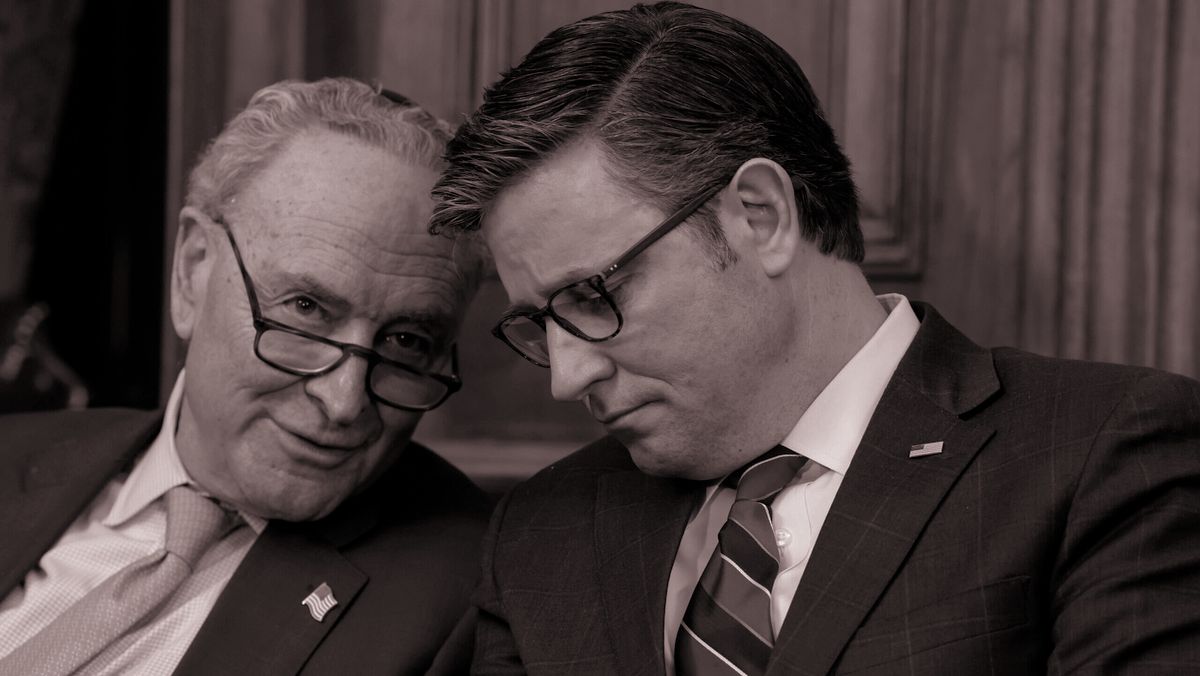
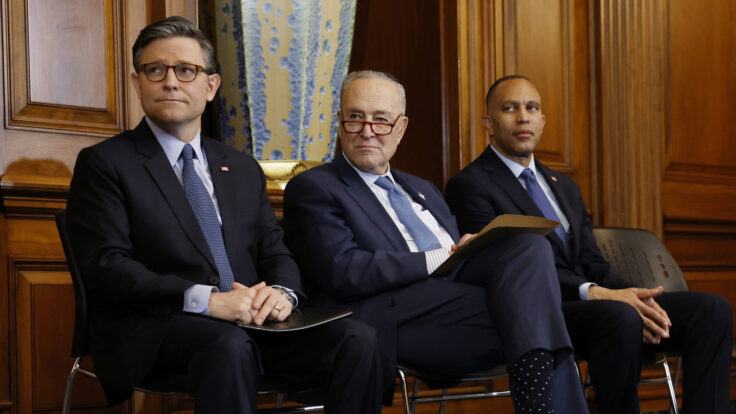
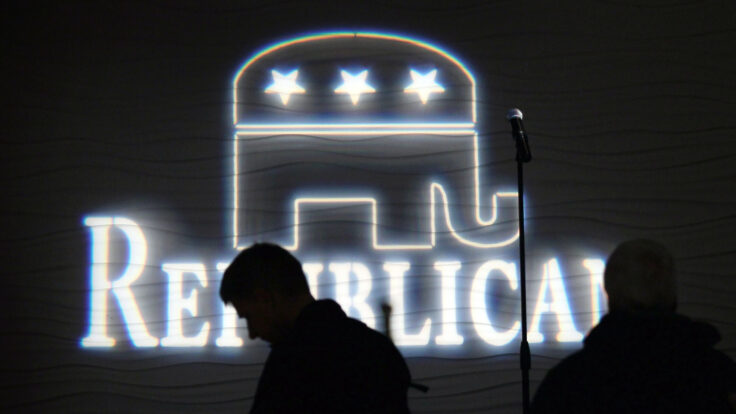
unrest: House Speaker Mike Johnson was hoping to finish out the year with a bang. Instead, the legislative session could end with a whimper. Johnson is aiming to pass two critical pieces of legislation that have divided his conference: his healthcare bill, meant to be a substitute for extending the A.C.A. subsidies, and legislation that reforms the energy permitting process. But if even a couple of members can’t make votes, he could send the House home early. It’s unlikely,
but it’s still something leadership is worried about.
Anyway, Johnson’s healthcare bill might not have the votes even if everyone turns up. The litany of potential headaches seems endless. Swing-district Republicans, hoping to extend A.C.A. subsidies to prevent massive price hikes on premiums, could block a required procedural rule that doesn’t include the extension, and leadership is mandating that subsidies include a provision to offset the cost—which, as Punchbowl first reported,
centrists weren’t prepared to accept. Meanwhile, a group of conservatives could block a rule on permitting reform that would both facilitate oil and gas production, and support renewable projects. We’ll see how Johnson maneuvers his rocky road to the holidays.
|
|
|
A MESSAGE FROM OUR SPONSOR |
Wells Fargo is helping strengthen small businesses in our communities. That's why we announced a $20 million program in
2025 to support small business owners. Across the United States, we’re proudly: |
• Serving ~60
million customers and over 3 million small businesses. • Supporting our customers digitally and in person, maintaining over 4,000 locations, from the smallest towns and the biggest cities. |
|
|

| Abby Livingston
|
|
- Redistricting
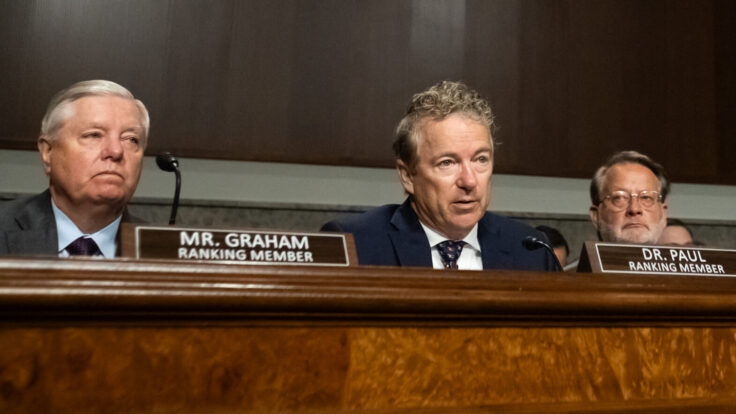
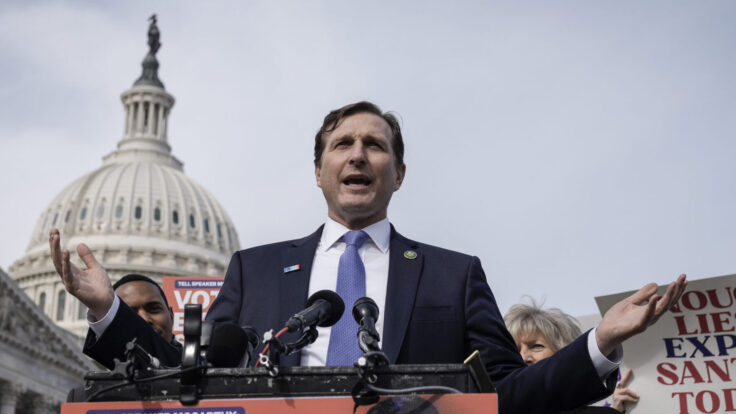
ceasefire?: On Sunday’s Meet the Press, Sen. Rand Paul called for a ceasefire in the redistricting wars, warning that “it’s going to lead to more civil tension and possibly more violence in our country.” The Senate’s greatest contrarian was weighing in on a lowly House problem, but he was also giving public voice to growing G.O.P. exhaustion with the whole redistricting project that Trump kicked off in Texas. “Members and staff believe the madness
needs to end,” one Republican consultant told me. A House G.O.P. consultant agreed: “It’s cutting off your nose to spite your face. The forethought is just not there.”
Indiana, of course, rejected a redraw late last week after a vicious statewide debate culminated in swatting attacks against several members of the legislature, along with threats of political violence. One Indiana state senator
angrily resigned from leadership over the issue. Meanwhile, some red states that have passed new maps, such as Missouri, are now bogged down in litigation. As a result, many Republicans view redistricting as a “waste of resources,” the House G.O.P. operative said.
While Paul wondered
how the parties would “get back to détente,” there remains Democratic momentum behind redistricting Virginia next year, which would likely yield a two-seat gain for Democrats and is intended to offset similar Republican gains from an anticipated redraw of Florida’s lines. Meanwhile, Maryland redistricting—a potential net one-seat gain for Dems—remains on the table. A New York redraw is also looming, though it’s unlikely such a map would be implemented this term. Beyond that, Trump’s Indiana
setback took pressure off Illinois Democrats to redraw their maps, so the two parties may yet battle to a draw. “There aren’t too many big places left to make a move,” said a Republican strategist.
The emerging ceasefire could still fall apart, however, if the Supreme Court guts the section of the Voting Rights Act that mandates minority-majority seats (all Democratic-held) across the South—which would in turn prompt more Republican redraws, and likely retaliation. In the
meantime, the entire nationwide fracas has led to fears that state maps could be constantly recalibrated every cycle—say, if a new map turns out to be a dummymander that winds up hurting the party that drew it. “You’re gonna go back and rejigger from the 2026 results?” the consultant said. “Come on, guys.”
|
|
|
The administration’s Genesis Mission, an unprecedented attempt at public-private A.I.
development, has been speciously compared to the Manhattan Project, which ended World War II, and the Apollo program, which brought us to space. But where is the money coming from—and what, exactly, is it poised to do? |
|
|
Late last month, David Sacks, the venture capitalist moonlighting as
Trump’s A.I. and crypto czar, wrote on X that reversing America’s massive investments in A.I.—which might have accounted for half of G.D.P. growth in the first six months of the year—would “risk [a] recession.” This was an unsurprising pronouncement from Sacks, whose occasionally somewhat self-serving Silicon Valley boosterism has helped set the tone for
the administration’s tech policy. For better or worse, the White House’s economic goals are now deeply entwined with the success of hyperscalers that have committed trillions of dollars to the A.I. arms race. |
|
|
A MESSAGE FROM OUR SPONSOR |
Wells Fargo is helping strengthen small businesses in our communities. That's why we announced a $20 million program
in 2025 to support small business owners. What we say, we do. See how. |
|
|
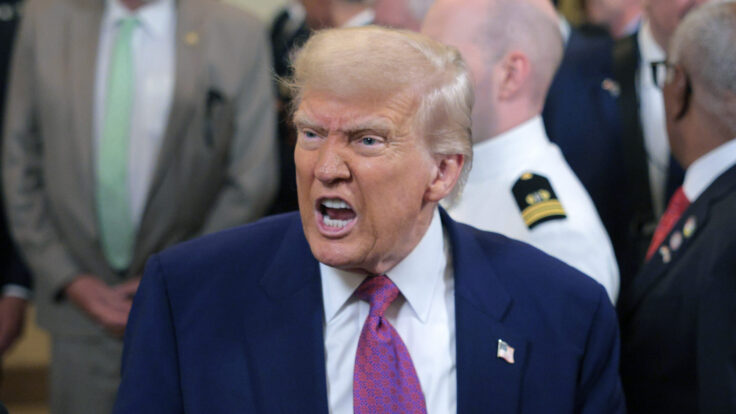
Perhaps uncoincidentally, just a few hours later, President Trump published an executive order launching the
Genesis Mission, a “dedicated, coordinated national effort to unleash a new age of A.I.‑accelerated innovation and discovery”—one that “can solve the most challenging problems of this century.” Chris Wright, the U.S. Energy secretary, claimed somewhat loftily that the Apollo program and the Manhattan Project were its natural
progenitors.
Unlike the Manhattan Project or Apollo, however, the Genesis Mission effectively codifies a technological race without a clear finish line. In practice, the E.O. calls for building an integrated platform using proprietary federal scientific datasets “to train scientific foundation models and create A.I. agents to test new hypotheses, automate research workflows, and accelerate scientific breakthroughs.” Makes sense: The government presumably has access to massive quantities
of data from decades of research on everything from fusion to biotech and advanced manufacturing. With “resources available through industry partners,” you simply feed all that data into model training and start generating new discoveries. Easy, right?
Notably, the mission will be overseen by the Department of Energy rather than the National Institute of Standards and Technology, or the National Science Foundation. Wright has been charged with submitting 20 scientific and technological
challenges of national interest—which will likely focus on energy technology, biotechnology, and advanced computing frameworks—within the next two months. These will be updated on an annual basis.
In many ways, the administration’s goals here align with policy proposals that Silicon Valley A.I. firms have sent to Washington—namely, to dramatically accelerate “A.I. development and utilization,” which has been a core tenet of the
executive action Trump has taken thus far. To that end, the Genesis Mission will involve a massive public-private partnership between government agencies, university researchers, and private companies. The list of private collaborators currently features more than 50 businesses, including
Google, Microsoft, OpenAI, Anthropic, AWS, Hugging Face, Quantinuum, IBM, HPE, Nvidia, and AMD. (Elon Musk’s xAI is conspicuously absent.)
After the announcement, I spoke with Hugging Face C.E.O. Clément Delangue, who expressed profound excitement about the Genesis Mission. “We’ve experienced firsthand how more openness and collaboration in the U.S. can massively accelerate progress,” he told me. “In my opinion, that’s what led to the current A.I. boom
and U.S. leadership [in the field].” Delangue added that there are already thousands of open science models and datasets on Hugging Face’s platform, and said that he expects to see “an order of magnitude more” over the next few months, specifically from federal agencies like the D.O.E. |
|
|
“There’s Real
Promise Here”
|
One major outstanding question is the provenance of the cash. Will the government
issue contracts, as it did with the Apollo program? Or will the government effectively function as a customer for these businesses? How much money will be allocated to this project? (The Department of Energy didn’t respond to questions seeking clarity on this point.) But the order is intent on incentivizing private-sector participation through
“coordinated funding opportunities or prize competitions across participating agencies”—an undefined process partly under the aegis of Sacks, whose influence as a special government employee continues to grow despite an investigation from several Democrats into whether he’s overstayed his term.
Asad Ramzanali, the director of A.I. and
tech policy at the Vanderbilt Policy Accelerator, told me he’s worried about the risk of federal dollars servicing private enterprise, all under the nebulous guise of the public good. And he has a point—even if you’re the sort of A.I. maximalist who views the tech as a crucial front in the U.S.’s cold war with China. The Apollo program cost $25
billion—roughly $250 billion today. In its peak year of funding, the Manhattan Project made up around 1 percent of federal outlays, and the Apollo program made up around 2 percent. If the Genesis Mission is anywhere near as ambitious, there will be a lot of money up for grabs—and Trump’s executive order doesn’t exactly make it clear how different stakeholders will
benefit.
Meanwhile, this push to accelerate A.I. growth and “unleash” science comes in the wake of Trump’s own efforts to slash federal research budgets, including those at the National Institutes of Health and the National Science Foundation. Still,
Ramzanali said, “There’s real promise here,” since the National Labs already have powerful supercomputing capability and the federal agencies possess vast, useful sets of data. But he’d like to see more than just a massive data center build-out: For instance, he hopes university researchers might gain access to federal funding to expand research initiatives, along with the use of the new public infrastructure envisioned in the E.O.
However, Ramzanali remains concerned about the
possibility that this project might be used as a justification to preempt state-level regulation of A.I., for instance, or otherwise simply allow the A.I. hyperscalers to continue their unchecked growth. “At the end of the day, it does come down to how this is implemented,” he said. “I think that when the government relies on private sector entities, there’s a heightened level of transparency required. And I hope that that plays out—that we actually get to see the details of who’s doing
what.” |
|
|
Join Emmy Award-winning journalist Peter Hamby, along with the team of expert journalists at Puck, as they let you in on the
conversations insiders are having across the four corners of power in America: Wall Street, Washington, Silicon Valley, and Hollywood. Presented in partnership with Audacy, new episodes publish daily, Monday through Friday. |
|
|
Unique and privileged insight into the private conversations taking place inside boardrooms and corner offices up and down Wall
Street, relayed by best-selling author, journalist, and former M&A senior banker William D. Cohan. |
|
|
Need help? Review our
FAQ page or contact us for assistance. For brand partnerships, email ads@puck.news.
You received this email because you signed up to receive emails from Puck, or as part of your Puck account associated with {{customer.email}}. To stop receiving this newsletter and/or manage all your email preferences, click here.
|
Puck is published by Heat Media LLC. 107 Greenwich St., New York, NY 10006 |
|
|
|


_01KC5C4Q5EPZZ2305F23RE8BYK.jpg "Wells Fargo")


_01KC5C4P5K8BYS34NWZS83XAN9.jpg "Wells Fargo")