|
Hello and welcome back to The Best & The Brightest. I’m Leigh Ann Caldwell on yet another day that ends in “y” where Trump is pushing the bounds of norms. What’s different (and much better) about this particular day is that tonight is my monthly mahjong game.
Today, my colleague Abby Livingston captures the latest chatter on the Hill as House Republicans ponder the hard choices they’ll be forced to make when the Big Beautiful Bill returns from the Senate—likely without the higher SALT cap that Reps. Lawler and Kean et al. fought to include.
But first…
|
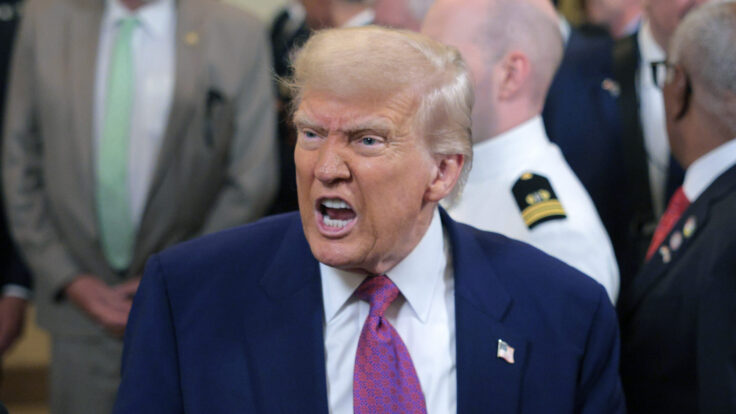
- Republicans quiet as Trump sends Marines into L.A.: President Trump is gleefully escalating tensions with Los Angeles and California officials over protests against ICE raids, and there doesn’t seem to be a de-escalation on the horizon. Trump, in fact, has encouraged members of the National Guard to hit protesters “harder than they have ever been hit before” if they are spit on. He said today that if he were border czar Tom Homan, he would arrest California Gov. Gavin Newsom. He also called the protesters “insurrectionists,” and has encouraged Defense Secretary Pete Hegseth to call in the troops.Los Angeles Mayor Karen Bass, still politically vulnerable following her mishandling of the wildfires tragedy, has called on Trump to lower the temperature. But as he has shown repeatedly, the president often prefers to escalate, especially when challenged, as he did recently in his showdowns with Harvard and Elon Musk. The president is especially unlikely to back down on a dispute related to immigration, an issue he feels benefits him and that he returns to over and over, especially when other things aren’t going his way. Plus, no Republican on Capitol Hill has yet to say the president is going too far. It’ll get worse before it gets better.
- Ken Martin gets Hogg-tied: The Democratic National Committee just released a new show on YouTube called The Daily Blueprint—a daily morning program to “cut through the noise and give you the real story,” while offering tips about how “you can fight back.” It’s another example of the Dems’ evolving comms strategy, which also includes using bad words, posting straight-to-camera social media videos, being less politician-y and more “authentic,” etcetera. Alas, this latest attempt falls just as flat. It’s only the show’s first day, but a 15-minute, public-access-style newscast, in which the D.N.C.’s deputy communications director reads headlines and quips the Democratic response, doesn’t scream innovative.Recently, under its new leader, Ken Martin, the D.N.C. has taken a lot of heat. Of course, there was the audio leaked to Politico, in which Martin could be heard telling Vice Chair David Hogg that his threats to primary incumbent Democrats had undermined the chair’s ability to do his job, making him question whether he even wants it still. That embarrassing breach created yet another stress fracture in the party, but it’s just the tip of the iceberg. I’ve heard from Democrats for months that they’ve been frustrated with the D.N.C.’s lack of communication and coordination with other elements of the party, including House Democrats. When the party isn’t in power, the D.N.C. usually takes a leading role, but it’s been exercising very little leadership or messaging discipline, Democrats tell me. To wit: I’m told Dems were initially afraid to criticize Trump’s tariffs because they didn’t want to anger the unions, and they felt they never got guidance from the party.
Martin’s supporters, and even some of his critics, say that it takes a while to learn the job and get comfortable. But with Hogg challenging his every move, the party searching for answers, and a Republican president who is an expert at dominating the news cycle, a thankless job has become even more difficult. No wonder he’s not sure he wants to do it anymore.
|
|
|
|
The Big Beautiful Bill will likely return to the House with cuts to the SALT deduction that blue-state Republicans can’t stomach—forcing them to decide between aggravating Trump or their constituents, with the fate of the G.O.P. majority on the line.
|
|
|
“A big beautiful bust” is how not one, but two grumpy Republican sources described Trump’s landmark tax and spending bill to me, separately and unsolicited, on Monday morning. The current legislation, after all, would be offset in part by cutting Medicaid, while adding an estimated $3 trillion to the deficit. After the bill passed the House by a single vote, more than one Republican publicly admitted that they hadn’t read it, which some G.O.P. sources told me was a preferable explanation to endorsing some of its more unsavory provisions. Worse, Senate Republicans are now working to rewrite large chunks of the bill, potentially rendering moot the political capital burned by House members who took uncomfortable votes to get it across the line. Oh, and Elon Musk called the bill a “disgusting abomination.”
Now, as the Senate moves toward its self-imposed deadline to pass its own version by July 4, there is growing anxiety and frustration in the House over what condition the Big Beautiful Bill will be in when it returns to them. Privately, some Republicans have mixed opinions on the merits of what is certainly the biggest and possibly the only major piece of legislation that will
come out of Capitol Hill before the midterms. Some Republicans view this bill as the capstone of their Hill careers. Others genuinely hate it, but will probably end up voting for it anyway.
The problem is that the bill’s Republican objectors all seem to despise the legislation for different reasons. The Freedom Caucus can’t stand the bill’s deficit spending and want deeper spending cuts. That position is at odds with many rural members, who worry about the impact of proposed Medicaid cuts on their local hospitals. Beyond that, the bill is so expansive that more obscure provisions—such as one that limits the power of judges to hold people in contempt—have caught members off guard.
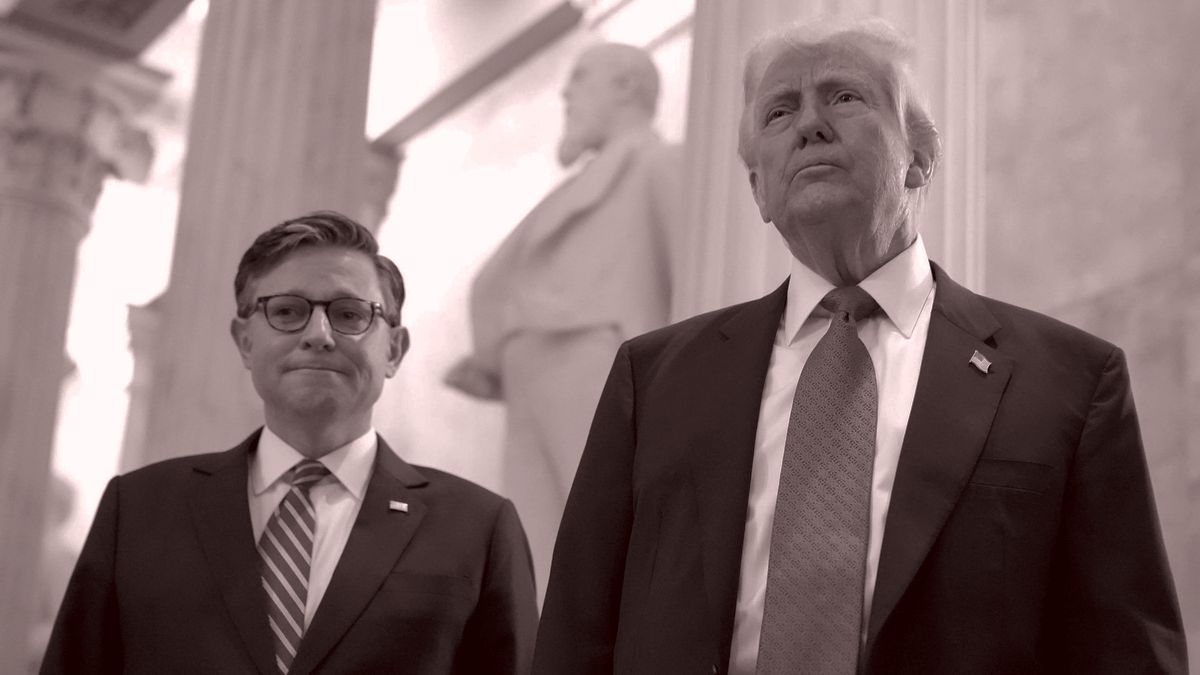
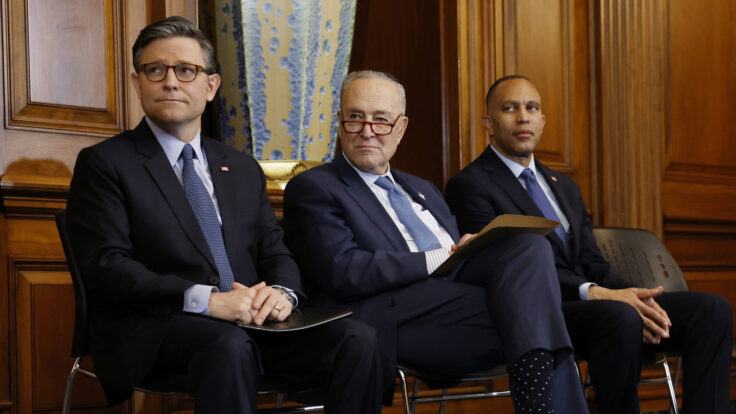
Then, of course, there’s the SALT problem. A not-insignificant group of House Republicans from high-tax blue states insisted on raising the cap on the state and local tax deduction to $40,000 as a condition for their support, but the Senate—which has no Republican members from high-tax blue states—is likely to gut those provisions. That’s music to the ears of the many red-staters who loathe the provision with an incandescent passion, but it leaves Speaker Mike Johnson in a tough spot.
Republicans can lose only two or three votes when the BBB returns to the House, which puts the screws to the SALT Caucus members: Unlike in 2017, when then-Speaker Paul Ryan had a large-enough margin to give those members a hall pass to vote their conscience, there can be no defectors this time around, especially if gleeful contrarian Thomas Massie continues to vote nay. Alas, the Republican House majority happens to run through SALT-affected districts, so the G.O.P. would face the prospect of either tanking its signature bill now, or forcing vulnerable Republican members in California, New Jersey, and New York to take a vote that could cost them reelection in 2026.
Some Republican sources insist the SALT Caucus will fold. “They’re the ones that are going to have to settle,” a senior Republican aide told me. “They say they’re going to vote no, but they never do.” A super-wired Republican consultant agreed. There would be “a very painful fight between chambers and geographic wings of the party,” this person said, but ultimately, pro-SALT Republicans would face insurmountable pressure from their colleagues. “You’re going to destroy the entire party and stop every one of these things [in the bill] from happening because there’s one thing you don’t like? Good luck.”
But an operative who’s close to the SALT Caucus insisted to me that their Republican spines are only continuing to stiffen. “This is probably the strongest they’ve ever been,” this person said, “because I don’t think they’re particularly in love with the BBB anyway.” The vulnerable New York Republican Mike Lawler, for instance, whose district is D+1, has promised to vote no if “the Senate changes the SALT deduction in any way.” New Jersey’s Tom Kean Jr. also said in March that his vote would be contingent on “SALT restoration.” SALT Caucus co-chairs Andrew Garbarino of New York and Young Kim of California called a previous $30,000 deduction cap “a slap in the face to the hardworking taxpayers we represent.”
And yet, there’s a widespread conviction that this bill will pass because it must—both to increase the debt ceiling, which is necessary to avoid a future fight, and to extend the 2017 tax cuts, without which rates for most Americans will go up. The contradictions embody this political moment in the G.O.P.: “We are back to Trumpworld, where the only thing that matters is what Trump wants,” another Republican consultant told me. “Logic doesn’t work.”
|
|
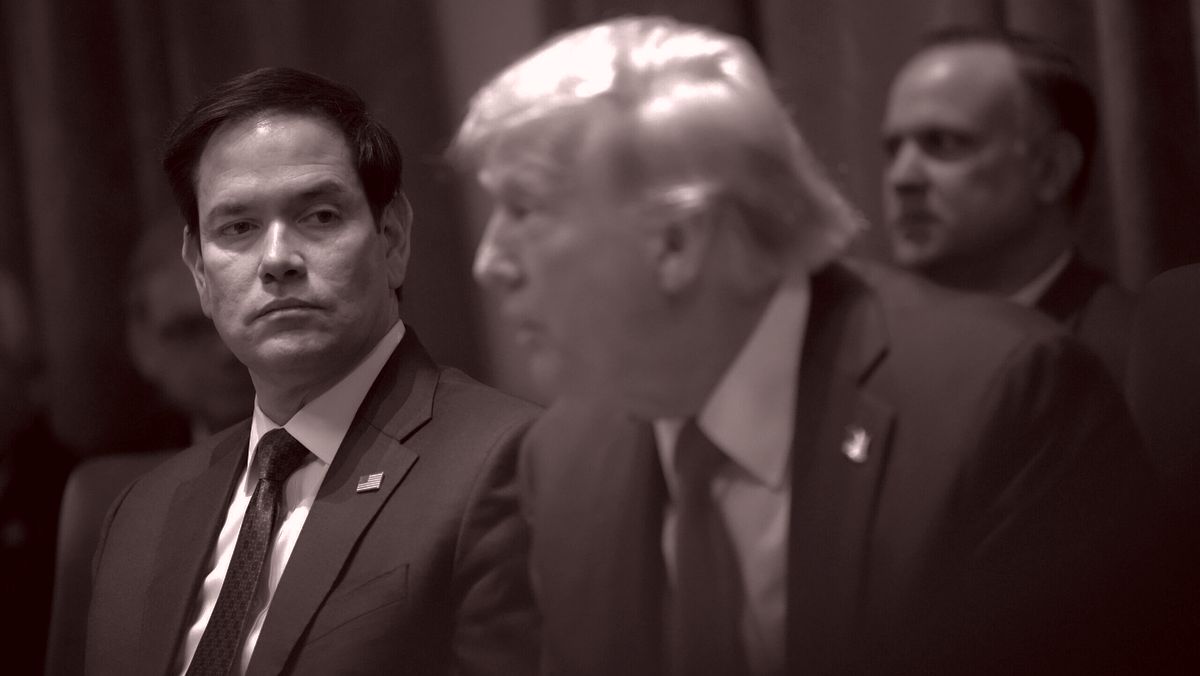
Meanwhile, as the highly acrimonious, predictably operatic, and perhaps always-inevitable Trump-Musk divorce continues to drag out, many rank-and-file congressional Republicans worry they could get caught wide-eyed in the middle of the drama. Most members are doing the easy thing and lying low. But there are nascent concerns that members might one day be caught between the world’s richest man—who, if crossed, has the financial firepower to fund a hellacious primary challenge—and the world’s most powerful man, who is also the party’s unquestioned leader.
When I called a few Republicans on the Hill to take the temperature, one senior House Republican aide told me, in no uncertain terms, that standing firmly by Trump was a “no-brainer,” at least in the short term. For one thing, while the president has his fair share of detractors in the party, he remains far more popular than Musk, who aggravated both voters and large swaths of D.C. over the past several months while running DOGE. But mostly, Trump has conditioned these members into compliance over the past 10 years, and this brawl is no different.
More than a handful of Republicans expressed concern that members would be stuck in the middle of a proxy war between Trump and Musk in next year’s primaries. But it’s worth remembering that Musk invested most heavily in the presidential contest last year, and that he was hardly a donor of major consequence in downballot races, even if he did help a few candidates get over the line. Musk could end up giving cover to a Massie-type willing to bring down the BBB, but few Republicans I spoke with are worried about this scenario. Even if Elon decides to fund challenges to members voting in favor of the bill, he would need political expertise from the consultant class, which has no interest in burning bridges with Trumpworld by working with Trump’s ex.
In the end, what might be more consequential is the absence of Musk’s money. It’ll matter at least “a little,” a prominent G.O.P. consultant told me, comparing that scenario to the financial void after a blue-chip donor dies. “You say, ‘Okay that’s a problem. We now have to find a certain amount of money to fill the hole,’” the consultant added.
|
|
|
|
Join Emmy Award-winning journalist Peter Hamby, along with the team of expert journalists at Puck, as they let you in on the conversations insiders are having across the four corners of power in America: Wall Street, Washington, Silicon Valley, and Hollywood. Presented in partnership with Audacy, new episodes publish daily, Monday through Friday.
|
|
|
|
Unique and privileged insight into the private conversations taking place inside boardrooms and corner offices up and down Wall Street, relayed by best-selling author, journalist, and former M&A senior banker William D. Cohan.
|
|
|
Need help? Review our FAQ page or contact us for assistance. For brand partnerships, email ads@puck.news.
You received this email because you signed up to receive emails from Puck, or as part of your Puck account associated with . To stop receiving this newsletter and/or manage all your email preferences,
click here.
|
|
Puck is published by Heat Media LLC. 107 Greenwich St, New York, NY 10006
|
|
|
|