 |
|
Welcome back to The Best and The Brightest. I’m Tina Nguyen.
|
|
To everyone who made it out to the French Ambassador’s residence last week for Puck’s second annual First Amendment party, it was lovely seeing you (even those of you who swiped the Puck-branded umbrellas). And to everyone who’s opening today’s issue with the hopes that the Speaker of the House has finally wrangled the MAGA caucus into recognizing that functional governance is a consensus-building activity, I am sorry to report that he’s not quite there yet. (And yes, there’s the tiniest little ember of a serious motion-to-vacate attempt still alive.)
More on all that, below the fold.
But first, a short snippet from my colleague Teddy Schleifer’s must-read bildungsroman of R.F.K. Jr.’s V.P. pick, Nicole Shanahan, published in yesterday’s issue of The Stratosphere…
|
|
|
| Last week, amid the crush of events and obligations that would ordinarily surround a campaign for president, Robert F. Kennedy Jr. reached out to an old friend in Malibu, the surrealist painter and art dealer Zoe Rose Schwartz. Kennedy had commissioned some work from her before, and he was back in town. This time, though, he wanted to show her work to a new friend: Nicole Shanahan, his 38-year-old mega-donor once married to Google co-founder Sergey Brin.
On Tuesday, at an hours-long rally filled with land acknowledgments and musical numbers, Kennedy introduced that new friend as the “next Vice President of the United States.” Shanahan, who described herself as a “disillusioned Democrat,” came across as poised, totally normal and eminently relatable—someone who, as she put it, wants to “make the world a little less crazy.” But to see her walk on stage, alongside R.F.K., was fully surreal.
Indeed, Shanahan’s only-in-Silicon Valley transformation—from patent lawyer to scenester to philanthropist and now, suddenly, a vice presidential candidate—has floored those who used to party or talk politics with her. It has stunned me, too. I’ve followed Shanahan for as long as any reporter, beginning in 2018, when her marriage to Brin seemed to elevate her overnight into one of the potentially biggest donors in Silicon Valley. We stayed in touch through 2022, amid the drama surrounding her separation from Brin, a purported “liaison” with Elon Musk, and Brin’s subsequent decision to dump his holdings in Musk’s companies….
Continue reading online…
Now, here’s Abby Livingston’s latest compilation of congressional murmurs and machinations… |
|
|
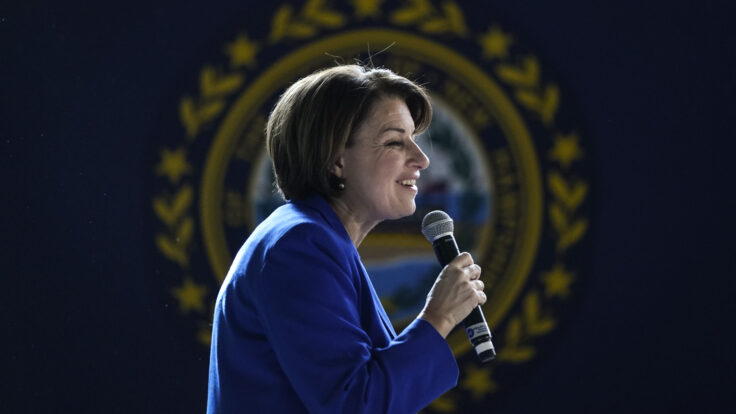
Earlier today, New Hampshire Democrat Annie Kuster became the 54th House member to wind down their House career this term. Yes, the erratic congressional schedule played a role in her decision (which was predicted here in the aftermath of McCarthy’s dethroning). But Kuster’s announcement was otherwise pro forma: She’s held office for 12 years, a respectable run by most measures. Also, she’s retiring, not resigning—a critical distinction that won’t affect the current, narrow House margin. But the move, naturally, has triggered another round of musical chairs on the Hill…
- An open-seat brawl?: Historically, New Hampshire has hosted two of the most competitive House districts in the country. But over the last decade or so—perhaps due to Trump-era polarization, or the strength of incumbents Kuster and Chris Pappas—Democrats have pretty much locked down The Granite State at the House level. Kuster was widely seen as one of House Democrats’ more exceptional campaigners, and an open-seat race to replace Kuster could get… interesting. My spidey sense is that her retirement is on the minds of the folks at Inside Elections, just a day before they release their new round of House ratings.
- E&C tea: Kuster’s departure frees up another seat on the highly-coveted Energy and Commerce Committee, which has seen five Democrats and seven Republicans exit this cycle. Of course, this portends even more jockeying among ambitious younger members. But it also sets up an interesting post-election drama: With so many vacancies, whichever side captures the majority could have more sway than usual in determining how many seats are apportioned to the minority.
- Pink ladies: Kuster is the second of the “Pink Ladies” House Democratic clique—following Cheri Bustos’ retirement last term—to leave Congress. The group, largely belonging to the class of ’12, will remain pivotal going forward—whip Katherine Clark is a member, along with Julia Brownley, Lois Frankel, and Grace Meng.
|
 |
| Johnson Melancholia |
| Republican hardliners, outraged over yet another vote in which they were sidelined, are slowly capitulating to the reality that their motion-to-vacate threat has lost its oomph—and that Speaker Mike Johnson isn’t speaking for them anymore. |
|
|
|
| For House Republicans, this week marks one of the first true recesses since Kevin McCarthy was ousted last October: Two weeks at home, away from the Capitol Hill pressure cooker, without the looming specter of a speaker election or government shutdown. But it’s also the first time I’ve reached out to my conservative sources—a typically wrathful, perpetually vengeance-minded crew—and found them to be… depressed. “[Our options] are pretty weak so far,” one Republican ally told me, when I asked whether they’d started plotting ways to punish Speaker Mike Johnson for ramming through yet another budget with the help of Democrats. “I mean, they don’t have the votes for anything.”
That includes a viable right-wing plot to vacate the speakership and send Johnson packing. Sure, Marjorie Taylor Greene filed a symbolic motion-to-vacate last Friday, after Johnson waved through the latest minibus over the protests of the hardliners who barely had time to read the bill, much less organize the opposition. And yes, if she manages to get two or three people onboard, she could technically vacate Johnson. (Right now, Greene is on the Twitter warpath, accusing Johnson of funding full-term abortion clinics, and the F.B.I.’s deep-state witch hunting machinery, among other things.) But the members who can think more than two weeks ahead are cold on the idea. “Maybe you’ll have, like, an Eli Crane” backing Greene and an M.T.V., a MAGA-aligned House aide told me. “But Matt Gaetz isn’t going to support it. Byron Donalds isn’t going to support it. [House Freedom Caucus chair] Bob Good, I don’t think he’s there.”
Two strategic reservations are guiding their thinking, I’m told. The first is the immediate downside hardliners discovered the last time around: Electing a Republican speaker is really hard, doing anything without a speaker is effectively prohibited, and finding an alternative to Johnson that every Republican could support is nearly impossible, especially with what is now a one-vote majority. (Rep. Mike Gallagher left Congress last Friday, joining Ken Buck, George Santos, Bill Johnson, and McCarthy as private citizens.)
Second, of course, is the fear that any replacement would almost certainly be worse. “If you vacate Johnson, we’re not electing a Republican Speaker,” a senior G.O.P. aide close to leadership told me bluntly. “Like, we barely elected him. The margins are smaller now… Hell, with the margins as tight as they are, you could accidentally elect [Democratic Minority Leader] Hakeem Jeffries. But more realistically, you end up with some sort of negotiated speaker who is palatable to enough Democrats and enough Republicans for them to become Speaker of the House.”
Alas, Johnson has now demonstrated that it’s possible to simply bypass the Complainer Caucus when he’s faced with must-pass legislation, even if that means bailing on supposedly critical G.O.P. agenda items and frustrating the base. Even far-right House Republicans now recognize that any sort of protest vote would be self-sabotaging. Indeed, there’s very little that anti-Johnsonites can do, procedurally, to oppose a bill passed under suspension, short of getting 140 Republicans—one third of the voting body—to pull the emergency break. And when the budget debate picks back up again in September, courting a government shutdown over some conservative gripe right before the elections would be a black eye for the entire party, Trump included. |
|
|
| Among the top frustrations of House Republicans, hardliners, and institutionalists, alike, isn’t just that they were forced to pass a tranche of appropriation bills with Democratic support—that’s life under divided government, especially with a negligible majority—but that G.O.P. lawmakers were given no insight into the package that Johnson had negotiated with Democrats before they voted on it Friday. “There are two sets of negotiated conversations that 99 percent of us are not privy to,” a senior aide to a powerful member explained. The first is inside the appropriations committee that writes the budget, which is typically an opaque process. In the latest budget talks, however, that conversation was moved to the “Big Five” negotiators—Johnson, Jeffries, Chuck Schumer, Mitch McConnell, and Joe Biden—resulting in legislation that was only described to them in broad strokes before the 1,000-plus-page bill was released, leaving members only 24 hours to excavate the various ways in which they’d been let down. Indeed, it took several days for many Republicans to realize, to their dismay, that they’d voted to fund things like L.G.B.T.Q.-friendly senior centers and more ICE detention beds. (“That is a total fraud,” the senior House aide added. “They already go unused.”)
Sources close to Johnson offer another perspective, arguing that the speaker had to play his cards close to the vest in order to prevent the hardliners from revolting—even if it meant alienating the rest of the Republican conference by keeping the details of the bill secret from them, too. “It’s not a black box, but they’re limiting their exposure. It’s a bunker situation,” a Johnson ally told me. In this case, “he thought they would cherry pick the worst parts [of the bill] and highlight [them] on social media.” (Johnson probably had good instincts: In the absence of a full bill text, those hardliners did go to social media to complain about not being able to read it thoroughly, as did their off-Hill activist allies.)
If there’s one thing that Republicans now acknowledge, even if they’re unhappy with Johnson’s style, it’s that the speaker has an extraordinarily weak hand to play against his Democratic counterparts (and against McConnell, who’s set to retire this year). With a one-vote majority, more than symbolic opposition to liberal priorities is laughable—even if the hardliners somehow put a shutdown on the table. What conservative win could Johnson pry from that scenario, other than something petty, like prohibiting the flying of Pride flags outside U.S. embassies? “I’m happy to take my shots at Johnson. But it’s not like he basically had this magic wand and flushed it down the toilet,” sighed the aide to the top member. “We’re frustrated that it all came down like this, and we never win. And, you know, it wasn’t really clear what [was in those] very mysterious black box kind of conversations. But in the end, we didn’t have a strong hand, and we don’t stick together.”
Is there any potential transgression that might shift that dynamic? Two Republican insiders offered up a hypothetical in which Johnson took up the Senate bill to fund Ukraine—deeply unpopular with the MAGA caucus—and put it to a floor vote under suspension of the rules. Such an affront, they posited, might force the broader Republican conference to act. “I think he would definitely get vacated,” said the senior leadership aide. “And I think there would definitely be more than eight [members].”
That scenario is probably unlikely, given how Johnson has trashed the $60 billion, Senate-passed bill to fund Ukraine. But he also said Friday that his office will “take the necessary steps to address the supplemental funding request,” unnerving some of his colleagues who are adamantly opposed to almost any iteration of the legislation that could win Democratic support. Perhaps it’s a headfake, and Johnson has no intention of aiding Ukraine—or maybe he’s truly floating the possibility, coupled with more border-security provisions, and daring hardliners to move against him.
If it’s the latter, of course, Johnson could find himself relying on Democrats to save his bacon once again… another demoralizing possibility for the far-right lawmakers who once supported him. Lamented the senior House aide: “You can’t effectively serve as the leader of the House Republican conference, if the reason that you’re in that position is because Democrats saved you.” |
|
|
|
| FOUR STORIES WE’RE TALKING ABOUT |
 |
| Shanahan’s Ascent |
| The definitive bildungsroman of R.F.K. Jr.’s V.P. pick. |
| TEDDY SCHLEIFER |
|
 |
| Putin’s New Trick |
| How the Russian propaganda machine is spinning the Moscow terror attack. |
| JULIA IOFFE |
|
 |
|
 |
|
|
|

|
 |
|
|
|
Need help? Review our FAQs
page or contact
us for assistance. For brand partnerships, email ads@puck.news.
|
|
You received this email because you signed up to receive emails from Puck, or as part of your Puck account associated with . To stop receiving this newsletter and/or manage all your email preferences, click here.
|
|
Puck is published by Heat Media LLC. 227 W 17th St New York, NY 10011.
|
|
|
|