Hello and welcome back to The Best & The Brightest. I’m Leigh Ann
Caldwell.
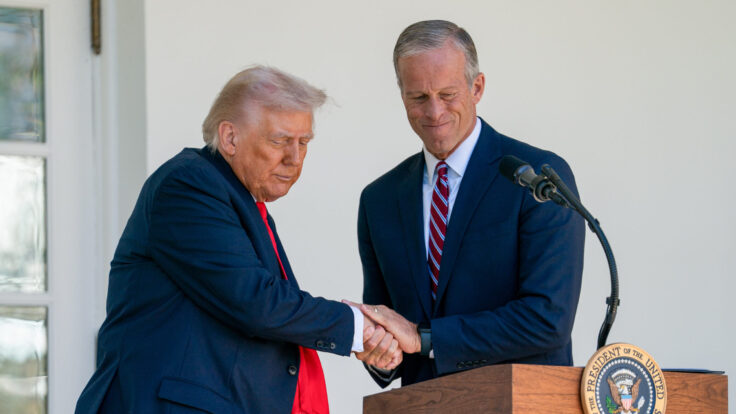
It’s that time of year. The party in power is fretting over their political futures, and the finger-pointing has begun. House Republicans, increasingly frustrated with redistricting and lacking a cohesive message, are blaming the White House political team and particularly James Blair, the deputy chief of staff who oversees politics and policy and architected Trump’s redistricting strategy. But Blair has plenty of friends, including
Susie Wiles, the president’s chief of staff, and his allies say the whining is counterproductive. I get into all the dynamics below. |
|
|
Meta is investing $600 billion in American infrastructure and jobs in communities across the country.
Adam, who grew up in Altoona, has seen the impact Meta's investment can bring. “Welcoming Meta into our community helped us create opportunities and start a new chapter for our next generation,” he says. Explore the impact in communities like Altoona. |
|
|

| Abby Livingston
|
|
- Pardon me?:
Trump’s cross-party pardon of Democratic Rep. Henry Cuellar sent shockwaves through Congress today. Last year, the Justice Department charged the 11-term Texas Democratic congressman and his wife, Imelda, with bribery and acting as a foreign agent on behalf of Azerbaijan. Cuellar denied the allegations, but the table seemed set for his potential resignation—and a special election for his seat in the Laredo-based 28th district, a hotly contested battleground in
South Texas. Both parties, in fact, had been in advanced stages of planning and recruiting for such a race; the pardon now seems to ensure it won’t happen.
The early speculation on the Hill was that Cuellar might return Trump’s favor by switching parties, bolstering Republicans’ precarious House majority and dealing a blow to Democrats’ tenuous hold on an increasingly Trumpy district. After all, Cuellar is the most conservative Democrat in the House and a favorite among the Texas
Republican delegation, and would find a welcome reception at their weekly lunch. Plus, it was Biden’s D.O.J. that indicted him.
But with his legal cloud lifted, Cuellar promptly filed to run for reelection as a Democrat, confounding many political operatives in both Washington and Texas. “What the fuck,” is how a House Democratic chief answered my call today. It made no sense for Trump, having launched a redistricting war across the country, to save a
Democrat in a district that would otherwise have been one of the G.O.P.’s easiest House pickups. As a Republican operative told Leigh Ann: “You gotta be shitting me.”
The explanations for Trump pardoning Cuellar aren’t necessarily that complicated. The president has been pardoning or commuting sentences for all kinds of white-collar criminals across the political spectrum, especially for corruption. Earlier in his term, he pardoned former Illinois Governor Rod Blagojevich
and incited a scandal within the D.O.J. by ordering prosecutors to drop the charges against New York Mayor Eric Adams. (He also commuted the sentence of disgraced ex-congressman George Santos.) Trump has also been particularly sympathetic to defendants and convicts whom he views as having been targeted for political reasons: Cuellar, he noted, had ostensibly gone against the Democratic establishment by supporting stricter border and immigration policies. As
Trump put it in his Truth Social post, “Sleepy Joe went after the Congressman, and even the Congressman’s wonderful wife, Imelda, simply for speaking the TRUTH.”
|
|
|
And now for the main event… |
|
|
Republicans are increasingly resigned to losing their House majority, a fate they ascribe to
Speaker Mike Johnson’s mismanagement, and to the redistricting crusade prosecuted by the White House itself. |
|
|
The winter doldrums have arrived for Republicans on Capitol Hill. It’s not just the party’s losses up and
down the ballot this past month—which intensified last night when Republican Matt Van Epps notched a mere nine-point victory in the Tennessee congressional district that Trump previously won by 22 points. There’s also a growing sense that leadership isn’t grappling with the likelihood of a Democratic wave in the midterms, which would relegate House Republicans to the minority. Indeed, after reopening the government last month, lawmakers have no significant
legislation on the docket to debate before the end of the year. Now the finger-pointing stage of the political cycle has begun. |
|
|
Meta's AI infrastructure is bringing jobs to local communities. Adam, who grew up in Altoona, has seen the impact Meta's investment can bring. “Welcoming Meta into our community helped us create opportunities and start a new chapter for our next generation,” he says. Explore the impact in communities like Altoona. |
|
|
Of course, few are willing to blame Trump or his unfavorables, but they’ve identified other scapegoats. Many
are frustrated with the White House policy team, which has failed to articulate a clear rejoinder to Democratic attacks over the surging cost of healthcare—a potent issue with voters who are already frustrated with the high cost of gas, groceries, and everything else. Others have beef with Speaker Mike Johnson, whom they view as a puppet doing whatever the White House wants while neglecting the important task of member management, fueling a wave of retirements and
resignations.
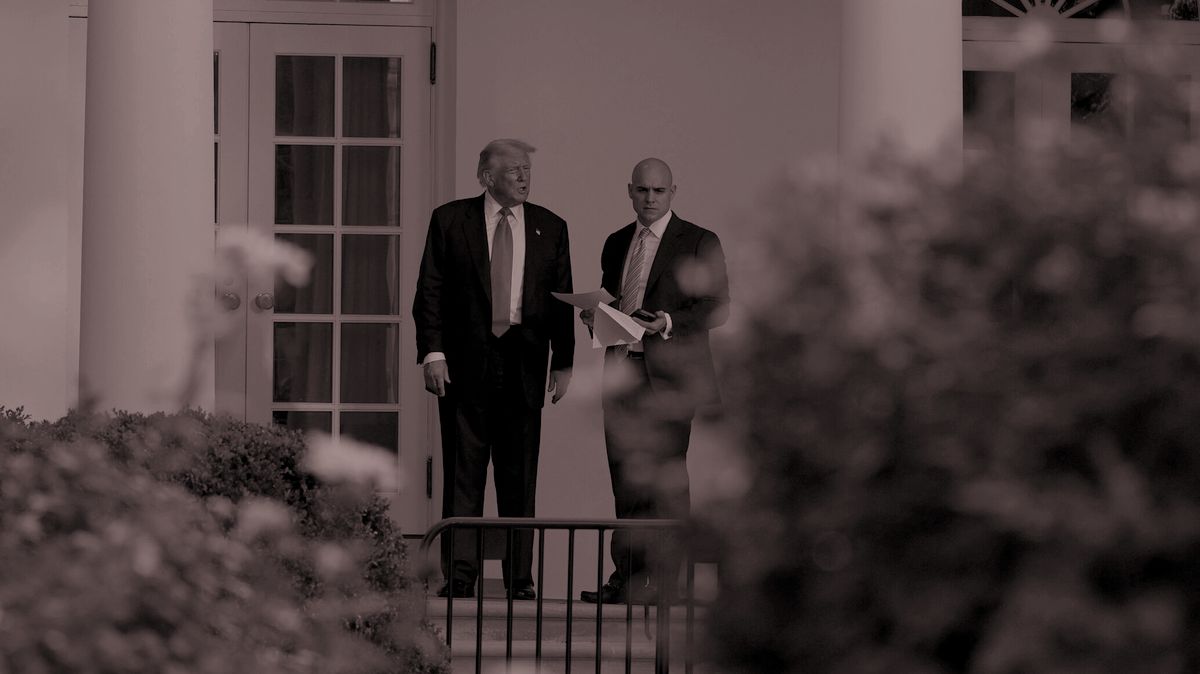
The blame game is inching closer to the president, as well. One sore subject among Republicans is James Blair, the aggressive White House deputy chief of staff, whose push for congressional redistricting continues to cause “huge unrest” among members, according to an operative who works with House Republicans. Half a dozen Republican sources confirmed that Trump’s mid-decade gerrymander efforts have exasperated Republicans from both swing districts
and safe seats.
It was Blair, of course, who’d hatched the plan to try to pick up more than a dozen seats before a single vote had been cast by fiddling with congressional maps in Texas, Indiana, North Carolina, Kansas, Nebraska, Florida, and Missouri. So far, the Texas, Missouri, and North Carolina legislatures have passed new maps, but Texas and Missouri face court challenges. Meanwhile, the party has spent millions of dollars on the effort—money that could have been spent on
ground game and traditional campaign elbow grease—while galvanizing Democrats. In the end, the party may very well end up losing seats and angering voters along the way.
Kansas and Nebraska have so far declined to carve out a new Republican seat, and the Indiana Senate has yet to agree to new maps to pick up two Republican seats, despite intense pressure—public and private—from Trump, J.D. Vance, and the White House team. Florida is expected to move forward,
which could help Republicans. But Democrats are on track to gain five seats in California, pending a court decision, plus one seat in Utah and as many as three seats in Virginia if the commonwealth moves forward.
Some Republicans are wondering if all this was worth it. “There are a lot of unhappy members,” said an operative who works to elect House Republicans. Among the particularly peeved are those Republicans likely to lose their seats in Democratic counter-districting efforts, members
occupying formerly deep red seats who now have to work harder for reelection, and members whose district lines have changed, forcing them to spend money on introducing themselves to new voters.
Blair’s defenders characterize the redistricting efforts as a necessary response to Democrats’ yearslong efforts to sue states over their congressional maps—with ongoing litigation in eight states, including Utah, Louisiana, Florida, and North Carolina, as of earlier this year. (Utah picked up a
Democratic seat and North Carolina picked up a Republican seat.) “It’s a simple question: Do you sit back and let the Democrats sue to blue, or do you go on offense and try to do something about it?” said Adam Kincaid, the president of the National Republican Redistricting Trust. Blair chose offense. |
|
|
Even from the outset, House Republicans have been skeptical. But as G.O.P. redistricting efforts hit
roadblock after roadblock, their anxiety has only grown more pronounced. Trump himself was furious that he was outmaneuvered by Gavin Newsom in California. But a White House official decried the Republican bed-wetting. “Waving a white flag a year before the midterms is insane,” the official said. “If the president did that, he wouldn’t be the president. As he says, never give in, never give up. Never, never, never.” |
But Republican anger on the Hill goes beyond redistricting. In a Congress that moves at the direction of the
White House, mixed signals from the other end of Pennsylvania Avenue on critical issues for voters—namely, cost of living and healthcare—have prevented lawmakers from building consensus around any particular affordability agenda. And it’s not just the White House policy team, which Blair oversees: Some Republicans are also frustrated with James Braid, the gruff former Hill staffer who has to liaise between a mercurial president and pearl-clutching members—sometimes without even
knowing what the president is up to. One person familiar with the interactions told me that Braid’s congressional affairs team hadn’t been informed of Trump’s tariffs on beef before they started getting angry phone calls from the Hill about the major policy shift. Of course, Braid and Blair have congressional allies, too. “We talk to them every day, pretty much night and day,” one senior House Republican lawmaker told me. “And I’m in leadership meetings, and they’ve been very responsive.” A
senior leadership aide added: “James Blair has been instrumental in every accomplishment we’ve delivered so far. … There’s been no better partner with House leadership.”
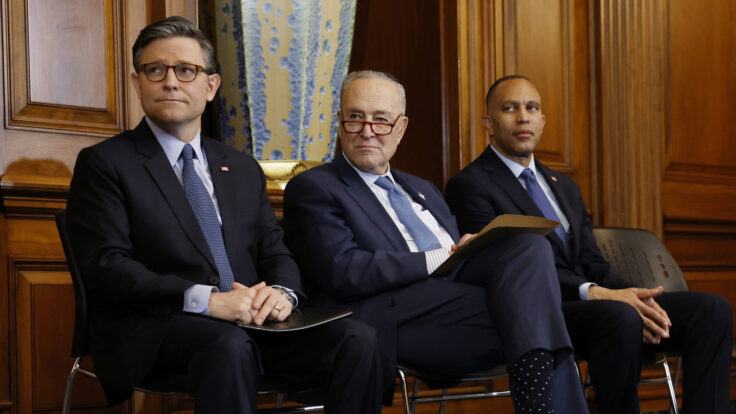
Members also put the onus squarely on Johnson, the ostensible leader of the House. On Tuesday, frustrations boiled over during a closed-door conference meeting as Republicans debated issues including affordability (why aren’t they talking about it more?), healthcare (what’s the plan?), and redistricting. Johnson defended
the redistricting blitz, I’m told, insisting that Republicans are currently in “positive territory,” even as vocal Republicans, including some members of the Texas delegation, railed about the whole situation. Some of those present felt the speaker ignored the reality of the stakes.
Meanwhile, Republicans still lack a coherent plan for addressing healthcare. “People who just came in, or have been in for a couple years, are frustrated that we haven’t just wrapped our arms around basically
fixing Obamacare overnight,” the senior House Republican told me. “We’re going to have to work hard.” But they’ve barely been at work: Johnson also angered members by imposing seven weeks of Washington exile during the shutdown, preventing members from making progress on individual appropriations bills or… talking about healthcare.
There are further signs that Johnson’s loose grip on his conference is continuing to slip. A bill governing college sports stalled this week when members of
his own party—namely Rep. Chip Roy—objected to it. Rep. Elise Stefanik called Johnson a liar and a defender of the “deep state” when one of her provisions was stripped from the annual defense policy bill. (After the public shaming, she posted that it will now be reinstated.) She holds Johnson largely responsible for torpedoing her nomination to be U.N. ambassador, and for failing to address the New York and California Republicans’ demands for a higher state and
local tax deduction as part of the One Big Beautiful Bill. (It was Blair who got the enhanced SALT deduction into the bill.)
In perhaps the most obvious sign of their discontent, Republicans are continuing to file discharge petitions, the legislative technique increasingly used to circumvent the speaker. (Typically, discharge petitions are filed by members of the minority, not the party in power.) Yesterday, Florida Republican Rep. Anna Paulina
Luna filed a discharge petition on a stock-trading ban for members of Congress—the third Republican petition in just the first year of this Congress, including the one that forced the release of the Epstein files. In a bid of defiance, Stefanik, a member of Johnson’s leadership team, signed it. And I’m told that other discharge petitions are in the works—a clear representation of how little faith Republicans have in the speaker. |
|
|
Join Emmy Award-winning journalist Peter Hamby, along with the team of expert journalists at Puck, as they let you in on the
conversations insiders are having across the four corners of power in America: Wall Street, Washington, Silicon Valley, and Hollywood. Presented in partnership with Audacy, new episodes publish daily, Monday through Friday. |
|
|
Unique and privileged insight into the private conversations taking place inside boardrooms and corner offices up and down Wall
Street, relayed by best-selling author, journalist, and former M&A senior banker William D. Cohan. |
|
|
Need help? Review our
FAQ page or contact us for assistance. For brand partnerships, email ads@puck.news.
You received this email because you signed up to receive emails from Puck, or as part of your Puck account associated with {{customer.email}}. To stop receiving this newsletter and/or manage all your email preferences, click here.
|
Puck is published by Heat Media LLC. 107 Greenwich St., New York, NY 10006 |
|
|
|